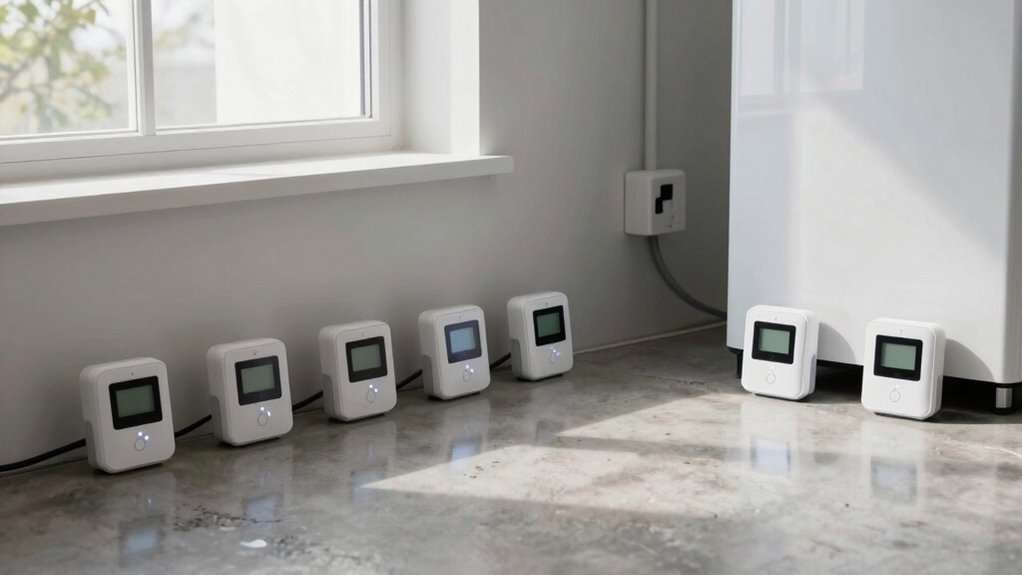

For an older adult living alone or a family member checking in from elsewhere, a leak alert needs to reach someone who can act on it. I rank the ZWE WiFi Water Leak Detector Kit first for its six sensors, local alarm, and phone alerts; the Winees 3-Pack is a better fit when SMS and email provide useful backup channels; and the FloodStop Wired Sensor makes most sense in a home that already uses a compatible FloodStop shutoff system. The main tradeoff is between flexible remote notification and a direct connection to a water shutoff setup. WiFi models also depend on a working network and app configuration, while the wired sensor depends on cable reach and system compatibility.

Get comfort and care essentials delivered free — and shop member deals
- Fast, free delivery on millions of items
- Access to Prime Big Deal Days deals on October 6–7
- Prime Video, Amazon Music and more included
Complete the kit


Key Takeaways
- The ZWE kit includes six sensors, which can cover more leak-prone locations than Winees’s three pre-paired sensors.
- Winees offers app, SMS, and email alerts; I would favor it when several notification routes matter to the household.
- FloodStop detects small drops and can trigger compatible FloodStop equipment, but it does not operate as a standalone WiFi alert system.
- Both WiFi kits need a hub and network setup; Winees specifies 2.4 GHz WiFi, while ZWE lists Tuya app compatibility.
- For an elderly resident who may not hear an alarm, remote notifications and a family member assigned to respond matter as much as sensor placement.
| ZWE WiFi Water Leak Detector Kit for Homes and Businesses |  | Best Overall for Multi-Room Coverage | Included units: 6 | App compatibility: Tuya | Alarm volume: 85 dB | VIEW ON AMAZON | See Our Full Breakdown |
| Winees WiFi Water Leak Detector, 3-Pack |  | Best for Multiple Remote Alert Channels | Pack size: 3 sensors | WiFi compatibility: 2.4 GHz only | Sensor range: Up to 200 meters from hub | VIEW ON AMAZON | See Our Full Breakdown |
| FloodStop Wired Water Sensor |  | Best for Existing FloodStop Shutoff Systems | Power source: Battery powered | Compatible devices: FloodStop systems | Battery type: Alkaline or zinc-carbon | VIEW ON AMAZON | See Our Full Breakdown |
| flood sensors for elderly home | Dimensions |
|---|---|
| ZWE WiFi Water Leak Detector K | 5 x 2 x 2 inches |
| Winees WiFi Water Leak Detecto | — |
| FloodStop Wired Water Sensor | 7.5 × 1.25 × 0.62 inches |
More Details on Our Top Picks
ZWE WiFi Water Leak Detector Kit for Homes and Businesses
I put the ZWE kit first because its six sensors make it easier to monitor several common leak points in an older adult’s home, including under sinks, near a water heater, and in a basement. Each sensor is described as IP67-rated, and the hub sends alerts through the Tuya app while each sensor can also sound a local alarm. That pairing is helpful when someone is home to hear it and a family member or caregiver needs to be notified remotely.
Compared with the three-sensor Winees kit, ZWE offers more included sensors, which matters when the home has multiple bathrooms or appliances to monitor. Winees has the advantage in alert variety, with SMS and email listed alongside app alerts; ZWE’s description specifies Tuya app alerts. The local alarm is listed at 85 dB, but I would not rely on sound alone for a resident who may not hear it. The main setup tradeoff is that phone notifications depend on WiFi and app configuration. This is an indoor system, so it is not suited to monitoring outdoor areas.
I see ZWE as a sensible first choice for a household that wants broad initial coverage and a phone alert path. A caregiver should still decide who receives notifications and who can check the home when an alert arrives. Additional sensors can be paired with the hub, though this kit already supplies six.
Pros:- Six sensors cover more locations out of the box than the Winees three-pack.
- Local audible alarm and Tuya app notifications provide two alert routes.
- IP67-rated sensor housing is described as dustproof and protected against short-term submersion.
- Hub can pair with additional sensors for a larger monitoring setup.
Cons:- Remote alerts depend on WiFi and app setup.
- Designed for indoor placement.
- The listed app alert path does not offer the SMS and email options specified for Winees.
Best for: Families who want to cover several indoor leak-prone locations and receive Tuya app alerts alongside a local alarm.
Not ideal for: Homes without reliable WiFi, buyers who need SMS or email alerts, or anyone seeking outdoor leak monitoring.
- Included units:6
- App compatibility:Tuya
- Alarm volume:85 dB
- Wireless technology:FSK
- Model:P-M06W-014
- Item weight:1.3 pounds
- Dimensions:5 x 2 x 2 inches
Our verdict“I recommend ZWE for households that prioritize covering several rooms while pairing a local alarm with remote app notifications.”
Winees WiFi Water Leak Detector, 3-Pack
Winees is my choice when the household wants alerts that can reach people through more than one digital channel. The system lists app, SMS, and email notifications, giving family members options if they do not routinely open a specific app. Its three sensors come pre-paired with the hub, so the initial setup may be more straightforward than configuring separate components from scratch.
Against ZWE, Winees trades three sensors for six in exchange for a broader set of specified notification routes. That makes it a better match for a smaller home or a household that values remote reach more than covering every possible leak point immediately. Its sensors are IP66-rated for humid areas, and the hub range is listed as up to 200 meters, although actual placement depends on the home and signal conditions. Winees also lists IFTTT support and adjustable alarm levels.
The limitations are meaningful for older-home use: Winees requires a hub and supports 2.4 GHz WiFi only. A buyer should check the router setup and identify who will receive and respond to alerts. Like ZWE, it relies on a network for remote notifications. It has fewer sensors in the pack and does not describe a connection to an automatic water shutoff valve, so I would not choose it over FloodStop for someone seeking integration with an existing compatible shutoff system.
Pros:- App, SMS, and email alerts give households several ways to receive notifications.
- Three sensors are pre-paired with the hub to simplify setup.
- IP66-rated design is specified for placement in humid areas.
- Adjustable alarm levels and IFTTT support add configuration options.
Cons:- Supports 2.4 GHz WiFi only.
- Requires a hub for operation.
- Includes three sensors, half the number supplied with the ZWE kit.
Best for: Families who want app, SMS, and email notifications from a three-sensor setup and can use 2.4 GHz WiFi.
Not ideal for: Homes that need more than three monitored locations immediately, lack a suitable WiFi network, or need a listed FloodStop shutoff connection.
- Pack size:3 sensors
- WiFi compatibility:2.4 GHz only
- Sensor range:Up to 200 meters from hub
- Sensor thickness:1.8 mm
- Notifications:App, SMS, and email
- Smart home compatibility:IFTTT
- Alarm settings:High, medium, and low
Our verdict“I would choose Winees for households that value several remote alert channels and can cover their priority leak points with three sensors.”
FloodStop Wired Water Sensor
The FloodStop sensor serves a different purpose from the two WiFi kits: it detects water and alerts compatible FloodStop systems to shut off the valve. That direct system role may suit an older adult’s home where a compatible FloodStop setup is already installed and limiting water flow after a leak matters. The sensor is described as sensitive to small drops, and the control unit lets the user adjust sensitivity.
Compared with ZWE and Winees, FloodStop does not lead on stand-alone remote notifications. Its value is its connection to the shutoff system, while both WiFi kits are described around hub-based alerts to a phone or other remote channels. The three-foot wire can reach another area or allow additional sensors to be daisy chained, but it also constrains where the sensor can sit. For a person whose caregiver needs an alert from outside the home, the product details here do not specify app, SMS, or email notifications.
I would rank it third for a general search because it only fits homes with compatible FloodStop equipment and offers less placement flexibility than wireless sensors. Still, it may be the most relevant option for a buyer focused on adding leak detection to an existing FloodStop valve setup. Before choosing it, the household should confirm the system compatibility, cable route, and who will receive the system’s alert.
Pros:- Designed to detect even small drops of water.
- Can alert compatible FloodStop systems to shut off the valve.
- Sensitivity can be adjusted at the control unit.
- Sensor-to-sensor extension wiring supports daisy chaining.
Cons:- Compatible with FloodStop systems only.
- Wired placement is limited by the three-foot cable reach.
- Product details do not specify remote phone notification options.
Best for: Households with a compatible FloodStop system that want a wired sensor to detect small drops and support valve shutoff.
Not ideal for: Buyers seeking a standalone WiFi detector, broad wireless placement, or specified phone, SMS, and email alerts.
- Power source:Battery powered
- Compatible devices:FloodStop systems
- Battery type:Alkaline or zinc-carbon
- Sensor technology:Contact sensor
- Maximum range:3 feet
- Extension wire:3 feet
- Model number:FSSensor
- Dimensions:7.5 × 1.25 × 0.62 inches
Our verdict“I recommend FloodStop when a compatible shutoff system is already in place and its wired sensor connection fits the leak location.”

How We Picked
I compared these three products against the needs raised by flood sensors for elderly homes: noticing a leak early, getting an alert to someone able to respond, and covering the places where water damage can start. I gave weight to the number of included sensors, the kinds of alerts offered, whether the product can work with a shutoff system, and practical setup limits such as WiFi dependence or cable length.
The ranking reflects different ways a household may handle a leak. ZWE leads because six sensors and both a local alarm and app notifications offer broad coverage for a home with several risk points. Winees comes next for households that prefer several remote alert channels and three sensors that arrive paired with the hub. FloodStop ranks third overall because its leak detection can be useful within a compatible shutoff setup, but its narrower system compatibility and wired placement make it less flexible for a general household. I have not treated any product as a substitute for a person who can check and respond to alerts.
Factors to Consider When Choosing Flood Sensors For Elderly Homes
For an elderly resident, a flood sensor is useful when it fits the home and someone has a clear plan for responding. I would compare alert delivery, the number of locations covered, compatibility with a shutoff system, and setup needs before deciding which kit is the better fit.
Decide who needs to receive the alert
A local alarm can help someone nearby notice a leak, but it may not reach a family member checking from another home. ZWE pairs its audible alarm with Tuya app alerts; Winees specifies app, SMS, and email. Those options only help if the right person receives them and can arrange a response. I would decide in advance whether the resident, a relative, or a caregiver should be notified, and who can check the home if the resident is away or does not hear the alarm.
Match sensor count to the home’s risk points
Common places to monitor include under sinks, near toilets and washing machines, by a water heater, and in a basement where a leak may go unnoticed. The six-sensor ZWE kit covers more locations at the outset than Winees’s three-pack. Winees’s smaller set may work well when the household has a few clear priority points. A wired FloodStop sensor is placed according to its cable reach and compatible system layout, so it does not offer the same wireless placement flexibility described for the hub-based kits.
Check network and setup requirements
Remote alerts from the ZWE and Winees systems rely on a hub, WiFi, and app configuration. Winees specifically supports 2.4 GHz WiFi only; confirm that the home router can support it before buying. ZWE lists Tuya app compatibility and also requires WiFi for remote alerts. These systems are a better fit when someone can complete setup and maintain the network. If the household already uses FloodStop equipment, its wired sensor avoids relying on a WiFi app for the specified shutoff-system function, but compatibility and cable placement need checking.
Weigh an alarm against automatic shutoff
A detector that notifies someone helps the household learn that water is present. A sensor connected to compatible FloodStop equipment can also alert the system to shut off the valve. These are distinct benefits: the WiFi kits emphasize remote notifications, while the FloodStop sensor serves a shutoff setup. I would confirm what the complete FloodStop system does, who receives its alerts, and whether the needed valve equipment is already installed before treating it as a complete solution.
Place sensors where leaks can reach them
Put each sensor where escaping water is likely to collect, rather than behind an appliance or somewhere difficult to inspect. Follow the product instructions for positioning and keep access practical for battery checks or cleaning. The ZWE and Winees descriptions specify indoor or humid-area placement and water protection ratings; those ratings do not mean every location is suitable. For an older resident, placement should avoid creating a tripping hazard or requiring frequent bending, and a family member can help inspect the sensors periodically.
Frequently Asked Questions
Which of these sensors is best for an elderly person living alone?
I would start with the ZWE kit if the home has several leak-prone locations and someone can configure its Tuya app alerts. Its six sensors and local alarm offer broad coverage with a remote alert route. Winees may be a better fit when SMS and email alongside app alerts are more useful, while FloodStop is most relevant when the home already has compatible shutoff equipment. In every case, decide who receives alerts and who can respond.
Do the ZWE and Winees sensors work without WiFi?
The product details say remote notifications rely on WiFi for ZWE, and Winees requires a hub and 2.4 GHz WiFi. Without a working network, do not count on receiving their remote app, SMS, or email alerts as described. ZWE also lists a local audible alarm, but a local sound does not notify an off-site caregiver. Check the manufacturer instructions for how each system behaves during an internet or power interruption.
Can the FloodStop sensor alert a family member’s phone?
The listed FloodStop sensor description says it alerts compatible FloodStop systems to shut off the valve; it does not specify phone, SMS, or email notifications. I would verify remote alert support with the maker for the complete FloodStop system before relying on it for off-site monitoring. Winees explicitly lists app, SMS, and email notifications, and ZWE specifies Tuya app alerts.
How many sensors does an elderly home need?
That depends on the home’s layout and plumbing risks. I would map the likely leak points first, such as sinks, toilets, a washing machine, water heater, and basement. ZWE includes six sensors, while Winees includes three; either count may be enough for the priority locations in a smaller home. More sensors do not help if they are placed where water will not reach them or alerts have no assigned responder.
Should I choose a leak alert or an automatic shutoff system?
A leak alert tells someone to check the problem, while a compatible shutoff setup can stop water flow through its valve when its sensor detects a leak. FloodStop is designed to work with compatible FloodStop systems for that shutoff function. ZWE and Winees focus on hub-based notifications in the supplied descriptions. I would choose based on whether the household can respond quickly, whether compatible valve equipment is installed, and what the full system does during a leak.
Conclusion
For a home with several areas to monitor, I would choose ZWE for its six sensors, local alarm, and Tuya app alerts. For a family that values more ways to receive remote notifications and has three priority locations, Winees offers app, SMS, and email alerts, subject to its hub and 2.4 GHz WiFi requirement. If the home already has a compatible FloodStop valve system and the wired placement works, FloodStop is the targeted choice for adding a sensor that can prompt shutoff. Whichever option fits, assign a person to receive alerts and a practical way for them to check the home.
Halloween Picks
halloween
As an affiliate, we earn on qualifying purchases.