For a chair assist for an elderly family member, the Stander Universal Stand Assist is my best overall pick for adding stable arm support to many chairs and recliners. The Carex Upeasy Seat Assist Plus suits someone who needs a portable lifting cushion, while the VOCIC AX10 is aimed at buyers who need powered lifting with wheels. The main choice is between a rail that gives the user leverage and a cushion or powered device that provides more lift. Chair shape, user strength, weight capacity, and how much help is needed can change which option makes sense. Read on for how the 14 picks compare and which tradeoffs matter most.

Turn quiet afternoons into listening time
- Thousands of audiobooks, podcasts and originals
- Listen on your phone, tablet or Echo — also offline
- Cancel anytime
Complete the kit


Key Takeaways
- Support rails lead this roundup for everyday chair use: the Stander Universal Stand Assist and similar arm-supported models focus on giving users a handhold as they rise.
- Lift cushions address a different need: both Carex Upeasy models provide assisted lifting and portability, but they do not offer the same fixed handholds as a rail.
- The VOCIC AX10 fills the powered-lift niche: its wheels and electric lift target users who need more assistance, with added complexity compared with simple rails.
- Adjustability is useful only when the rail fits the furniture: extension legs and height settings can help with varied chairs, but a poor fit can undermine stability.
- The lineup includes several similarly named adjustable rails: compare their actual dimensions, grip layout, support limits, and installation details instead of relying on the product title.
| Stander Universal Stand Assist for Chairs and Recliners, Brown |  | Best Overall for Compatible Chairs and Recliners | Weight capacity: 300 lb | Handle height: 8.5–12 in | Seat width compatibility: 19–26 in | VIEW ON AMAZON | See Our Full Breakdown |
| Carex Upeasy Seat Assist Plus Portable Lifting Cushion | 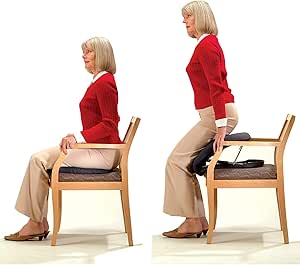 | Best for Portable Lift Assistance | Material: Polyester | Weight: 9 lbs | User weight range: 200–340 lbs | VIEW ON AMAZON | See Our Full Breakdown |
| Adjustable Couch and Chair Stand Assist Handrail, Black |  | Best for a Wide Adjustment Range | Material: Carbon steel | Maximum weight capacity: 400 lb | Height adjustment: 21.5–31.5 in, 6 settings | VIEW ON AMAZON | See Our Full Breakdown |
| VOCIC Upgrade Electric Chair Lift with Wheels – Portable Lift Assist Device for Elderly (AX10), Supports up to 300 lbs |  | Best for Caregiver-Assisted Transfers | Model: AX10 | Weight capacity: 300 lbs | Seat height adjustment: 2.9–19.7 in | VIEW ON AMAZON | See Our Full Breakdown |
| Adjustable Couch Stand Assist for Seniors |  | Best for a Fixed Sofa Setup | Color: White | Height adjustment: 23.5–30.25 in | Width adjustment: 22.6–24.75 in | VIEW ON AMAZON | See Our Full Breakdown |
| Adjustable Sit-to-Stand Assist Grab Bar for Sofas and Chairs |  | Best for Flexible Seat Fit | Height adjustment: 13–17.3 in | Width adjustment: 18.8–26.8 in | Weight capacity: 300 lbs | VIEW ON AMAZON | See Our Full Breakdown |
| NIMOOD L1 Stand Assist Rail for Couch and Chair |  | Best for Firm, Removable Cushions | Brand and model: NIMOOD L1 | Material: Aircraft-grade aluminum and stainless steel | Weight capacity: 300 lbs (136 kg) | VIEW ON AMAZON | See Our Full Breakdown |
| Adjustable Couch Stand Assist for Seniors |  | Best for Deep Cushions | Material: Thick steel frame | Cushion compatibility: Removable cushions only | Minimum cushion length: Over 18 in | VIEW ON AMAZON | See Our Full Breakdown |
| NIMOOD L2 Adjustable Stand Assist Rail with Extension Legs |  | Best for Floor-Reaching Support | Brand and model: NIMOOD L2 | Material: Stainless steel and aircraft-grade aluminum | Weight capacity: 300 lbs (136 kg) | VIEW ON AMAZON | See Our Full Breakdown |
| Carex Upeasy Portable Seat Assist Lift Cushion, Blue | | Best for Powered-Feeling Lift Without Electricity | Cushion material: Polyurethane foam | Cover: 100% polyester | Lift assistance: Up to 70% | VIEW ON AMAZON | See Our Full Breakdown |
| Stand Assist Aid for Elderly from Chair Couch Standing Aids & Supports Walking Cane Adjustable Cane, Mobility Aids Tool Help get up for Seniors Toilet Bathroom |  | Best for Multi-Room Use | Material: High-strength aluminum alloy | Height adjustment: 30–37 inches | Weight capacity: Up to 350 lbs | VIEW ON AMAZON | See Our Full Breakdown |
| Adjustable Couch Stand Assist for Seniors, Gray |  | Best for Sofa Fit Adjustment | Material: Metal frame with soft foam handles | Adjustable height: 23.5–30.25 inches | Adjustable width: 22.6–24.75 inches | VIEW ON AMAZON | See Our Full Breakdown |
| Vive Stand Assist Mobility Rail for Sofas and Chairs |  | Best for Cushioned Chairs | Material: Aluminum | Weight capacity: 300 pounds | Handle grip: Soft foam padded | VIEW ON AMAZON | See Our Full Breakdown |
| Able Life Universal Stand Assist with Legs, Brown |  | Best for Measured Furniture Fit | Color: Brown | Compatible cushion height: 12–21 inches above the ground | Compatible furniture width: 19–26 inches | VIEW ON AMAZON | See Our Full Breakdown |
| chair assist for elderly | Weight capacity | Material |
|---|---|---|
| Stander Universal Stand Assist | 300 lb | — |
| Carex Upeasy Seat Assist Plus | — | Polyester |
| Adjustable Couch and Chair Sta | — | Carbon steel |
| VOCIC Upgrade Electric Chair L | 300 lbs | — |
| Adjustable Couch Stand Assist | — | — |
| Adjustable Sit-to-Stand Assist | 300 lbs | — |
| NIMOOD L1 Stand Assist Rail fo | 300 lbs (136 kg) | Aircraft-grade aluminum and stainless steel |
| Adjustable Couch Stand Assist | — | Thick steel frame |
| NIMOOD L2 Adjustable Stand Ass | 300 lbs (136 kg) | Stainless steel and aircraft-grade aluminum |
| Carex Upeasy Portable Seat Ass | — | — |
| Stand Assist Aid for Elderly f | Up to 350 lbs | High-strength aluminum alloy |
| Adjustable Couch Stand Assist | — | Metal frame with soft foam handles |
| Vive Stand Assist Mobility Rai | 300 pounds | Aluminum |
| Able Life Universal Stand Assi | 300 pounds | — |
More Details on Our Top Picks
Stander Universal Stand Assist for Chairs and Recliners, Brown
The Stander Universal Stand Assist is the strongest fit for someone who wants a handhold attached to their existing chair or recliner. Its padded handles support both sitting down and standing up, while adjustable sizing lets it work with several cushion styles. Compared with the Carex Upeasy Seat Assist Plus, it does not lift the user; it provides leverage for someone who can push through their legs. That simpler approach may suit users who want support without a lifting cushion, but it depends on a compatible seat and careful measuring. Check the chair’s width and depth before choosing it, since fit is the main limitation. I’d rank it ahead of freestanding rails when a compatible recliner is already the user’s preferred seat.
Pros:- Padded handles offer a comfortable place to grip during sitting and standing.
- Adjustable fit accommodates a range of seat widths and depths.
- Works with fixed, stitched, and removable cushions.
- Supports transfers without requiring batteries or electricity.
Cons:- Furniture dimensions must be checked before purchase.
- Requires a compatible chair, couch, or recliner.
- Provides leverage rather than lifting the user.
Best for: Older adults who can bear weight through their legs and want padded handholds fitted to a measured chair, couch, or recliner.
Not ideal for: People who need powered or mechanical lifting assistance, or anyone whose seat falls outside the listed width and depth ranges.
- Weight capacity:300 lb
- Handle height:8.5–12 in
- Seat width compatibility:19–26 in
- Seat depth compatibility:24–27 in
- Color:Brown
- Compatible cushion styles:Fixed, stitched, or removable
Our verdict“Choose the Stander if your preferred seat fits its measurements and you can stand using a stable handhold.”
Carex Upeasy Seat Assist Plus Portable Lifting Cushion
Unlike the handholds on the Stander Universal Stand Assist, this cushion adds upward assistance as the user rises. Its self-powered hydro-pneumatic spring provides up to 70% lift assistance, with no battery or outlet to manage. At 9 lb, it can move between suitable seats, and its washable, waterproof cover helps with routine cleanup. That portability makes it distinct from the VOCIC AX10 electric chair lift, which is designed for a different kind of transfer and has adjustable seat height. The Carex is intended for people who can walk independently and use firm armchairs or sofas. It is a poor match for recliners, wheelchairs, or soft sofas, so users should confirm the seat type before relying on its lift.
Pros:- Self-powered mechanism provides up to 70% lift assistance.
- Needs no batteries or electricity.
- Portable 9 lb design includes a built-in handle.
- Waterproof, washable cover is practical for regular use.
Cons:- Not recommended for wheelchairs, recliners, or soft sofas.
- Designed for users who can walk independently.
- Its lift assistance is limited to the specified 200–340 lb user range.
Best for: Independently mobile adults weighing 200–340 lb who need lift assistance from a firm armchair or sofa and want a portable cushion.
Not ideal for: Wheelchair users, people using recliners or soft sofas, and anyone who needs a caregiver-operated transfer lift.
- Material:Polyester
- Weight:9 lbs
- User weight range:200–340 lbs
- Lift assistance:Up to 70%
- Base width:15 in
- Power source:Self-powered hydro-pneumatic gas spring
- Cover:Waterproof and washable
Our verdict“Choose the Carex for portable assistance from a firm, compatible seat if the user can walk independently.”
Adjustable Couch and Chair Stand Assist Handrail, Black
This carbon-steel rail is a good match when a fixed handhold needs to suit different seating positions or users. Its six height settings and three width choices give it a broader adjustment range than the Adjustable Couch Stand Assist for Seniors, whose listed fit focuses on sofa dimensions. The 1.5-inch grab bar offers a substantial grip, and the stated 400 lb capacity is higher than the 300 lb limits listed for several other options here. Its tradeoff is some movement during use: the description notes slight shaking, so a user who needs a completely rigid support should be cautious. Width changes also require keeping the hex wrench nearby. I’d choose it for adaptable everyday support, provided the user is comfortable with the possibility of minor movement.
Pros:- Six height settings accommodate different seating and user needs.
- Three width settings allow a tailored fit.
- Carbon steel construction has a stated 400 lb capacity.
- Base plate is designed for most couches, sofas, and chairs.
Cons:- Slight movement may occur during use.
- Width adjustments require a hex wrench.
- The listed capacity does not remove the need for a secure fit and appropriate use.
Best for: Households with varied seating or users who need multiple height and width settings in a freestanding support rail.
Not ideal for: People who need a rail with no reported movement, or users who do not want to keep a hex wrench for adjustments.
- Material:Carbon steel
- Maximum weight capacity:400 lb
- Height adjustment:21.5–31.5 in, 6 settings
- Width adjustment:19.4, 21.6, or 24.0 in
- Grab bar pipe diameter:1.5 in
- Vertical support diameter:1.97 in
- Base plate thickness:5 mm
- Color:Black
Our verdict“Pick this rail when adjustment range and a higher stated capacity matter more than eliminating all movement.”
VOCIC Upgrade Electric Chair Lift with Wheels – Portable Lift Assist Device for Elderly (AX10), Supports up to 300 lbs
The VOCIC AX10 takes a different approach from the chair-side rails in this roundup: it is an electric lift device with adjustable seat height, wheels, and a rechargeable hand control. Wheels may help a caregiver reposition the unit without lifting it manually, while the height range from 2.9 to 19.7 inches offers more flexibility than a fixed rail such as the Stander Universal Stand Assist. Two suction cup types are supplied for smooth and hard surfaces, and the listed IP68 rating suits use around water. The 300 lb capacity sets a clear limit, and the product data does not specify battery runtime. Surface texture also matters because suction cups may be less effective on uneven areas. This makes more sense for supported transfers than for someone who only needs leverage to rise from a familiar sofa.
Pros:- Built-in wheels can reduce caregiver effort when moving the device.
- Seat height adjusts from 2.9 to 19.7 in.
- IP68 waterproof rating supports use around water.
- Rechargeable hand control avoids a fixed power connection during operation.
Cons:- The 300 lb capacity may not suit heavier users.
- Battery runtime is unspecified.
- Suction cups may be less effective on textured or uneven surfaces.
Best for: Caregivers seeking a powered, movable lift aid for a user within the 300 lb limit, including use around suitable bathroom surfaces.
Not ideal for: People who only need a simple chair-side handhold, users above 300 lb, or anyone relying on textured or uneven surfaces for suction.
- Model:AX10
- Weight capacity:300 lbs
- Seat height adjustment:2.9–19.7 in
- Wheel design:Built-in wheels
- Suction cup types:2, for smooth and hard surfaces
- Battery:Rechargeable hand-control battery
- Assembly required:No
Our verdict“Choose the VOCIC AX10 for powered, caregiver-assisted transfers when its capacity and surface requirements fit.”
Adjustable Couch Stand Assist for Seniors
This rail suits someone who wants a handhold to stay beside a compatible sofa for everyday use. Its foam grips, wide support legs, and anti-slip feet are intended to give a user leverage while sitting or standing, not to lift them. Compared with the Adjustable Couch and Chair Stand Assist Handrail, it has a narrower listed width range and a lower maximum supported force, but its product data spells out key sofa fit limits: the seat must be under 22 inches high, floor clearance must exceed 1.4 inches, and bottom support bars must not block the frame. Those details make fit-checking central to the choice. I’d favor it for a stable, compatible sofa setup; someone unable to bear weight through their legs should look at a lifting aid such as the Carex cushion instead.
Pros:- Adjustable height and width fit many sofa setups.
- Soft foam handles provide a comfortable grip.
- Wide support legs and anti-slip feet support stability and help protect hard floors.
- Can remain in place after adjustment for everyday use.
Cons:- Requires the user to bear weight through their own legs.
- Does not lift a person.
- Sofa height, clearance, recline, and frame design can prevent compatibility.
Best for: Older adults who can bear weight on their legs and want a fixed handhold beside a sofa that meets the listed clearance and height limits.
Not ideal for: Users who need the device to lift them, or households with floor-level, reclining, or frame-obstructed sofas.
- Color:White
- Height adjustment:23.5–30.25 in
- Width adjustment:22.6–24.75 in
- Maximum supported force:300 lbs combined downward force through both handles
- Minimum sofa floor clearance:Over 1.4 in
- Maximum sofa seat height:Under 22 in
- Handle material:Soft foam
- Frame and feet:Reinforced metal frame; anti-slip feet
Our verdict“Choose this rail for a compatible sofa and a user who needs leverage rather than lifting assistance.”
Adjustable Sit-to-Stand Assist Grab Bar for Sofas and Chairs
Adjustable seat fit is the main reason I’d place this option ahead of simpler fixed-size rails: its height and width settings can help it match a range of cushioned chairs and sofas. The padded handles give users a more comfortable place to push, while independent support legs and anti-slip feet add support at floor level. Compared with the NIMOOD L1, this model’s listed fit instructions don’t specify a minimum cushion thickness, though both depend on a compatible cushioned seat. It also differs from the Carex Upeasy Portable Seat Assist Lift Cushion: this rail relies on the user’s own arm strength, while the Carex provides gradual lifting assistance. The tradeoff is that installation under the cushions narrows where it can be used, and the user must still push up independently.
Pros:- Height and width adjust to fit different seats
- Padded handles provide a comfortable grip
- Independent legs and reinforced base add support
- Anti-slip rubber feet grip the floor
Cons:- Must fit under removable cushions or cushioned seats
- Requires the user to push up with their own arms
Best for: People who can push through their arms and need an adjustable rail for more than one compatible cushioned chair or sofa
Not ideal for: People who cannot bear weight through their arms or need support on a recliner or a seat without compatible cushions
- Height adjustment:13–17.3 in
- Width adjustment:18.8–26.8 in
- Weight capacity:300 lbs
- Feet:Anti-slip rubber
- Installation:Fits under removable cushions or cushioned seats
- Handle:Padded grip
Our verdict“Choose this adjustable rail if you can push with your arms and need a cushioned-seat fit that can be configured to different chairs.”
NIMOOD L1 Stand Assist Rail for Couch and Chair
The NIMOOD L1 suits buyers who can confirm their sofa has firm, removable cushions at least four inches thick. Its flat-tube base is designed to sit on those cushions, and the adjustable width and height help accommodate different furniture dimensions. Compared with the Adjustable Sit-to-Stand Assist Grab Bar, the L1 gives more specific cushion requirements, which makes compatibility easier to check but rules out more seats. Its aluminum and stainless steel frame supports up to 300 pounds, and foam-padded handles give the user a comfortable place to push. The limits are clear: it does not fit recliners or electric lift chairs, and the user still needs sufficient arm strength to rise. I’d skip it if the cushions are soft, fixed in place, or under the stated thickness.
Pros:- Width and height adjust for different furniture
- Flat-tube base is designed for stability on firm cushions
- Padded handles provide a comfortable grip
- Aircraft-grade aluminum and stainless steel frame supports up to 300 lbs
Cons:- Requires removable cushions at least four inches thick and firm
- Not compatible with recliners or electric lifting chairs
- Requires the user to push up using their own strength
Best for: Seniors or people recovering from surgery who have a firm, removable sofa cushion at least four inches thick and can push through their arms
Not ideal for: People with recliners, electric lifting chairs, fixed cushions, or soft cushions that cannot provide the required base
- Brand and model:NIMOOD L1
- Material:Aircraft-grade aluminum and stainless steel
- Weight capacity:300 lbs (136 kg)
- Item weight:2.42 kg (5.33 lbs)
- Dimensions:1.99 x 26 x 16.7 in
- Cushion requirement:Removable, firm cushions at least 4 in thick
- Care:Wipe with a dry cloth
Our verdict“Pick the L1 if your sofa meets its firm, removable cushion requirements and you want an adjustable rail with a 300-pound capacity.”
Adjustable Couch Stand Assist for Seniors
This steel-frame assist is a practical match for a couch with removable cushions in its specified size range: over 18 inches long and wide, with thickness from 4 to 15 inches. Those measurements give buyers a concrete way to check fit before choosing it. Its adjustable sizing and height can help position the grip for different users, while the wrist-friendly handle offers a place to push when standing. Compared with the NIMOOD L1, this model lists a wider cushion thickness range, but it does not provide a stated weight capacity or material grades. Like the Adjustable Sit-to-Stand Assist Grab Bar, it depends on the user’s own arm strength. Soft or undersized cushions can compromise stability, and the design is not for recliners or electric lift chairs.
Pros:- Steel frame is designed to provide steady support
- Adjustable sizing and height accommodate different users
- Wrist-friendly grip provides leverage when rising
- Specified cushion dimensions help buyers check fit
Cons:- Requires removable cushions over 18 inches long and wide
- Soft or out-of-range cushions may make it unstable
- No weight capacity is provided in the supplied product data
Best for: People who can push up with their arms and have a firm, removable couch cushion over 18 inches long and wide
Not ideal for: People using recliners, electric lift chairs, or sofas with soft, fixed, or out-of-range cushions
- Material:Thick steel frame
- Cushion compatibility:Removable cushions only
- Minimum cushion length:Over 18 in
- Minimum cushion width:Over 18 in
- Cushion thickness:4–15 in
- Adjustment:Adjustable sizing and height
Our verdict“Choose this model for a compatible deep-cushion couch if you want an adjustable steel rail and can provide your own lifting effort.”
NIMOOD L2 Adjustable Stand Assist Rail with Extension Legs
The NIMOOD L2 stands out in this group for its extension legs, which reach the floor and end in anti-slip feet. That support path may suit someone who wants a rail braced at floor level rather than relying only on the seat area. Its adjustable width and height help it fit different cushioned seats, and the frame is rated for 300 pounds. Compared with the NIMOOD L1, the L2 specifically calls out extension legs and a 33.7-inch overall height, while both require removable cushions and exclude recliners. Padded handles make gripping more comfortable, but this is still a manual aid: users need enough arm strength to push themselves up. The cushion requirement also limits placement, so it is a poor match for fixed-seat furniture.
Pros:- Extension legs reach the floor and have anti-slip feet
- Width and handle height adjust for different cushioned seats
- Padded handles provide a comfortable grip
- Frame supports up to 300 lbs
Cons:- Requires removable seat cushions for installation
- Not suitable for recliners
- Requires the user to push up with their own arms
Best for: People who can push through their arms and want floor-reaching support legs for a compatible chair or sofa with removable cushions
Not ideal for: People who use recliners, have fixed seat cushions, or need powered lifting assistance
- Brand and model:NIMOOD L2
- Material:Stainless steel and aircraft-grade aluminum
- Weight capacity:300 lbs (136 kg)
- Adjustability:Width- and height-adjustable
- Dimensions:23 in W x 33.7 in H
- Seat compatibility:Requires removable sofa or couch cushions; not suitable for recliners
- Care:Wipe with a dry cloth
Our verdict“Choose the L2 if you can rise with arm effort and want adjustable handles with extension legs that reach the floor.”
Carex Upeasy Portable Seat Assist Lift Cushion, Blue
Unlike the rails in this roundup, the Carex Upeasy adds gradual lifting support through a self-powered hydro-pneumatic mechanism, so the user does not have to rely solely on pushing against handles. That distinction makes it the strongest fit here for someone who needs help with the upward movement but can still sit and position themselves safely. Its carry handles and 9-pound weight make it easier to move between suitable rooms than a seat-installed rail such as the NIMOOD L2. The tradeoff is a narrower fit: it is intended for users weighing 95–220 pounds and is not recommended for wheelchairs, cars, reclining chairs, or chairs with wheels. Compared with the Carex Upeasy Seat Assist Plus, this blue model’s supplied data lists assistance up to 70% and a 95–220-pound range.
Pros:- Hydro-pneumatic mechanism provides gradual lifting support
- Self-powered, with no electricity or batteries
- Carry handles and 9-pound weight support room-to-room use
- Wipe-clean polyester cover
Cons:- User weight range is limited to 95–220 lbs
- Not recommended for wheelchairs, cars, reclining chairs, or chairs with wheels
- Provides less than a full lift, so the user still needs some mobility
Best for: People weighing 95–220 pounds who need gradual lifting help in a stable, non-reclining chair and want a portable option
Not ideal for: People outside the stated weight range or those needing assistance in a wheelchair, car, reclining chair, or chair with wheels
- Cushion material:Polyurethane foam
- Cover:100% polyester
- Lift assistance:Up to 70%
- User weight range:95–220 lbs
- Product weight:9 lbs
- Power:Self-powered hydro-pneumatic mechanism; no electricity or batteries
- Use limitations:Not recommended for wheelchairs, automobiles, reclining chairs, or chairs with wheels
Our verdict“Choose the Carex Upeasy if you fall within its weight range and want portable, gradual lift assistance for a suitable stationary chair.”
Stand Assist Aid for Elderly from Chair Couch Standing Aids & Supports Walking Cane Adjustable Cane, Mobility Aids Tool Help get up for Seniors Toilet Bathroom
Adjustable from 30 to 37 inches, this aluminum aid can move between chairs, couches, beds, and toilets, making it more versatile than the Vive Stand Assist Mobility Rail, which is designed to fit around or beneath cushioned seats. The dual anti-slip bases and foam handles give users two points of contact while they push up, and its 350-pound capacity is the highest stated here. A detachable pouch adds a practical place for small items when the aid travels around the home. That portability comes with tradeoffs: a slight wobble may occur at maximum height, and safe use depends on pressing down correctly rather than pulling or leaning unpredictably. Assembly may also be challenging for some buyers. This is a support aid for people who can bear weight through their legs, not a device that lifts someone.
Pros:- Height adjusts from 30 to 37 inches for different users and locations
- Dual anti-slip bases and a reinforced aluminum frame provide standing support
- 350-pound stated capacity exceeds the 300-pound ratings of the Vive and Able Life rails
- Lightweight frame and detachable pouch suit moving it between rooms
Cons:- May develop slight wobble at the highest setting
- Safe use depends on applying downward pressure correctly
- Assembly may be difficult for some users
Best for: Older adults who want one portable support aid to use beside several types of seats and at the toilet
Not ideal for: People who need a device to lift them, or users who cannot reliably apply downward pressure through the handles
- Material:High-strength aluminum alloy
- Height adjustment:30–37 inches
- Weight capacity:Up to 350 lbs
- Handle material:High-density foam
- Base:Dual anti-slip bases with optional suction cups
- Additional feature:Detachable storage pouch
Our verdict“Choose this portable, multi-location aid if the user can push through their legs and needs support beyond a single sofa.”
Adjustable Couch Stand Assist for Seniors, Gray
This frame’s adjustable height and width make it a useful choice when a standard rail may not match the sofa’s proportions. It can remain in place after adjustment, while foam handles and anti-slip feet offer a steady handhold for users who still have enough leg strength to rise. Compared with the Vive Stand Assist Mobility Rail, which fits around or beneath seat cushions, this model gives buyers stated sofa clearance and seat-height limits to check before setup. Those measurements also define its main limitation: floor-level or reclining sofas, and sofas with obstructing bottom bars, are excluded. The 300-pound figure describes combined downward force through both handles; it does not mean the frame lifts a person. I’d choose it for a compatible everyday sofa, but not for users who need powered or caregiver-assisted lifting.
Pros:- Height and width adjustments help accommodate different sofas
- Foam handles provide a comfortable grip
- Wide base and anti-slip feet support stability and help protect hard floors
- Can remain in place after its initial adjustment
Cons:- Requires more than 1.4 inches of floor clearance beneath the sofa
- Not suited to floor-level or reclining sofas or sofas with blocking support bars
- Users must bear weight on their own legs; it does not lift
Best for: Older adults with a standard-height sofa who can stand using their own leg strength and want a frame adjusted to the sofa
Not ideal for: People with reclining or floor-level sofas, obstructing support bars, or a need for a lifting device
- Material:Metal frame with soft foam handles
- Adjustable height:23.5–30.25 inches
- Adjustable width:22.6–24.75 inches
- Maximum downward force:300 lbs combined through both handles
- Minimum sofa floor clearance:Over 1.4 inches
- Maximum sofa seat height:Under 22 inches
- Feet:Anti-slip
- Color:Gray
Our verdict“Pick this frame for a compatible fixed sofa when the user needs a fitted handhold and can rise under their own power.”
Vive Stand Assist Mobility Rail for Sofas and Chairs
The Vive Stand Assist Mobility Rail is aimed at homes with several upholstered seats: its adjustable aluminum frame fits around or beneath cushions on sofas, recliners, and chairs. Dual foam-padded handles give a user a stable place to push while standing, and the 300-pound capacity matches the Able Life rail’s stated limit. Compared with the multi-room aluminum aid, this design integrates with a cushioned seat instead of standing independently, which can keep support close to the spot where it’s needed. The tradeoff is fit dependence: it requires a cushioned seat, and loose or unsecured cushions may make installation unsuitable. Its product data does not provide detailed seat-size ranges, so buyers with unusual furniture should check fit before choosing it. The lifetime guarantee is an added product assurance, but it does not replace checking the rail’s compatibility with the intended seat.
Pros:- Adjustable frame fits around or beneath a range of cushioned seats
- Dual handles provide support while standing
- Soft foam padding gives the handles a comfortable grip
- Aluminum frame has a stated 300-pound capacity
Cons:- Requires a cushioned seat for installation
- May not fit seats with loose or unsecured cushions
- Product data does not give specific seat-dimension ranges for checking fit
Best for: Older adults who use a stable, upholstered chair or sofa and want a rail fitted at the seat
Not ideal for: People who need support beside toilets or beds, or whose cushions are loose or unsecured
- Material:Aluminum
- Weight capacity:300 pounds
- Handle grip:Soft foam padded
- Installation:Fits around or beneath seat cushions
- Suitable furniture:Sofas, recliners, and upholstered chairs
- Guarantee:Lifetime
Our verdict“Choose this rail for a stable upholstered seat when a seat-mounted handhold suits the user better than a portable standalone aid.”
Able Life Universal Stand Assist with Legs, Brown
For buyers willing to measure first, the Able Life Universal Stand Assist spells out the furniture dimensions it accepts: cushion height, width, and depth all have stated ranges. It works with fixed, stitched, or removable cushions, giving it a clear fit advantage over the Vive rail, whose supplied data does not list specific seat dimensions. Its padded handles adjust from the horizontal frame, so users have a handhold for sitting and standing without adding a powered lift. The constraint is that every dimension must fall within range, which can rule out an otherwise suitable-looking couch. At a 300-pound capacity, it shares the Vive’s stated limit rather than exceeding it like the 350-pound multi-room aid. This pick makes most sense when the intended sofa has been measured and fits; it is less forgiving when furniture dimensions are uncertain.
Pros:- Published cushion height, furniture width, and depth ranges make fit easier to check
- Compatible with fixed, stitched, and removable cushions
- Padded handles adjust 7–10 inches above the frame
- Supports up to 300 pounds
Cons:- Furniture must meet all stated size ranges
- Requires measuring the intended furniture before purchase
Best for: Caregivers and older adults who can measure a couch or recliner and want confirmation that the furniture falls within a defined fit range
Not ideal for: Buyers with unusually sized furniture or those unable to measure the cushion height, width, and depth before ordering
- Color:Brown
- Compatible cushion height:12–21 inches above the ground
- Compatible furniture width:19–26 inches
- Compatible furniture depth:24–27 inches
- Handle height adjustment:7–10 inches above the horizontal frame
- Weight capacity:300 pounds
- Cushion compatibility:Fixed, stitched, or removable cushions
Our verdict“Choose this rail when measured furniture fits its stated ranges and you want a defined compatibility check before setup.”

How We Picked
I ranked these options by how directly they address the everyday task of rising from a chair, then by the support they provide, compatibility with common chairs and recliners, adjustability, portability, and setup demands. I gave simple, hand-supported rails an advantage for buyers who can stand with leverage, since they add a clear point to push against without requiring a powered mechanism. Lift cushions rank for people who need the seat itself to assist, while the powered VOCIC model serves buyers seeking more substantial help and willing to manage a larger device.
Within the rail group, I considered whether the design appears adaptable to different furniture and whether its structure suggests useful stability. Repeated or broadly titled adjustable models are not treated as interchangeable: buyers should verify the exact dimensions, weight limit, and fit information for the listing they choose. Product names alone do not establish clinical suitability or safe use, so a user’s mobility needs and the chair’s construction remain part of the decision.
Factors to Consider When Choosing Chair Assist For Elderly
My first step would be to match the type of assistance to what the person can already do. A rail, a lifting cushion, and a powered lift help in different ways, and choosing by the word “assist” alone can lead to a poor fit. These broader checks can help narrow the options before comparing individual models.
Choose Between a Handhold and a Lift
A stand-assist rail gives the user something to grip and push against, so it works best when they have enough arm strength and balance to take an active role. A lift cushion raises the seat as the user stands, which can reduce the effort of getting upward but does not provide the same side-to-side hand support. A powered lift may suit someone who needs more help, though its mechanism adds setup and operating steps. Avoid assuming that more assistance is automatically safer; the person still needs to sit down in a controlled way. If standing ability varies, ask a clinician or physical therapist which movement pattern is appropriate before buying.
Measure the Chair and Check Its Structure
Measure seat height, width, and depth, and check whether the chair has arms or a frame that can accept the device. Recliners and soft sofas can shift or flex under pressure, so a rail designed for a firm chair may not sit securely on every model. For a cushion, confirm the seat dimensions and how it rests on the chair; a cushion that slides or crowds the seat can make sitting less predictable. Check the manufacturer’s fit instructions against the actual furniture rather than relying on a general claim of broad compatibility. Leave enough room for feet to plant flat and for the user to approach the chair without obstruction.
Treat Weight Limits and Stability as Safety Requirements
Compare the user’s weight with the device’s stated capacity and read how the manufacturer defines supported use. A capacity figure does not by itself confirm that a device will stay stable on a particular chair or floor. Look for clear instructions on fastening, placement, and routine checks, especially with rails that rely on a seat or frame for support. Avoid improvising with loose straps, altered furniture, or a device that rocks during setup. If the user tends to pull hard to one side or loses balance while standing, get professional guidance before relying on a single handhold.
Plan for the Whole Sit-to-Stand Movement
People often focus on getting up and overlook the return to sitting. The person needs enough space to position their feet, reach the support, and lower themselves without hitting a table or nearby wall. Check whether the device’s handles are reachable from the seated position and whether the user can release them safely after standing. A cushion that lifts may change the seat’s height and how the user gets back down, while a rail can affect how they turn to sit. Practicing with a caregiver nearby can reveal awkward movements before the device becomes part of a daily routine.
Balance Portability Against Setup and Daily Use
A portable cushion can move between rooms or travel with the user, but frequent repositioning creates more chances for incorrect placement. A fixed rail may be easier to use consistently at one favorite chair, though it is less flexible when the person changes seats. Powered equipment can reduce physical effort, but buyers should account for charging or power needs, controls, storage, and caregiver help. Consider who will set up the device and whether the user can operate it independently. The simplest option that meets the person’s actual support needs is often easier to use reliably.
Know When to Ask for a Professional Fit Check
A chair aid is not a substitute for a mobility assessment when a person has frequent falls, sudden weakness, pain, or difficulty following movement instructions. A physical therapist or occupational therapist can observe how the person rises and recommend the right support height and placement. This can matter especially when comparing a handhold with a lifting device, because they encourage different movements. Bring the chair’s measurements and the device’s specifications to the conversation. Getting that advice before purchase can prevent a return and reduce the risk of relying on equipment that does not match the user’s abilities.
Frequently Asked Questions
Should I choose a stand-assist rail or a lifting cushion?
Choose a rail if the person can bear some weight through their arms and mainly needs a steady handhold to push from. Choose a lifting cushion when the seat height or the effort of rising is the bigger barrier and the person can still manage balance and positioning. A cushion and a rail do not provide identical support, so one should not be treated as a substitute for the other. Check the person’s ability to use each safely, ideally with advice from a mobility professional. Also confirm that the device fits the chair where it will be used most.
Can I use a chair assist on a recliner or soft sofa?
Some devices are designed for chairs and recliners, but furniture shape and firmness still matter. A soft or moving seat may make a rail less stable, and a recliner’s frame can differ from the chair pictured in a product listing. Measure the furniture and follow the manufacturer’s compatibility and installation instructions. Do not rely on a device that shifts, tilts, or leaves the user without a secure grip. When the fit is unclear, ask the seller or manufacturer to confirm compatibility with the exact chair model.
What should I check before buying a powered chair lift?
Check the user’s weight against the stated capacity, then review how the device is positioned, operated, and charged or powered. Make sure the user can reach and understand its controls, or identify who will assist each time. Confirm that the lift fits the chair and leaves enough clear floor space for safe approach and standing. A powered aid may reduce lifting effort, but it can involve more steps than a basic rail or cushion. If the person’s balance or mobility needs are changing, ask a clinician whether this type of device suits them.
How can I tell whether an adjustable rail will fit my chair?
Compare the product’s full measurements with the chair’s seat width, height, arm arrangement, and frame. Check what the adjustment range refers to, since height adjustment alone does not guarantee that the base will fit beneath the seat or remain stable. Read the installation directions and look for any requirements about chair construction or floor clearance. A rail with extension legs may accommodate more setups, but it still needs a secure fit on the specific furniture. If the listing lacks measurements, request them before ordering.
When should I get a therapist’s advice before choosing a chair aid?
Ask a physical therapist or occupational therapist when the person has fallen, struggles to balance, has pain or weakness, or cannot rise consistently. Professional guidance is also useful if the person needs someone to lift or steady them, since a chair device may not address the full need. A therapist can observe the person’s movement and recommend whether a rail, cushion, or powered aid fits their abilities. They can also help set handle height and practice safe use. Bring the chair measurements and product specifications to the appointment.
Conclusion
For most buyers seeking a straightforward handhold, I would start with the Stander Universal Stand Assist as the best overall choice. The adjustable stand-assist rails are the value direction when their measurements and chair fit check out, while the Carex Upeasy Seat Assist Plus is my beginner-friendly pick for someone who needs seat lift and a portable format. Choose the VOCIC AX10 as the premium, powered option when greater lifting assistance matters and the user can manage its controls or has caregiver support. For a user who primarily needs a lift cushion that can move between seats, compare the two Carex Upeasy models and verify their fit and setup requirements. The right pick is the one that matches the person’s strength and balance, the chair, and the help available at home.