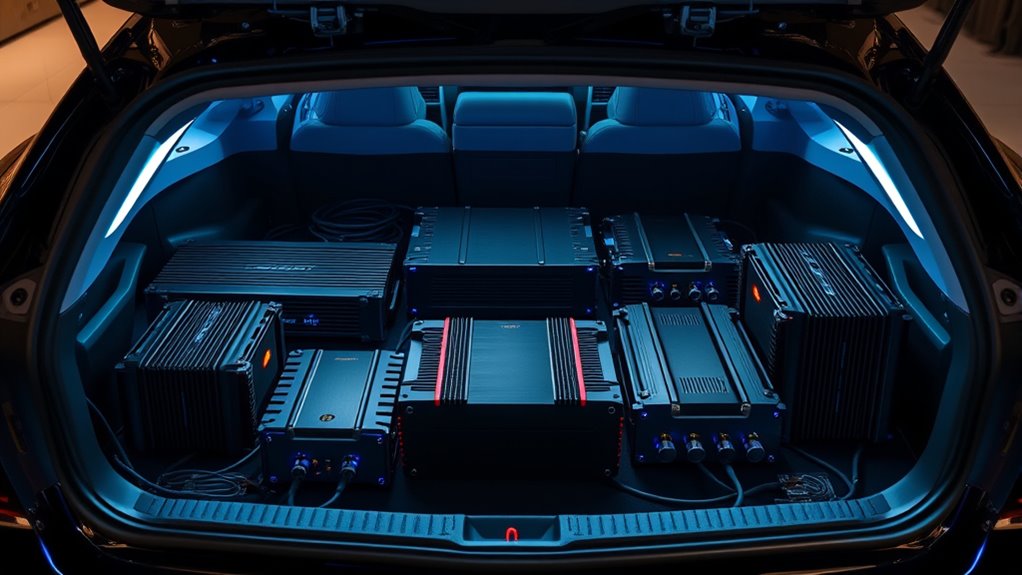

When selecting a car amplifier, the key considerations include power output, sound quality, and ease of installation. The CT Sounds CT-1000.1D stands out as the best overall choice for its compact size and high wattage. For those wanting budget-friendly options, the BOSS R1100M offers solid performance at a lower price. Meanwhile, the ORION CBA2000.1D shines for its high power capacity and advanced features. But each option comes with tradeoffs—more power often means increased cost and complexity, while smaller units might lack enough output for larger systems. Continue reading for a detailed breakdown of these amplifiers and what makes each a good fit for different needs.
Complete the kit


Key Takeaways
- The highest wattage models like the ORION CBA2000.1D deliver massive power but require more complex installation and higher budgets.
- Compact amplifiers such as the CT Sounds CT-1000.1D provide a strong balance of size and output, ideal for limited space situations.
- Multi-channel amplifiers like the Pioneer GM-A6704 suit those seeking both front and rear speaker amplification with versatile filtering options.
- Budget options like the BOSS R1100M prove that quality doesn’t always mean high cost, though they may lack advanced features.
- The best choices depend heavily on your system size, desired sound quality, and installation complexity—there’s no one-size-fits-all.




| car amplifier | Power Output | Dimensions | Channels |
|---|---|---|---|
| CT Sounds CT-1000.1D Compact C | — | — | — |
| Taramps TS 1200×4 Car Amplifie | 1200W RMS | 5.43" x 1.89" x 9.84" | 4 |
| ORION CBA2000.1D Cobalt Mono 1 | 2000W max, 500W RMS @ 1 Ohm | 14 x 8 x 3 inches | 1 |
| Skar Audio RP-1200.1D Monobloc | — | — | — |
| Skar Audio RP-800.1D Monoblock | — | — | — |
| BOSS Audio Systems R1100M Mono | 1100W max x 1 @ 2 Ohms | 10.43" x 9.21" x 2.25" | — |
| Taramps HD 3000 1 Ohm 3000 Wat | 3000 watts RMS | 7 x 9 x 3 inches | 1 |
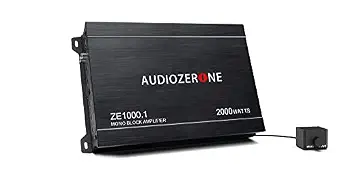
| AUDIOZERONE Car Audio Amplifie | — | 11” x 6.9” x 2” | — |
| Pioneer GM-A6704 1000W Max Cla | 1000W max | — | 4 |
| Taramps TS 400×4 400 Watts RMS | 400 Watts RMS at 2 Ohms | 5.43" x 1.93" x 4.76" | 4 |
More Details on Our Top Picks
CT Sounds CT-1000.1D Compact Class D Car Audio Monoblock Amplifier, 1000 Watts RMS
This model stands out for its impressive 1000 Watts RMS at 1 ohm, making it a strong choice for those upgrading their subwoofer systems without adding bulk. Compared with larger monoblocks like the ORION CBA2000.1D, it offers similar power but in a much smaller footprint, ideal for tight spaces. Its efficient Class D design ensures minimal heat buildup, and multiple protection circuits add reliability. However, the limited frequency response means it’s not suited for full-range audio, and proper wiring knowledge is essential for safe setup. This pick makes the most sense for car owners seeking high power in a compact form.,”
Pros:- High power output suitable for demanding subwoofer setups
- Compact size allows easy installation in tight spaces
- Efficient heat dissipation for cooler operation
- Multiple protection circuits for durability
Cons:- Limited frequency response range for full-range audio
- Requires proper wiring and installation knowledge
Best for: Car audio enthusiasts who want a powerful, space-saving amplifier for subwoofers
Not ideal for: Beginners or those seeking full-range sound, as its limited frequency response restricts versatility
- Power at 1 ohm:1000 Watts RMS
- Power at 2 ohm:650 Watts RMS
- Power at 4 ohm:350 Watts RMS
- Frequency response:0 to 320 Hz
- Protection features:High voltage, low voltage, over current, high-temperature
Our verdict“This amplifier is perfect for users needing high power in a small package primarily for subwoofer applications.”
Taramps TS 1200×4 Car Amplifier – 1200W RMS, 4 Channels, 2 Ohms, Full Range Crossover, RCA/Wire Input
The Taramps TS 1200×4 excels in providing 1200W RMS across four channels, making it well-suited for multi-speaker setups. Compared to the Skar RP-1200.1D, which is dedicated to subwoofers, this amplifier offers more flexibility with full-range output and multiple input options, including RCA and high-level inputs. Its adjustable gain and fixed crossovers allow precise sound tuning, though the need for a 60A circuit breaker and heavy-duty cables might require professional installation. The fixed crossover points limit fine-tuning for specific speaker setups, but overall, this amplifier balances power with versatility. This pick makes sense for those upgrading multiple speakers in their vehicle.
Pros:- High power output across four channels
- Versatile input options including RCA and high-level inputs
- Adjustable gain and fixed crossovers for sound customization
- Compact yet durable build
Cons:- Requires a 60A circuit breaker for safe operation
- Limited adjustable filtering due to fixed crossovers
- Heavy-duty cables may need professional setup
Best for: Car owners looking for a multi-channel amplifier to drive a complete speaker system
Not ideal for: Beginners or users with small or simple setups, as the installation complexity and power requirements are higher
- Power Output:1200W RMS
- Channels:4
- Impedance:2 Ohms
- Input Options:RCA and High Level
- Crossover:Fixed HPF and LPF
- Dimensions:5.43″ x 1.89″ x 9.84″
Our verdict“This amplifier is ideal for those wanting to power multiple speakers with flexible input options and precise tuning capabilities.”
ORION CBA2000.1D Cobalt Mono 1-Channel Class D Amplifier, 2000W Max, 500W RMS, 1/2/4 Ohm Stable, Monoblock with Bass Boost and MOSFET Power
The ORION CBA2000.1D provides a substantial 500W RMS at 1 ohm, with a peak of 2000W, making it suitable for large subwoofer systems. Compared to the Skar RP-1200.1D, it offers similar power but with a focus on durability thanks to its aluminum build and thermal protection. Its bass boost feature enhances low-end performance, and the MOSFET power supply ensures efficient operation. However, its larger size demands more space and may be complex for beginners to install correctly. Its high power and rugged build make it a prime choice for demanding subwoofer setups, but it’s overkill for small or moderate systems.
Pros:- High power capacity for demanding subwoofers
- Durable aluminum construction with effective cooling
- Bass boost and adjustable low pass filter
- Reliable thermal and protection circuitry
Cons:- Requires significant space for installation
- Complex setup may challenge beginners
- High power consumption for some vehicles
Best for: Users seeking a robust monoblock for demanding subwoofer applications
Not ideal for: Casual listeners or those with limited space, due to its size and power demands
- Power Output:2000W max, 500W RMS @ 1 Ohm
- Channels:1
- Stable Impedance:1/2/4 Ohms
- Voltage:12 volts
- Dimensions:14 x 8 x 3 inches
- Protection Features:Thermal, 2-way protection circuitry
Our verdict“This amplifier is tailored for users who need serious power and durability for large subwoofer systems.”
Skar Audio RP-1200.1D Monoblock Class D MOSFET Amplifier with Remote Subwoofer Level Control, 1200W
The Skar Audio RP-1200.1D delivers 1200W RMS at 1 ohm, with a handy remote level control that allows for quick adjustments without opening the vehicle. Compared to the CT Sounds CT-1000.1D, it offers similar power but adds remote control functionality, enhancing user convenience. Its bass EQ switch helps tailor low-end response, and its protection circuitry ensures stability during demanding use. The high power output makes it suitable for large subwoofers, but installation requires careful attention to power wiring due to high current demands. This amplifier is best for those who want easy control over their bass levels along with robust power.
Pros:- High power output suitable for demanding subwoofers
- Includes remote level control for ease of use
- Bass EQ switch for sound customization
- Effective protection circuitry for reliability
Cons:- Requires careful installation due to high current needs
- Limited frequency response for full-range audio
- Overkill for small or moderate systems
Best for: Car owners who want a powerful subwoofer amplifier with remote level control for convenience
Not ideal for: Beginners or those with small systems, as high power requirements and setup complexity may be challenging
- Peak Power at 1 Ohm:1600 Watts
- RMS Power at 1 Ohm:1200 Watts
- Frequency Response:20Hz – 250Hz
- Bass Boost:+6 or +12dB at 45Hz
- Protection Circuitry:4-Way
- Remote Subwoofer Level Control:Included
Our verdict“This amplifier is best for users seeking high power with added convenience of remote bass level adjustment.”
Skar Audio RP-800.1D Monoblock Class D MOSFET Amplifier with Remote Subwoofer Level Control, 800W
The Skar Audio RP-800.1D offers 800W RMS at 1 ohm, making it a solid choice for those with smaller subwoofers or less demanding setups. Compared with the Skar RP-1200.1D, it provides less power but still includes the convenient remote bass control and bass boost features. Its efficient heatsink design ensures stability, but installation can be tricky for those unfamiliar with high-current wiring, and its limited frequency response range makes it less suitable for full-range sound. This model strikes a balance between power and simplicity, ideal for users with moderate subwoofer needs.
Pros:- Good power output for moderate setups
- Remote subwoofer level control included
- Efficient heatsink design for reliable operation
- Compact size for flexible installation
Cons:- Requires careful wiring during installation
- Limited frequency response for full-range audio
- Power demands may be high for some vehicles
Best for: Car owners with moderate subwoofer systems seeking a reliable, controllable amplifier
Not ideal for: High-end audiophiles or those wanting full-range audio, due to its focus on bass and subwoofer power
- Peak Power at 1 Ohm:1200 Watts
- RMS Power at 1 Ohm:800 Watts
- Frequency Response:20Hz – 250Hz
- Bass Boost:+6 or +12dB at 45Hz
- Protection Circuitry:4-Way Protection
- Remote Control:Included
Our verdict“This amplifier suits users wanting reliable subwoofer power with remote control in a manageable package.”
BOSS Audio Systems R1100M Monoblock Car Amplifier – 1100W, 2-Ohm Stable, Low/High Level Inputs, Low Pass Crossover
The BOSS R1100M stands out for offering a substantial 1100W maximum power output, making it ideal for drivers seeking high-volume, deep bass performance. Its stability at 2 ohms provides flexibility in wiring multiple subwoofers, and features like the low pass filter and remote subwoofer control allow for customized sound tuning. Compared with the Taramps HD 3000, it’s more user-friendly for typical car setups, though it doesn’t reach the extreme wattage of Taramps, which is better suited for very demanding audio systems. The main tradeoff is that the R1100M requires professional installation to maximize its performance and can be somewhat bulky for smaller vehicles. Overall, this amp is perfect for enthusiasts who want high power without sacrificing reliability or ease of use.
Pros:- High maximum power output of 1100W for impactful bass
- Stable at 2 ohms, allowing versatile subwoofer configurations
- Includes protection circuits and remote control for easy tuning
- Relatively straightforward RCA and speaker level inputs
Cons:- Requires professional installation to ensure optimal performance
- Relatively large size may challenge space-constrained vehicles
Best for: Car audio enthusiasts upgrading their system for loud, bass-heavy sound without complex wiring.
Not ideal for: Casual listeners or drivers with limited space, since its size and power demands require careful installation.
- Dimensions:10.43″ x 9.21″ x 2.25″
- Weight:4.37 lbs
- Type:Monoblock
- Class:A/B
- Ohm Stability:2Ω
- Power Output:1100W max x 1 @ 2 Ohms
- Features:Low Pass Filter, Bass Boost, Input Sensitivity, Thermal and Overload Protection
- Inputs:RCA & Speaker Level
Our verdict“This amp makes the most sense for serious audio fans who want high power with flexible wiring options in larger vehicles.”
Taramps HD 3000 1 Ohm 3000 Watts RMS Monoblock Car Amplifier
The Taramps HD 3000 is designed for users who need enormous wattage, delivering 3000 Watts RMS at 1 ohm—far surpassing the BOSS R1100M in raw power. Its mono Class D design ensures efficiency, reducing heat and allowing for a more compact form factor despite the high output. While its wiring complexity and weight are challenges, this amp is built for extreme setups, especially with subwoofers demanding maximum wattage. Compared with the AUDIOZERONE ZE1000.1, the HD 3000 provides more raw power but requires more precise installation and cooling. This model is best suited for experienced installers or dedicated enthusiasts who prioritize sheer volume over simplicity.
Pros:- Unmatched 3000W RMS output for extreme bass and volume
- 1 Ohm stability allows maximum power transfer
- Efficient Class D design minimizes heat build-up
- Includes remote control and LED indicator for monitoring
Cons:- Heavy and bulky, challenging for smaller vehicles
- High power requires careful wiring and cooling setup
Best for: Power-hungry car audio builders with advanced wiring skills seeking the loudest possible sound.
Not ideal for: Casual users or those with limited space, given the weight and wiring intricacies involved.
- Power Output:3000 watts RMS
- Ohm Compatibility:1 Ohm
- Channels:1
- Frequency Response:10Hz – 20KHz
- Dimensions:7 x 9 x 3 inches
- Fuse/Circuit Breaker:150A
- Material:Aluminum
- Input Type:RCA
Our verdict“Designed for extreme audio setups, this amp is best for experienced users demanding maximum power and volume.”
AUDIOZERONE Car Audio Amplifier ZE1000.1 2000W Monoblock Class D MOSFET Subwoofer Amplifier
The AUDIOZERONE ZE1000.1 offers a balanced mix of power and efficiency, providing up to 2000W max at 1 ohm and 1000W RMS, which makes it a strong contender against the Taramps HD 3000. Its Class D MOSFET design ensures reduced heat and size, making it easier to install in a variety of vehicles. While it requires some technical knowledge for optimal wiring, its stable 1-ohm capability and built-in protections make it reliable for demanding subwoofer applications. Compared to the Skar RP-1200.1D, the ZE1000.1 delivers comparable power but with a more compact form factor. It’s best suited for users comfortable with electrical setups who want high wattage without excessive bulk.
Pros:- High power output suitable for demanding subwoofers
- Efficient Class D reduces heat and saves space
- Stable at 1 Ohm for versatile wiring
- Built-in protections ensure safe operation
Cons:- Requires technical wiring knowledge
- Limited detailed user reviews available
Best for: Experienced car audio enthusiasts seeking a powerful yet compact amp for subwoofers.
Not ideal for: Beginners or casual users without technical installation skills, due to setup complexity.
- Power:2000 Watts MAX @1-Ohm
- RMS Power:1000 Watts RMS @1-Ohm
- Impedance:Stable at 1 Ohm
- Protection Features:Thermal, overload, short circuit
- Dimensions:11” x 6.9” x 2”
- Weight:6.6 lbs
- Class:D
- Material:MOSFET
Our verdict“This amp is ideal for advanced users who need high power in a compact package for subwoofer setups.”
Pioneer GM-A6704 1000W Max Class AB Bridgeable 4-Channel Car Amplifier with High-/Low-Pass Filters
The Pioneer GM-A6704 serves drivers who want a flexible 4-channel amplifier capable of powering both speakers and subwoofers with a maximum of 1000W. Its Class AB design offers a good balance between efficiency and sound quality, making it a step up from basic mono amps like the Skar RP-800.1D. The inclusion of adjustable high- and low-pass filters allows tailored sound shaping, ideal for users who appreciate precise control. While it doesn’t match the raw wattage of the Taramps HD 3000, it excels in producing clear, low-distortion audio across multiple channels. Its main tradeoff is that it doesn’t include a remote control, and high-power operation can generate heat, requiring proper installation.
Pros:- Powerful 1000W max output for multi-speaker setups
- Adjustable high- and low-pass filters for tailored sound
- Bridgeable channels increase flexibility
- Low distortion for clear audio quality
Cons:- No included remote for remote level control
- Requires careful installation to manage heat and wiring
Best for: Audiophiles seeking a multi-channel amp capable of delivering clear, balanced sound from multiple speakers and subwoofers.
Not ideal for: Those looking solely for maximum bass or high wattage, as this amp prioritizes sound quality and versatility over sheer volume.
- Power Output:1000W max
- RMS Power:60W x 4 at 4 ohms
- Channels:4
- Design:Class AB
- Filters:Variable high and low-pass
- Distortion:Low
Our verdict“This amplifier makes sense for listeners who value sound clarity and customization over maximum loudness.”
Taramps TS 400×4 400 Watts RMS 4-Channel Car Audio Amplifier
The Taramps TS 400×4 offers a compact design with 400 Watts RMS spread across four channels, making it suitable for upgrading factory systems or smaller vehicles. Its small size, at just over 5 inches in length, makes it easier to fit into tight spaces compared to larger amps like the Pioneer GM-A6704. While it’s not as powerful as higher-wattage options, its short-circuit protection and fixed crossover ensure reliable operation for door speakers, tweeters, or subwoofers in moderate setups. Compared with the CT Sounds CT-1000.1D, it’s less powerful but easier to install and more affordable. This model is best for users who want dependable, space-efficient amplification without complex features.
Pros:- Compact size fits small or tight spaces
- Four channels for multi-speaker or tweeter setup
- Features short-circuit protection and LED indicator
- Affordable and easy to install
Cons:- Limited to 2 Ohms power handling
- Lower wattage compared to larger amps
- Requires proper wiring to maximize performance
Best for: Owners of small vehicles or factory upgrades who need reliable multi-channel power without bulk.
Not ideal for: High-power systems or drivers seeking deep bass, as its power output is limited to 400W RMS.
- Power Output:400 Watts RMS at 2 Ohms
- Channels:4
- Dimensions:5.43″ x 1.93″ x 4.76″
- Weight:1.32 lbs
- Crossover:Fixed Low-Pass 90Hz
- Remote:Included
- Protection:Short-circuit
Our verdict“Ideal for small cars or simple upgrades where space and ease of installation are priorities.”

How We Picked
Our evaluation focused on how each amplifier balances power, build quality, usability, and value. We prioritized models with proven reliability, user-friendly features, and clear technical specs. Performance was gauged based on RMS wattage, total harmonic distortion, and compatibility with common car audio systems. We also considered factors like size, input options, and ease of installation, as these influence real-world usability. The ranking reflects a combination of value for money, versatility, and overall sound performance, helping buyers find the best fit for their specific needs.
Factors to Consider When Choosing Car Amplifiers
Choosing the right car amplifier involves more than just looking at wattage. It’s essential to consider your system’s size, your audio goals, and your installation setup. Making an informed decision can prevent overspending on features you don’t need or underpowering your speakers, which results in poor sound quality. The following factors will guide you through the key considerations to keep in mind.
Power Output and Compatibility
The primary reason for selecting an amplifier is to boost audio power, but matching wattage with your speakers is critical. Too much power can damage speakers, while too little leaves you with weak sound. Check your speakers’ RMS ratings and pick an amplifier that can deliver slightly more wattage for headroom. Also, confirm the amplifier’s impedance compatibility—most are stable at 2 or 4 ohms—so they match your speakers without risking damage or performance issues.
Number of Channels and System Size
The choice between mono, 2-channel, or multi-channel amps hinges on your system’s scope. Monoblock amps are best for subwoofers, providing high power focused on low frequencies. Multi-channel models suit setups with multiple speakers, offering flexibility to power front and rear speakers simultaneously. Think about your current and future system size; investing in a slightly more capable multi-channel amp can simplify upgrades down the line.
Build Quality and Durability
Car amplifiers face harsh conditions—heat, vibrations, and dust—so durability matters. Look for models with sturdy casing, high-quality components, and good thermal management, such as adequate heatsinks or cooling fans. Cheaper units may save money upfront but often lack longevity, leading to potential failures or reduced performance over time. Investing in a well-built amplifier ensures consistent sound quality and fewer maintenance worries.
Ease of Installation and Features
Ease of installation varies widely—some amps come with user-friendly wiring options, clear instructions, and adjustable settings, while others can be complex for DIY setups. Features like remote bass control, adjustable crossovers, and high-/low-pass filters add versatility but can also complicate setup. Consider your comfort level with wiring and tuning, and whether additional features align with your audio goals and technical skills.
Cost and Value
Higher price tags often correlate with increased power, better build quality, and more features, but that isn’t always necessary for every user. Define your budget and prioritize the features that matter most—such as wattage or channel count. Sometimes, a mid-range model offers the best value by balancing performance and affordability, while premium models excel in durability and advanced features for enthusiasts willing to invest more.
Frequently Asked Questions
How do I know what wattage my speakers need?
Matching your amplifier’s RMS wattage to your speakers’ RMS ratings is vital to prevent damage and ensure balanced sound. Typically, your speakers will specify a RMS wattage range; choose an amplifier that provides slightly more wattage than your speakers’ RMS but not excessively higher. This headroom allows for clean, distortion-free volume without risking speaker damage. It’s also helpful to consider your listening volume preferences—higher wattage can deliver louder sound with clarity if your system is properly tuned.
Can I power multiple speakers with one amplifier?
Yes, multi-channel amplifiers can power multiple speakers simultaneously, simplifying your setup and reducing clutter. The number of channels determines how many speakers you can connect directly; for example, a 4-channel amp can handle four speakers or be bridged to power a subwoofer. Be sure to match the amplifier’s channel configuration with your system design and verify that the total impedance of connected speakers remains within the amplifier’s stable range to avoid overheating or damage.
Is higher wattage always better for car amplifiers?
Not necessarily. While more wattage can deliver louder volume, it also demands better wiring, higher-quality speakers, and careful tuning to prevent distortion or damage. Excessive wattage without proper setup can lead to blown speakers or system instability. For most users, matching amplifier wattage closely to speaker ratings and considering your typical listening levels results in the best balance of sound quality and system longevity.
Should I prioritize mono or multi-channel amplifiers?
The choice depends on your system’s configuration. Mono amplifiers are ideal for powering subwoofers, providing high power focused on bass frequencies. Multi-channel amps suit systems with multiple speakers, offering flexibility for full-range sound. If you want a straightforward setup with deep bass, a mono amp like the ORION CBA2000.1D makes sense. For more complex systems with front and rear speakers, a multi-channel amplifier offers better control and expansion options.
How important are additional features like crossovers and remote controls?
Features such as adjustable crossovers, bass boost, and remote control enhance your listening experience by allowing precise tuning and easier access to volume adjustments. They help optimize sound quality and system integration, especially in complex setups. However, they can also add complexity during installation and tuning. Consider your familiarity with audio systems and whether these features align with your goals—sometimes, a basic amplifier is sufficient for simpler setups.
Conclusion
For most casual listeners or those starting out, the CT Sounds CT-1000.1D offers a superb balance of power, size, and ease of use, making it the best overall pick. If you want the best value without sacrificing performance, the BOSS R1100M is hard to beat. For enthusiasts seeking high wattage and advanced features, the ORION CBA2000.1D stands out as the premium choice. Beginners should consider simpler, straightforward models like the Taramps TS 400×4, while those with larger systems or specific needs might focus on multi-channel options like the Pioneer GM-A6704. Your ideal amplifier depends on your system size, budget, and performance expectations—use these recommendations to guide your decision.