Personal emergency response systems vary most in how they connect to help: the ADT On-The-Go All-in-One is my best overall pick for its mobile, all-in-one approach, while the Freedom Alert suits people who want two-way calling through a landline and the Safety+ 4G stands out for mobile use with GPS and fall detection. The main tradeoff is between a home-based device and a wearable that can call for help away from home. Buyers should also check who receives an alert, whether a service plan is required, and how fall detection works. Comfort, water resistance, battery upkeep, and dependable coverage matter as much as the feature list. Read on for the full breakdown of all 13 systems and how to match one to your routine.

Turn quiet afternoons into listening time
- Thousands of audiobooks, podcasts and originals
- Listen on your phone, tablet or Echo — also offline
- Cancel anytime
Complete the kit


Key Takeaways
- Alert routing separates the lineup: some devices connect to a monitoring service, while options such as the 911 Help Now pendant emphasize direct calls to emergency services; buyers should know who answers before choosing.
- Mobile coverage changes where a system can help: GPS-equipped options such as Safety+ 4G and the SecuLife wearables are aimed at use beyond the home, unlike the landline-centered Freedom Alert.
- Fall detection is not the same as guaranteed help: it can add an automatic alert path, but users still need to understand the call recipient, coverage conditions, and what happens if a fall is not detected.
- Wearable form matters for daily use: the pendant-style SecuLife and Lively Mobile2 differ from the SecuLife SOS wristband, so comfort and willingness to wear the device can determine whether it is useful.
- Simple home setups remain a distinct choice: the PRNBRH and AtsCares systems pair a base receiver with alert controls, while cellular and GPS models trade that home-centered format for greater mobility.
| SecuLife Medical Alert Pendant with Fall Detection, GPS Tracking, and Two-Way Calling |  | Best for Longer Battery Life | Connectivity: 4G LTE cellular | Emergency features: Fall alerts, SOS button, and two-way calling | Location features: GPS tracking, geofencing, and one year of location history | VIEW LATEST PRICE | See Our Full Breakdown |
| PRNBRH App-Controlled Medical Alert System for Seniors with Panic Buttons, Waterproof Wristband, Receiver, and 6-Number LED Display |  | Best for Home Use Without a Monthly Pager Fee | Model: CF106 | Included alert devices: Two panic buttons and one wristband remote | Receiver: 110 dB alarm with six-number LED display | VIEW LATEST PRICE | See Our Full Breakdown |
| SecuLife SOS Wristband with Fall Detection, GPS Tracking, and Two-Way Calling |  | Best Screen-Free Wearable | Connectivity: Cellular | Emergency features: One-button SOS calling and automatic fall alerts | Calling: Two-way voice with hands-free auto-answer | VIEW LATEST PRICE | See Our Full Breakdown |
| Medical Guardian MGMini Medical Alert Device for Seniors, Rose Gold |  | Best for 24/7 Monitoring | Connectivity: Cellular with Wi-Fi backup | Emergency communication: SOS button and two-way speaker | Monitoring: 24/7 service; subscription activation required | VIEW LATEST PRICE | See Our Full Breakdown |
| AtsCares Medical Alert System with SOS Pendant and Base Station |  | Best for Landline-Based Home Coverage | Model: ATS HELP DIALER | Connectivity: Landline or VOIP; cell phone use requires an optional Bluetooth adapter | Maximum range: 600 feet | VIEW LATEST PRICE | See Our Full Breakdown |
| Silent Beacon Bluetooth Personal Safety Alert |  | Best for Smartphone-Connected Check-Ins | Connectivity: Bluetooth | Battery life: Up to 42 days | Battery capacity: 180 mAh | VIEW LATEST PRICE | See Our Full Breakdown |
| LogicMark Guardian Alert 911 Plus Emergency Pendant with Fall Detection |  | Best for Fall Detection Without a Monthly Fee | Model: Guardian Alert 911 Plus (40711) | Power source: Battery powered | Battery type: Lithium-ion | VIEW LATEST PRICE | See Our Full Breakdown |
| SmartGo 911 Emergency Communicator Pendant |  | Best Simple Direct-to-911 Pendant | Power source: Battery powered | Batteries: 3 AAA batteries included | Connection: Direct call to local 911 operator | VIEW LATEST PRICE | See Our Full Breakdown |
| 911 Help Now Medical Alert Pendant with Direct 911 Calling |  | Best for Protected, Accidental-Press-Conscious Use | Connectivity: 4G LTE cellular | Emergency calling: Direct call to 911; no monitoring center | SOS activation: Press and hold for 3 seconds | VIEW LATEST PRICE | See Our Full Breakdown |
| ADT On-The-Go All-in-One Emergency Medical Alert for Seniors |  | Best for 24/7 Professional Monitoring on the Go | Model: MD5 | Connectivity: Cellular | Location: Built-in GPS | VIEW LATEST PRICE | See Our Full Breakdown |
| Freedom Alert Landline Personal Emergency Device with Two-Way Calling |  | Best for Landline-Based Home Use | Connection: Landline phone service required | Communication: Two-way voice calling | Contacts: Family, friends, EMS, police, and fire services | VIEW LATEST PRICE | See Our Full Breakdown |
| Safety+ 4G Medical Alert System with Fall Detection and GPS |  | Best for GPS and Automatic Fall Detection | Connectivity: Nationwide 4G | Monitoring: 24/7 emergency monitoring | Fall detection: Automatic | VIEW LATEST PRICE | See Our Full Breakdown |
| Lively Mobile2 Medical Alert Device with Water Resistance and Lanyard |  | Best for Simple Portable Response | Brand and model: Lively Mobile2 | Connectivity: Mobile; no landline or base station required | Response access: Certified agents available 24/7 through the Urgent Response button | VIEW LATEST PRICE | See Our Full Breakdown |
| personal emergency response system | Connectivity | Water resistance |
|---|---|---|
| SecuLife Medical Alert Pendant | 4G LTE cellular | IP67 |
| PRNBRH App-Controlled Medical | — | — |
| SecuLife SOS Wristband with Fa | Cellular | IP67 |
| Medical Guardian MGMini Medica | Cellular with Wi-Fi backup | — |
| AtsCares Medical Alert System | Landline or VOIP; cell phone use requires an optional Bluetooth adapter | — |
| Silent Beacon Bluetooth Person | Bluetooth | IPX4 |
| LogicMark Guardian Alert 911 P | — | Water resistant |
| SmartGo 911 Emergency Communic | — | — |
| 911 Help Now Medical Alert Pen | 4G LTE cellular | — |
| ADT On-The-Go All-in-One Emerg | Cellular | IP57 |
| Freedom Alert Landline Persona | — | — |
| Safety+ 4G Medical Alert Syste | Nationwide 4G | Suitable for showers and rain |
| Lively Mobile2 Medical Alert D | Mobile; no landline or base station required | Water resistant |
More Details on Our Top Picks
SecuLife Medical Alert Pendant with Fall Detection, GPS Tracking, and Two-Way Calling
I’d choose this pendant for someone who needs mobile coverage, automatic fall alerts, and location sharing in one wearable. Its GPS, geofencing, and location history give caregivers more context than the home-focused AtsCares ATS HELP DIALER, while two-way calling and hands-free auto-answer let the wearer communicate through the device. The display also makes battery and signal status easier to check. The main tradeoff is ongoing service: a monthly subscription is required for these connected features. Battery claims are inconsistent—the specs list up to six days with 24-hour interval tracking, while other product information says five—so I wouldn’t plan around the longer figure without checking current details. Its IP67 rating suits regular wear, but charging remains part of the routine.
Pros:- Fall detection can alert preselected emergency contacts.
- Two-way calling includes hands-free auto-answer.
- GPS supports geofencing and location history.
- IP67 water resistance and a display support everyday wear and status checks.
Cons:- A monthly subscription is required for service features.
- Battery-life information differs between five and up to six days.
- The stated battery life depends on tracking interval.
Best for: People who spend time away from home and want GPS, caregiver location tools, and fall alerts in a pendant with several days of stated battery life.
Not ideal for: Buyers who want a no-subscription device, or anyone who needs a clearly stated and dependable battery interval.
- Connectivity:4G LTE cellular
- Emergency features:Fall alerts, SOS button, and two-way calling
- Location features:GPS tracking, geofencing, and one year of location history
- Battery capacity:1000 mAh
- Battery life:Listed as up to 6 days with 24-hour interval tracking; also listed as 5 days
- Water resistance:IP67
- Subscription:$20 per month
- Compatibility:Android and iOS devices
Our verdict“Choose this pendant if you want GPS-enabled fall alerts and calling on the go, and can accept a subscription and some uncertainty around battery life.”
PRNBRH App-Controlled Medical Alert System for Seniors with Panic Buttons, Waterproof Wristband, Receiver, and 6-Number LED Display
This system makes the most sense for a household that wants local alerts at home rather than a cellular pendant for outings. The receiver sounds a 110 dB alarm, and the wrist remote or either panic button can trigger it; the wireless signal is listed for up to 300 feet and can still work during internet outages. App notifications through Tuya Smart or Smart Life add caregiver awareness, while the numbered display helps identify which button was pressed. Compared with the GPS-equipped SecuLife Medical Alert Pendant, PRNBRH lacks location tracking and automatic fall detection, but it also avoids a monthly fee for pager use. The limits are meaningful: only the wrist remote is waterproof, the app needs 2.4 GHz Wi-Fi, and SMS alerts require a subscription.
Pros:- Pager operation has no monthly fee.
- Wrist remote is waterproof for shower use.
- Wireless signal is listed for up to 300 feet and can work during internet outages.
- Loud receiver alarm and numbered display help caregivers identify an alert.
Cons:- Only the wrist-worn remote is water resistant.
- App connection supports 2.4 GHz Wi-Fi only.
- SMS notifications require a subscription, and the system has no GPS or fall detection.
Best for: Families seeking an at-home alert receiver with multiple panic buttons, a shower-safe wrist remote, and app notifications without a monthly pager fee.
Not ideal for: People who need GPS or automatic fall detection, or households whose Wi-Fi only supports 5 GHz.
- Model:CF106
- Included alert devices:Two panic buttons and one wristband remote
- Receiver:110 dB alarm with six-number LED display
- Wireless range:Up to 300 feet
- Wi-Fi:2.4 GHz only
- App compatibility:Tuya Smart or Smart Life
- Subscription:No monthly fee for pager use; SMS notifications require a subscription
- Batteries:Two A batteries included
Our verdict“Pick PRNBRH for straightforward home alerts and multiple triggers, but choose a cellular system such as the SecuLife pendant for mobile coverage or fall detection.”
SecuLife SOS Wristband with Fall Detection, GPS Tracking, and Two-Way Calling
The wristband keeps interaction simple: one button calls preset contacts, while fall alerts and two-way voice calling add help when the wearer can’t easily reach a phone. GPS tracking, geofencing, and a year of location history give caregivers more insight than the home-only PRNBRH CF106. Its screen-free, IP67-rated design avoids a display to manage and is suited to splashes and handwashing. The cost of that simplicity is a short stated runtime: battery life is listed as one day, which may mean daily charging becomes part of care. It also requires a $25 monthly subscription. Compared with the SecuLife pendant, this model trades a larger listed battery capacity and longer stated runtime for a wrist-worn form; I’d favor it only if that form factor is more comfortable for the wearer.
Pros:- One-button SOS calls preset contacts and supports automatic fall alerts.
- GPS, geofencing, and location history help caregivers follow movement.
- Two-way calling includes hands-free auto-answer and spam call blocking.
- IP67 rating suits rain, splashes, and handwashing.
Cons:- Battery life is listed as only one day.
- Service requires a $25 monthly subscription.
- Plastic, screen-free construction provides no on-device display for checking status.
Best for: Wearers who prefer a screen-free wristband and need cellular SOS calling, fall alerts, and caregiver location tools.
Not ideal for: Anyone who may forget daily charging, wants to avoid a subscription, or prefers a pendant with a longer stated battery life.
- Connectivity:Cellular
- Emergency features:One-button SOS calling and automatic fall alerts
- Calling:Two-way voice with hands-free auto-answer
- Location features:Real-time GPS, geofencing, and one year of location history
- Battery capacity:680 mAh
- Battery life:Listed as 1 day
- Water resistance:IP67
- Subscription:$25 per month
- Warranty:1 year
Our verdict“Choose this wristband when a simple, screen-free fit matters more than charging less often or avoiding a monthly service fee.”
Medical Guardian MGMini Medical Alert Device for Seniors, Rose Gold
I’d put the MGMini ahead for buyers who want an alert to connect to a 24/7 monitoring team, rather than relying only on preselected contacts. Its SOS button and two-way speaker support direct communication, while GPS assistance and hourly location updates give the service more context when the wearer is away from home. The lanyard and belt clip offer practical ways to carry it, and the stated up to 72-hour battery life is a longer interval than the one-day SecuLife SOS Wristband lists. The tradeoff is that service must be activated with a subscription, and fall detection is an optional add-on rather than included. Location updates are hourly, not continuous, so buyers seeking more frequent GPS tracking may prefer the SecuLife pendant or wristband.
Pros:- Two-way speaker connects the wearer with a 24/7 monitoring team.
- GPS assistance and hourly location updates support caregiver awareness.
- Lanyard and belt clip provide two carrying options.
- Battery life is listed as up to 72 hours, with charging in about four hours.
Cons:- Monitoring service requires subscription activation.
- Fall detection is an optional add-on.
- Location updates are hourly rather than continuous.
Best for: Seniors and caregivers who want a wearable connected to a 24/7 monitoring service, with flexible carrying options and GPS assistance.
Not ideal for: Buyers who want included fall detection, continuous location tracking, or a device that works without activating a paid monitoring service.
- Connectivity:Cellular with Wi-Fi backup
- Emergency communication:SOS button and two-way speaker
- Monitoring:24/7 service; subscription activation required
- Location features:GPS assistance and hourly location updates
- Battery life:Up to 72 hours
- Recharge time:About 4 hours
- Fall detection:Optional add-on
- Included accessories:Charging cradle, power cord, clip, and lanyard
Our verdict“Choose the MGMini if a 24/7 monitoring connection matters more than included fall detection or continuous GPS updates.”
AtsCares Medical Alert System with SOS Pendant and Base Station
This is the home-centered choice for someone who wants a wearable SOS button backed by a base station and up to 600 feet of stated range. A waterproof pendant and wristband give the wearer a choice of how to trigger an alert, including while showering, while large buttons can suit people with limited dexterity. Unlike the cellular SecuLife Medical Alert Pendant, AtsCares is built around a landline or VOIP connection and does not list GPS, fall detection, or two-way calling. That simpler setup avoids a monthly device fee, but the household needs a compatible phone connection and must maintain the battery-powered system. Cell phone use calls for an optional Bluetooth adapter, adding another piece to source. I’d choose it for indoor coverage, not for independent outings or location monitoring.
Pros:- Waterproof pendant supports wear during showering and handwashing.
- Pendant and wristband provide alternative ways to trigger an alert.
- Listed wireless range reaches up to 600 feet.
- Large push buttons can be easier to operate for users with limited mobility.
Cons:- Standard operation requires a landline or VOIP connection.
- Cell phone compatibility requires a separately purchased Bluetooth adapter.
- Battery-powered equipment requires ongoing battery maintenance.
Best for: People who spend most of their time at home, have a landline or VOIP connection, and want pendant or wristband activation without a monthly device fee.
Not ideal for: Users who need alerts while away from home, GPS tracking, automatic fall detection, or a setup that does not depend on a landline or VOIP connection.
- Model:ATS HELP DIALER
- Connectivity:Landline or VOIP; cell phone use requires an optional Bluetooth adapter
- Maximum range:600 feet
- Included wearables:SOS pendant and gray wristband
- Control method:Push button
- Audible alarm:85 dB
- Power source:Battery powered, 3.7 V
- Monthly fee:None associated with the device
Our verdict“Choose AtsCares for simple in-home alerts over a compatible landline or VOIP connection, not for mobile protection or GPS-based caregiver updates.”
Silent Beacon Bluetooth Personal Safety Alert
The Silent Beacon is the most phone-dependent pick in this group: it uses Bluetooth and its app to alert chosen contacts, share GPS location, and support two-way calls through its built-in speaker and microphone. That makes it a better fit for someone who wants family contacts in the loop than the SmartGo 911 Emergency Communicator Pendant, which calls 911 directly instead. Its five modes, including Check-In and Footstep Tracking, also give it uses beyond an emergency button. The tradeoff is that a compatible smartphone must be nearby, and some features may require a paid subscription. Its up to 42-day battery life reduces charging frequency, but this is not a standalone cellular medical alert system with professional monitoring.
Pros:- One-touch alert can call a chosen phone number, including 911.
- Can share real-time GPS location with selected contacts.
- Built-in speaker and microphone enable two-way calls.
- Battery life is listed as up to 42 days.
Cons:- Requires a compatible smartphone and the Silent Beacon app.
- Some features may require a paid subscription.
- Bluetooth-based operation depends on the phone being available and connected.
Best for: People who routinely carry a compatible smartphone and want a wearable alert that can notify selected contacts and share their location.
Not ideal for: Anyone who needs an emergency device that works independently of a smartphone or connects to a professional monitoring service.
- Connectivity:Bluetooth
- Battery life:Up to 42 days
- Battery capacity:180 mAh
- Dimensions:1.41 x 1.69 x 0.62 inches
- Weight:19.01 g
- Water resistance:IPX4
- Alert modes:Emergency, Silent, Check-In, Low Battery, Footstep Tracking
- Included accessories:Wearable accessory clip, universal 18 mm wristband, USB cable, quick start guide
Our verdict“Choose Silent Beacon if you want a long-lasting wearable that uses your smartphone to contact selected people, not a standalone monitored alert system.”
LogicMark Guardian Alert 911 Plus Emergency Pendant with Fall Detection
The LogicMark Guardian Alert 911 Plus suits buyers who want fall detection and two-way voice without committing to a monthly monitoring plan. It differs from the ADT On-The-Go All-in-One Emergency Medical Alert, which connects to professional agents around the clock but requires a plan and phone activation. LogicMark instead uses a 4G LTE network and has a two-way voice pendant for communication with emergency personnel; it also works without a landline and is water resistant for bath or shower use. That combination may appeal to someone who wants a direct, fee-free setup, but buyers should verify compatible 4G LTE coverage where the device will be used. The listed tabletop mounting type also leaves some uncertainty about how the product is worn or positioned day to day.
Pros:- Fall detection can send an alert if the wearer cannot press the button.
- Two-way voice supports communication with emergency personnel.
- Works without a landline and has no monthly fee.
- Water resistant for use in the bath or shower.
Cons:- Requires a compatible 4G LTE network.
- The listed tabletop mounting type makes everyday placement less clear.
- The product data does not specify battery life or water-resistance rating.
Best for: People seeking fall detection, two-way emergency communication, and no monthly fee who can confirm compatible 4G LTE service in their area.
Not ideal for: Buyers who want a clearly specified wearable pendant setup, professional monitoring, or service that does not depend on compatible 4G LTE coverage.
- Model:Guardian Alert 911 Plus (40711)
- Power source:Battery powered
- Battery type:Lithium-ion
- Compatible network:4G LTE
- Communication:Two-way voice
- Fall detection:Yes
- Landline required:No
- Water resistance:Water resistant
- Dimensions and weight:9 x 7.1 x 1.9 inches; 9.92 ounces
Our verdict“Pick the LogicMark if avoiding a monthly fee and having fall detection matter more than a clearly defined wearable setup or staffed monitoring plan.”
SmartGo 911 Emergency Communicator Pendant
The SmartGo 911 Emergency Communicator Pendant keeps its job narrow: press and hold SOS to speak directly with a local 911 operator through the built-in speaker and microphone. Unlike the ADT On-The-Go All-in-One Emergency Medical Alert, it does not connect to a professional monitoring service, and it has no monthly fee, subscription, or contract. It also needs no landline, cellphone, or home hub, which makes it a simpler choice for someone who wants a standalone cellular call device. The main limitation is that it works only where cellular signal is available, and the SOS button must be held for about three seconds. Because it calls 911 rather than a monitoring center or a selected family contact, it offers fewer options for how an alert is handled.
Pros:- Direct two-way voice connection to a local 911 operator.
- No monthly fee, subscription, or contract.
- Works without a landline, cellphone, or home hub where cellular signal is available.
- Includes a lanyard and removable button protection shield.
Cons:- Depends on available cellular signal.
- SOS activation requires holding the button for about three seconds.
- Does not provide professional monitoring or listed fall detection.
Best for: People who want a straightforward, no-subscription pendant that calls 911 directly and have cellular coverage where they live and travel.
Not ideal for: Buyers who want professional monitoring, automatic fall detection, or alerts routed first to family or other chosen contacts.
- Power source:Battery powered
- Batteries:3 AAA batteries included
- Connection:Direct call to local 911 operator
- Cellular coverage:Works where cellular signal is available
- Communication:Two-way voice through built-in speaker and microphone
- SOS activation:Press and hold the SOS button for about 3 seconds
- Included accessories:Lanyard, removable button protection shield, 3 AAA batteries
- Color:White
Our verdict“Choose SmartGo if direct 911 access without recurring service is your priority and you do not need monitoring or automatic fall detection.”
911 Help Now Medical Alert Pendant with Direct 911 Calling
The 911 Help Now Medical Alert Pendant is another direct-to-911 option, but its protective cover and press-and-hold activation make it a more deliberate choice than the SmartGo 911 Emergency Communicator Pendant. It calls 911 over 4G LTE, then uses its built-in microphone and speaker to let the wearer speak with the dispatcher; voice prompts and a battery-level indicator add useful feedback during use. The included lanyard and belt or clothing clip give buyers more ways to carry it than a pendant-only setup. The tradeoff is that it does not route calls through a monitoring center, and service depends on compatible cellular coverage. It also runs on three AAA alkaline batteries, so readiness depends on those batteries being powered and available.
Pros:- Calls 911 directly without a monitoring center or subscription.
- Built-in speaker and microphone allow conversation with a dispatcher.
- Protective cover and press-and-hold activation help reduce accidental calls.
- Includes AAA batteries, a removable lanyard, and a belt or clothing clip.
Cons:- Requires compatible cellular service in the area of use.
- Depends on three AAA alkaline batteries being powered and available.
- Does not provide a monitoring center or listed fall detection.
Best for: People who want a direct 911 device with a protective button cover, spoken prompts, and flexible lanyard or clip carry options.
Not ideal for: People who prefer a monitoring center to handle alerts, need fall detection, or cannot confirm compatible cellular service in their area.
- Connectivity:4G LTE cellular
- Emergency calling:Direct call to 911; no monitoring center
- SOS activation:Press and hold for 3 seconds
- Call cancellation:Press and hold the Function Button for 2 seconds
- Audio:Built-in microphone and speaker
- Power source:3 included AAA alkaline batteries
- Dimensions and weight:2.8 x 1.75 x 0.6 inches; 2.4 oz
- Included accessories:Removable neck lanyard, belt/clothing clip, protective cover, user guide
Our verdict“Choose 911 Help Now over SmartGo if a protective cover, voice prompts, and clip carry matter, while accepting direct 911 calling and battery upkeep.”
ADT On-The-Go All-in-One Emergency Medical Alert for Seniors
The ADT On-The-Go All-in-One is the clearest fit here for someone who wants an agent to answer an SOS rather than a device that calls 911 directly. Pressing its button connects to ADT’s 24/7 U.S.-based monitoring agents, while built-in GPS and nationwide cellular service support use away from home. That makes it a different proposition from the 911 Help Now Medical Alert Pendant, which calls 911 without a monitoring center or subscription. ADT’s all-in-one design also avoids the need for a separate pendant or wristband, and its IP57 water resistance suits everyday wear. The tradeoff is an ongoing monitoring plan and phone activation; fall detection is optional and may not detect every fall. Buyers who want a no-fee direct-911 device should choose one of the other approaches.
Pros:- SOS connects to professional monitoring agents 24/7.
- Built-in GPS and nationwide cellular service support use at home and on the go.
- All-in-one design does not require a separate pendant or wristband.
- IP57 water resistance.
Cons:- Phone activation and a monthly monitoring plan are required.
- Fall detection is optional and may not detect every fall.
- Requires charging with the included cradle; battery life is not specified in the product data.
Best for: People who want 24/7 professional monitoring, GPS-supported mobile use, and an all-in-one device rather than a separate pendant or wristband.
Not ideal for: Buyers who want no monthly plan, direct 911 calling without a monitoring service, or guaranteed fall detection.
- Model:MD5
- Connectivity:Cellular
- Location:Built-in GPS
- Monitoring:24/7 professional monitoring; monthly plan required
- Fall detection:Optional integrated automatic fall detection
- Water resistance:IP57
- Dimensions and weight:2.75 x 1.75 x 0.63 inches; 1.76 ounces
- Included items:Medical alert mobile device, lanyard, cradle charger
Our verdict“Choose ADT if you want an agent-backed response and mobile GPS support, and are comfortable with activation and an ongoing monitoring plan.”
Freedom Alert Landline Personal Emergency Device with Two-Way Calling
Freedom Alert is the clearest fit for someone who wants a direct way to call for help at home without paying for ongoing monitoring. Pressing the pendant connects through an existing landline, and two-way voice calling lets the user speak with family, friends, or emergency personnel rather than relying on an alert that gives no immediate conversation. The rechargeable pendant can be worn or kept on its mount, while a 24-hour battery backup adds a measure of resilience during a power interruption.
Compared with the mobile Lively Mobile2 or GPS-enabled Safety+ system, this device is tied to the home and does not provide the same mobile connectivity or automatic fall detection. Its main appeal is avoiding monthly operating fees, but that only helps households that already maintain landline service. I’d choose it for a home-centered routine, not for someone who regularly needs protection away from home.
Pros:- Two-way voice calling allows the user to explain what is happening.
- Can connect with family, friends, or emergency services.
- Rechargeable pendant can be worn or kept on its mount.
- Includes a 24-hour battery backup and has no monthly operating fees.
Cons:- Requires an existing landline phone service.
- Home-focused connection is less suited to people who need coverage away from home.
- The provided product information does not list automatic fall detection or GPS.
Best for: People who spend most of their time at home, have an existing landline, and want two-way emergency calls without a monthly operating fee.
Not ideal for: People without landline service or those who need a wearable alert system that works while traveling away from home.
- Connection:Landline phone service required
- Communication:Two-way voice calling
- Contacts:Family, friends, EMS, police, and fire services
- Power:Rechargeable
- Battery backup:24 hours
- Monthly operating fees:None
Our verdict“Choose Freedom Alert if you have a landline and want a home emergency device with two-way calling and no monthly operating fee.”
Safety+ 4G Medical Alert System with Fall Detection and GPS
Safety+ 4G suits someone who needs more than a button that works only at home: its nationwide 4G connection, GPS, and 24/7 emergency monitoring support use away from a landline. Automatic fall detection adds another route to help if the wearer cannot press the button, while the caregiver app shares location, activity, battery status, and emergency notifications. Up to six days of battery life may also mean fewer charging interruptions than a device that needs daily attention.
Compared with the home-based Freedom Alert, Safety+ offers mobility and automatic fall detection, but it requires activation and a continuing subscription after the included first month. The Lively Mobile2 also offers mobile response access, though its fall detection is optional; Safety+ includes automatic fall detection as part of its described feature set. The ongoing service commitment makes this a better match for buyers who value monitoring and location tools over avoiding recurring fees.
Pros:- Provides 24/7 emergency monitoring over nationwide 4G.
- Automatic fall detection can summon help when the wearer cannot press the button.
- GPS and caregiver app features support location and emergency updates.
- Water-resistant design and up to six days of battery life support everyday wear.
Cons:- Requires phone activation before it can be used.
- Monitoring continues by subscription after the included first month.
- Requires regular charging, despite its stated battery life of up to six days.
Best for: Older adults who leave home regularly and families who want 24/7 monitoring, GPS location sharing, and automatic fall detection.
Not ideal for: People seeking a one-time, no-subscription device or anyone unable to complete phone activation before use.
- Connectivity:Nationwide 4G
- Monitoring:24/7 emergency monitoring
- Fall detection:Automatic
- Location services:GPS
- Battery life:Up to 6 days
- Water resistance:Suitable for showers and rain
- Wear options:Lanyard with magnetic clasp or belt clip
- Activation:Required by phone before use
- Ongoing service:Subscription required after the included first month
Our verdict“Pick Safety+ if mobile monitoring, GPS, and automatic fall detection are worth the activation step and ongoing subscription to you.”
Lively Mobile2 Medical Alert Device with Water Resistance and Lanyard
Lively Mobile2 is a portable choice for someone who wants access to a response team without depending on a landline or a home base station. Pressing its Urgent Response button connects the wearer to certified agents 24/7, and its water-resistant design supports wearing it in the shower or outdoors. It comes with a lanyard and can also be worn with a clip, giving the user a couple of practical ways to keep the alert within reach.
Unlike Freedom Alert, Mobile2 is not tied to a landline, making it better suited to people who leave home. Compared with Safety+ 4G, though, its fall detection is optional and requires adding it to a Lively Plan; the supplied details also do not specify GPS. Family emergency notifications rely on the caregiving app, so this is not the strongest fit for households that want automatic family updates without app involvement. I’d shortlist it for straightforward mobile access to agents.
Pros:- One-button access to certified agents 24/7.
- Mobile connectivity does not require a landline or base station.
- Water-resistant design supports shower and outdoor wear.
- Can be worn with the included lanyard or a belt clip.
Cons:- Fall detection is optional and requires adding it to a Lively Plan.
- Family emergency notifications require the caregiving app.
- The provided product details do not specify GPS or battery life.
Best for: People who want a wearable alert with 24/7 agent access that works without a landline or home base station.
Not ideal for: Buyers who want fall detection included by default, GPS details confirmed, or family notifications without using a caregiving app.
- Brand and model:Lively Mobile2
- Connectivity:Mobile; no landline or base station required
- Response access:Certified agents available 24/7 through the Urgent Response button
- Fall detection:Optional; requires adding it to a Lively Plan
- Water resistance:Water resistant
- Power:Battery powered; one lithium-ion battery included
- Wear options:Included lanyard or belt clip
- Color:Black
- Weight:16 ounces
Our verdict“Choose Lively Mobile2 for a straightforward portable connection to response agents, and look elsewhere if included fall detection is your priority.”
How We Picked
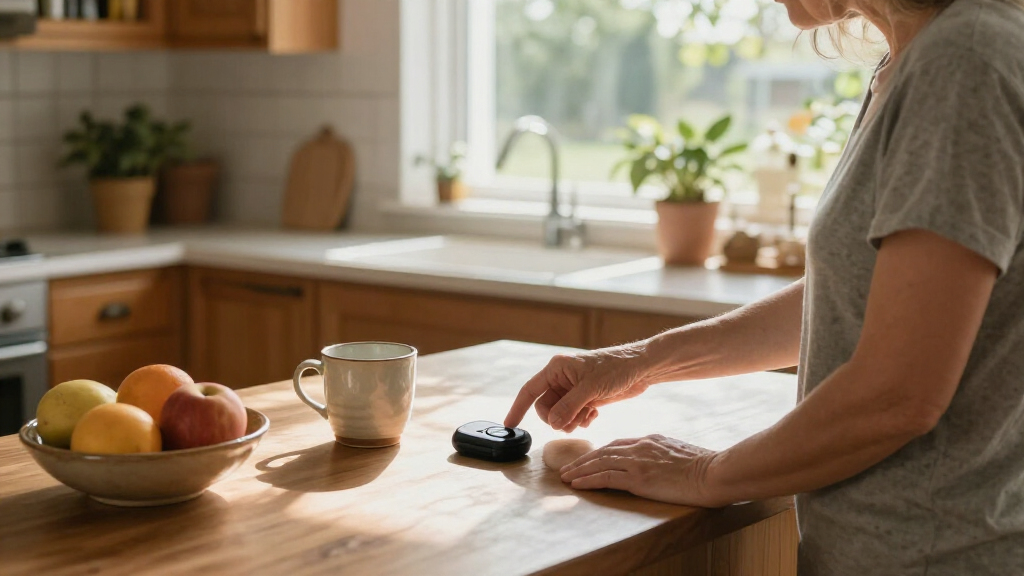
I compared these personal emergency response systems by the practical steps between an emergency and a person able to respond: what triggers an alert, where the device works, who receives the call, and whether two-way communication is available. I also weighed fall-detection availability, GPS or cellular connectivity, home-base dependence, water resistance, wearable format, setup demands, and the likely upkeep involved. For emergency devices, a clear alert path and a realistic match to the user’s routine matter more than a long feature list.
The ranking gives priority to usable coverage and clear communication, then to fit for particular needs such as landline use, direct 911 calling, or a wrist-worn design. That is why the ADT On-The-Go leads as a mobile all-in-one choice, while specialized systems rank for narrower situations rather than being treated as interchangeable. Product descriptions do not establish identical monitoring arrangements or coverage, so buyers should verify current service terms, network compatibility, and fall-detection limits before relying on any device.
| personal emergency response system | Water resistance |
|---|---|
| SecuLife Medical Alert Pendant | IP67 |
| PRNBRH App-Controlled Medical | — |
| SecuLife SOS Wristband with Fa | IP67 |
| Medical Guardian MGMini Medica | — |
| AtsCares Medical Alert System | — |
| Silent Beacon Bluetooth Person | IPX4 |
| LogicMark Guardian Alert 911 P | Water resistant |
| SmartGo 911 Emergency Communic | — |
| 911 Help Now Medical Alert Pen | — |
| ADT On-The-Go All-in-One Emerg | IP57 |
| Freedom Alert Landline Persona | — |
| Safety+ 4G Medical Alert Syste | Suitable for showers and rain |
| Lively Mobile2 Medical Alert D | Water resistant |
Factors to Consider When Choosing Personal Emergency Response Systems
Before choosing a device, I would start with the user’s daily routine and the exact route an alert takes. A system that looks feature-rich can still be a poor fit if it stays at home while the wearer goes out, is uncomfortable enough to be left behind, or calls a contact who cannot respond. These broader checks can help narrow the field beyond the individual product differences above.
Where Does Help Need to Be Available?
Decide whether protection is needed only inside the home, around the property, or during errands and travel. A base-station system can suit someone who spends most of the day at home, but its usefulness may depend on the wearable staying within the receiver’s reach. A mobile device with GPS and cellular connectivity can extend protection outside, though coverage depends on the relevant network and location. A common mistake is to choose a home unit for someone who regularly leaves the house alone. Check service coverage in the places the wearer actually visits, not just at the home address.
Who Answers the Alert, and What Happens Next?
“Calls for help” can mean different things: a monitoring center may answer, a device may call selected contacts, or it may place a direct call to 911. Those routes have different implications for response, availability, and the wearer’s ability to explain what happened. Ask whether the system supports two-way speech, whether contacts must be set up in advance, and what happens if nobody answers. Do not assume that an emergency pendant automatically includes a staffed monitoring service. Choose the alert path that fits the user’s communication needs and the support network available to them.
Is Fall Detection Worth Adding?
Fall detection may help when the wearer cannot press a button, but it is an aid rather than a guarantee that every fall will trigger an alert. Movement, device position, and the type of fall can affect detection, and an alert may still need someone to answer and respond. Consider whether the wearer can reliably press a button and whether a caregiver can check in through another route. Ask how automatic alerts are handled and whether the wearer can cancel a false alarm. Paying for this feature makes more sense when pressing a button may be difficult and the alert process is clear.
Will the Wearer Keep It On?
A pendant, wristband, and compact mobile unit can deliver similar peace-of-mind goals but feel very different in everyday use. Ask the wearer which form they will tolerate during meals, sleep, bathing, and time outdoors. Water resistance matters if the device is expected to stay on in wet areas, where falls can occur, but buyers should check the stated limits rather than assume waterproofing. A device left on a dresser cannot help during an emergency. Prioritize a comfortable, easy-to-operate format over extra functions the wearer is unlikely to use.
What Ongoing Setup and Upkeep Are Required?
Before buying, clarify whether the device needs a landline, cellular service, a smartphone app, a base station, or regular charging. Each dependency can create a different failure point: a depleted battery, changed phone settings, poor reception, or a disconnected home line. Ask who will install the system, test it, maintain emergency contacts, and help the wearer if settings change. For an older adult living alone, simple routines and a family member who can assist with setup may matter more than advanced controls. Verify plan terms and any continuing service requirements directly with the provider.
Does the System Fit the Person’s Support Network?
A device is only one part of an emergency plan. Consider who can reach the wearer, whether those people are available at different times of day, and whether the user can communicate clearly during a stressful call. A direct-to-911 pendant may suit someone who wants emergency services contacted without a personal contact list, while a contact-based setup may fit a household with nearby, responsive caregivers. Agree on what caregivers should do when they receive an alert, including how to check the home and when to call emergency services. Revisit the plan when living arrangements, health, or regular routines change.
Frequently Asked Questions
Should I choose a monitored system or one that calls 911 directly?
Choose based on who should receive the first alert and what support the wearer needs during a call. A monitored service may provide an intermediary who can assess the situation and contact responders or listed contacts, while a direct-911 device prioritizes reaching emergency services. Direct calling may be less suitable if the wearer may need help explaining their location or condition. A contact-based system can work well when reliable caregivers are available, but it depends on their ability to respond. Confirm the device’s actual call path and service terms before purchase.
Can a personal emergency response system work away from home?
Some mobile systems use cellular connectivity and GPS for alerts beyond the home, while many base-station systems are designed around a receiver in the house. A wearable by itself does not prove that it has mobile coverage or location sharing. Check network availability in the wearer’s regular destinations, including indoor areas where reception may be weaker. Ask whether GPS is shared with a responder or only used in a specific feature. If the wearer often goes out alone, prioritize verified mobile coverage over a home-range claim.
Is automatic fall detection reliable enough to replace pressing the help button?
No automatic fall-detection feature should be treated as a substitute for a working alert button or a broader safety plan. Detection may miss some falls or produce an alert when no emergency has occurred, and the device still needs a functioning connection and a response route. Learn how the system handles an alert and whether the wearer can speak with someone through it. If pressing a button may be difficult, fall detection can add another way to request help, but it should be one layer of protection rather than the only one. Review the provider’s stated limits and test the system as directed.
What should I check if the wearer has trouble using a smartphone or app?
Find out whether daily use depends on an app or whether the wearer can request help directly from the pendant, wristband, or base unit. App setup may be manageable for a caregiver, but ongoing permissions, contact changes, or phone updates can add maintenance. Look for a clear physical help control and an alert process that does not require the wearer to navigate a screen during an emergency. Ask who will manage setup and updates if the user cannot. A simpler device can be a better fit even if it offers fewer app-based features.
How can I tell whether a device is suitable for someone who lives alone?
Start by checking who receives an alert, whether two-way communication is available, and whether the system works in the rooms and locations the person uses. Consider whether the wearer can keep the device on, charge it, and activate it without assistance. A listed caregiver should be able to respond promptly, or the system should offer a clearly explained alternative response path. Test setup and alert procedures with the provider before relying on the device. Living alone makes a dependable routine and clear escalation plan as important as the wearable itself.
Conclusion
My best overall choice is the ADT On-The-Go All-in-One for shoppers seeking a mobile, all-in-one emergency option; the best value for a landline household is the Freedom Alert, provided its home-based setup matches the wearer’s routine. For a premium-style mobile feature set, compare Safety+ 4G with the GPS-equipped SecuLife options and confirm service details before deciding. The PRNBRH system is my best starting point for someone who wants a home receiver and straightforward alert controls, while the SecuLife SOS Wristband suits a wearer who prefers a wrist format to a pendant. For specific needs, choose the 911 Help Now when direct 911 calling is the priority, or Lively Mobile2 when a water-resistant wearable format is the deciding factor. The right pick is the one the wearer will keep on and whose alert route caregivers understand.