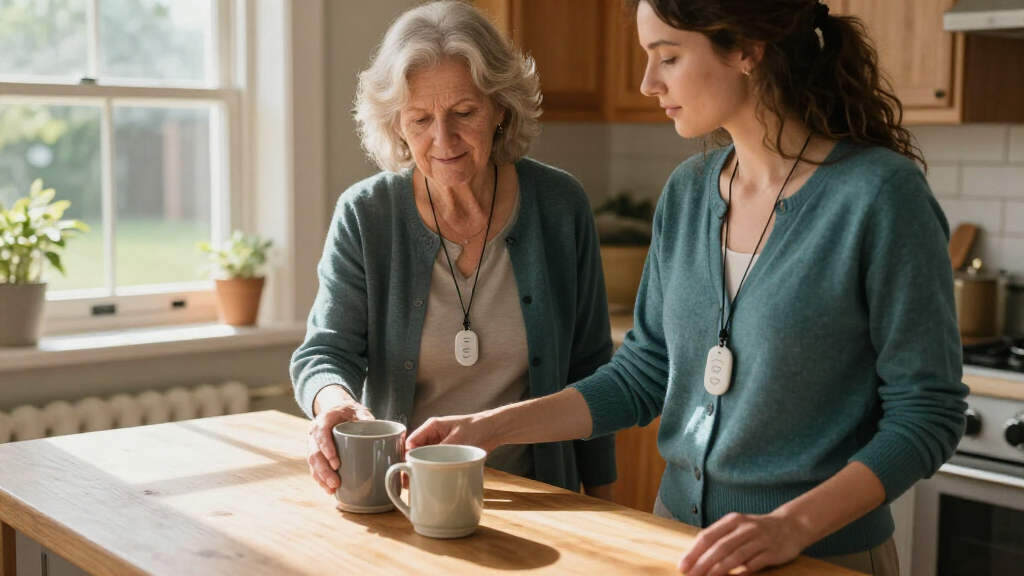

When a fall happens and the person can’t press a button, automatic fall detection is the feature that makes a medical alert system actually deliver on its promise. My top pick overall is the Bay Alarm Medical SOS Mobile GPS, which pairs dependable fall detection with nationwide GPS coverage and flexible monitoring plans at a reasonable monthly cost. Two standouts worth knowing early: the Medical Guardian MGMini is the most discreet wearable option I found, and the Seculife Smartband adds heart-rate monitoring and two-way calling on the wrist for buyers who want health tracking alongside emergency protection. The main tradeoffs in this category come down to monitored versus self-monitored systems (monthly fees versus no fees), wearable comfort versus detection accuracy, and whether you need at-home-only protection or GPS coverage outside the house. Keep reading for the full breakdown of all 13 systems and which one fits your situation best.

Turn quiet afternoons into listening time
- Thousands of audiobooks, podcasts and originals
- Listen on your phone, tablet or Echo — also offline
- Cancel anytime
Complete the kit


Key Takeaways
- Monitored systems like Bay Alarm Medical and Medical Guardian connect to a 24/7 emergency response center for a monthly fee, while self-contained devices like the Freedom Alert and Fall Detection Smart Watch call family members directly — the single biggest cost and reliability difference in this lineup.
- Fall detection accuracy varied most by form factor: pendants and dedicated medical bands (SecuLife Pendant, Nomo) tended to detect hard falls more reliably than multi-purpose smartwatches, which trade accuracy for extra features like video calling and heart-rate tracking.
- Water resistance matters more than most buyers expect — falls in the bathroom are among the most common, and only the water-resistant wrist options (Seculife Smartband, SOS Wristband) are practical to wear in the shower.
- GPS tracking divided the lineup sharply: on-the-go devices (Bay Alarm SOS Mobile, MGMini, ADT On-The-Go) protect active seniors outside the home, while landline-based systems like the Freedom Alert only work within the house.
- Caregiver apps (TurboSense, the Rose Gold GPS system, SecuLife options) turned out to be the deciding factor for long-distance family members, offering location history and alert notifications that basic pendants simply can’t match.
| Bay Alarm Medical SOS Mobile GPS Medical Alert System |  | Best Overall | Connectivity: 4G LTE | Location: GPS | Weight: Under 2 oz | VIEW LATEST PRICE | See Our Full Breakdown |
| Nomo Medical Alert System with Fall Detection for Seniors |  | Best Home Hub System | Included components: Smart Hub, two Satellite range extenders, wearable Tags | Connectivity: WiFi | Landline required: No | VIEW LATEST PRICE | See Our Full Breakdown |
| Medical Alert System for Seniors with GPS Tracking, SOS Button, and Caregiver App – Rose Gold |  | Best for Style-Minded Wearers | Color: Rose Gold | Networks: Verizon + AT&T 4G LTE | Battery life: Up to 5 days per charge | VIEW LATEST PRICE | See Our Full Breakdown |
| Medical Guardian MGMini Medical Alert Device for Seniors |  | Best Feature-Rich Mobile Pick | Model: MGMini | Battery life: 3 days per charge | Recharge time: 4 hours | VIEW LATEST PRICE | See Our Full Breakdown |
| ADT On-The-Go Emergency Medical Alert for Seniors, All-in-One |  | Best Brand-Trust Pick | Brand: ADT | Monitoring: 24/7 U.S.-based professional monitoring | GPS: Built-in | VIEW LATEST PRICE | See Our Full Breakdown |
| Seculife Medical Alert Smartband for Seniors with Fall Detection, GPS Tracking, Heart Rate Monitor, 2-Way Calling, SOS Button, Water-Resistant |  | Best for Health Monitoring Plus Fall Detection | Product Type: Medical Alert Smartband | Model: Seculife S16 | Fall Detection: Automatic | VIEW LATEST PRICE | See Our Full Breakdown |
| SecuLife Medical Alert Pendant for Seniors with Fall Detection, GPS Tracking, and 2-Way Calling |  | Best Battery Life in a Family-Connected Pendant | Product Type: Wearable medical alert pendant | Fall Detection: Automatic | Calling: 2-way cellular with hands-free auto-answer | VIEW LATEST PRICE | See Our Full Breakdown |
| Freedom Alert Landline Personal Emergency Device with 2-Way Call Pendant for Seniors |  | Best No-Fee Option for Home Use | Product Type: Landline personal emergency device | Connection: Landline phone service required | Communication: Two-way voice pendant | VIEW LATEST PRICE | See Our Full Breakdown |
| LIVELY Mobile2 Medical Alert Device with Fall Detection |  | Best Professional Monitoring On the Go | Connectivity: Cellular; no landline or base station required | Waterproof: Yes | Fall Detection: Optional add-on at $9.99/month | VIEW LATEST PRICE | See Our Full Breakdown |
| Medical Guardian MGMini Medical Alert Device for Seniors, Rose Gold |  | Best Compact Style Pick with 24/7 Monitoring | Color: Rose Gold | Monitoring: 24/7 team with two-way speaker | Location Features: Hourly location updates | VIEW LATEST PRICE | See Our Full Breakdown |
| TurboSense Wi-Fi Caregiver Alert System with App, Pendant and Wrist Button |  | Best No-Fee In-Home Option | Manufacturer: TurboSense | Connectivity: 2.4 GHz Wi-Fi | Included components: 1 waterproof call button, 1 SOS watch button, 1 receiver | VIEW LATEST PRICE | See Our Full Breakdown |
| Fall Detection Smart Watch for Seniors with GPS Tracking, SOS Alert, HD Video Call, IP67 Waterproof, 4G |  | Best Feature-Rich Smartwatch | Compatibility: iPhone and Android | Connectivity: 4G | Water resistance: IP67 | VIEW LATEST PRICE | See Our Full Breakdown |
| SecuLife SOS Wristband for Seniors with Fall Detection |  | Best for Simplicity-Minded Families | Brand: SecuLife | Design: Screen-free, one-button wristband | Water resistance: IP67 (splash resistant) | VIEW LATEST PRICE | See Our Full Breakdown |
| medical alert systems with fall detection | Connectivity | Water resistance |
|---|---|---|
| Bay Alarm Medical SOS Mobile G | 4G LTE | Water-resistant |
| Nomo Medical Alert System with | WiFi | — |
| Medical Alert System for Senio | — | Water-resistant, shower-safe |
| Medical Guardian MGMini Medica | — | — |
| ADT On-The-Go Emergency Medica | Nationwide cellular service | — |
| Seculife Medical Alert Smartba | GPS, GPRS; iOS and Android app | IP67 |
| SecuLife Medical Alert Pendant | — | IP67 waterproof |
| Freedom Alert Landline Persona | — | — |
| LIVELY Mobile2 Medical Alert D | Cellular; no landline or base station required | — |
| Medical Guardian MGMini Medica | — | — |
| TurboSense Wi-Fi Caregiver Ale | 2.4 GHz Wi-Fi | Waterproof call button |
| Fall Detection Smart Watch for | 4G | IP67 |
| SecuLife SOS Wristband for Sen | — | IP67 (splash resistant) |
More Details on Our Top Picks
Bay Alarm Medical SOS Mobile GPS Medical Alert System
This option stands out as the most balanced pick in the lineup because it does the fundamentals well without layering on costs for each feature. Compared with the Medical Guardian MGMini, the Bay device is lighter, works entirely on its own without a phone, and keeps things simple: one button, a trained operator, and GPS location if help is needed away from home. Where the MGMini leans on extras like step counting and hourly location pings, this one focuses on reliable one-press emergency response, which is what most families actually want from fall-risk protection. The tradeoff is that its automatic fall detection capability depends on the subscription plan you choose, and battery life fluctuates with signal conditions, so users in weak-coverage areas may want a home backup like the Nomo hub system.
Pros:- One-button connection to a trained emergency operator
- Works completely independently, no smartphone needed
- Under 2 oz with both lanyard and belt clip wearing options
- Caregiver app shows device and battery status
Cons:- Ongoing subscription required for full functionality
- Battery life varies with usage and cellular signal strength
Best for: Active seniors who leave the house regularly and want simple, reliable mobile protection with GPS
Not ideal for: Housebound users who never leave home — a dedicated home hub system like Nomo covers that scenario better
- Connectivity:4G LTE
- Location:GPS
- Weight:Under 2 oz
- Water resistance:Water-resistant
- Communication:Built-in two-way speaker
- Smartphone required:No
- Wear options:Lanyard or belt clip
- Subscription:Required
Our verdict“The most sensible all-around choice for seniors who want dependable mobile emergency coverage without unnecessary extras.”
Nomo Medical Alert System with Fall Detection for Seniors
Unlike every mobile pendant in this roundup, the Nomo is built to blanket an entire house rather than track a person outside it. The kit pairs a Smart Hub with two Satellite range extenders, so a fall in the basement or backyard corner still reaches the two-way voice system — coverage that single-device options like the Bay Alarm SOS Mobile simply can’t match indoors at range. Setup is genuinely plug-and-play over WiFi with no landline, which makes this pick better suited to families installing a system for a parent without technical help. The wearable Tags include fall detection as standard, not a paid add-on like the MGMini. The catch: once you step off the property, protection ends, and monitoring depends on both a stable WiFi connection and consistent tag wearing habits.
Pros:- Complete kit with hub, two range extenders, and wearable tags included
- Fall detection built into the wearable tags rather than sold separately
- Plug-and-play WiFi setup with no landline or wiring
- Caregiver notifications and 24/7 monitoring trial via the Nomo app
Cons:- Monthly subscription required after the 30-day trial
- Monitoring depends on home WiFi and the Nomo app
- Tags must be worn consistently or alerts can be missed
Best for: Seniors who spend most of their time at home and families who want whole-property coverage with caregiver notifications
Not ideal for: Seniors who drive, garden far from home, or take walks — this system’s protection stops at the edge of WiFi range
- Included components:Smart Hub, two Satellite range extenders, wearable Tags
- Connectivity:WiFi
- Landline required:No
- Installation:Plug-and-play
- Communication:Two-way voice through Smart Hub
- Monitoring:24/7 via RapidSOS through Nomo app
- Trial:30-day monitoring trial included
- Key features:Fall detection, panic button, emergency alerts, caregiver notifications
Our verdict“The strongest choice for full-home fall protection with included detection, as long as the user stays on the property.”
Medical Alert System for Seniors with GPS Tracking, SOS Button, and Caregiver App – Rose Gold
Most medical alert pendants look clinical, and that matters more than families expect — a device that gets left in a drawer protects no one. This rose gold model is the pick for seniors who resist wearing something that reads as medical equipment, and compared with the ADT On-The-Go, it delivers the same core package (GPS, one-button SOS, 24/7 monitoring) in a form people actually keep on. Coverage runs on both Verizon and AT&T 4G LTE networks, giving it a redundancy edge over single-carrier devices. The real tradeoff is structural: fall detection is an optional paid add-on rather than standard, and the pendant expects daily charging despite a multi-day battery rating — a habit some seniors will need help building. Families wanting detection included upfront should look at the Nomo kit instead.
Pros:- Attractive rose gold design that wearers actually keep on
- Dual-network coverage on Verizon and AT&T for better signal reliability
- Shower-safe water resistance for the highest-risk room in the home
- Caregiver app included for family peace of mind
Cons:- Fall detection costs extra on top of the base monitoring fee
- Pendant should be charged daily for dependable operation
Best for: Seniors who refuse traditional-looking medical devices and want nationwide mobile protection in a discreet, stylish pendant
Not ideal for: Buyers on a strict budget or anyone unwilling to add fall detection — without the add-on, this is only a manual SOS device
- Color:Rose Gold
- Networks:Verizon + AT&T 4G LTE
- Battery life:Up to 5 days per charge
- Water resistance:Water-resistant, shower-safe
- Fall detection:Optional paid add-on
- Monitoring:24/7 emergency monitoring, subscription required
- Key features:GPS tracking, SOS button, caregiver app
Our verdict“A smart pick for style-conscious seniors, provided the family budgets for the fall detection add-on.”
Medical Guardian MGMini Medical Alert Device for Seniors
The MGMini earns its spot by pairing emergency protection with wellness tracking that families genuinely use. Hourly location updates and step counting let adult children confirm a parent is moving normally between check-ins — context no other device in this batch provides, and something the Bay Alarm SOS Mobile doesn’t attempt. The three-day battery with a fast four-hour recharge beats most mobile competitors, and the U.S.-based monitoring team answers through a clear two-way speaker. Compared with the rose gold pendant, it’s the more capable device, but that capability comes at a cost: fall detection is the priciest add-on in the roundup, only one device can be active per member at a time, and weak cellular signal drains the battery faster than the stated runtime.
Pros:- Compact, discreet design wearable as a necklace or belt clip
- 24/7 access to trained U.S.-based monitoring operators
- 3-day battery life with a fast 4-hour recharge
- Hourly location updates and step counting via app or portal
Cons:- Fall detection carries the highest add-on cost in this lineup
- Battery life shortens in weak cellular coverage areas
- Only one device active per member at a time
Best for: Families who want location insights and activity data alongside emergency response for an active senior
Not ideal for: Budget-focused buyers — the fall detection add-on makes this the most expensive way to get protected here
- Model:MGMini
- Battery life:3 days per charge
- Recharge time:4 hours
- Wearing options:Lanyard or belt clip
- Fall detection:Optional paid add-on
- Monitoring:24/7 U.S.-based, subscription required after 1-month trial
- Key features:SOS button, two-way speaker, hourly location updates, step counting
Our verdict“The best choice for families who value ongoing location and activity visibility, not just emergency button presses.”
ADT On-The-Go Emergency Medical Alert for Seniors, All-in-One
ADT’s name carries weight with a lot of seniors, and this device leans on that reputation while removing a common failure point: nothing to wear, charge separately, or lose. Every pendant and wristband in this roundup — from the SecuLife pendant to the MGMini — is useless if it’s forgotten on a nightstand, and the all-in-one design sidesteps that entirely. Protection follows the user anywhere with built-in GPS and nationwide cellular service, backed by 24/7 U.S.-based ADT monitoring agents. The flexible no-contract plans also make it a low-commitment entry point compared with lock-in alternatives. Two caveats temper the appeal: automatic fall detection is an extra monthly cost and, like all such technology, won’t catch every fall, and the device needs phone activation before first use, which requires a helper for less tech-comfortable seniors.
Pros:- All-in-one design with no pendants or accessories to wear or replace
- 24/7 access to ADT’s established U.S.-based monitoring network
- Built-in GPS and nationwide cellular coverage for use anywhere
- Flexible plans with no long-term contracts
Cons:- Automatic fall detection costs extra and cannot detect 100% of falls
- Requires phone activation before the device works
Best for: Seniors who trust the ADT name and want a single device with nothing extra to wear, pair, or keep track of
Not ideal for: Anyone unwilling to pay extra for fall detection — without that add-on this covers button-press emergencies only
- Brand:ADT
- Monitoring:24/7 U.S.-based professional monitoring
- GPS:Built-in
- Connectivity:Nationwide cellular service
- Accessories required:None — no pendants or wristbands
- Fall detection:Optional, additional monthly cost
- Contract:No long-term contracts
- Activation:Phone activation required; monthly plan needed
Our verdict“The right pick for brand-loyal buyers who want maximum simplicity, as long as they add fall detection to the plan.”
Seculife Medical Alert Smartband for Seniors with Fall Detection, GPS Tracking, Heart Rate Monitor, 2-Way Calling, SOS Button, Water-Resistant
This option stands out for combining fall detection with everyday wellness tracking — heart rate, blood oxygen, and body temperature sit alongside SOS calling in one wristband. Compared with the SecuLife Pendant, the touchscreen smartband trades battery life for information: roughly one day per charge versus the pendant’s six. Alerts route directly to family through the Secupro app, which cuts out the call center entirely, but it also means a smartphone-dependent setup that won’t suit every household. Geofencing and location history make this pick make the most sense for active seniors whose families want passive health insights, not just emergency coverage. The IP67 rating handles showers and handwashing, though it’s not built for extended submersion.
Pros:- Combines fall detection with heart rate, blood oxygen, and temperature tracking
- Direct-to-family alerts through the Secupro app with geofencing and location history
- Hands-free auto-answer for effortless two-way calls
- Senior-friendly touchscreen interface with a dedicated SOS button
Cons:- Battery lasts only about one day, requiring nightly charging
- Family monitoring depends entirely on a compatible smartphone and app
- Subscription required for the core safety features
Best for: Active seniors and families who want continuous health metrics and GPS oversight alongside emergency fall alerts
Not ideal for: Seniors who dislike nightly charging or families without a smartphone to run the caregiver app
- Product Type:Medical Alert Smartband
- Model:Seculife S16
- Fall Detection:Automatic
- Water Resistance:IP67
- Health Metrics:Heart rate, blood oxygen, body temperature
- Battery Life:Approximately 1 day (680 mAh)
- Connectivity:GPS, GPRS; iOS and Android app
- Subscription:Required, from $25 per month
Our verdict“This is the pick for families who want a fitness-band-style wearable that watches vitals and location as closely as it watches for falls.”
SecuLife Medical Alert Pendant for Seniors with Fall Detection, GPS Tracking, and 2-Way Calling
Where the Seculife Smartband demands nightly charging, this pendant stretches to up to six days per charge — a meaningful difference for seniors who shouldn’t have to remember a daily routine. Like its smartband sibling, it skips the call center and sends fall alerts straight to family contacts via cellular two-way calling with auto-answer. The IP67 waterproofing means it can stay on in the shower, which is where many falls happen. The tradeoff is simplicity over insight: no heart-rate or temperature data here, just location tracking with geofencing and a year of location history. A $20 monthly subscription applies despite the no contract framing, and like most fall detection in this category, occasional false alarms are possible.
Pros:- Up to 6 days of battery life with 24-hour interval tracking
- IP67 waterproof for continuous wear including showering
- Direct-to-family alerts with no call center intermediary
- Real-time GPS with geofencing and 1-year location history
Cons:- $20/month subscription still required despite no-contract claim
- Fall detection can trigger false alarms, common across the category
Best for: Seniors who want shower-safe, week-long wear between charges and family members who prefer handling alerts themselves
Not ideal for: Buyers who want a professional monitoring center rather than relying on family members to respond
- Product Type:Wearable medical alert pendant
- Fall Detection:Automatic
- Calling:2-way cellular with hands-free auto-answer
- GPS Tracking:Real-time with geofencing; 1-year location history
- Water Resistance:IP67 waterproof
- Battery Life:Up to 6 days
- Subscription:$20/month, no contract
Our verdict“Families who self-monitor and want minimal charging fuss get the best endurance here without giving up GPS or fall detection.”
Freedom Alert Landline Personal Emergency Device with 2-Way Call Pendant for Seniors
In a lineup full of monthly subscriptions, this is the only pick with zero recurring fees — the tradeoff is that it lives on a landline connection and works only around the house. Compared with the LIVELY Mobile2, which goes anywhere on cellular, the Freedom Alert is strictly a home solution, but it costs nothing beyond the hardware and lets users reach family or 911 directly with two-way voice from the pendant. There’s no automatic fall detection here, so it suits seniors who can still press a button rather than those relying on hands-free emergency triggering. The rechargeable base includes a 24-hour battery backup for outages, and the pendant can be worn or docked on its mount near a bed or favorite chair.
Pros:- No monthly monitoring fees of any kind
- Two-way voice contact with family or emergency services from the pendant
- Rechargeable base with 24-hour battery backup
- Pendant can be worn or mounted within easy reach
Cons:- Requires an existing landline phone service
- Home-only coverage with no GPS or cellular mobility
- No automatic fall detection — help depends on a button press
Best for: Homebound seniors with an existing landline who can press a button and want no monthly costs
Not ideal for: Active seniors who leave the house, or anyone relying on automatic fall detection rather than a manual button press
- Product Type:Landline personal emergency device
- Connection:Landline phone service required
- Communication:Two-way voice pendant
- Form Factor:Wearable pendant with mount
- Power:Rechargeable with 24-hour battery backup
- Monthly Fees:None
Our verdict“This is the budget-friendly choice for a landline household where the senior stays home and can still summon help manually.”
LIVELY Mobile2 Medical Alert Device with Fall Detection
This model takes the opposite approach from the SecuLife products: instead of alerting family members directly, it connects to certified urgent response agents around the clock, so a trained professional — not a relative who might be unavailable — handles the emergency. That model suits seniors whose families live far away or can’t guarantee a fast response. It works anywhere on cellular with no landline or base station, and the waterproof build survives the shower and rain. The catch is cost stacking: fall detection is an add-on at $9.99/month on top of the required service plan, making it pricier over time than the Freedom Alert’s no-fee approach. The included fall detection lanyard at least means the device rides where a fall is most likely to leave someone unable to press a button.
Pros:- 24/7 access to certified urgent response agents, not just family contacts
- Works anywhere on cellular with no landline or base station
- Waterproof for shower, pool, and rain wear
- Automatic fall detection summons help even if the button can’t be pressed
Cons:- Fall detection costs an additional $9.99/month on top of the required plan
- Ongoing service subscription is mandatory
- No built-in health metrics like the Seculife Smartband offers
Best for: Seniors without nearby family who want 24/7 trained responders and anywhere-in-the-country coverage
Not ideal for: Budget-focused buyers who want to avoid ongoing subscription stacking, since both the base plan and fall detection cost extra
- Connectivity:Cellular; no landline or base station required
- Waterproof:Yes
- Fall Detection:Optional add-on at $9.99/month
- Monitoring:24/7 certified urgent response agents
- Included Accessories:Fall detection lanyard
- Service Plan:Required
Our verdict“Seniors who want a professional on the other end of every alert — anywhere they go — will find this the most reassuring mobile option.”
Medical Guardian MGMini Medical Alert Device for Seniors, Rose Gold
Compared with the LIVELY Mobile2’s utilitarian look, the MGMini’s rose gold finish and compact body make it the most wearable-by-choice option among the professionally monitored picks — it reads more like an accessory than a medical device. It links to Medical Guardian’s 24/7 monitoring team via two-way speaker and offers hourly location updates plus step counting, a light activity layer the Freedom Alert can’t touch. The costs add up quickly, though: monitoring runs $43.95/month after the trial, and fall detection tacks on another $10, making it the most expensive ongoing commitment in this batch. Battery life is a reasonable three days with a four-hour recharge, though it drains faster where cellular signal is weak. Lanyard and belt clip wearing options add flexibility for seniors who dislike neck pendants.
Pros:- Compact, attractive rose gold design seniors are more likely to actually wear
- 24/7 monitoring team with clear two-way speaker communication
- Hourly location updates and step counting for added family insight
- Both lanyard and belt clip included for wearing flexibility
Cons:- $43.95/month monitoring fee plus $10/month extra for fall detection
- Requires activation and a paid subscription before it functions
- Battery life varies with network and cellular signal strength
Best for: Style-conscious seniors who want a discreet, professionally monitored device they’ll actually wear every day
Not ideal for: Cost-sensitive buyers — the combined monitoring and fall detection fees are the highest recurring costs here
- Color:Rose Gold
- Monitoring:24/7 team with two-way speaker
- Location Features:Hourly location updates
- Activity Tracking:Step counting
- Battery Life:Up to 3 days; 4-hour recharge
- Included Accessories:Lanyards and belt clip
- Subscription:$43.95/month after trial; fall detection $10/month extra
Our verdict“If ongoing cost is secondary to a discreet look and professional monitoring, this is the most wearable way to stay protected.”
TurboSense Wi-Fi Caregiver Alert System with App, Pendant and Wrist Button
This option stands out as the only pick in the lineup with zero ongoing cost, which completely changes the math for families on a budget. It works like a wireless doorbell for emergencies: a waterproof pendant, a wrist button, and a receiver that chimes while pushing notifications to a caregiver app over 2.4 GHz Wi-Fi. Compared with the SecuLife SOS Wristband, there’s no $25 monthly bill — but that savings comes with a hard limit. This system alerts caregivers rather than detecting falls or contacting emergency services, so it only works when a family member is within Wi-Fi range and able to respond. Think of it as a summoning tool, not a lifeline to 911.
Pros:- No monthly fee or subscription of any kind
- Two wearable buttons (pendant and wrist) plus a receiver included
- Waterproof call button works in wet areas like bathrooms
- App notifications extend alerts beyond the audible chime
Cons:- Requires 2.4 GHz Wi-Fi for app notifications to function
- No fall detection and no emergency dispatch — it only notifies caregivers
- Limited to home use, unlike GPS-equipped mobile options
Best for: Seniors living with or near family caregivers who mainly need a quick way to call for help inside the home without monthly fees
Not ideal for: Seniors living alone or at risk of falls — there is no automatic fall detection and no connection to emergency services
- Manufacturer:TurboSense
- Connectivity:2.4 GHz Wi-Fi
- Included components:1 waterproof call button, 1 SOS watch button, 1 receiver
- Button use:Necklace, wrist button, or placed near care areas
- Water resistance:Waterproof call button
- Battery:1 lithium-ion battery (included)
- Monthly fee:None
Our verdict“A budget-friendly in-home summoning system for seniors with attentive caregivers, not a substitute for true fall detection.”
Fall Detection Smart Watch for Seniors with GPS Tracking, SOS Alert, HD Video Call, IP67 Waterproof, 4G
This is the most feature-dense device in this roundup, pairing automatic fall detection with GPS, geo-fencing, 4G video calling, and health tracking. Compared with the screen-free SecuLife SOS Wristband, the large touchscreen adds real utility: seniors can see who’s calling, check their stats, and use video calls without ever touching a smartphone. The included SIM with a year of free data softens the ongoing-cost issue that plagues subscription devices — though a voice plan still requires swapping in a standard SIM. The tradeoff is complexity. Families comfortable with app setup and charging routines will get the most from it; anyone wanting a press-one-button-and-done device may find the menu-driven interface frustrating.
Pros:- Automatic fall detection sends SOS alerts to preset emergency contacts
- Real-time GPS with geo-fencing helps families respond to wandering
- 4G HD video calls work without a separate smartphone
- IP67 waterproof with magnetic charging for easier daily use
Cons:- Pre-installed data-only SIM doesn’t support voice calls without adding a voice SIM
- Blood pressure readings are reference-only, not medical-grade
- Caregiver monitoring depends entirely on app setup and maintenance
Best for: Tech-comfortable seniors and their families who want fall detection, GPS wandering protection, and video calling in a single wearable
Not ideal for: Seniors who struggle with touchscreens or regular charging — the feature set depends on daily interaction and app-based caregiver setup
- Compatibility:iPhone and Android
- Connectivity:4G
- Water resistance:IP67
- Display:Large high-contrast touchscreen
- Charging:Magnetic charging cable
- SIM card:Pre-installed data-only SIM with one year of free data
- Location tracking:Real-time GPS with geo-fencing
- Safety features:Fall detection and SOS alert
- Health monitoring:Heart rate, blood pressure reference, sleep tracking, pedometer, sedentary reminder
Our verdict“The pick for families who want a full-featured senior smartwatch with fall detection and GPS, provided they can handle the setup and charging demands.”
SecuLife SOS Wristband for Seniors with Fall Detection
This wristband takes the opposite approach from the Fall Detection Smart Watch: instead of a touchscreen loaded with features, it’s a screen-free, one-button device that does a few things extremely well. Falls are detected automatically, SOS calls go directly to family members with no call center intermediary, and the Secupro app gives caregivers GPS tracking, geofencing, and a full year of location history. That direct-to-family model means faster, more personal responses than monitored services like the Bay Alarm Medical SOS Mobile — but also no professional backup if no one answers. The $25 monthly subscription stings compared with fee-free options like the TurboSense, though it’s comparable to what monitored services charge.
Pros:- Alerts route directly to family with no call center intermediary
- One-button design with automatic fall detection requires no tech skill
- Real-time GPS and geofencing with 1-year location history
- IP67 waterproof for everyday wear including showers
Cons:- Requires a $25/month subscription
- No screen limits functionality and feedback for users
- No professional monitoring backup if family can’t respond
Best for: Seniors who want zero-friction operation and families who prefer handling alerts themselves rather than routing through a monitoring center
Not ideal for: Seniors without an active family support network, since there’s no call center fallback, or anyone unwilling to pay the monthly subscription
- Brand:SecuLife
- Design:Screen-free, one-button wristband
- Water resistance:IP67 (splash resistant)
- Subscription:$25 per month
- Location history:1 year
- Safety features:Automatic fall detection, one-button SOS, 2-way hands-free calling with spam blocking
- Companion app:Secupro for caregiver monitoring of safety, location, and health
- Warranty:1 year
Our verdict“The simplest fall-detection wearable here, ideal for seniors whose families can serve as their own monitoring team.”
How We Picked
I evaluated each system through the lens that actually matters for fall detection: whether it gets help when the wearer can’t ask for it. That meant judging detection method (accelerometer-based automatic detection versus button-press only), response pathway (24/7 monitoring center, direct family calling, or caregiver app notification), and coverage area (landline-only, cellular at home, or GPS nationwide). I also weighed wearability, since a device that gets taken off because it’s uncomfortable or not shower-safe is a device that fails when it counts.
The ranking favors systems that balance detection reliability with total cost of ownership. Monitored devices with monthly fees ranked higher when their fall detection and GPS performance justified the ongoing expense, while fee-free self-monitored options earned their positions by offering genuine protection for families who can respond themselves. Battery life, false-alarm reputation, two-way talk quality, and caregiver software rounded out the comparison, because those details determine whether a system works in real emergencies rather than just on paper.
| medical alert systems with fall detection | Water resistance |
|---|---|
| Bay Alarm Medical SOS Mobile G | Water-resistant |
| Nomo Medical Alert System with | — |
| Medical Alert System for Senio | Water-resistant, shower-safe |
| Medical Guardian MGMini Medica | — |
| ADT On-The-Go Emergency Medica | — |
| Seculife Medical Alert Smartba | IP67 |
| SecuLife Medical Alert Pendant | IP67 waterproof |
| Freedom Alert Landline Persona | — |
| LIVELY Mobile2 Medical Alert D | — |
| Medical Guardian MGMini Medica | — |
| TurboSense Wi-Fi Caregiver Ale | Waterproof call button |
| Fall Detection Smart Watch for | IP67 |
| SecuLife SOS Wristband for Sen | IP67 (splash resistant) |
Factors to Consider When Choosing Medical Alert Systems With Fall Detection
Choosing among medical alert systems with fall detection comes down to a handful of decisions that shape everything else: who responds to an alert, where the device works, and how it’s worn. Before committing to any single product, work through the factors below — they explain most of the price differences across this category and help you avoid the most common buying mistakes.
Monitored vs. Self-Monitored: Who Actually Responds
The single most consequential decision is whether an alert routes to a professional monitoring center or directly to family members. Monitored services employ trained agents around the clock who can assess the situation and dispatch EMS, which matters enormously if your emergency contacts work full-time, live far away, or are themselves elderly. The tradeoff is a monthly subscription that continues for as long as you own the device. Self-monitored systems eliminate recurring fees by calling or texting pre-programmed family numbers instead, but they depend entirely on someone answering — a missed call during a meeting can mean a delayed response. A common mistake is choosing the fee-free option without honestly asking whether the listed contacts can reliably pick up at 3 a.m. If they can’t, the subscription cost buys something no app can replicate.
Fall Detection Technology and Its Limits
Automatic fall detection uses accelerometers and gyroscopes to sense the sudden acceleration and impact of a fall, then triggers an alert without any button press. What marketing rarely mentions is that no fall detection is 100% accurate — abrupt sitting, or a slow slide to the floor, can be missed, while jarring movements can trigger false alarms. Devices that let you cancel a false alert within a grace window (typically 30–60 seconds) are far more pleasant to live with. Detection also tends to work best when the sensor sits on the torso or wrist in a consistent position, which is why pendant and wristband designs outperform loose-fitting smartwatches here. Treat fall detection as a powerful backup, not a replacement for the button itself.
Coverage Area: Home-Only vs. On-the-Go GPS
Landline and Wi-Fi base systems cover only the house and immediate yard, which is adequate for homebound users but useless at the grocery store or on a walk. Cellular GPS devices work anywhere with mobile coverage and let responders pinpoint location — a genuine lifesaver for active seniors who drive, garden, or travel. The tradeoffs are real: GPS devices need charging every one to two days, they depend on cellular signal strength, and their monthly plans cost more. A surprisingly common mistake is overbuying GPS capability for someone who rarely leaves home, then dealing with the charging burden for coverage they never use. Match the coverage type to how the person actually spends their week.
Wearability, Water Resistance, and Battery Reality
A device only works if it’s being worn, and the data on senior falls makes this urgent: bathroom falls are among the most frequent and most serious, yet many pendants must be removed before showering. Wrist-worn, water-resistant options solve this but tend to be bulkier and easier to forget than a pendant that stays around the neck. Battery life follows a similar honesty test — manufacturers quote best-case figures, and GPS plus fall detection running together drains cells faster than advertised. Look for low-battery alerts pushed to caregivers rather than relying on the wearer to notice. The most comfortable device is the one that stays on the body through a shower and an overnight fall.
Caregiver Features and Family Oversight
For long-distance family members, the caregiver app can matter as much as the emergency features. Location history, geofencing alerts when someone wanders beyond a set radius, battery notifications, and daily activity check-ins give families visibility without hovering. Some systems also offer wellness checks and medication reminders, which reduce the number of separate devices on the wrist. The mistake to avoid is assuming all apps are equal — some are polished and reliable, others are afterthoughts that crash or delay notifications. If a family caregiver is the primary safety net, weight app quality heavily in your decision.
Total Cost of Ownership Over Five Years
Comparing sticker prices across this category is nearly meaningless because the real cost lives in the monthly plan. A device that looks affordable up front can cost several times a fee-free alternative once you total three to five years of monitoring. Conversely, a higher-priced device with no subscription can be the cheaper long-term play for families who self-monitor. Also check whether fall detection is included in the base plan or costs extra each month — several major providers charge a premium just to activate it. Contract terms, cancellation policies, and spouse coverage on a shared plan all shift the math. Run the five-year total before you commit.
Frequently Asked Questions
Do I still need to press the SOS button if my device has fall detection?
Yes, and treating them as a pair is the safest mindset. Automatic fall detection misses a meaningful percentage of real falls — particularly slow slides, faints against a wall, or falls where the device doesn’t experience a sharp impact. The SOS button remains the most reliable way to summon help, while fall detection serves as the backup for moments when the wearer is unconscious, disoriented, or unable to move. When comparing products, check whether the fall detection feature costs extra on the monitoring plan, because some providers charge a monthly premium for it while others include it in the base rate. The best systems make canceling a false alarm easy through a grace period or two-way voice check-in.
Can a fall detection device work without a monthly subscription?
Some can, but you’re trading professional response for family response. Self-monitored devices like the Freedom Alert or certain smartwatch-style systems call pre-programmed numbers directly with no ongoing fees, which works well if your contacts are dependable and nearby. The catch is that help only arrives if someone answers, and family members may be unreachable, far away, or unsure whether to call 911. Monitored systems route alerts to a staffed response center that can dispatch emergency services regardless of whether family picks up. If budget is the constraint, a self-monitored device is far better than nothing — just be honest about who is really on the other end of that call.
Are fall detection smartwatches a good substitute for a dedicated medical alert system?
For some buyers, yes — but with clear compromises. Smartwatches like the Fall Detection Smart Watch in this lineup add GPS, video calling, and fitness tracking in a familiar form factor, which encourages daily wear. Their weaknesses are battery life measured in days rather than the weeks or months dedicated pendants achieve, and fall detection tuned for general use rather than medical-grade response. Some models also route alerts through an app rather than a certified monitoring center. A dedicated medical alert device remains the stronger choice for someone with serious fall risk or a heart condition, while a smartwatch suits an active senior who wants a safety net plus everyday features.
What happens if the device detects a fall that didn’t happen?
False alarms are a normal part of life with fall detection, and how a system handles them determines whether it’s livable. Most devices trigger a countdown — typically 30 to 60 seconds — during which the wearer can cancel by pressing a button or confirming through two-way talk that they’re fine. If the countdown expires, the alert goes to the monitoring center or family contacts, who will verify before dispatching anyone. Persistent false alarms are worth reporting to the manufacturer, since some devices can be recalibrated, and wearing the device in the recommended position reduces them considerably. Don’t let fear of false alarms push you toward a button-only device if the wearer has genuine fall risk.
Should I choose a pendant, wristband, or smartwatch style?
Form factor should follow the wearer’s habits above all else. Pendants stay on the body reliably and resist being forgotten, but many must be removed for showering — exactly when falls are most likely. Wristbands are shower-friendly and comfortable but can be taken off at night or forgotten on a nightstand. Smartwatches encourage consistent wear because they look like ordinary watches, yet they demand near-daily charging, and a dead battery at 2 a.m. is a silent failure. If the person has ever resisted wearing a device, choose whichever style they’ll genuinely keep on — an uncomfortable device with perfect specs protects no one.
Conclusion
After comparing all 13 systems, the right choice depends almost entirely on who will respond and where the wearer spends their days. For best overall protection, the Bay Alarm Medical SOS Mobile GPS combines automatic fall detection, nationwide GPS, and professional monitoring with flexible plans — the strongest all-around package in this lineup. The Medical Guardian MGMini is my pick for best premium wearable, delivering discreet protection that active seniors will actually keep on. For best value, the SecuLife Pendant and Nomo system deliver fall detection and GPS without premium-brand pricing, while the Freedom Alert is the standout no-monthly-fee option for homebound users with responsive family nearby. Beginners who want simple setup with family oversight should start with the TurboSense Wi-Fi system or the Rose Gold GPS system, both of which lean on intuitive caregiver apps. For specific needs, the Seculife Smartband covers shower-safe wrist wear with heart-rate tracking, and the Fall Detection Smart Watch suits tech-comfortable seniors who want video calling and fitness features alongside SOS protection. Whatever you choose, prioritize the device that will be worn every hour of every day — that, more than any spec sheet, is what determines whether it works when it matters.
Evergreen bestsellers Picks
bestsellers
As an affiliate, we earn on qualifying purchases.