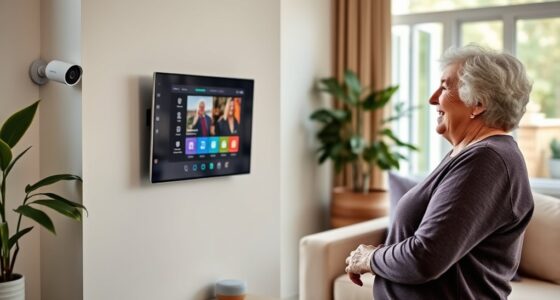
Smart locks are perfect for older adults and caregivers because they’re easy to operate with simple interfaces, voice commands, and biometric options, reducing the need for keys. They enhance security by providing real-time alerts, remote access, and temporary codes for visitors. With features like automatic locking and activity logs, you stay informed and in control. Keep exploring how these features can make managing home security more convenient and safe for everyone involved.
Prime for Young Adults — start your free trial
Fast free delivery, streaming and member deals for eligible 18–24 year olds.
As an affiliate, we earn on qualifying purchases.
Key Takeaways
- Easy-to-use interfaces and keyless entry options simplify access for seniors and caregivers.
- Remote management allows caregivers to control and monitor locks from anywhere, enhancing safety.
- Enhanced security features, like alerts and activity logs, help prevent unauthorized access.
- Compatibility and straightforward installation ensure reliable operation without complex modifications.
- Customizable access permissions and temporary codes provide flexible, secure control for visitors and caregivers.
As an affiliate, we earn on qualifying purchases.
What Are Smart Locks and Why Are They Important for Older Adults?
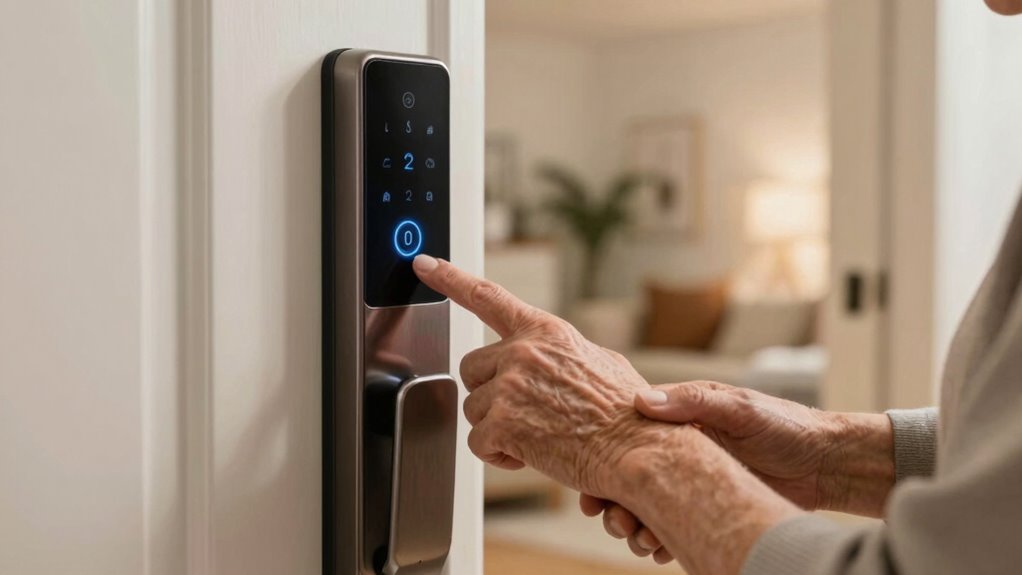
Smart locks are digital locks that allow you to control access to doors electronically, often through smartphones or keypads. When considering smart lock installation for an older adult, ease of use is essential. Many models feature simple interfaces and keyless entry, making access straightforward. Battery life is also vital; a good smart lock offers long-lasting batteries, so you don’t worry about frequent replacements. Some locks even send alerts when battery levels are low, ensuring continuous security and access. These features make smart locks especially valuable for older adults who may have difficulty handling traditional keys or remembering combinations. By choosing a model with reliable battery life and easy installation, you help promote independence and peace of mind for both seniors and their caregivers. Additionally, understanding the digital concepts behind smart locks can help users better utilize their features and maintain security. Knowing how smart lock technology works can help users troubleshoot issues and maximize their security benefits, especially when considering features such as battery monitoring and remote access. Familiarity with home security systems can further enhance the safety and convenience offered by smart locks. Furthermore, incorporating knowledge of electric power generation with bike generators can inspire sustainable energy solutions for homes and communities.
How Do Smart Locks Enhance Safety and Security at Home?
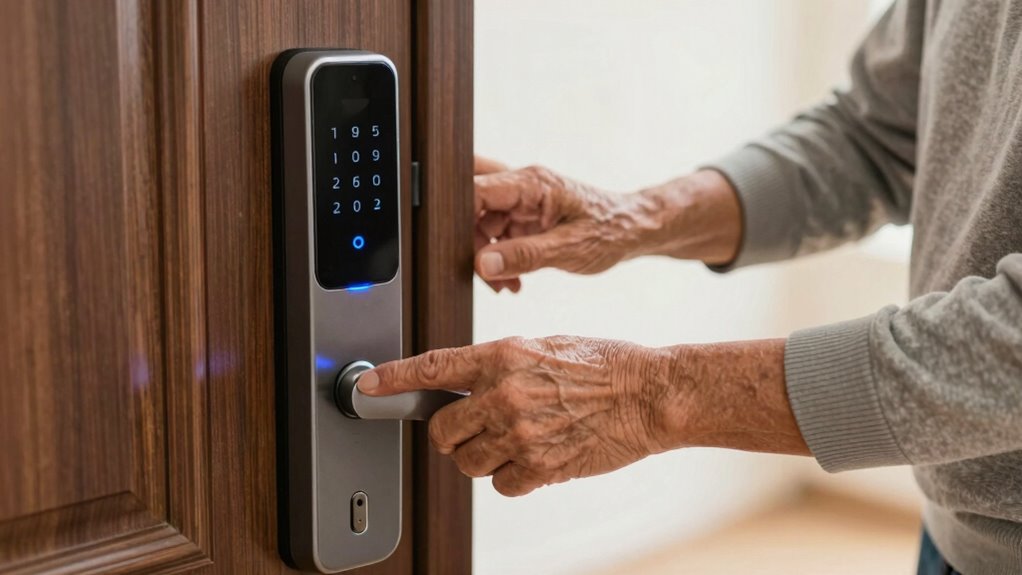
Smart locks give you better control over who can access your home, preventing unauthorized entry. They also allow you to monitor security in real time, so you always know what’s happening outside your door. This combination makes your home safer and more secure for everyone.
Enhanced Access Control
| Method | Description |
|---|---|
| Voice recognition | Opens with your unique voice command |
| Biometric authentication | Uses fingerprint or facial recognition |
| Smartphone app | Remote access with secure login |
| Smart locks often include automatic locking features, which add an extra layer of security by ensuring doors are always securely closed. Additionally, home automation can be integrated to monitor and control these features remotely, enhancing overall safety.
Real-Time Security Monitoring
Real-time security monitoring is a key feature that allows you to keep a constant eye on your home’s safety. With smart locks integrated into your home automation system, you can receive instant alerts when someone secures or unsecures the door. This immediate feedback helps you detect unauthorized access or suspicious activity early. You can also monitor activity remotely through your smartphone, giving you peace of mind whether you’re at work or away. Additionally, choosing smart locks with up-to-date security features ensures that your data remains protected from potential breaches. Incorporating natural pool technology and eco-friendly practices can also enhance overall home safety by reducing chemical use and promoting a healthier environment. However, privacy concerns may arise since real-time data sharing can expose sensitive information. It’s important to choose reputable smart lock brands that prioritize security and data encryption. By leveraging real-time security monitoring, you enhance your home’s safety while maintaining control over who enters and when, making your environment safer for older adults and caregivers alike. Understanding the importance of home automation and security protocols can further improve your safety strategy.
Key Features That Make Smart Locks Easy for Seniors to Use
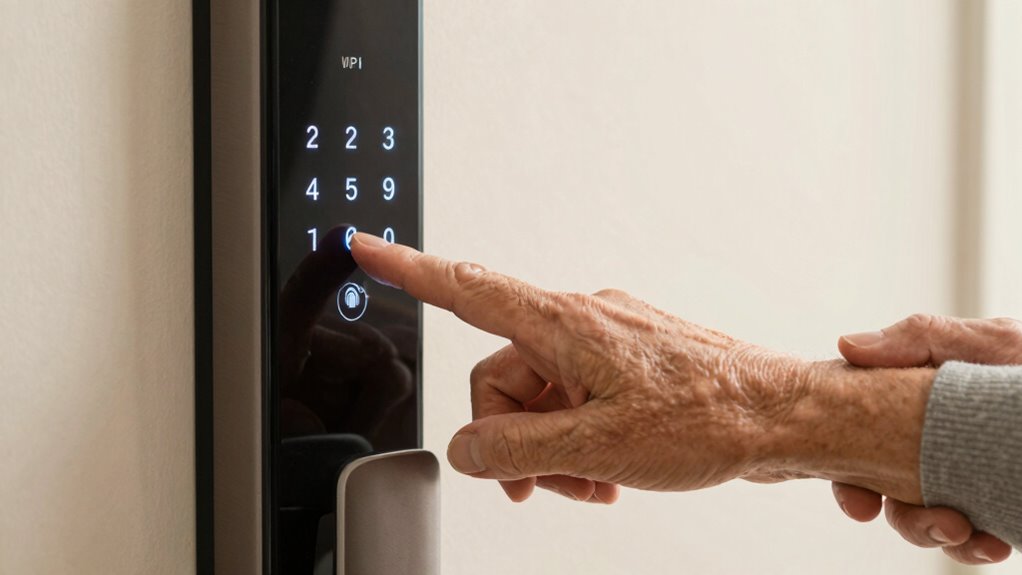
To guarantee seniors can use smart locks comfortably, manufacturers focus on key features that prioritize simplicity and accessibility. Easy smart lock installation is vital, so most models are designed for quick setup without complex tools or steps. Clear instructions and intuitive interfaces help seniors understand how to operate the lock confidently. Additionally, smart locks with long-lasting batteries reduce the need for frequent battery maintenance, which can be confusing or inconvenient. Some models include low-battery alerts, so users or caregivers are notified before power runs out. These features ensure the lock remains reliable and user-friendly, minimizing frustration. Proper battery management, including understanding power consumption, further enhances user experience and trust in the device. Incorporating battery life optimization strategies can also extend the usability of smart locks without frequent replacements, adding to their practicality for seniors.
How Caregivers Can Manage Access Remotely and Securely
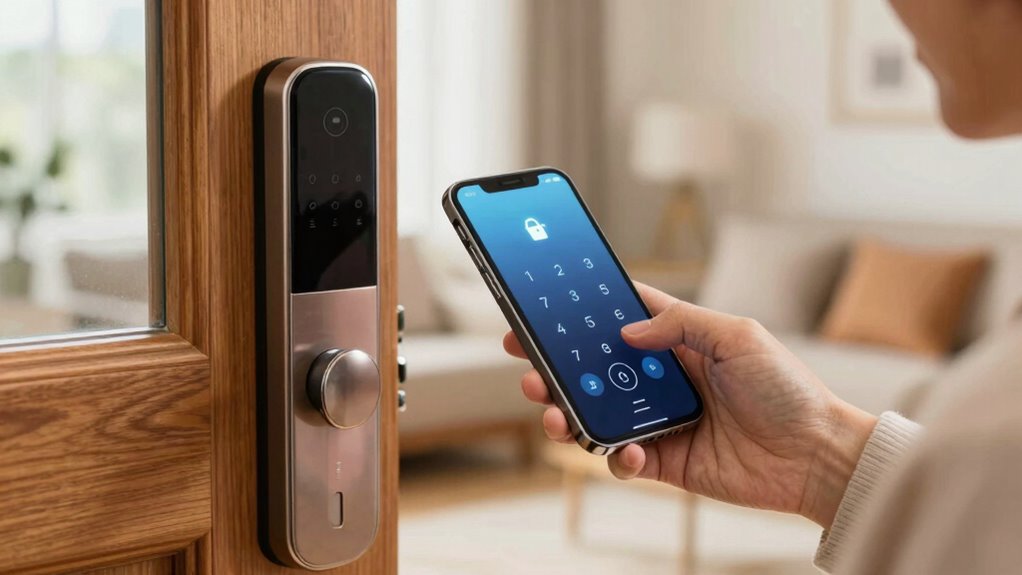
Caregivers can manage access remotely and securely by using smart locks that offer mobile control features. With remote management, you can gain entry or lock doors from anywhere, ensuring your loved one’s safety without being physically present. This feature is especially helpful if you need to grant access quickly or respond to emergencies. Smart locks provide secure access by allowing you to set permissions and monitor entry logs through a smartphone app. You can verify who entered and when, giving you peace of mind. Additionally, these locks often include encryption and security protocols that protect against hacking. Incorporating digital security measures further enhances overall safety and peace of mind. Understanding the security features of these devices can help you choose the most reliable options for your needs. Properly configuring remote access controls can prevent unauthorized entry and improve overall security. By leveraging remote management, you maintain control over your loved one’s home, ensuring they’re safe while reducing the need for physical key exchanges. Being aware of potential cybersecurity threats can help you stay vigilant and protect sensitive information related to access management. Being informed about security best practices can help you implement additional layers of protection.
Why Use Temporary Access Codes for Visitors and Caregivers?
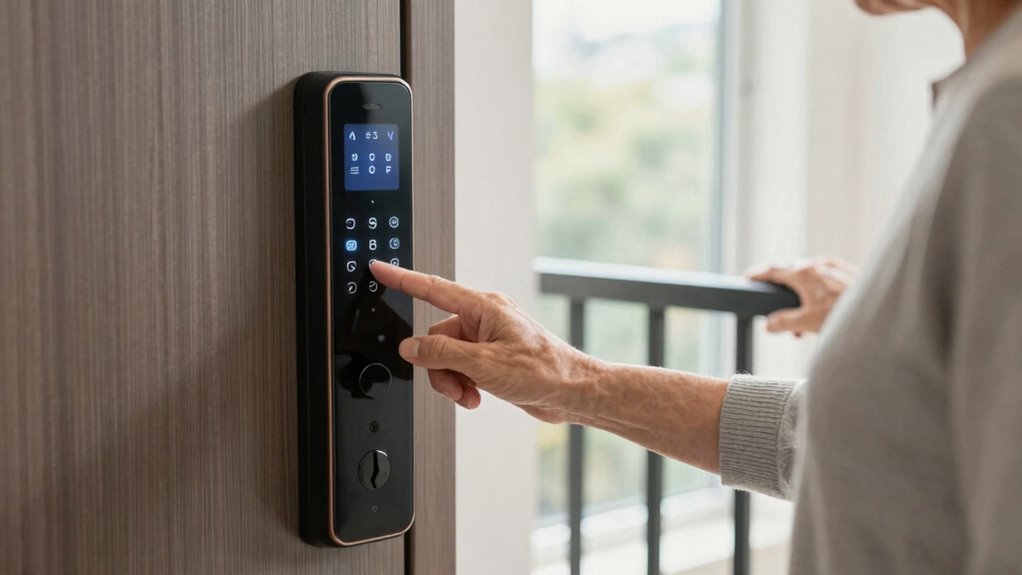
Using temporary access codes enhances security and convenience when allowing visitors or caregivers into your loved one’s home. These codes make visitor management simple, eliminating the need for physical keys or shared passwords. You can generate unique codes for each visitor, providing access only during specific times or dates, which helps prevent unauthorized entry. Access customization allows you to tailor permissions based on individual needs, giving caregivers or service providers limited access without compromising overall security. Plus, if a visitor’s stay ends early, you can easily deactivate their code remotely. Temporary access codes provide peace of mind, knowing you control who enters, when they enter, and for how long. It’s a flexible, secure way to manage home access for loved ones and caregivers alike.
How Smart Lock Alerts Keep Families Informed About Security Events?
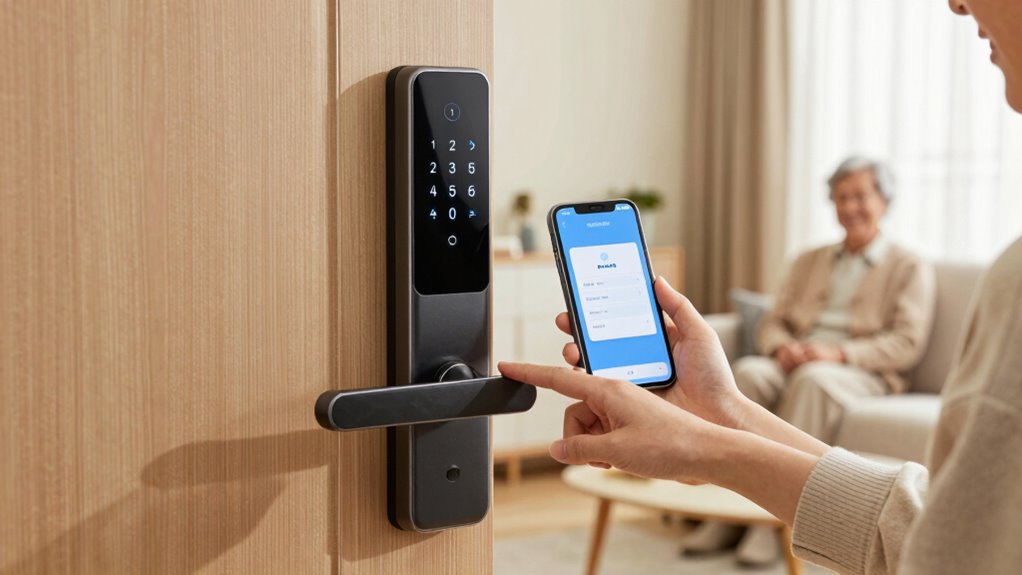
Smart lock alerts provide immediate updates about your home’s security status, so you’re always in the know. These notifications keep families informed about who enters or exits, helping with emergency preparedness and guaranteeing quick responses if needed. For example:
- You get instant alerts when a loved one arrives or leaves, so you can monitor daily routines.
- You’re notified of any suspicious activity, allowing for swift action.
- You can review access history to maintain privacy considerations and guarantee security.
- Integrating smart locks with home security systems enhances overall safety and provides comprehensive protection. Additionally, these systems often incorporate sensor technology, which can detect unusual movements or unauthorized access attempts. This integration can also include access control features, allowing caregivers to set specific permissions for different individuals.
- Understanding the timing of access events through these alerts can help identify patterns or irregularities that may indicate security concerns. These alerts help you stay proactive without constant monitoring, but it’s important to balance security with privacy. Regular updates strengthen safety, especially for older adults, while respecting their independence and confidentiality. Recognizing the unique features of smart lock technology, such as temporary access codes or activity logs, further enhances security and convenience for families.
Choosing the Right Smart Lock for Your Needs
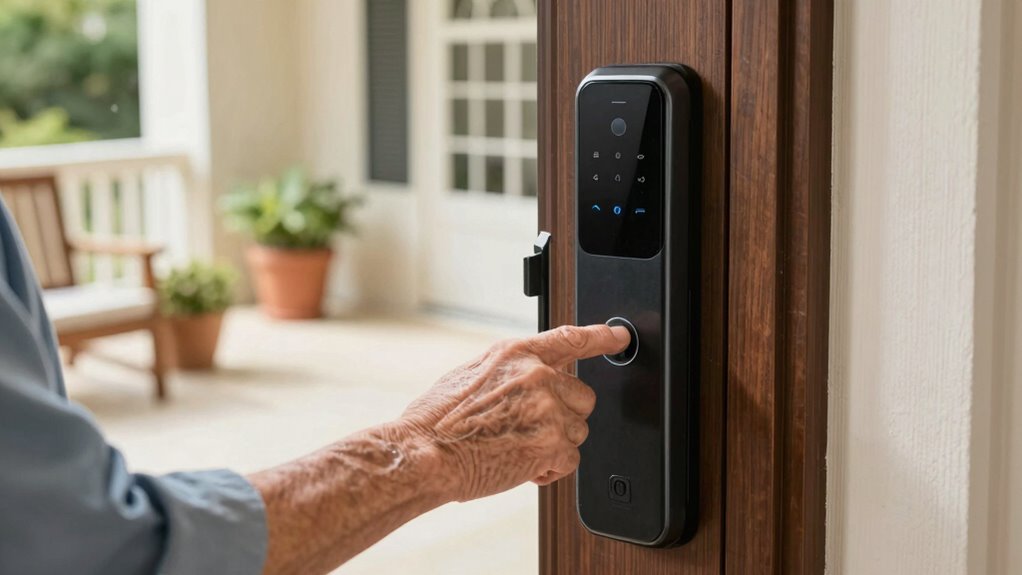
When choosing a smart lock, you’ll want to guarantee it fits your existing door and works seamlessly with your setup. Consider how easy it is to use, whether through keypads, smartphones, or other methods, so everyone can access effortlessly. Don’t forget to check the security features and alerts to keep your home protected and informed at all times. Additionally, understanding paranormal phenomena and how they are investigated might help you recognize false alarms or suspicious activity related to your smart lock system. Being aware of hive health and drone behavior can also shed light on how electronic devices and sensors interact with your environment, ensuring your smart lock functions reliably.
Compatibility With Existing Doors
Choosing a smart lock that fits your existing door setup is essential to guarantee easy installation and reliable operation. Before buying, consider your door’s compatibility, especially regarding the type and thickness. You may need to assess if doorframe reinforcement is necessary for added security and stability.
Key points to keep in mind include:
- Check the lock’s compatibility with your door’s thickness and material.
- Review installation considerations, such as whether the lock fits existing holes or requires modifications.
- Verify the smart lock can be properly secured to avoid issues with doorframe reinforcement.
Easy-to-Use Access Methods
Selecting a smart lock with easy-to-use access methods is essential for ensuring that older adults and caregivers can operate it confidently and comfortably. Look for locks that respond to voice commands, allowing users to release doors simply by speaking, which is especially helpful for those with mobility or dexterity challenges. Biometric authentication, such as fingerprint or facial recognition, offers quick and secure access without the need for keys or codes. These features reduce frustration and make access more intuitive. When choosing a smart lock, consider how easily the access methods integrate into daily routines. Opt for options that require minimal setup and are reliable, so users feel confident using them every day without confusion or delays.
Security Features and Alerts
- Reliable security alerts that keep you informed
- Long battery life for consistent protection
- Easy installation process for hassle-free setup
Frequently Asked Questions
Are Smart Locks Compatible With All Types of Door Hardware?
Smart locks aren’t compatible with all types of door hardware, so you need to check door compatibility before lock installation. Some locks fit standard deadbolts, while others require specific mounting options. If your door has unusual hardware, you might need adapters or different models. Always review the lock’s specifications to confirm easy installation and proper fit, helping you avoid frustration and ensuring your smart lock functions smoothly.
How Do Smart Locks Handle Power Outages or Dead Batteries?
Think of smart locks as resilient guardians—they’re designed to handle power failures with built-in safety. During a power outage or dead battery situation, a battery backup kicks in, ensuring you’re never locked out. Many models also offer physical keys or alternative access methods, so you can maintain security and peace of mind without worry. This reliability makes smart locks especially beneficial for older adults and caregivers.
Can Smart Locks Be Integrated With Existing Home Automation Systems?
Yes, smart locks can be integrated with your existing home automation systems. You can control them via voice commands, making it easier for older adults or caregivers to open doors hands-free. Plus, with remote access, you can manage your locks from anywhere using your smartphone. This seamless integration enhances convenience and security, giving you peace of mind knowing your home is always accessible and protected.
What Are the Privacy Concerns Related to Smart Lock Data?
You should be aware that smart lock data security is vital because privacy risks involve unauthorized access to your lock data or personal information. Hackers might exploit vulnerabilities, potentially compromising your home security or privacy. To protect yourself, make sure your smart lock system uses encryption, regularly updates firmware, and has strong authentication methods. Staying vigilant about privacy risks helps prevent unauthorized access and keeps your home and data safe.
Are There Any Subscription Costs for Using Smart Lock Features?
Yes, some smart locks have subscription fees for advanced features. These service plans often include remote access, activity logs, or integration with other smart home devices. You should check the specific lock’s details, as costs vary by brand and plan. While basic functionalities like locking and open might be free, opting for premium options usually involves paying a monthly or annual fee to enhance convenience and security.
Conclusion
Imagine stepping into your home, where a simple tap opens the door, welcoming you with peace of mind. Smart locks act like vigilant guardians, silently watching over your loved ones’ safety while offering convenience. With remote access, real-time alerts, and temporary codes, you hold the keys to a secure, accessible haven. Embrace this smart technology, and transform your home into a fortress of safety and independence for everyone inside.
Fall yard work Picks
leaf blowers
As an affiliate, we earn on qualifying purchases.