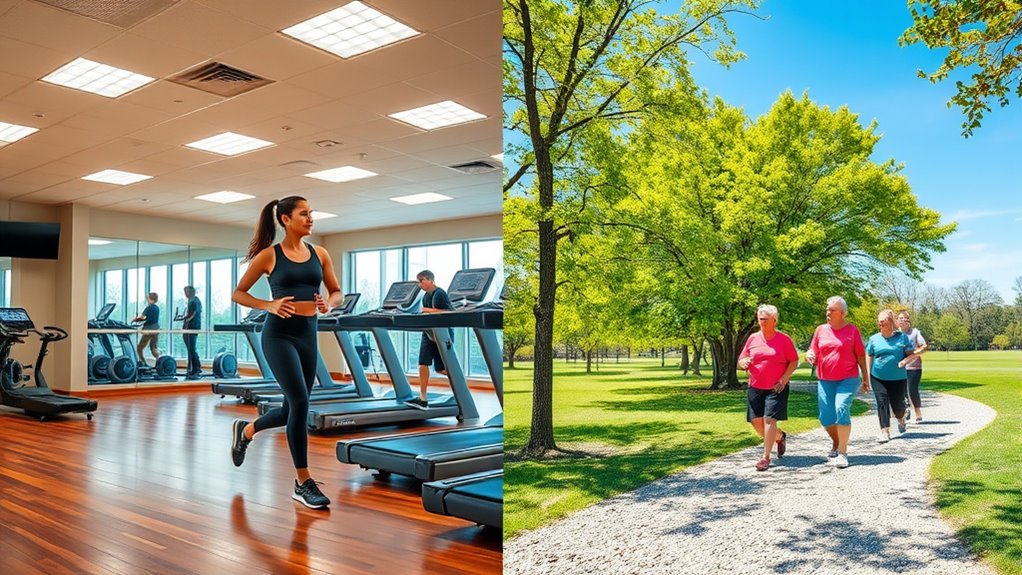

Walking programs can be tailored to your environment, whether indoors or outdoors, offering benefits like improved mental health, cardiovascular support, and better overall fitness. For indoor walks, create a clutter-free space with good lighting and fun activities like obstacle courses or virtual challenges to stay motivated. Outdoors, explore trails or parks, dress appropriately, and stay safe with supportive footwear. Keep track of progress and maintain consistency, and you’ll discover tips to help you enjoy walking more fully.

Turn quiet afternoons into listening time
- Thousands of audiobooks, podcasts and originals
- Listen on your phone, tablet or Echo — also offline
- Cancel anytime
Key Takeaways
- Combine outdoor trail walking with indoor activities like obstacle courses and virtual challenges to maintain variety and motivation.
- Prioritize proper footwear with arch support and cushioning to ensure safety and comfort in both environments.
- Use safety tips such as staying on well-lit paths outdoors and arranging clutter-free, well-lit indoor spaces.
- Track progress regularly with journals or apps, setting milestones to boost motivation and monitor improvements.
- Incorporate noise reduction technology indoors and explore different outdoor trail areas to enhance walking comfort and experience.
As an affiliate, we earn on qualifying purchases.
Benefits of Walking Regularly
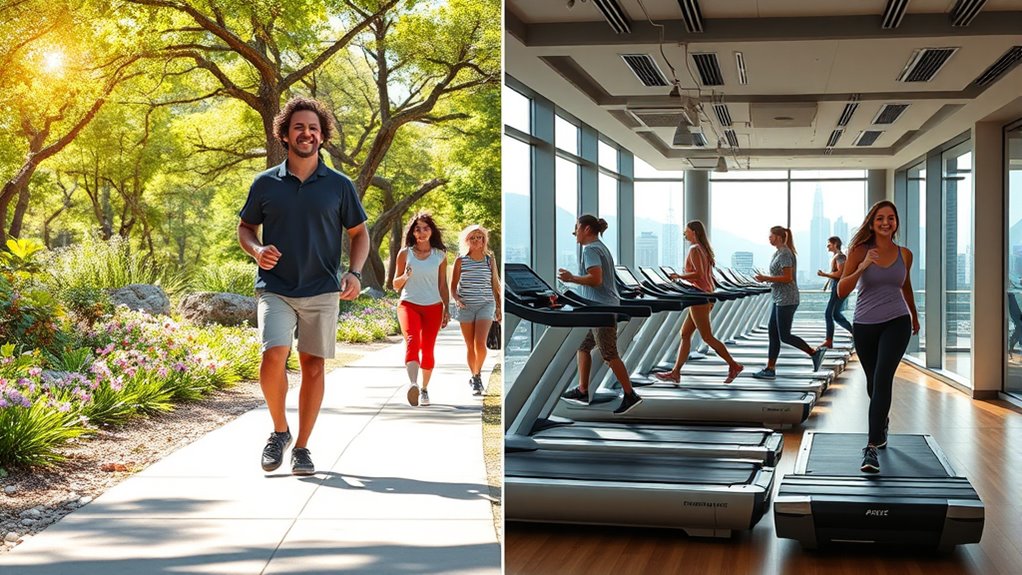
Have you ever wondered how a simple walk can boost your health? Regular walking benefits both your mental health and cardiovascular health. As you walk, your body releases endorphins, which lift your mood and reduce stress, helping combat anxiety and depression. It’s also a low-impact activity that strengthens your heart and improves circulation, lowering the risk of heart disease. Walking consistently can help you maintain a healthy weight, manage blood pressure, and improve cholesterol levels. Plus, being outdoors exposes you to sunlight, which boosts vitamin D production and supports overall well-being. Incorporating noise reduction technology in your walking environment or home can make your walks more comfortable and enjoyable. Whether you walk alone or with friends, making it a daily habit can lead to long-term health benefits that keep you energized and mentally resilient.
Setting Up Your Indoor Walking Space
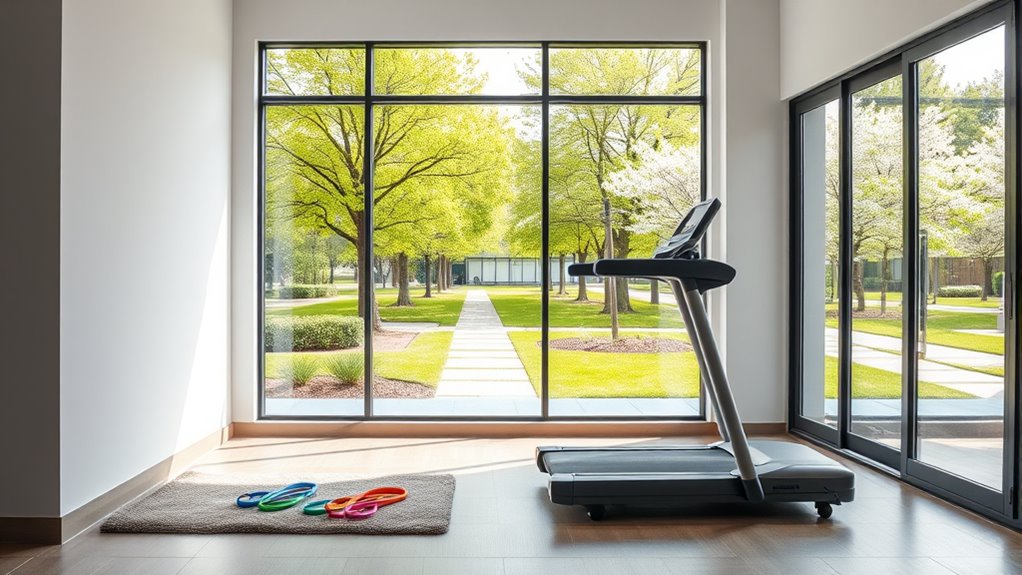
Creating a dedicated indoor walking space makes it easier to stay consistent with your routine, especially during bad weather or busy days. Start by choosing a clear, clutter-free area with enough room to walk comfortably. Pay attention to equipment placement; keep shoes, mats, or any accessories nearby but out of your walking path. Lighting considerations are also crucial—aim for bright, natural light or well-placed artificial lighting to prevent eye strain and boost motivation. Arrange your space with safety in mind, ensuring no tripping hazards. Using the right flooring options can further enhance safety and comfort.
Creative Indoor Walking Activities
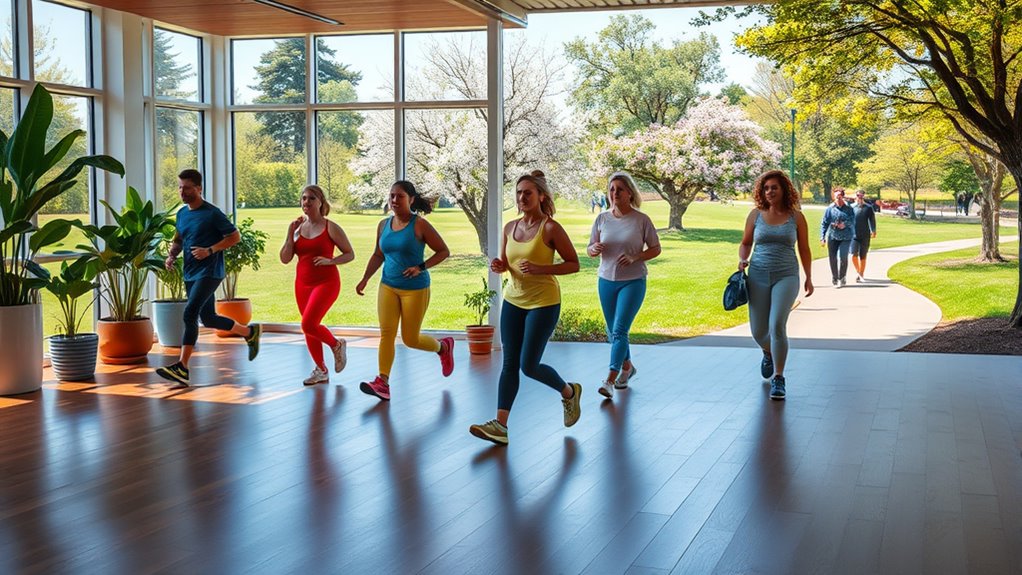
You can make indoor walking more engaging by trying different challenges that keep you motivated. Using your space creatively allows you to set up obstacle courses or timed walks to boost your activity. With a little planning, your indoor environment becomes a fun, effective way to stay active. Incorporating organized zones for different activities can help you stay focused and make your routine more enjoyable.
Indoor Walking Challenges
Indoor walking challenges can turn a routine activity into an engaging and fun experience, especially when you get creative with your environment. Virtual walking challenges are a great way to stay motivated, as they let you compete with friends or track progress online. You can set daily or weekly goals, making each walk more purposeful. Additionally, designing indoor obstacle courses adds an element of excitement; use furniture, pillows, or taped lines to create pathways and hurdles. These activities challenge your coordination and stamina while keeping things fresh. Incorporating variety keeps your indoor walks interesting and prevents boredom. Whether you’re competing virtually or steering through a homemade obstacle course, these challenges boost your motivation and make indoor walking a lively, enjoyable part of your routine. Exploring movement science can also inspire new ways to optimize your indoor exercise routines for better health benefits.
Creative Space Utilization
Maximizing the use of your available space can turn any room into a dynamic indoor walking area. You can transform your home gym or living room by rearranging furniture or adding a simple track along the walls. Use your indoor decor creatively—place rugs or tape markings to define walking paths, making movement more engaging. Incorporate props like chairs, step stools, or lightweight weights to add variety and challenge. Vertical space can hold hanging items or wall-mounted steps for added activity. Keep the area well-lit and clutter-free to ensure safety. Being aware of resources and tools available can further enhance your indoor walking setup. With a little ingenuity, your space becomes a versatile environment for walking routines—whether for cardio, warm-ups, or interval training—bringing energy and variety into your indoor walking program.
Tips for Safe Outdoor Walking
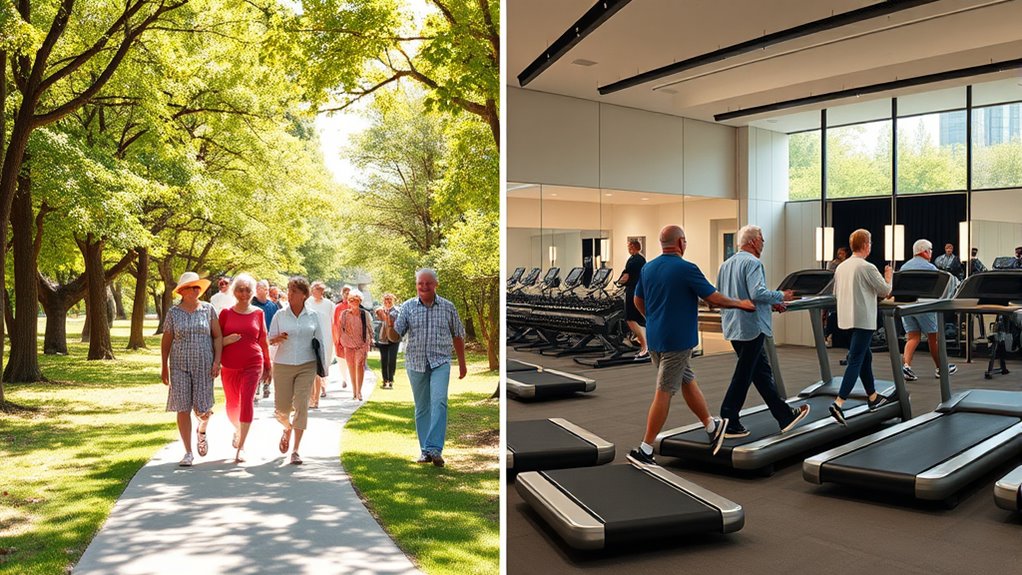
Walking outdoors can be enjoyable and beneficial, but staying safe should always be a top priority. Start by choosing the right footwear selection—opt for well-fitting, supportive shoes that grip the ground to prevent slips and injuries. Always check the weather forecast before heading out; weather preparedness helps you avoid dangerous conditions like rain, snow, or extreme heat. Dress appropriately in layers, and carry essentials such as water, sunscreen, and a hat. Stay on familiar paths and avoid uneven or poorly lit areas. Be aware of your surroundings, watch for traffic, and listen for approaching vehicles or cyclists. Let someone know your route and expected return time. Being informed about local laws and regulations can also help you stay safe and compliant during outdoor activities. These precautions help you enjoy your outdoor walks while minimizing risks.
Making the Most of Nature Trails and Parks

To truly enjoy nature trails and parks, take the time to plan your visits and explore different areas. Familiarize yourself with trail etiquette, such as staying on designated paths, yielding to others, and respecting wildlife. This guarantees a safe and respectful environment for everyone. Keep park safety in mind by carrying water, wearing appropriate footwear, and being aware of your surroundings. Stick to marked trails to avoid getting lost and minimize environmental impact. Be considerate of fellow hikers by keeping noise levels down and not disturbing natural habitats. Using a best vacuum can help you keep your outdoor gear and picnic areas clean and free of dust and allergens. By following trail etiquette and prioritizing park safety, you’ll enhance your outdoor experience, connect more deeply with nature, and help preserve these beautiful spaces for future visitors.
Dressing for Comfort and Safety
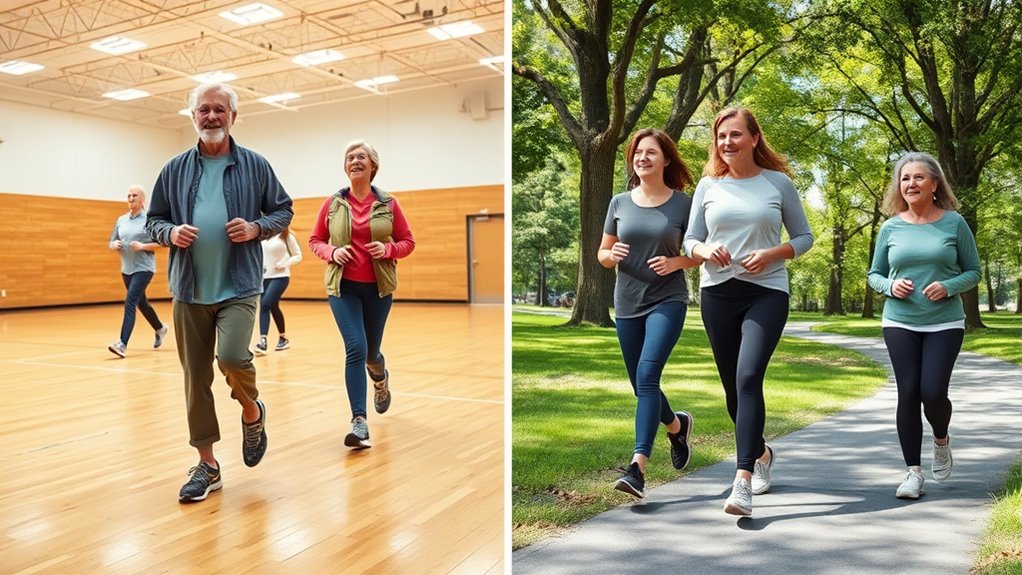
To stay comfortable and safe during your walks, make sure to dress appropriately. Layer up so you can adjust to changing temperatures, and wear supportive footwear to prevent injuries. Proper clothing and shoes keep you comfortable and help you enjoy your walk more. Incorporating essential oils for relaxation into your routine, such as lavender or chamomile, can also create a calming atmosphere during your walk.
Layer Up Appropriately
Dressing appropriately for different weather conditions is essential for a safe and comfortable walk. Using effective layering techniques helps you adapt to changing temperatures and conditions. Start with a moisture-wicking base layer to keep sweat away from your skin, then add an insulating layer for warmth if needed. Finish with a weather-appropriate gear layer, such as a waterproof jacket or windbreaker, to protect against rain or wind. Layering allows you to remove or add clothing as your body warms up or cools down, preventing overheating or chills. Always choose weather-appropriate gear suited to the forecast to stay dry, warm, and comfortable. Proper layering ensures you can walk confidently regardless of the weather, making your walking routine more enjoyable and safe. Incorporating rustic outdoor decor elements can also enhance your walking experience in outdoor settings.
Choose Supportive Footwear
Choosing the right supportive footwear is essential for a safe and comfortable walk. Proper shoes provide adequate arch support, which helps maintain proper foot alignment and reduces fatigue. Look for shoes with cushioned soles that absorb shock and lessen impact on your joints. Make sure your footwear fits well, with enough room in the toe box to prevent pinching or blisters. Avoid shoes that are too tight or too loose, as they can cause discomfort or instability. Supportive shoes can improve your walking experience and help prevent injuries, especially if you walk regularly. Whether indoors or outdoors, investing in quality footwear ensures you stay comfortable and safe during every step. Remember, good shoes are the foundation of an effective walking routine. Additionally, proper footwear can help manage foot conditions and improve overall posture during your walks.
Tracking Progress and Staying Motivated

Tracking your progress is essential for staying motivated and recognizing your achievements along the way. By monitoring your walks, you’ll see how far you’ve come, which fuels your motivation strategies. Use a journal, app, or calendar to note distances and times regularly. Celebrate milestones, like completing a week or reaching a new distance. Here’s a simple way to visualize your progress:
| Week | Distance Walked | Motivation Boosts |
|---|---|---|
| 1 | 3 miles | Reward yourself with a treat |
| 2 | 4 miles | Share progress with friends |
| 3 | 5 miles | Set a new goal for next week |
| 4 | 6 miles | Reflect on your achievements |
| 5 | 7 miles | Feel proud of your consistency |
Tracking progress keeps you inspired and committed to your walking journey.
Frequently Asked Questions
What Equipment Is Essential for Indoor Walking Programs?
You only need a good walking surface and some walking accessories to start an indoor walking program. Choose a flat, non-slip surface like a treadmill, carpet, or hardwood floor for safety. Grab comfortable shoes, a water bottle, and maybe a timer or fitness tracker to monitor your progress. These essentials help you walk safely and comfortably, making your indoor walking routine effective and enjoyable.
How Can I Modify Walking Routines for Joint Issues?
To modify walking routines for joint issues, focus on joint-friendly modifications and low impact alternatives. You can walk on softer surfaces like grass or padded tracks to reduce joint stress. Use supportive shoes to cushion your joints, and keep your pace moderate to avoid strain. Incorporate gentle stretching before and after walks, and consider shorter, more frequent sessions to prevent overuse and discomfort.
Are There Specific Footwear Recommendations for Indoor vs. Outdoor Walking?
Indoor shoes typically prioritize cushioning and slip resistance, while outdoor footwear emphasizes durability and sole traction. For indoor walking, choose shoes with non-slip soles to prevent falls and extra padding for comfort. Outdoors, opt for shoes with rugged soles that grip uneven surfaces and provide support against rough terrain. This footwear difference guarantees you stay safe and comfortable, whether you’re steering smooth floors or outdoor trails.
How Do Weather Conditions Affect Outdoor Walking Safety?
Weather conditions can substantially impact your outdoor walking safety. Rain hazards make surfaces slippery, increasing your risk of falls, so wear shoes with good traction and watch your step. Wind challenges can cause loss of balance, especially on open paths or bridges. Always check the weather forecast before heading out, dress appropriately, and consider postponing your walk if conditions are too severe to stay safe.
Can Walking Indoors Help Improve Mental Health Effectively?
Surprisingly, walking indoors can boost your mental health just as much as outdoor strolls. You’ll find improved mental clarity and stress reduction, even when weather’s terrible. While you might think a change of scenery is essential, indoor walks provide a controlled environment that helps you focus, relax, and clear your mind. So, don’t underestimate the power of walking inside; it’s a simple way to enhance your well-being anytime.
Conclusion
Now that you know how to walk indoors and outdoors, imagine what you could achieve by staying consistent. Will you discover a hidden trail nearby or turn your living room into a walking haven? Every step you take brings new possibilities—and perhaps surprises—along the way. The key is to stay motivated and keep moving. Are you ready to open the full benefits of your walking journey? The next step is yours—are you in?
Fall Picks
fall essentials
As an affiliate, we earn on qualifying purchases.