
TL;DR

Get comfort and care essentials delivered free — and shop member deals
- Fast, free delivery on millions of items
- Access to Prime Big Deal Days deals on October 6–7
- Prime Video, Amazon Music and more included
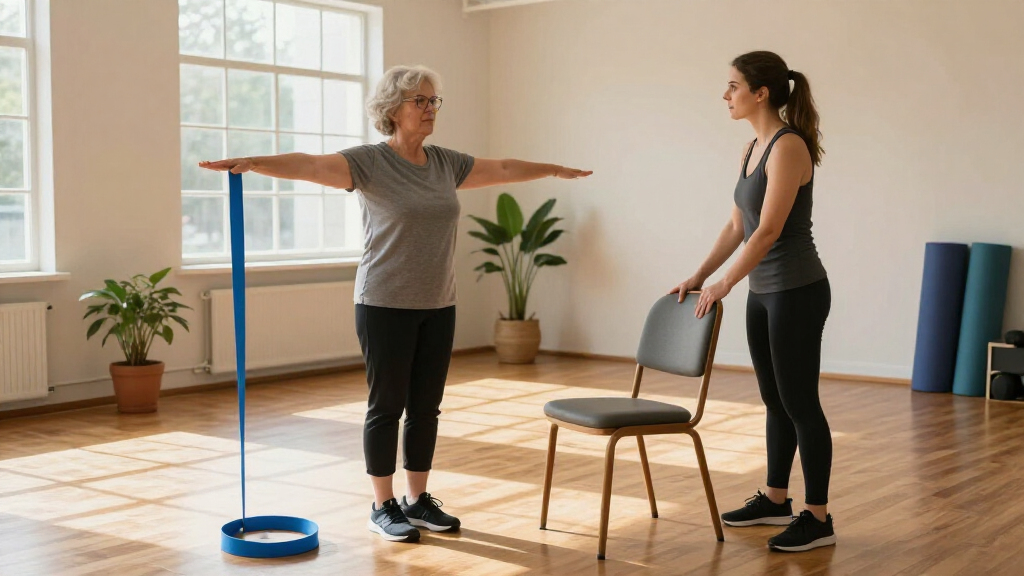
A Sixty and Me guide describes five low-equipment exercises intended to help women over 60 practise movements used in daily life, such as standing, reaching and stepping. It recommends starting gradually and consulting a health professional about health conditions, pain, dizziness or mobility concerns.
Sixty and Me has published a beginner’s guide to functional fitness for women over 60, describing five exercises that can be done at home with little or no equipment. The guide focuses on practising everyday movements—including rising from a chair, pushing, stepping sideways and balancing—and advises readers to increase activity gradually and seek professional guidance when health concerns affect exercise.
The Sixty and Me guide defines functional fitness as building strength and ability for activities in daily life. It gives lifting grocery bags, reaching for items in a cabinet and squatting to pick something up as examples. The guide distinguishes this approach from exercise focused only on general strength by connecting movements to tasks people may want or need to perform day to day.
The exercises suggested by the guide are sit-to-stands, wall push-ups, supported heel raises, supported side steps and balance practice beside a counter or chair. Sixty and Me gives a range of five to 12 repetitions for the first three exercises. For side steps and balance practice, it emphasizes using a sturdy support if needed; it does not give a repetition target for those activities.
For a starting plan, the Sixty and Me article proposes adding 10 to 15 minutes of exercise on two or three days in a week. It says readers can add time or repetitions, or use a resistance band, as exercises become easier. The guide also advises stopping if an activity feels wrong and speaking with a health care professional when a condition, pain, dizziness or another concern could affect exercise.
Practising Movements Used Every Day
Sixty and Me’s practical focus is on strength, mobility and balance as abilities that support everyday activities. For example, the guide connects practising standing from a chair with getting up, while supported side steps and balance work practise movement and weight transfer. Those examples may help readers identify exercises that relate to tasks they personally find challenging.
The article also places its recommendations within broader activity guidance, citing the CDC recommendation that adults aged 65 and older do muscle-strengthening activities at least twice a week, alongside activity that supports cardiovascular and pulmonary fitness and balance. The audience named in the Sixty and Me guide includes women over 60, while the cited CDC age threshold is 65 and older; the two should not be treated as identical age categories.
For readers who want to begin at home, the guide’s suggested movements require limited equipment and include support options. That can make the routine easier to adapt to an individual’s surroundings, although Sixty and Me does not establish that the exercises are suitable for every person or health condition.
senior resistance bands for exercise
As an affiliate, we earn on qualifying purchases.
As an affiliate, we earn on qualifying purchases.
Evidence and Activity Guidance Cited
Sixty and Me refers to a 2025 meta-analysis, saying functional task training helped improve balance, mobility and walking ability among adults aged 60 and older. The supplied source material does not name the analysis or provide its methods, participant numbers or effect sizes, so those details cannot be assessed here.
The guide also cites World Health Organization guidance that adults aged 65 and older do muscle-strengthening activities on two days a week. For people with mobility difficulties, it says balance and fall-prevention activities are suggested on three or more days weekly, with activity increased gradually if needed. These are recommendations reported by Sixty and Me, not a personalized exercise prescription.
To bring movement into daily routines, the article mentions walking, taking stairs when appropriate and paying attention to posture while carrying purchases. Sixty and Me describes its aim as helping people maintain the ability to do activities they value, rather than promising a particular health outcome.
Limits of the Available Evidence
The supplied Sixty and Me material provides no publication date, named author or direct quotations from researchers or health authorities. It also gives no citation details for the 2025 meta-analysis or the review it describes as supporting a combination of balance and functional training to help prevent falls. The strength and scope of that evidence cannot be verified from the provided material alone.
The guide does not report testing the five-exercise routine as a complete program, nor does it give outcomes for people who follow it. It is therefore unclear how much benefit an individual might receive, how quickly changes could occur or whether the exercises fit particular mobility limitations. Sixty and Me advises readers with relevant health concerns to consult a qualified professional.
Starting With a Manageable Routine
Sixty and Me recommends beginning with short sessions two or three days a week, then increasing duration or repetitions as movements become more comfortable. The guide says readers can use a counter or chair for support during balance practice and should stop if an exercise does not feel right. The article provides no follow-up reporting or announced next milestone; any individual routine should be adjusted to the person’s abilities and health guidance.
Key Questions
What does functional fitness mean in this guide?
It means practising strength and movement patterns connected to daily tasks, such as standing from a chair, reaching, pushing or stepping.
Which exercises does the guide suggest?
It lists sit-to-stands, wall push-ups, supported heel raises, supported side steps and supported balance practice.
How often does the article suggest starting?
It proposes adding 10 to 15 minutes of functional exercises on two or three days in the first week, then increasing activity gradually as the exercises become easier.
Should people with pain or dizziness try the exercises?
The guide advises speaking with a health care professional if pain, dizziness, a health condition or mobility limitations raise concerns. It also says to stop an activity if something feels wrong.
Source: rss
Fall Picks
fall essentials
As an affiliate, we earn on qualifying purchases.