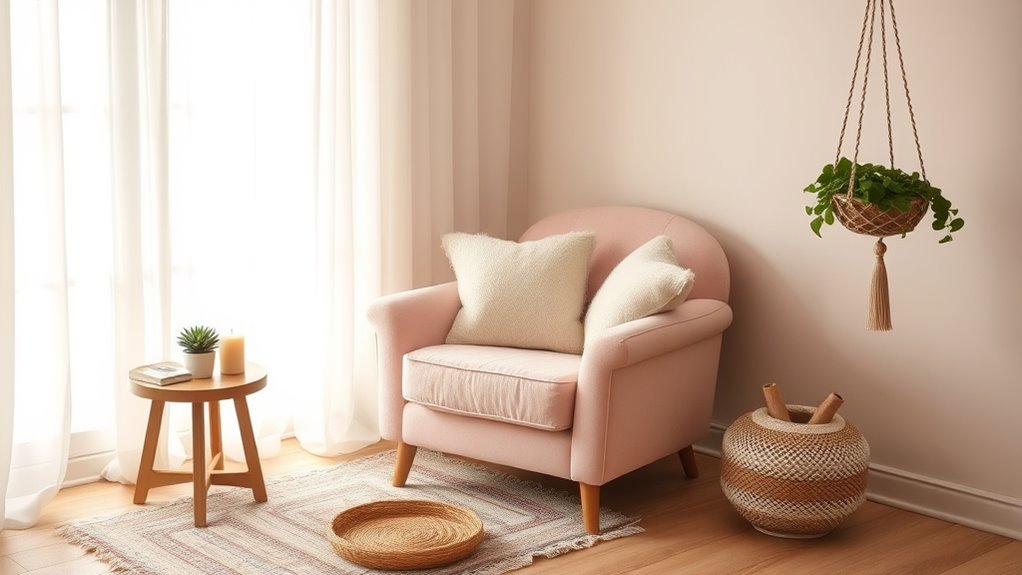

To create a calming space at home, pick a quiet, cozy corner away from noise and distractions, and arrange comfortable seating with natural elements like plants or wood accents. Use soft colors, gentle lighting, and calming scents like lavender to promote relaxation. Personalize with your favorite blankets, books, or keepsakes, and add soothing sounds or music. Keep the area tidy and revitalizing, so it remains a true sanctuary. Continue exploring for more tips to enhance your space.

Turn quiet afternoons into listening time
- Thousands of audiobooks, podcasts and originals
- Listen on your phone, tablet or Echo — also offline
- Cancel anytime
Key Takeaways
- Choose a quiet, comfortable outdoor or corner space with natural elements and privacy for relaxation.
- Use soothing colors, soft lighting, natural decor, and calming sounds to create a tranquil atmosphere.
- Incorporate plush seating, cushions, personal items, and sensory elements like scents and textures for comfort.
- Keep the area organized with storage solutions, decluttering regularly, and rotating decor for freshness.
- Block external noise with soundproofing or white noise, and add gentle music or nature sounds to enhance calmness.
As an affiliate, we earn on qualifying purchases.
Choosing the Perfect Location
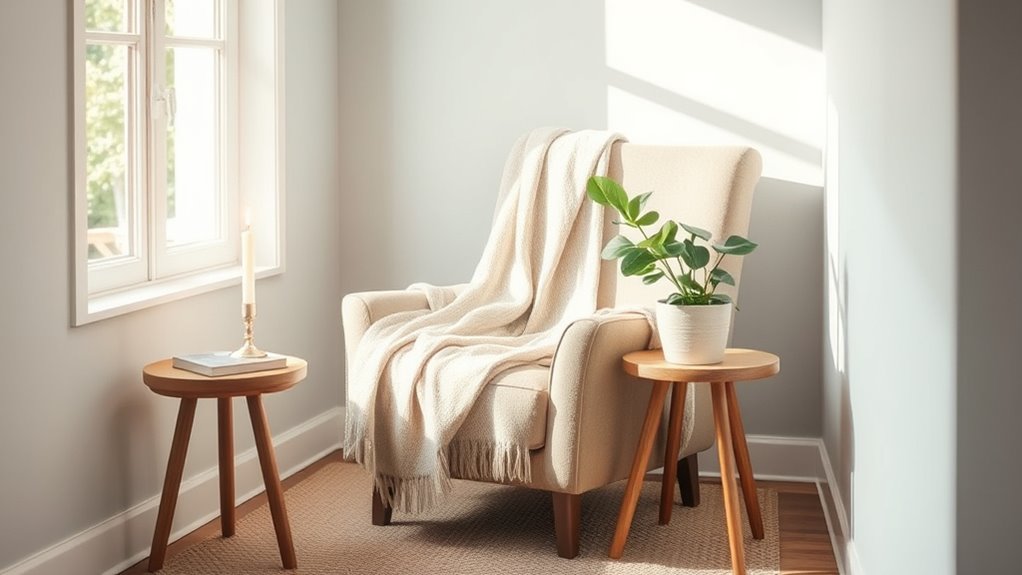
When selecting a location for your calm-down space, it’s important to choose a spot that feels safe and inviting. An outdoor retreat can be an ideal choice because it offers fresh air and natural surroundings that promote relaxation. Look for a quiet corner in your yard or garden, away from noise and distractions. Make sure the area has enough space to add comfortable seating and calming elements. Incorporate functional storage options to keep your space tidy and organized, allowing you to easily access relaxation tools like blankets, books, or sensory items. A well-chosen location enhances your sense of security and helps establish a routine for calming down. Keep it simple, cozy, and accessible so you’re encouraged to use it whenever needed. Considering the use of outdoor greenhouses can also add a peaceful, natural environment to your calming space.
Selecting Soothing Colors and Decor

Choosing calming colors like soft blues, gentle greens, or neutral tones helps create a peaceful atmosphere. Soft lighting, such as warm lamps or dimmable fixtures, enhances relaxation, while minimalist decor keeps the space uncluttered and soothing. Incorporating interior design tips can further refine the ambiance and promote tranquility. By combining these elements, you can design a calm-down space that truly fosters tranquility.
Calm Color Palette
A calm color palette sets the tone for a soothing space, so selecting the right hues is essential. Using color psychology, you can choose shades that promote relaxation and emotional balance. Soft, muted tones like gentle blues, calming greens, and warm neutrals are ideal for mood enhancement. These colors help create an environment where you feel safe and at ease, reducing stress and anxiety. Avoid bright, harsh colors that can stimulate instead of relax. Instead, focus on shades that evoke serenity and comfort. Incorporating a cohesive palette with these soothing hues helps establish a tranquil atmosphere, making your calm-down space a refuge where you can truly unwind. Remember, the right colors influence your mood, so choose hues that foster peace and relaxation. To further enhance your space, implementing mindful decluttering strategies can help eliminate visual clutter, creating a more peaceful environment that complements your calming color scheme.
Soft Lighting Choices
Soft lighting transforms your calm-down space into a soothing sanctuary by enhancing the gentle color palette and cozy decor. Use lamps and lanterns with warm, soft bulbs to create a calming atmosphere. Incorporate dimmer switches to adjust lighting levels easily, allowing you to set the perfect mood for relaxation. Avoid harsh overhead lights, opting instead for layered lighting that adds warmth and comfort. Lamps and lanterns placed strategically around the space can provide gentle pools of light, reducing visual clutter and promoting tranquility. With the right combination of soothing colors and adjustable lighting, you’ll foster an environment that invites calmness and helps you unwind after a stressful day. Considering color temperature adjustments can further optimize the viewing conditions and overall ambiance in your space. This thoughtful lighting setup is key to creating a peaceful, inviting calm-down space.
Minimalist Decor Tips
Opting for a minimalist decor approach means focusing on soothing colors and simple designs that promote calmness. Choose a neutral color palette, like soft blues, gentle grays, or warm beiges, which align with feng shui principles to create harmony. Keep decor minimal by selecting minimalist artwork that adds visual interest without cluttering the space. Avoid bold patterns and busy prints; instead, opt for clean lines and subtle textures. Incorporate natural elements, such as wood or stone, to enhance tranquility. Declutter regularly to maintain clarity and space. Remember, less is more when creating a calming environment. By intentionally selecting calming colors and simple decor, you’ll foster a peaceful atmosphere conducive to relaxation and mindfulness. Additionally, integrating rustic lighting like lanterns or pendant lights can add character while maintaining a soothing ambiance.
Incorporating Comfortable Seating Options
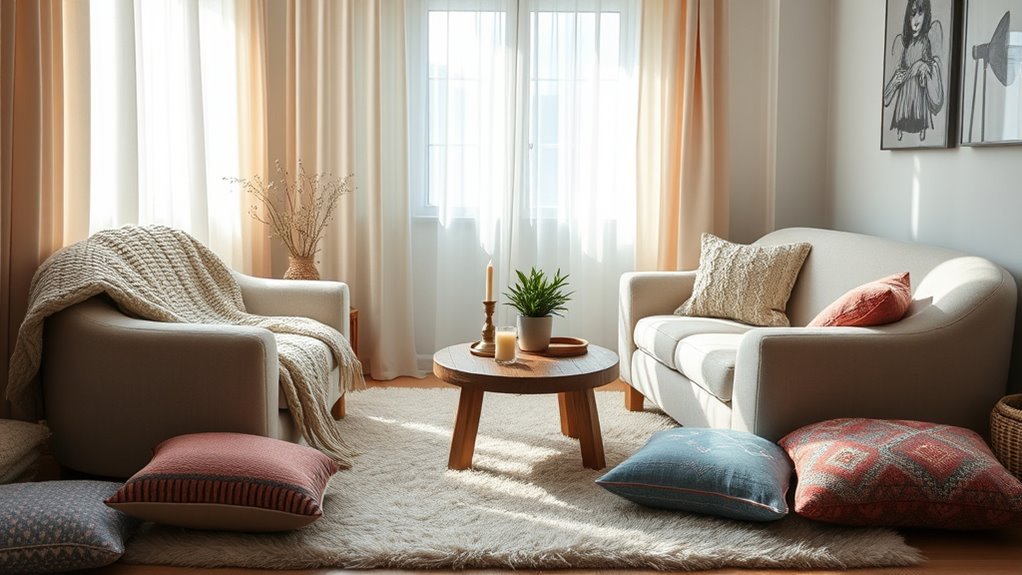
Choosing comfortable seating is key to creating a relaxing space. Consider options like plush chairs, cushions, or a cozy loveseat that invite you to unwind. Position your seating where you can easily relax and feel at peace, making your calm-down area truly inviting. Incorporating AI-driven design tools can also help you select the most soothing arrangements for your space.
Comfortable Seating Choices
Creating a comfortable seating area is essential for a calming space at home, as it encourages relaxation and helps you unwind. Choose seating that supports your artistic expression by adding cushions or throws in colors and patterns that inspire you. Incorporate technological integration by selecting chairs with built-in charging ports or smart features that enhance comfort without cluttering the space. Opt for ergonomic designs that promote proper posture, making it easier to relax fully. Keep the seating versatile so you can easily adjust it to suit your mood or activity, whether reading, meditating, or simply resting. Prioritize comfort and personal style to create an inviting environment where you feel safe and at ease. Additionally, exploring hosting discount codes can help you find affordable options for quality furniture and accessories to enhance your space.
Placement for Relaxation
To foster relaxation, carefully consider where you place your seating within your calming space. Position your chairs or cushions where you can enjoy a view of your outdoor landscaping, creating a natural connection to nature. Make certain the area feels secure, so incorporate subtle home security features like discreet cameras or outdoor lighting. Place seating away from noisy windows or busy streets to minimize distractions. Think about cozy corners, shaded spots, or areas shielded by plants for privacy. Consider the flow of movement, making sure you can easily access your relaxation zone without feeling exposed. An inviting, well-placed seating arrangement encourages you to unwind and feel safe, transforming your space into a true sanctuary for calm. Incorporating elements of environmental awareness into your setup can also enhance your sense of comfort and well-being.
Adding Soft Lighting and Ambiance

Adding soft lighting and ambiance can transform a space into a calming retreat. Use dimmable lamps, fairy lights, or candles to create a gentle glow that soothes your mind. Warm, muted tones work best to foster relaxation and help you unwind. Incorporate music therapy by playing calming tunes or nature sounds to enhance the peaceful atmosphere. Aromatherapy blends further deepen the calming effect, filling the room with subtle, relaxing scents that promote tranquility. Avoid harsh overhead lights or bright LEDs, which can be overstimulating. Instead, focus on layered lighting that allows you to easily adjust the mood. By thoughtfully combining soft lighting with calming sounds and scents, you create an environment where tension melts away, helping you feel more centered and relaxed. Additionally, integrating environmental customization can make your calming space even more effective.
Including Sensory Elements for Relaxation
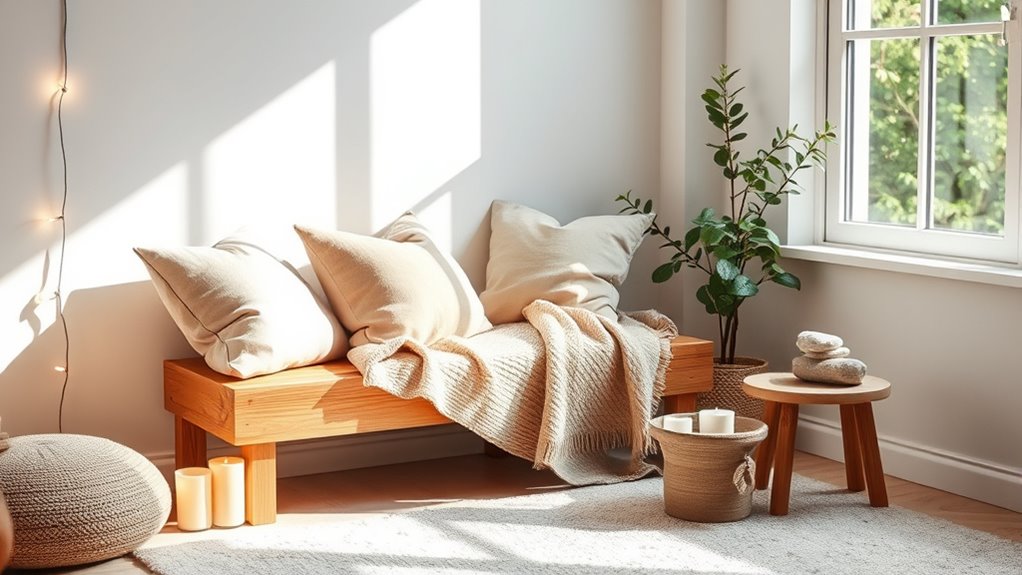
Incorporating sensory elements into your calm-down space can considerably enhance relaxation by engaging multiple senses. These sensory elements activate relaxation techniques that help calm your mind and body. For example, soft textures and calming scents can create a soothing environment. Consider adding:
- Aromatherapy diffusers with lavender or chamomile
- Soft, textured blankets or cushions
- Gentle background sounds like nature or white noise
- Light-touch objects such as stress balls or smooth stones
- Visual stimuli like calming artwork or gentle lighting
These elements help you stay present and grounded, reducing stress and promoting relaxation. Incorporating proper surface preparation and choosing the right paint tools can also ensure your space is visually appealing and inviting. By thoughtfully including sensory elements, you create a multisensory sanctuary where relaxation techniques become more effective and enjoyable.
Personalizing the Space With Favorite Items
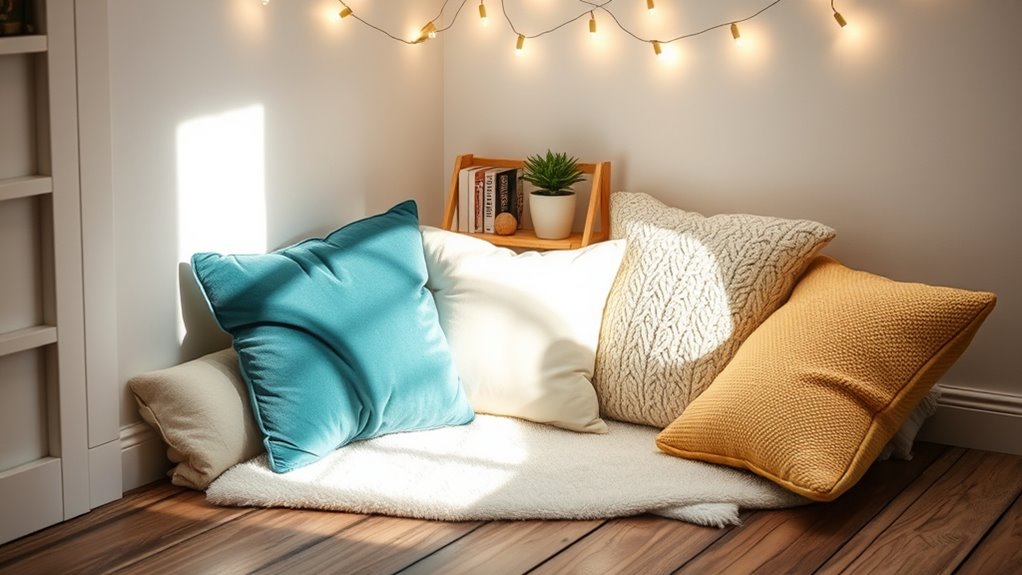
Personalizing your calm-down space with your favorite items transforms it into a truly comforting refuge. Adding personal touches makes the space feel uniquely yours, fostering a sense of safety and familiarity. Incorporate favorite items like a cozy blanket, a cherished book, or a small keepsake that brings you joy. These personal touches create a welcoming environment, encouraging relaxation and emotional comfort. Keep in mind that the goal is to make the space feel soothing and reflective of your personality. By thoughtfully selecting and arranging your favorite items, you’ll be more likely to use this space when you need a mental reset. Remember, the key is to choose items that genuinely make you feel calm and happy, turning your calm-down space into a true sanctuary.
Creating a Sound Environment for Calmness
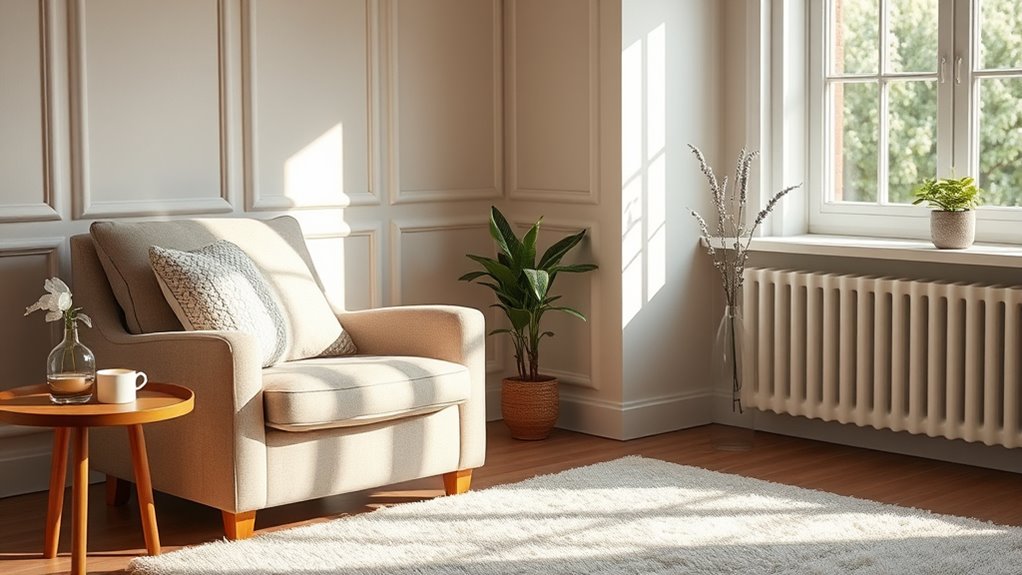
A calming sound environment can considerably enhance the effectiveness of your home calm-down space. To achieve this, consider installing soundproof windows to block outside noise and create a peaceful atmosphere. Using white noise machines helps mask disruptive sounds and promotes relaxation. You can also add gentle music or nature sounds to deepen the calming effect. Soft, muffled voices or low-volume ambient sounds prevent sudden noises from startling you. Additionally, choosing audio sources with consistent, soothing tones ensures a steady sense of calm. Focus on creating a cocoon of tranquility where external noises are minimized, and gentle sounds nurture relaxation. This combination of soundproof windows and white noise machines sets the perfect foundation for a serene, calming space.
Keeping the Area Clutter-Free and Organized
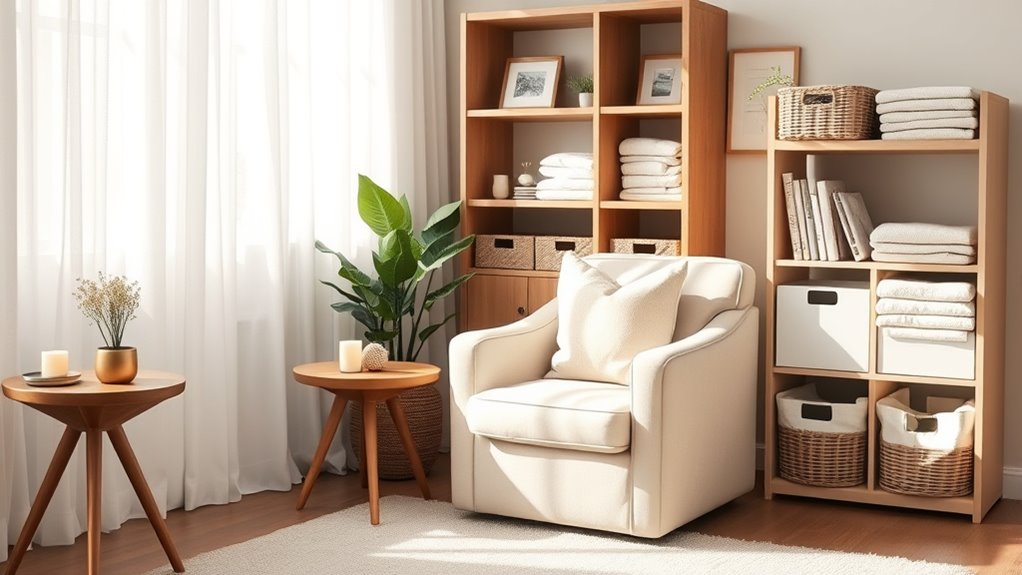
Keeping the area clutter-free and organized is essential for creating a calming home space. Use storage solutions like baskets, bins, and shelves to keep items neatly stored and easily accessible. Organizational tools such as labels and trays help you categorize and maintain order, reducing visual chaos. Regularly declutter by removing unnecessary items to prevent buildup and distractions. Designate specific spots for essentials like stress-relief tools, books, or calming objects so everything has a place. Keeping your space tidy promotes relaxation and makes it easier to *shift* into a calm-down zone when needed. Remember, a clutter-free environment minimizes stress and creates a welcoming atmosphere for relaxation and mindfulness. Stay consistent with your organization to preserve the tranquility of your space.
Tips for Maintaining and Refreshing the Space

Regularly maintaining and revitalizing your calm-down space guarantees it stays inviting and effective. To keep it welcoming, perform simple decor maintenance like dusting surfaces, replacing worn-out cushions, and inspecting lighting. A quick space refresh can include swapping out seasonal decor or adding fresh flowers for a new vibe. Consider reorganizing items to keep the area functional and visually appealing. Renewing your space periodically prevents it from feeling stagnant and ensures it continues to serve its purpose. Here are some tips:
Keep your calm-down space inviting with regular cleaning, fresh decor, and thoughtful reorganizing.
- Dust and clean all surfaces regularly
- Replace or update soft furnishings
- Rearrange decor for a new perspective
- Add fresh plants or flowers
- Rotate calming accessories to keep the space lively
Frequently Asked Questions
How Can I Ensure the Space Remains a Calming Environment Over Time?
You can keep your calm-down space calming by regularly updating the decor to prevent it from feeling stale and maintaining sensory enhancement with soothing elements like soft lighting, gentle textures, and calming scents. Keep the space tidy and inviting, and occasionally refresh the decor to reflect your evolving needs. This consistency guarantees the environment remains a peaceful retreat, helping you stay relaxed over time.
Are There Specific Safety Considerations for a Quiet-Down Area?
You need to prioritize safety by keeping fire hazards away, such as avoiding candles or electrical overloads near the quiet-down area. Also, watch for choking hazards by selecting age-appropriate toys and avoiding small objects that could be swallowed. Regularly inspect the space for any hazards, secure cords or sharp edges, and choose soft, non-toxic materials. These steps help guarantee your calming space remains safe and secure over time.
How Do I Involve Children in Creating Their Own Calming Space?
You involve children in creating their calming space by encouraging child-led design, letting them choose calming objects that bring comfort. Picture them selecting soft pillows or gentle lights, shaping the space into their own retreat. Ask for their ideas, listen actively, and include their choices in the final design. This approach makes the space meaningful, empowering them to use it whenever they need a peaceful moment.
What Budget-Friendly Ideas Exist for Designing a Peaceful Retreat?
You can design a peaceful retreat on a budget with DIY decor like cozy pillows, fairy lights, and painted signs. Incorporate scent therapy using inexpensive essential oils or scented candles to create a calming atmosphere. Repurpose old furniture or fabric to personalize the space without spending much. These simple touches make the area inviting and soothing, helping you and your children unwind easily without breaking the bank.
How Can I Adapt the Space for Different Age Groups or Needs?
You can adapt your calm-down space for different ages by incorporating multifunctional furniture that grows with your child, like adjustable seating or storage beds. Add sensory tools like textured fabrics, calming lights, or noise machines tailored for various needs. Keep the layout flexible, allowing for changes as your child develops, and include accessible storage so everyone can easily find and use the calming elements.
Conclusion
Creating a calm-down space at home can considerably reduce stress—research shows that having a designated relaxation area lowers anxiety levels by up to 30%. By choosing the right spot, adding soothing colors, comfy seating, soft lighting, and sensory elements, you craft a sanctuary just for you. Keep it organized and personalize it with your favorite items. Regularly revitalizing the space guarantees it remains inviting, helping you find peace whenever you need it most.
Halloween Picks
halloween
As an affiliate, we earn on qualifying purchases.