
To choose the right light bulbs, consider brightness in lumens—higher lumens mean a brighter light, so aim for about 1,500 lumens for living rooms and less for bedrooms. Think about color temperature: warm tones create cozy vibes, while cooler tones energize spaces. Proper placement, like ceiling fixtures or task lighting, enhances each room’s ambiance and functionality. Keep exploring to discover how to fine-tune your lighting to match your mood and needs.
Key Takeaways
- Match lumens to room size: around 1,500 lumens for living rooms, less for bedrooms.
- Choose color temperature: warm (~2700K) for cozy spaces, cool (~5000K) for task areas.
- Use layered lighting: combine ambient, task, and accent lights for versatility and ambiance.
- Select appropriate fixtures: ceiling lights for general illumination, decorative fixtures for style and focus.
- Opt for energy-efficient LEDs with dimming options to control brightness and save power.
Understanding Brightness and Lumens
Have you ever wondered how to tell if a light bulb will be bright enough for your needs? Brightness is measured in lumens, which indicate how much light a bulb produces. The higher the lumens, the brighter the light. When choosing bulbs, consider the lumens needed for your space—living rooms typically need around 1,500 lumens, while bedrooms may require less. Dimming options can give you control over brightness, creating a cozy atmosphere or saving energy. Speaking of energy efficiency, look for LED bulbs—they provide high lumens with less power consumption, saving you money on electricity. Understanding lumens and dimming options helps you pick the right bulb for your space, ensuring adequate lighting without wasting energy. Additionally, selecting the right brightness level is essential for understanding lighting needs, which can vary depending on the room’s purpose and size.
Exploring Color Temperature and Its Effects

While lumens tell you how bright a bulb is, color temperature determines the quality and mood of the light. With different color temperatures, you can create various atmospheres in your space. Warm tones around 2700K offer a cozy, inviting feel perfect for relaxing. Cooler tones near 5000K provide a crisp, energetic environment suited for work or activity. Choosing the right color temperature can markedly enhance your mood and the room’s ambiance. Consider these points:
Different color temperatures create mood: warm for relaxation, cool for focus, neutral for balanced lighting.
- Warm light for comfort and relaxation
- Neutral light for balanced, everyday use
- Cool light for focus and productivity
- The right wall organization can complement your lighting choices and elevate your home decor.
Optimal Placement Tips for Different Rooms
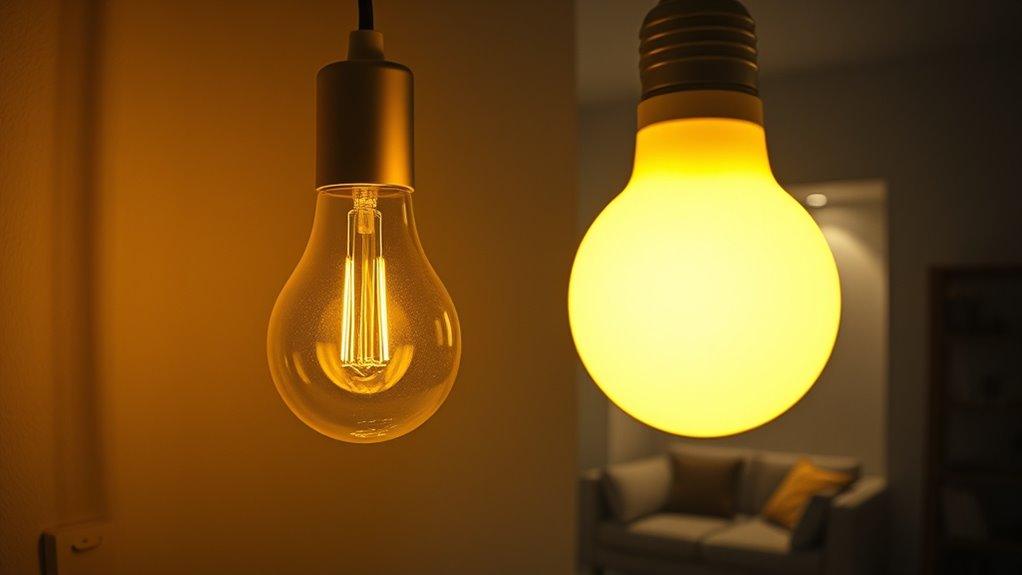
Where should you place your light bulbs to get the best effect? For general lighting, position bulbs in ceiling fixtures or recessed lighting to evenly illuminate the space. Use decorative fixtures like chandeliers or wall sconces to add style and focus light where needed, such as above mirrors or artwork. In rooms like the living room or bedroom, consider layered lighting with a mix of ambient, task, and accent lights. Smart lighting systems make it easy to adjust placement and brightness remotely, enhancing functionality and mood. In kitchens and bathrooms, ensure task lighting is bright and directed, while in cozy corners, softer, decorative fixtures create a welcoming atmosphere. Proper placement maximizes light efficiency and complements your room’s design. Additionally, incorporating eye patch benefits in your lighting choices can help reduce eye strain, especially in workspaces or areas with prolonged screen use.
Frequently Asked Questions
How Do Smart Bulbs Differ From Traditional Incandescent Bulbs?
Smart bulbs differ from traditional incandescent bulbs because they offer advanced features like remote control, adjustable brightness and color, and scheduling options. Unlike incandescent technology, which converts electricity into heat and light, smart bulbs use LED or other efficient lighting methods. You can customize your lighting experience through apps or voice commands, making smart bulbs more versatile, energy-efficient, and convenient compared to standard incandescent bulbs.
What Is the Lifespan of Different Types of Light Bulbs?
You’ll find that LED bulbs last the longest, often 25,000 to 50,000 hours, thanks to their durability. Incandescent bulbs typically burn out after about 1,000 hours, while CFLs last around 8,000 hours. LED’s durability and filament lifespan give you extended use, making them a cost-effective choice. You’ll appreciate the longevity and reliability of LED bulbs, especially if you want to reduce replacement frequency and save money over time.
Are There Eco-Friendly Lighting Options Available?
Yes, eco-friendly lighting options are available. You can choose energy-efficient fixtures like LED or CFL bulbs, which use less power and last longer. Look for sustainable lighting materials, such as recycled or biodegradable components, to reduce environmental impact. By opting for these options, you not only save energy and money but also contribute to a healthier planet. Switching to eco-friendly lighting is a simple step toward more sustainable living.
How Do Motion Sensors Impact Lighting Energy Efficiency?
Motion sensors considerably boost your lighting energy efficiency by automatically turning lights off when no movement is detected, reducing unnecessary energy use. The benefits include decreased electricity bills and extended bulb lifespan. Incorporate these sensors as part of your energy-saving strategies to optimize lighting, especially in frequently used areas like hallways or outdoor spaces. By doing so, you make your home more eco-friendly and cost-effective without sacrificing convenience.
Can Specific Light Colors Influence Mood or Productivity?
You might think color therapy is just a fancy trend, but specific light colors truly influence your mood and productivity. Bright blue tones can boost focus, while warm reds evoke comfort and relaxation. Ironically, the very colors meant to uplift you can also trigger stress if misused. So, pay attention to emotional impact when choosing your lighting; it’s a simple way to harness mood-enhancing benefits every day.
Conclusion
Now that you know how brightness, color temperature, and placement work together, you’re ready to light your space like a true artisan. Think of it as wielding a magic lamp—crafting the perfect ambiance with a flick of your wrist. Remember, a well-placed bulb can turn any room from a dull cave to a lively parlor. So go forth and illuminate your world, just as the inventors of yore dreamed of brighter days ahead!