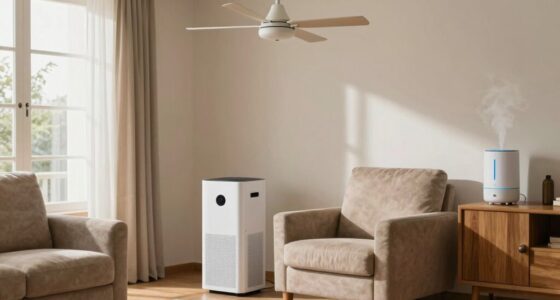
A supportive home designed with safety, comfort, and accessibility encourages you to stay active and independent. Features like proper lighting, grab bars, open floor plans, and visual contrast help you navigate easily and reduce fall risks. Smart devices and safety technologies keep you monitored and alert, giving you confidence to move around freely. Creating a warm, inviting environment boosts your mood and motivation. Keep exploring to discover more ways your home can support your active lifestyle.

Turn quiet afternoons into listening time
- Thousands of audiobooks, podcasts and originals
- Listen on your phone, tablet or Echo — also offline
- Cancel anytime
Key Takeaways
- A safe, accessible environment reduces fall risks and encourages seniors to move freely and confidently.
- Thoughtful lighting and contrasting colors enhance visibility, prompting activity and navigation.
- Home modifications like grab bars and wide pathways support independence and ongoing mobility.
- Smart safety devices and monitoring systems provide reassurance, motivating seniors to stay active.
- Well-designed social and outdoor spaces promote engagement, exercise, and emotional well-being.
As an affiliate, we earn on qualifying purchases.
Why a Supportive Home Is Key to Senior Mobility
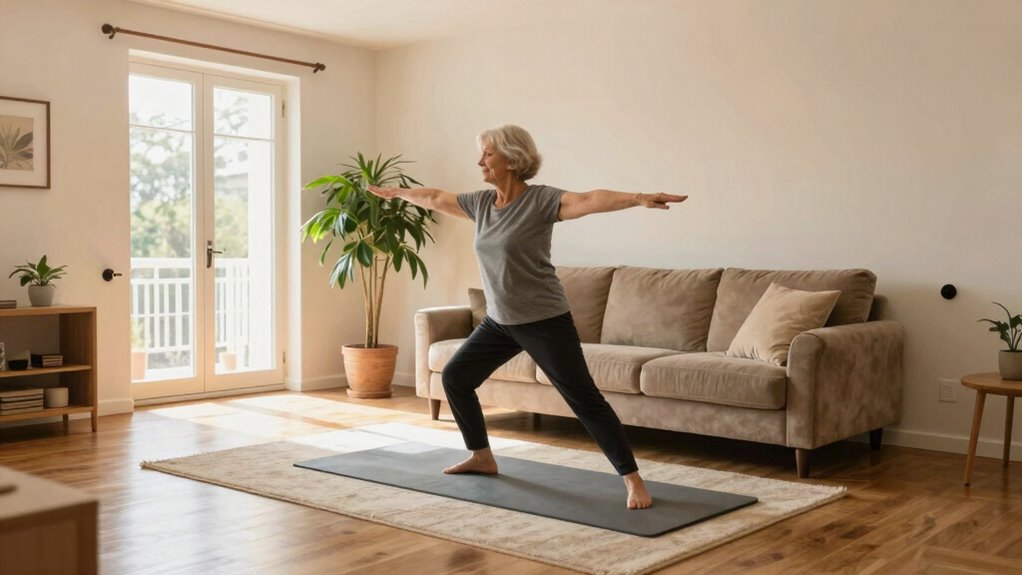
A supportive home plays a crucial role in maintaining senior mobility because it provides a safe and accessible environment that encourages independence. When your home is designed with comfort and safety in mind, you’re more likely to stay active and engaged. This proactive approach can reduce injury risk by minimizing hazards and ensuring proper navigation throughout your living space. This boosts your emotional well-being, helping you feel confident and less isolated. A welcoming space also fosters social engagement, making it easier to connect with family, friends, and neighbors. Feeling secure at home reduces anxiety about falls or accidents, so you’re more inclined to move around freely. As a result, you maintain your strength and flexibility longer. Home safety is essential in creating an environment that promotes ongoing mobility and confidence. A well-designed home that considers decor and spatial arrangement can significantly enhance your comfort and safety, encouraging you to remain active daily.
What Features Make a Home Accessible and Comfortable for Seniors
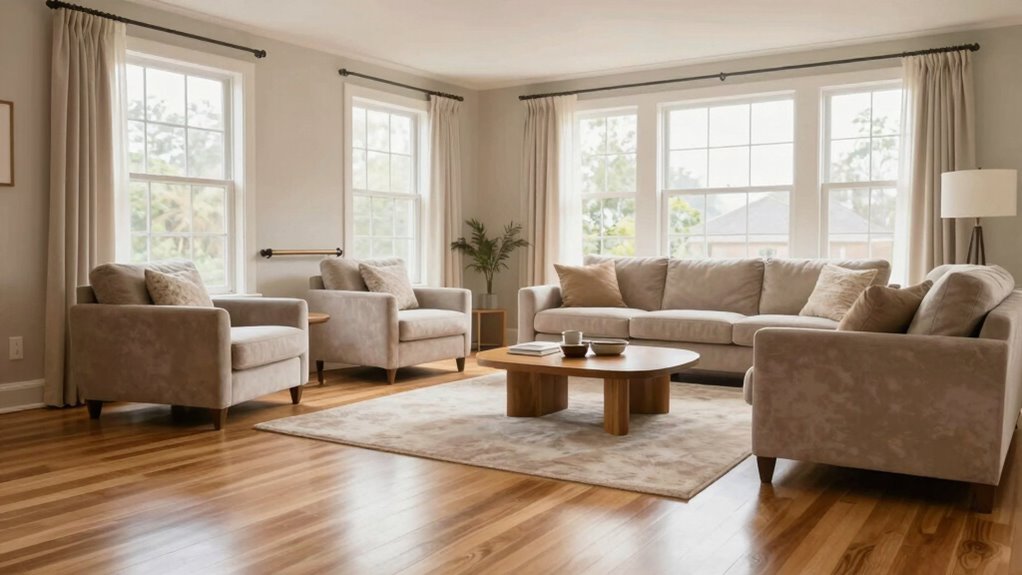
To create a home that’s accessible and comfortable for seniors, focus on safety features that are easy to operate, like lever handles and non-slip flooring. Adequate lighting is essential to prevent falls and improve visibility, especially in hallways and staircases. Additionally, designing bathrooms with accessible features, such as grab bars and walk-in showers, makes daily routines safer and more manageable. Incorporating home safety modifications can further enhance security and independence for seniors. Utilizing contrast ratio considerations in lighting and decor can also help improve visual clarity and reduce the risk of accidents. Incorporating landscaping elements that blend with the home’s surroundings can create a calming environment and improve overall safety. Regular maintenance and product recommendations can ensure that safety features remain effective over time, preventing potential hazards like slippery surfaces or loose fixtures.
Easy-to-Use Safety Features
Ensuring safety in a senior’s home involves incorporating simple, intuitive features that promote independence and prevent accidents. Safety sensors are a key addition, alerting you to potential hazards like falls or unusual activity, which allows quick intervention. A new monitoring system can provide continuous oversight, further enhancing safety and peace of mind. Emergency alerts give seniors a direct line to help at the push of a button, providing peace of mind and quick response in emergencies. These features are easy to operate and don’t require complicated setups, making them accessible for seniors with varying levels of tech familiarity. Incorporating commercial kitchen equipment into home modifications can also support healthy eating habits and social activities, further enhancing overall well-being. Understanding device vulnerabilities and security measures can help in selecting the most effective safety solutions. Additionally, integrating biosensors that monitor vital signs can offer real-time health insights, enabling earlier detection of potential health issues. Implementing user-friendly interfaces on safety devices ensures that seniors can operate them confidently without frustration. By integrating safety sensors and emergency alerts into your home, you’ll create a safer environment that encourages more confident movement and activity. This simple setup supports independence while reducing risks, helping seniors stay active and secure in their daily routines.
Adequate Lighting Solutions
Having adequate lighting is essential for making a home accessible and comfortable for seniors, as it helps prevent falls and reduces eye strain. Focus on creating a warm lighting ambiance that feels inviting without being harsh. Use layered lighting, combining overhead fixtures with task lights in areas like kitchens and reading spots. Incorporate visual contrast by choosing lighter walls and flooring to make navigation easier and safer. Bright but soft lighting minimizes shadows and helps seniors see potential hazards clearly. Motion-activated lights can enhance safety during nighttime trips to the bathroom or hallway. Additionally, selecting a lighting style that complements the home’s decor can improve overall ambiance and encourage seniors to stay active and engaged. By paying attention to lighting ambiance and visual contrast, you create an environment that supports independence, reduces risk, and makes your home a more welcoming space for seniors to stay active and comfortable. Incorporating energy-efficient refrigerants and smart controls can further optimize lighting efficiency and reduce environmental impact. Staying informed about market trends and new lighting technology options can help you choose the most effective solutions for your home. Exploring advancements in lighting technology can also provide innovative ways to enhance safety and energy savings.
Accessible Bathroom Design
An accessible bathroom is an essential part of making a home safe and comfortable for seniors. It should feature adaptive fixtures and ergonomic fixtures that promote independence and safety. Imagine stepping into a space with:
- Grab bars strategically placed near the toilet and shower to prevent slips.
- Walk-in showers with low or no thresholds, making entry easy and reducing fall risks.
- Comfort-height toilets with ergonomic seats that make sitting and standing simpler.
- Incorporating ergonomic fixtures that are designed to reduce strain and improve ease of use for individuals with limited strength or mobility. Additionally, assistive technology can further support independence by providing easy access to emergency communication. Regular checks and maintenance, such as ensuring proper power requirements, are essential to prevent issues with gas appliances during power outages and to maintain safety. Proper maintenance routines can also extend the lifespan of fixtures and ensure they function correctly when needed.
These features help minimize accidents and provide support where needed most. Adaptive fixtures, like lever handles instead of knobs, are easier to operate, especially for those with limited strength. An accessible bathroom transforms safety into comfort, empowering seniors to maintain their independence.
Design Elements That Encourage Daily Movement
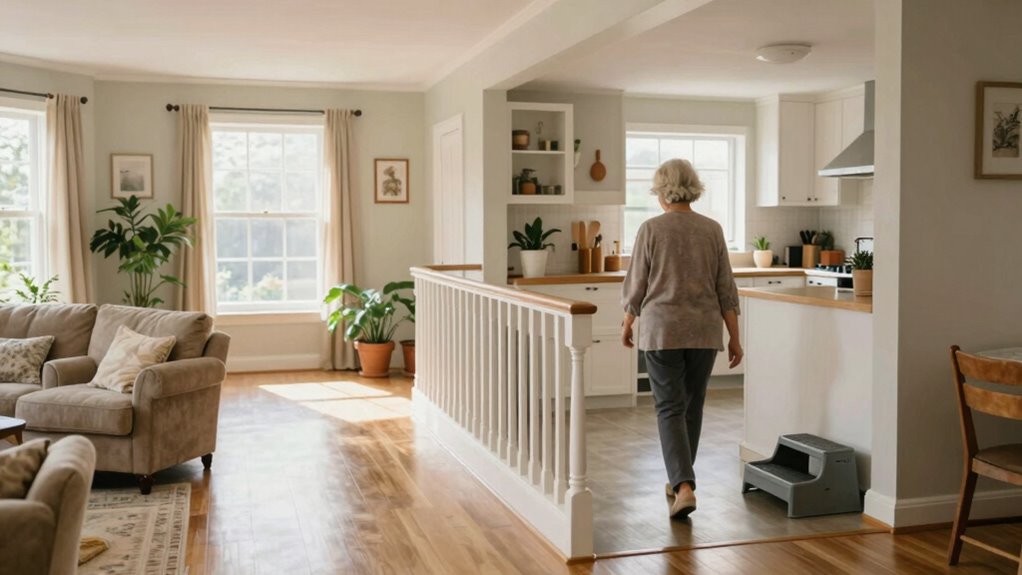
Design elements that promote daily movement in senior-friendly homes are essential for maintaining health and independence. You should focus on furniture arrangement to create clear pathways and accessible spaces, encouraging seniors to move freely without obstacles. Place frequently used items within easy reach to motivate regular activity. Additionally, thoughtful color schemes can make spaces more inviting and stimulating; using bright, contrasting colors helps seniors identify areas and objects easily, prompting movement. Incorporating open floor plans can further enhance flow and accessibility, making it easier for seniors to navigate their environment comfortably. Using color contrast effectively can also help seniors distinguish between different areas, reducing confusion and enhancing safety. Avoid clutter that can hinder mobility and create a sense of openness with well-defined zones. These design choices support daily activity by making movement natural and comfortable, reducing the risk of falls, and fostering confidence. When you optimize furniture placement and color schemes, you create an environment that gently encourages seniors to stay active every day.
Home Modifications to Support Senior Movement and Safety
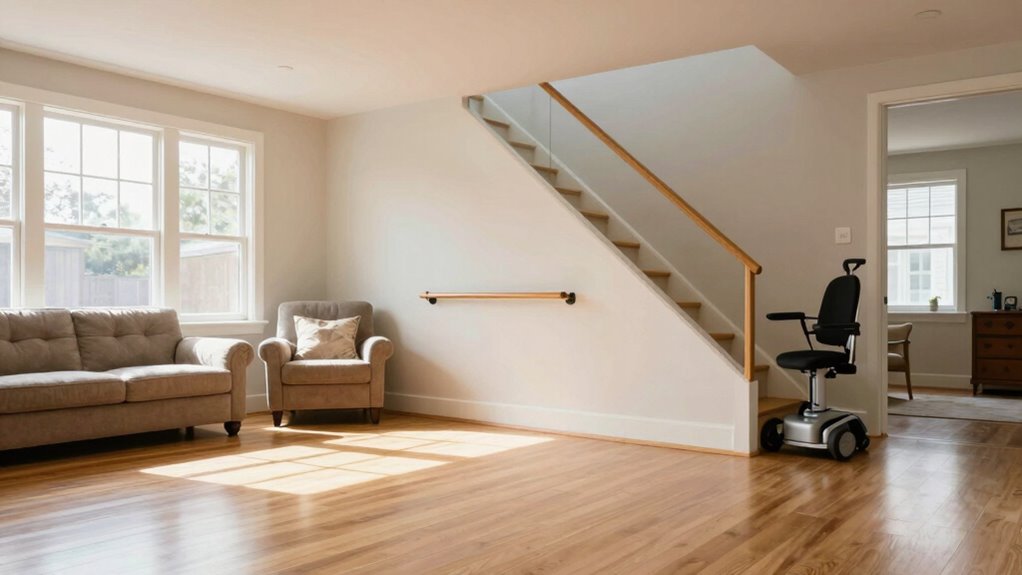
You can improve safety by installing handrails and grab bars in key areas like bathrooms and stairways. Making pathways clear and open helps prevent trips and falls, giving you more confidence moving around your home. These simple modifications can make a big difference in supporting your independence.
Installing Handrails and Grab Bars
- Along staircases for steady ascent and descent
- Next to toilets and sinks in bathrooms for easy balance
- Near bathtubs and showers to prevent slipping
Make sure grab bars are securely anchored into wall studs to support weight. Position handrails at a comfortable height, typically between 34 and 38 inches from the floor. This guarantees your loved ones can grasp them easily when needed, reducing fall risks and fostering independence. Proper placement and installation are crucial to their effectiveness.
Creating Clear, Open Pathways
Creating clear, open pathways throughout the home is essential for guaranteeing seniors can move safely and comfortably. Make sure garden pathways are smooth, well-lit, and free of obstacles to prevent trips and falls outdoors. Inside, keep walkways unobstructed, wide enough for mobility aids, and clutter-free. Pay special attention to stair safety—install sturdy handrails on both sides, ensure steps are even, and add non-slip treads. Remove any loose rugs or cords that could cause slipping hazards. Clear pathways reduce the risk of accidents and boost confidence, encouraging more movement both inside and outside the home. Regularly check that all routes are accessible and well-maintained, supporting independence and ongoing activity for seniors.
Smart Home Devices That Help Seniors Stay Active
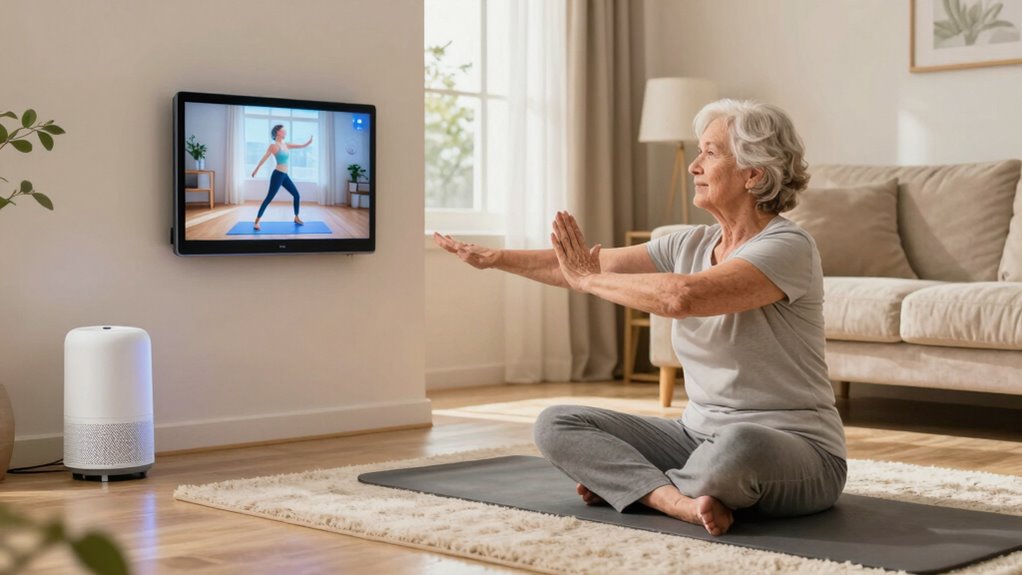
Smart home devices are transforming how seniors stay active and independent by providing convenient tools that encourage movement and engagement. With smart technology, you can monitor mobility and receive alerts to prevent falls or inactivity. These devices make it easier to stay connected and motivated.
Smart devices help seniors stay active, connected, and safe through easy monitoring and gentle reminders.
Imagine:
- A wearable fitness tracker that monitors your daily steps and activity levels, promoting movement throughout the day.
- An intelligent motion sensor that detects movement in rooms and reminds you to stay active if you’ve been still too long.
- Voice-activated assistants that not only answer questions but also suggest gentle exercises or reminders to move.
How Your Home Environment Affects Seniors’ Mood and Motivation
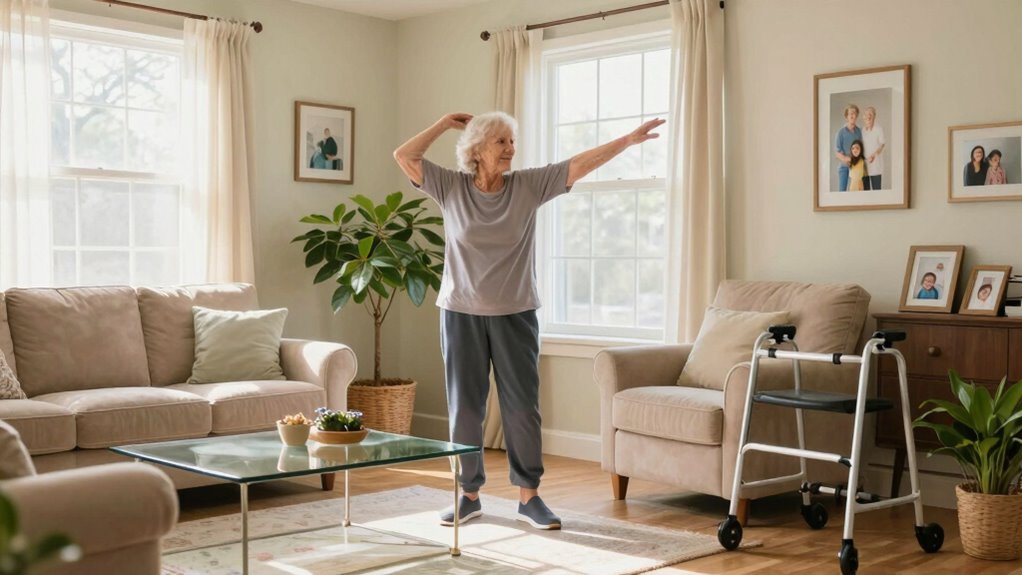
The environment inside a senior’s home can profoundly influence their mood and motivation, often shaping their daily experiences and emotional well-being. A bright, clutter-free space with comfortable seating encourages positive feelings and reduces stress. When your home fosters easy social interaction, seniors feel more connected and less isolated, boosting their emotional well-being. Incorporate inviting areas for conversation and activities, which motivate seniors to engage with others. Natural light and calming colors help elevate mood, making everyday routines more enjoyable. Conversely, a dark or chaotic environment can lead to feelings of loneliness or depression, diminishing motivation to stay active. By creating a warm, welcoming space that promotes social interaction, you support your loved one’s emotional health and inspire them to remain engaged and active.
Involving Seniors in Designing Their Active Living Space
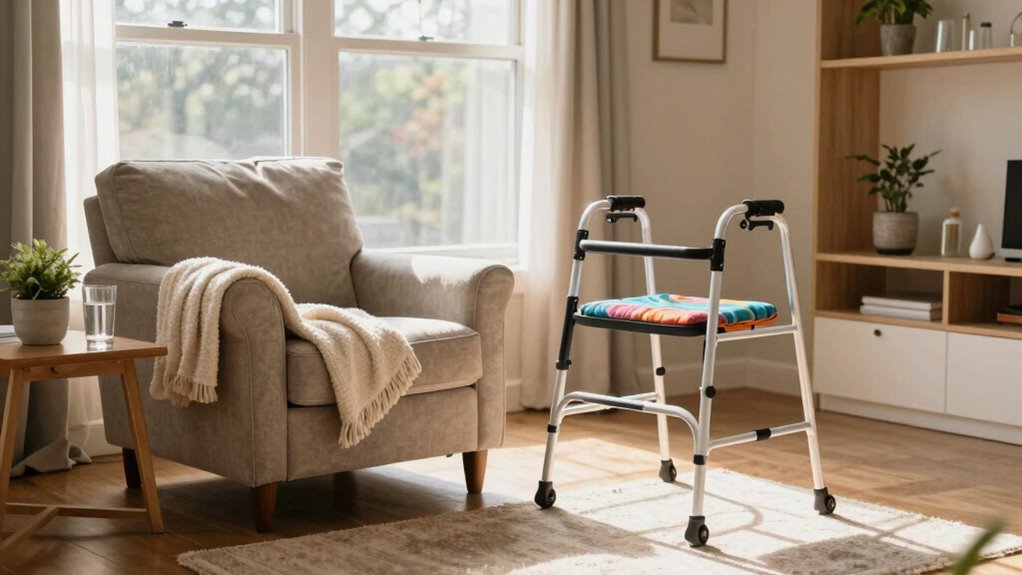
Involving seniors in designing their active living space empowers them to create an environment that truly reflects their preferences and needs. By including them in the process, you enable personalized design that boosts comfort and independence. Imagine a cozy corner with their favorite chair, a well-lit pathway for safe movement, and accessible storage that suits their routines. Community engagement also plays a key role, as involving neighbors or local designers can inspire ideas that foster social interaction. When seniors participate in choosing colors, furniture, and layout, they feel more invested and motivated to stay active. This collaborative approach ensures the home evolves into a supportive space that encourages movement, socialization, and a sense of ownership.
Common Mistakes to Avoid When Making Your Home Senior-Friendly
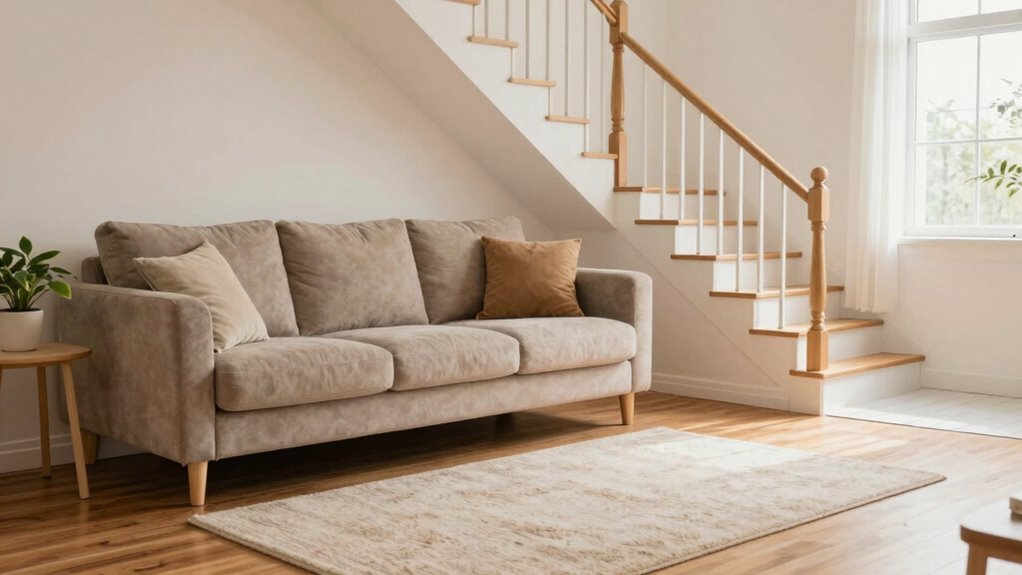
Creating a senior-friendly home requires careful planning, but many common mistakes can undermine safety and comfort. One mistake is neglecting accessible outdoor spaces, like a garden relaxation area, which encourages seniors to enjoy nature and stay active. Avoid cluttered walkways or high-pile rugs that increase fall risks. Also, forgetting social gathering spaces can lead to isolation; ensure there’s a cozy spot for friends and family to gather. Use the table below to highlight some key pitfalls:
| Mistake | Solution |
|---|---|
| Ignoring outdoor safety | Add ramps and non-slip surfaces |
| Overlooking social areas | Create inviting spaces for gatherings |
| Cluttered pathways | Keep walkways clear and well-lit |
| Poor lighting | Install ample, adjustable lighting |
| Neglecting relaxation zones | Incorporate garden seating |
Avoid these mistakes to make your home truly supportive.
How a Thoughtfully Designed Home Supports Long-Term Independence
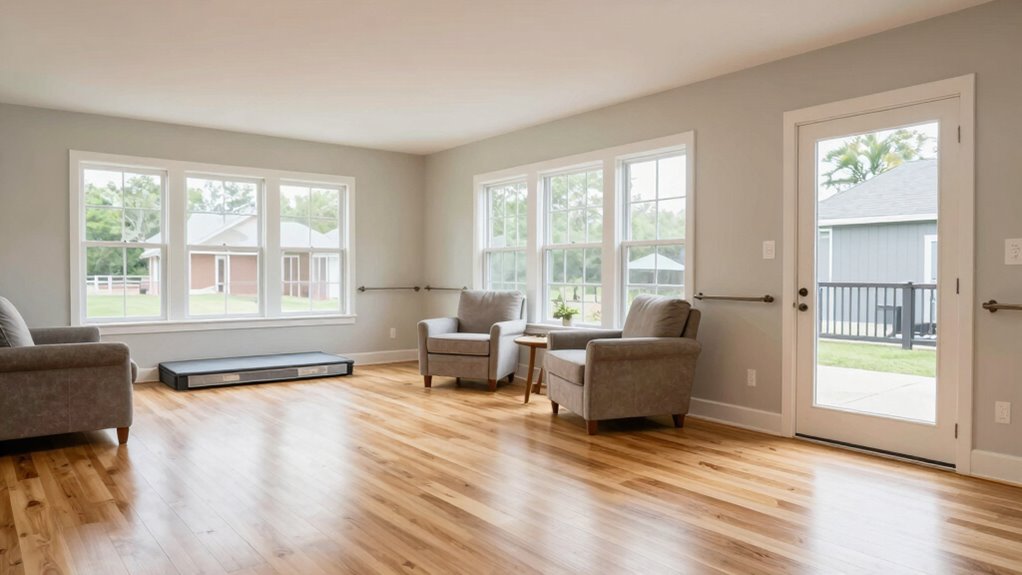
Ever wondered how a thoughtfully designed home can help seniors stay independent longer? It’s about creating spaces that promote safety, engagement, and connection. Consider these features:
Thoughtful home design fosters safety, connection, and independence for seniors.
- A accessible garden for garden therapy, encouraging gentle activity and outdoor time.
- Comfortable, inviting areas that foster social interaction, preventing loneliness.
- Clear pathways and safety features that reduce fall risks and support mobility.
These elements empower you to maintain routines and independence while enjoying meaningful activities. A garden offers therapeutic benefits, boosting mental health and physical activity. Social areas encourage interaction, keeping you connected with loved ones and neighbors. Thoughtful design turns your home into a supportive environment that nurtures long-term independence, making daily life safer and more fulfilling.
Frequently Asked Questions
How Does a Supportive Home Influence Seniors’ Mental Health?
A supportive home boosts your mental well-being by providing emotional support and a sense of security. When you feel cared for and comfortable, you’re less likely to experience anxiety or depression. This environment encourages social interactions and independence, which are essential for mental health. Knowing you’re in a nurturing space helps you stay positive, resilient, and engaged, ultimately improving your overall emotional well-being and quality of life.
What Affordable Modifications Can Promote Senior Activity at Home?
You can promote senior activity at home by making affordable modifications like creating safe, open spaces for exercise routines and adding mobility aids such as grab bars, non-slip mats, and sturdy chairs. These adjustments help seniors feel confident in moving around, encouraging regular activity. Simple changes like proper lighting and removing tripping hazards also boost safety, making it easier for seniors to stay active and maintain their independence in a supportive environment.
How Can Family Members Assist in Creating an Active-Friendly Environment?
You can assist by choosing assistive devices that promote safety and independence, making it easier for seniors to move around and stay active. Encourage social engagement by organizing regular visits, activities, or virtual chats, which boost mental and emotional health. Support your loved ones by creating an accessible environment, offering encouragement, and participating in activities together, helping them feel motivated and confident to stay physically and socially active at home.
Are There Specific Colors or Lighting That Motivate Seniors to Move More?
Bright, warm colors like yellow and orange can energize your loved ones, acting as a spark to motivate movement. Incorporate color psychology and thoughtful lighting design to create an inviting space that encourages activity. Use natural light or well-placed LEDs to boost mood and vigor. By choosing the right colors and lighting, you turn your home into a lighthouse guiding seniors toward a more active and joyful lifestyle.
How Often Should Home Safety Assessments Be Conducted for Seniors?
You should conduct home safety assessments at least once a year to identify safety hazards and make certain mobility aids are properly used. Regular checks help catch new risks, like loose rugs or clutter, and confirm that mobility aids remain effective. If your senior experiences health changes or falls, do assessments more frequently. Staying vigilant ensures their environment stays safe, encouraging independence and activity while minimizing injury risks.
Conclusion
Creating a supportive home isn’t just about safety—it’s about empowering you to stay active and independent. Research shows that seniors with accessible, engaging environments are 40% more likely to maintain their mobility and mood. By making thoughtful modifications and involving you in design choices, you can enjoy a vibrant, active lifestyle for years to come. Your home truly becomes your foundation for lasting independence and well-being.
Fall Picks
fall essentials
As an affiliate, we earn on qualifying purchases.