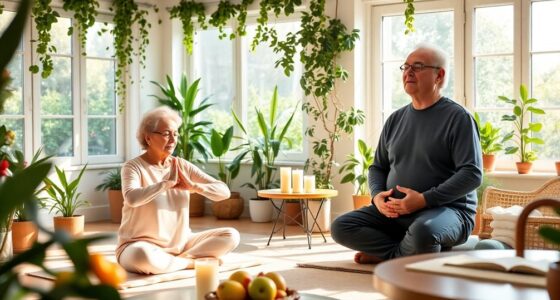
If sitting still feels impossible, try movement-based meditation like mindful walking, dancing, or gardening to stay present. Incorporate mindfulness into daily routines such as mindful eating or active breathing during breaks. Short, dynamic practices like guided visualization or deep breaths can quickly calm your mind. Use sound, music, or nature noises to enhance focus, and personalize your routine with rhythm, scents, or movement. Keep exploring these techniques to find what works best for you.
Key Takeaways
- Use movement-based techniques like mindful walking, dancing, or gardening to stay present without sitting still.
- Incorporate active routines such as stretching or breathing exercises during breaks to cultivate mindfulness.
- Practice quick, focused meditation sessions like deep breathing or visualization to manage restlessness.
- Enhance engagement with sound, music, or rituals to create a calming environment and support focus.
- Personalize your practice with movement, sensory cues, and journaling to maintain motivation and adapt to energy levels.
Embracing Movement-Based Meditation Techniques

For people who find sitting still challenging, movement-based meditation techniques offer a practical alternative. You can explore mindful walking, where you focus on each step, feeling your feet connect with the ground and your breath synchronize with your movements. This practice helps center your mind while keeping your body engaged. Dance meditation is another option, allowing you to express yourself through freeform movement or guided dance, helping you stay present and attentive to your body’s sensations. Both methods shift the focus from sitting still to active awareness, making meditation more accessible. Incorporating Nike Tech into your movement routines can enhance comfort and performance during these practices. These techniques provide a dynamic way to cultivate mindfulness, reduce stress, and enhance your sense of calm without the need for traditional seated meditation.
Incorporating Mindfulness Into Daily Activities

You can bring mindfulness into your daily routine through simple practices like mindful eating, where you focus on flavors and textures. Incorporating active breathing exercises during breaks helps you stay centered and alert. Moving meditation techniques, such as walking or stretching, allow you to stay active while cultivating awareness throughout your day.
Mindful Eating Practices
Have you ever noticed how often you eat without truly paying attention? Mindful eating practices encourage you to slow down and focus on your food. Start with mindful snacking by savoring each bite, noticing textures, flavors, and smells. This helps you enjoy your food more and prevents overeating. Practicing mindful portion control means serving yourself smaller amounts and eating slowly, giving your body time to signal when it’s full. Avoid distractions like screens or multitasking during meals. Instead, stay present, paying attention to how you feel before, during, and after eating. Incorporating air quality awareness into your routine can further support mindful habits, as clean air contributes to overall well-being. These small shifts can transform your relationship with food, making mealtime more satisfying and improving digestion. Incorporating mindful eating into your daily routine enhances awareness and supports healthier habits.
Active Breathing Exercises
Ever wonder how simple breathing exercises can fit seamlessly into your busy day? You can turn everyday moments into mindful practices with active breathing. Start by taking a few deep breaths, focusing on the sensation of air filling your lungs. Incorporate visualization techniques, such as imagining calm waves washing over you, to deepen your focus. During moments like commuting or waiting in line, pause for mindful journaling—note how your breath feels or what you notice in the present moment. These quick exercises help you stay grounded and connected, even on hectic days. Recognizing the importance of mindfulness can enhance your overall well-being and mental clarity. With consistent practice, active breathing becomes a natural part of your routine, making mindfulness accessible whenever you need it. It’s a simple way to stay centered amidst your busy schedule.
Moving Meditation Techniques
Building on active breathing exercises, incorporating mindful movement into your daily routine offers a practical way to stay present throughout the day. You can turn simple activities into moving meditations by paying close attention to each step or movement. Try mindful gardening, where you focus on the sensation of soil, plants, and tools, or practice walking meditations by slowly paying attention to your footsteps and surroundings. These practices help ground you in the present moment. To make it easier, consider the following options:
| Activity | Focus Point | Benefits |
|---|---|---|
| Mindful Gardening | Sensations of soil and plants | Calms the mind |
| Walking Meditations | Each step and breath | Enhances awareness |
| Stretching | Body sensations during movement | Relieves tension |
| Cleaning | Attention to movements and sounds | Boosts mindfulness |
| Dancing | Rhythm and body awareness | Improves mood |
Additionally, integrating mindfulness practices into activities like cleaning or dancing can deepen your awareness and presence.
Short and Dynamic Meditation Practices
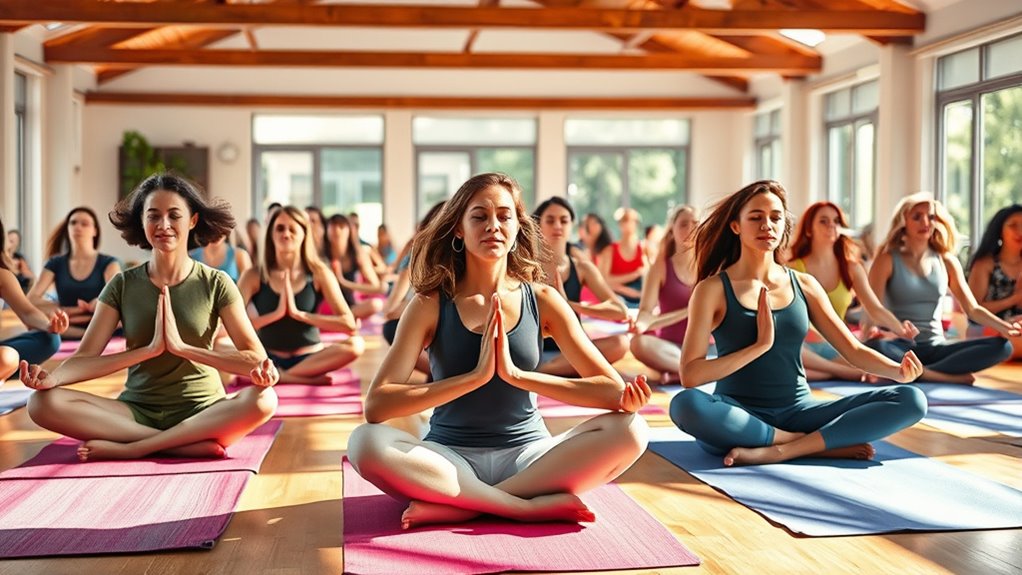
When you feel restless or short on time, short and dynamic meditation practices can offer quick relief and renewed focus. Silent sitting is a simple technique where you sit quietly, focusing on your breath or sensations, helping calm your mind in just a few minutes. Guided visualization takes this further by leading you through vivid mental images, engaging your imagination and distracting from restlessness. These practices are perfect for busy days, allowing you to reset without needing a lengthy session. You can do them anywhere—at your desk, in a waiting room, or during a break. The key is consistent practice; even brief moments of focused attention can reduce stress, improve clarity, and boost your energy levels when you need it most.
Using Sound and Music to Focus Your Mind
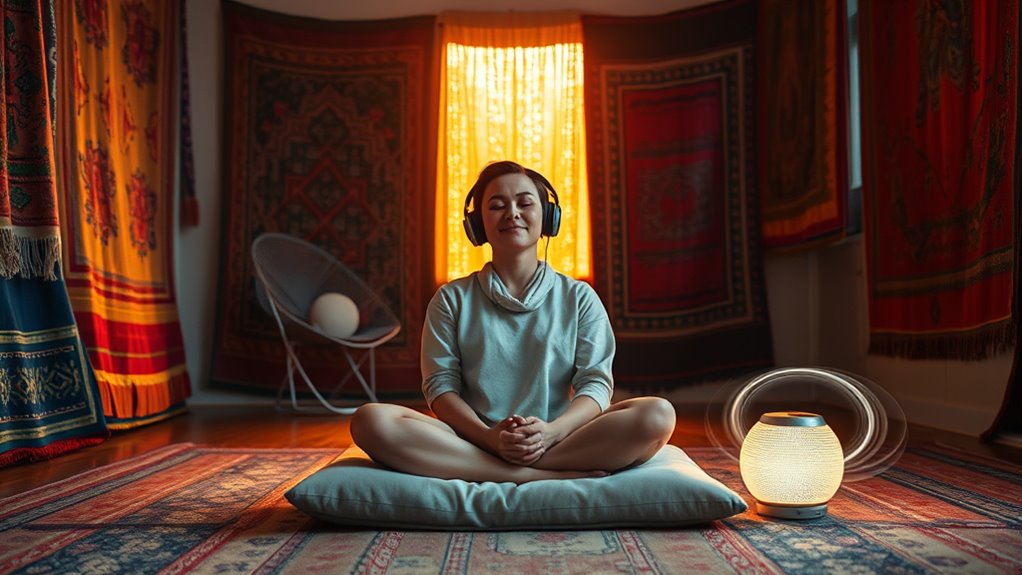
Using sound and music can help you stay focused during meditation, even if sitting still feels tough. You might choose calming sounds like gentle waves or soft wind, or create music rituals that signal your practice. Binaural beats can also enhance concentration, guiding your mind into a relaxed, alert state. Additionally, incorporating sound healing science principles by selecting specific frequencies may further support your meditation goals.
Selecting Calming Sounds
Choosing the right calming sounds can substantially enhance your meditation experience, especially if you find it hard to sit still. Nature sounds, like flowing water, bird songs, or gentle rain, can create a soothing environment that helps your mind relax. These sounds mask background noise and bring your focus inward. Guided meditations often incorporate calming audio cues that direct your attention and promote tranquility. When selecting sounds, choose what resonates with you personally—some prefer the hum of forest sounds, while others find ocean waves calming. Experiment with different options to discover what keeps your mind engaged without distraction. The goal is to create a gentle auditory atmosphere that anchors your focus and makes it easier to stay present during your meditation. Incorporating an aroma diffuser with calming essential oils can further enhance the atmosphere and deepen your relaxation.
Incorporating Music Rituals
Incorporating music rituals into your meditation can deepen your focus and create a meaningful routine. Using sound and music as part of your practice taps into the power of music therapy and sound healing, helping you stay present. You might choose specific melodies or instruments to signal the start of your session or set an intention. Experiment with different sounds that resonate with you, like chimes, drumming, or calming melodies. These rituals can help reset your mind, reduce stress, and boost your focus during meditation. To enhance your experience, consider:
- Creating a playlist of calming tunes
- Using singing bowls or bells for sound healing
- Incorporating rhythmic drumming to energize
- Listening to soothing nature sounds with music
- Vetted – Halloween Product Reviews
Using Binaural Beats
Binaural beats are a powerful tool to help focus your mind during meditation. They work through brainwave entrainment, where different sound frequencies are played into each ear, prompting your brain to sync with the beat. This creates a calming, centered state that’s perfect for those who find sitting still challenging. Using sound therapy with binaural beats can make meditation more accessible and engaging, especially for restless minds. You simply listen through headphones, allowing the subtle tones to guide your brain into desired states like relaxation or focus. This technique helps you bypass the need for traditional stillness, making meditation more adaptable to your natural energy levels. Incorporating brainwave entrainment into your routine can enhance concentration and cultivate a peaceful mind.
Breathing Exercises That Keep You Engaged
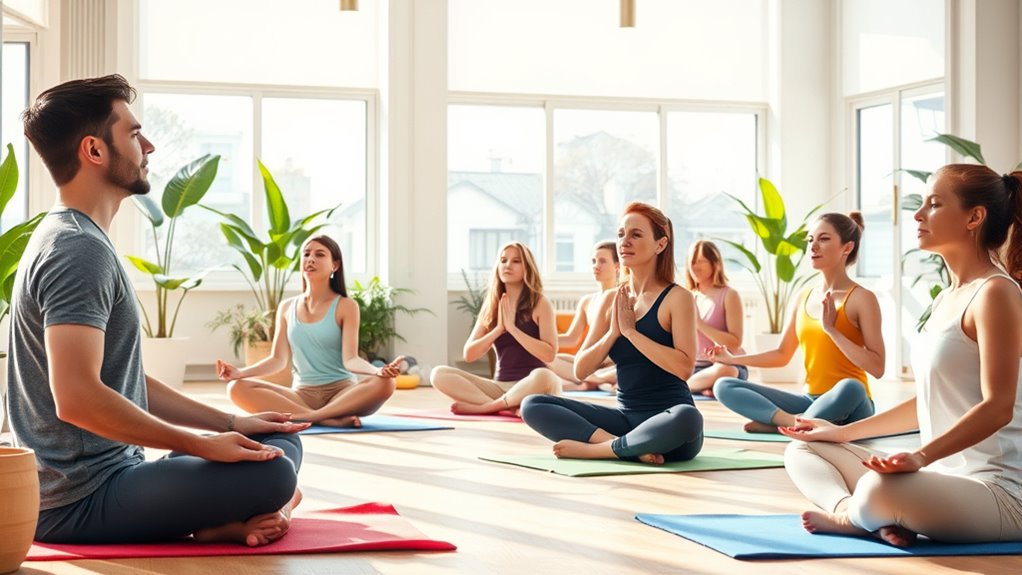
When you find it hard to sit still during meditation, engaging your breath can make a big difference. Focusing on your breathing keeps your mind present and prevents wandering. Try combining breathing exercises with mindful journaling to track your progress or incorporate visual meditation by imagining your breath as flowing colors or shapes. These techniques help you stay engaged and grounded. Incorporating breath control techniques can further enhance your ability to stay focused during restless moments.
Engage your breath through visualization and journaling to stay present and grounded in meditation.
Here are some effective methods:
- Deep belly breathing, slowly inhaling and exhaling to calm your nerves
- Alternate nostril breathing to balance energy
- Visualizing each breath as a wave or light moving through your body
- Noting each inhale and exhale as part of your mindful journaling practice
These practices make meditation more interactive and suited for restless minds.
Creating a Personalized Meditation Routine
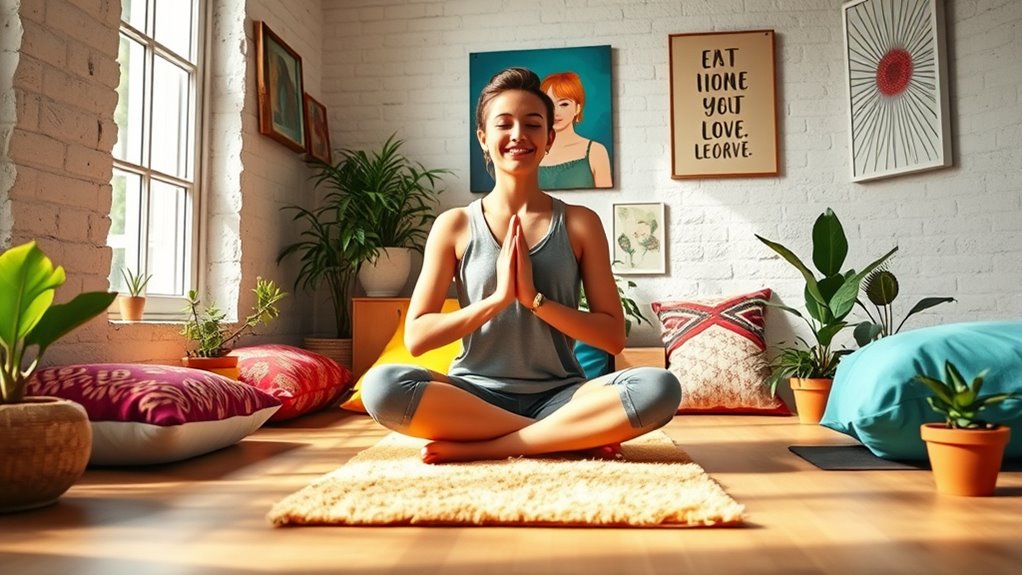
Creating a personalized meditation routine starts with understanding what works best for you and your lifestyle. If sitting still isn’t easy, consider incorporating movement or brief activities like mantra chanting to keep your mind engaged. Mantra chanting helps focus your thoughts and reduces restlessness, making meditation more accessible. Visualization exercises can also be effective; imagine calming scenes or positive outcomes to anchor your attention. Experiment with different durations, environments, and techniques until you find what feels natural. Remember, mindfulness practices matter more than perfection. Adjust your routine as needed—maybe short sessions in the morning or quick visualizations during breaks. By tailoring your practice, you’ll stay motivated and gradually deepen your meditation, even when sitting still isn’t your strength.
Frequently Asked Questions
Can Meditation Help With ADHD or Hyperactivity?
Meditation can help with ADHD and hyperactivity by improving your neurodivergent focus and concentration enhancement. Even if you struggle to sit still, practices like guided or moving meditation can keep your mind engaged while calming your body. Regular meditation trains your brain to better manage impulses, reduce restlessness, and increase mental clarity, giving you tools to navigate hyperactivity more effectively in daily life.
How Do I Meditate if I Have Chronic Pain?
Think of your mind as a gentle stream that can be guided around obstacles. When you meditate with chronic pain, focus on mindfulness adjustments and pain management techniques. Find a comfortable position, and gently direct your attention to your breath or sensations without judgment. Use guided meditations designed for pain relief, and be patient—your practice will build resilience and help you find moments of calm amid discomfort.
Is It Effective to Meditate Lying Down or While Moving?
Yes, lying down meditation and moving meditation techniques can be very effective if you can’t sit still. Lying down meditation helps you relax without strain, making it ideal for chronic pain or discomfort. Moving meditation techniques, like walking or gentle stretching, keep your body active while maintaining mindfulness. Both methods help you stay engaged and focused, making meditation accessible and beneficial even if sitting still isn’t an option.
Are There Specific Meditation Techniques for Children or Teens?
Yes, there are specific meditation techniques for children and teens. You can try mindful breathing exercises to help them focus and stay calm. Incorporate playful visualization, encouraging them to imagine fun, peaceful scenes. These methods make meditation engaging and accessible, even for those who find sitting still challenging. Keep sessions short and fun, and let them express their creativity to build a lasting meditation habit.
How Long Should I Meditate if I Can’t Sit Still for Long?
If you can’t sit still for long, start with short sessions, even just 2-5 minutes. Try movement-based meditation, like walking or gentle stretches, to keep your mind focused and body active. Gradually increase your practice as you get comfortable. The key is consistency, so listen to your body and don’t push yourself too hard. Over time, these short, active sessions can help you build a peaceful mind.
Conclusion
Think of meditation like tending a lively garden—you can’t just plant and forget. Instead, you weave in movement, sounds, and breath, nurturing each moment like a new sprout. Your mind, like a restless butterfly, needs gentle guidance rather than confinement. By customizing your routine, you become the gardener of your own calm, shaping a vibrant space where stillness grows amidst the lively dance of your thoughts. Embrace your unique rhythm and watch tranquility blossom.