To boost your indoor air quality and protect your health, make certain good ventilation by regularly opening windows and using exhaust fans. Use air purifiers with HEPA filters, and keep humidity levels between 30-50% with dehumidifiers or humidifiers. Clean dust and surfaces often, choose low-emission products, and add air-purifying plants. Avoid smoking indoors, and monitor air quality with sensors. These simple fixes can markedly improve your environment—exploring more will show you how to implement them effectively.
Key Takeaways
- Improve ventilation by regularly opening windows and using exhaust fans to reduce indoor pollutants.
- Use air purifiers with HEPA filters and keep them well-maintained to remove allergens and toxins effectively.
- Maintain indoor humidity between 30-50% to prevent mold growth and dust mites.
- Choose low-VOC, eco-friendly furnishings and paints to minimize chemical emissions indoors.
- Regularly clean surfaces, dust, and vacuum to reduce airborne dust, pet dander, and other allergens.
Keep Your Home Well-Ventilated

Keeping your home well-ventilated is essential for maintaining good indoor air quality. Effective ventilation strategies help remove pollutants and bring in fresh air, reducing indoor air contaminants. To optimize airflow, open windows regularly, especially when cooking or using chemicals, and use exhaust fans in the kitchen and bathroom. Consider cross-ventilation by opening windows on opposite sides of your home to enhance airflow. Installing vents or air bricks can also aid airflow optimization, especially in areas prone to moisture buildup. Keep interior doors open to promote circulation throughout your home. Regularly inspecting and maintaining your ventilation systems ensures they work efficiently. Additionally, understanding indoor air quality and how ventilation impacts it can help you make more informed decisions about your home’s airflow. By actively managing ventilation strategies, you create a healthier environment, reducing the risk of airborne illnesses and improving overall indoor air quality.
Use Air Purifiers Effectively

To get the most out of your air purifier, you need to choose one that’s the right size for your space. Make sure to change the filters regularly to keep it functioning effectively. Proper placement is key—position it where it can circulate air freely without obstacles. For optimal performance, consider the air circulation dynamics within your room to ensure even filtering throughout the area.
Choose the Right Size
Choosing the right size air purifier is vital for effectively improving your indoor air quality. The appropriate size depends on your room capacity, so measure the space where you plan to use it. An air purifier that’s too small won’t clean the air efficiently, while one that’s too large may be unnecessarily loud and energy-consuming. Check the manufacturer’s recommendations for room size to ensure the unit matches your space. A unit designed for your room capacity will filter pollutants more effectively and operate efficiently. Proper sizing helps you get the most benefit, making your home a safer, cleaner environment. Additionally, selecting a model with HEPA filtration ensures maximum removal of allergens and airborne particles, further enhancing indoor air quality.
Regular Filter Changes
Proper filter maintenance is key to ensuring your air purifier works effectively over time. Regular filter changes prevent allergen buildup, maintaining ideal air quality and prolonging the filter’s lifespan. When filters become clogged, they struggle to trap pollutants, risking increased allergens and compromised health. By changing filters as recommended, you keep the air clean and breathe easier. Consider the emotional impact:
| Clean Air | Healthy Lungs | Peace of Mind |
|---|---|---|
| Fresh environment | Reduced allergy symptoms | Confidence in your space |
| Better sleep | Fewer respiratory issues | Comfort at home |
| Clear mind | Less irritation | Assurance you’re protecting loved ones |
Stay vigilant—changing filters regularly isn’t just maintenance; it’s an essential step toward healthier living. Maintaining air quality by replacing filters on schedule ensures your air purifier continues to protect your health effectively.
Proper Placement Techniques
Placing your air purifier correctly guarantees it works at its best. Start by selecting a central location away from walls or furniture that could block airflow. Proper furniture placement is key; avoid placing it behind large pieces that restrict air circulation. Keep the appliance positioned at least a few feet above the ground, ideally on a stable surface, to maximize airflow and filtration effectiveness. Don’t place it near sources of moisture or strong odors, which can overload the filter. Make sure the air intake and outlet are unobstructed, allowing for ideal circulation. By paying attention to appliance positioning and furniture placement, you ensure your air purifier operates efficiently, improving indoor air quality and health. Proper placement is simple but essential for the best results.
Manage Humidity Levels
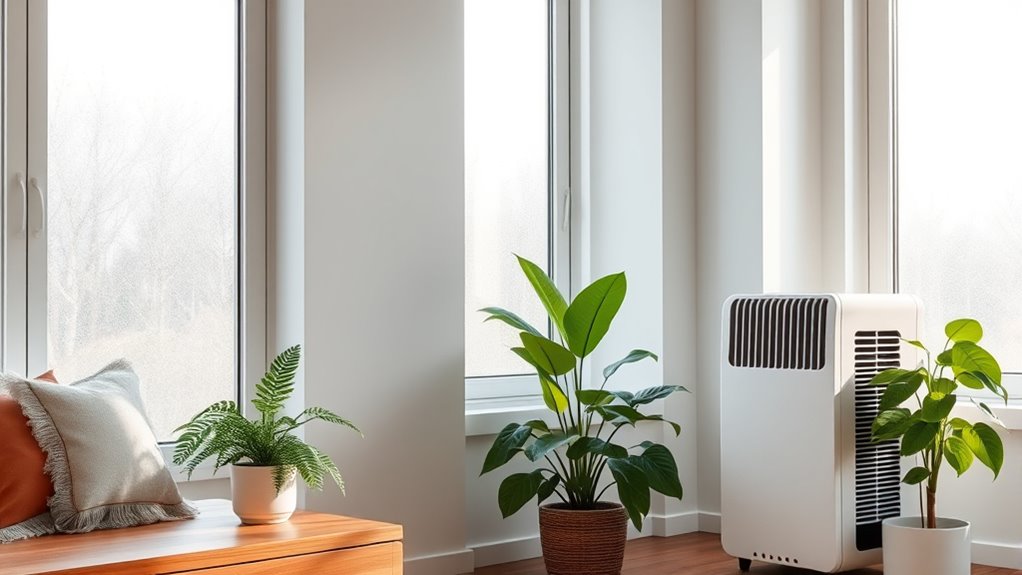
Maintaining ideal humidity levels is essential for indoor air quality and your health. Proper humidity control helps prevent mold growth, dust mites, and bacteria, which thrive in overly humid environments. To manage moisture effectively, use a hygrometer to monitor indoor humidity and keep it between 30-50%. If levels are too high, use exhaust fans, dehumidifiers, or increase ventilation to reduce excess moisture. Conversely, if it’s too low, consider using a humidifier to add moisture to the air. Consistent moisture management not only improves comfort but also reduces the risk of respiratory issues and allergies. By controlling humidity, you create a healthier indoor environment and protect your home from potential damage caused by excess moisture. Advanced materials in some dehumidifiers can improve their efficiency and durability over time.
Regularly Clean and Dust Surfaces

Regularly cleaning and dusting your surfaces keeps dust from piling up and minimizes allergens in the air. When you stay on top of these chores, your home feels fresher and healthier. This simple step substantially boosts overall cleanliness and improves indoor air quality. Additionally, maintaining a dust-free environment can enhance customer experience by creating a more comfortable and healthier space.
Prevents Dust Accumulation
Dust can quickly build up on surfaces, worsening indoor air quality and potentially triggering allergies or respiratory issues. To prevent this, regularly dust and clean surfaces to reduce dust accumulation. Good air circulation helps move airborne dust away from living areas, preventing it from settling. Using dust barriers like curtains, rugs, and furniture covers can catch dust before it spreads across your home. Keep vents and fans clean to ensure they don’t circulate dust particles. When you dust, use a damp cloth or microfiber duster to trap dust effectively. Consistent cleaning not only keeps surfaces clear but also limits the amount of dust that becomes airborne, improving overall air quality and creating a healthier living environment.
Reduces Allergens in Air
Cleaning and dusting surfaces frequently can markedly reduce the number of allergens floating in your indoor air. Regularly wiping down furniture, shelves, and other surfaces helps eliminate pet dander that settles there, preventing it from becoming airborne. Dusting also removes dust mites and other particles that can trigger allergic reactions. Additionally, keeping surfaces clean reduces the growth of airborne mold, which thrives on dust and moisture. Use a damp cloth or microfiber duster to trap allergens effectively, rather than just spreading them around. By maintaining a consistent cleaning routine, you’ll lower the concentration of airborne mold and pet dander, making your indoor environment healthier and more comfortable for allergy sufferers. Digital literacy programs encourage playful communication, which can help seniors stay connected and engaged. This simple step can profoundly improve your indoor air quality.
Enhances Overall Cleanliness
Maintaining a high level of overall cleanliness in your home not only improves its appearance but also promotes healthier air quality. Regularly cleaning and dusting surfaces helps reduce airborne bacteria and prevents mold growth. When you keep surfaces free of dust and grime, you’re limiting the accumulation of particles that can circulate in the air. This simple practice can considerably cut down on allergens and harmful microbes. To maximize effectiveness, consider these actions:
- Wipe down frequently touched surfaces daily
- Vacuum carpets and upholstery regularly
- Use damp cloths to trap dust instead of just sweeping
Choose Low-Emission Products and Materials
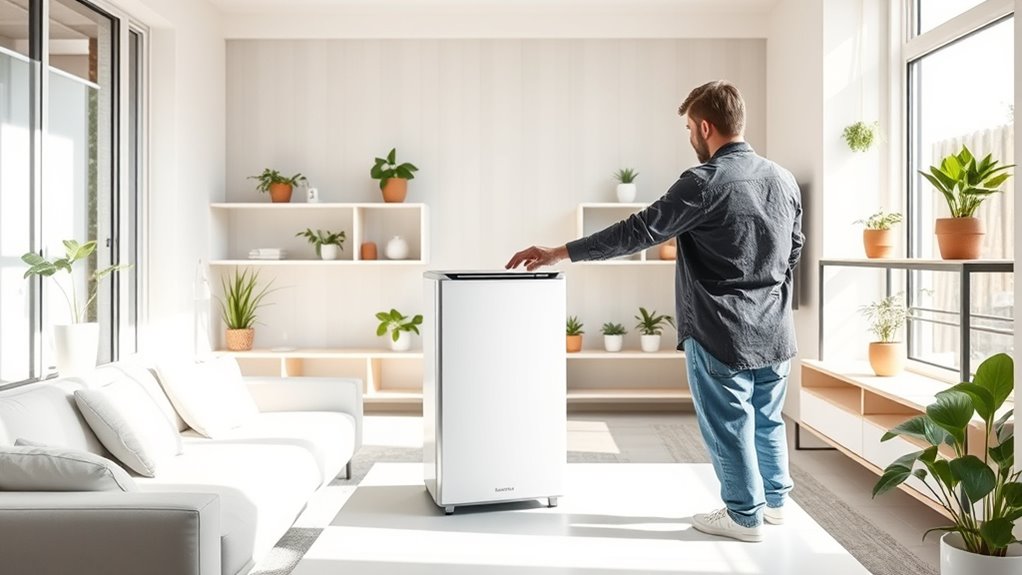
Choosing low-emission products and materials is an essential step in improving indoor air quality. Opt for eco friendly furnishings that release fewer volatile organic compounds (VOCs) and other pollutants, reducing indoor air contaminants. When updating your space, select non toxic paints that are free from hazardous chemicals, which can emit fumes long after application. These products help minimize harmful emissions and create a healthier environment for you and your family. Always check labels to ensure the items are low-VOC or VOC-free, and prioritize products that are sustainably sourced and environmentally friendly. Making mindful choices about the materials you bring into your home can considerably decrease indoor air pollution, leading to better health and overall comfort.
Incorporate Indoor Plants
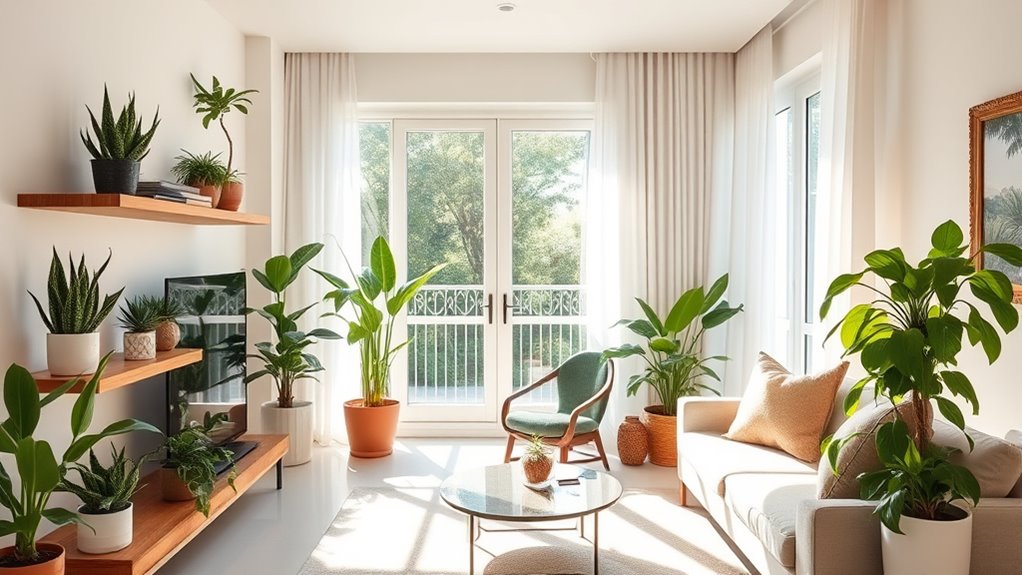
Adding indoor plants is an effective way to boost your home’s air quality naturally. They offer numerous indoor plants benefits, from filtering toxins to increasing humidity. When choosing the right plants, consider factors like light, maintenance, and size to guarantee they thrive in your space. Selecting plants known for air purification, such as snake plants or pothos, enhances their benefits. Properly maintained indoor plants can reduce airborne pollutants and improve overall wellbeing. Keep in mind that overwatering or neglecting plant health can diminish their effectiveness. To maximize benefits, position plants in areas with adequate light and avoid overcrowding. Incorporating indoor plants not only elevates your decor but also creates a healthier indoor environment, making your home more comfortable and inviting. Using air-purifying plants can further enhance your home’s air quality and promote well-being.
Avoid Indoor Smoking
To safeguard your indoor air quality, it’s vital to avoid smoking inside your home, as tobacco smoke releases harmful chemicals and particulates that linger in the air. Secondhand smoke contains toxins that can cause respiratory problems, allergies, and other health issues for everyone in your household. Tobacco fumes settle on surfaces and drift through the air, making your environment unsafe even if smoking is outside. By not smoking indoors, you eliminate the source of these pollutants and reduce the risk of long-term health problems. Maintaining a smoke-free environment helps guarantee cleaner, healthier air for you and your loved ones. Being aware of indoor air quality and its impact can motivate you to keep your living space healthier.
Monitor Indoor Air Quality With Sensors

Monitoring indoor air quality with sensors allows you to detect pollutants and airborne toxins in real-time, giving you immediate insight into your environment. Proper sensor calibration guarantees accurate readings, helping you identify issues early. Using data analytics, you can track trends over time and make informed decisions to improve air quality. Consider these key points:
- Regularly calibrate sensors to maintain measurement accuracy.
- Use data analytics to interpret complex air quality patterns.
- Choose sensors that detect specific pollutants like VOCs, CO₂, and particulate matter.
- Remember that fatherhood plays a vital role in fostering a healthy environment, inspiring us to care for our loved ones by maintaining good air quality.
Frequently Asked Questions
How Often Should I Replace or Clean My Air Purifier Filters?
You should replace or clean your air purifier filters every 3 to 6 months to ensure peak filter maintenance. Regularly checking filters helps maintain the purifier‘s lifespan and keeps indoor air quality high. If you notice reduced airflow or odors, it’s time for a change. Proper filter maintenance not only extends your device’s lifespan but also guarantees it effectively removes pollutants, keeping your home healthier.
Which Indoor Plants Are Best for Improving Air Quality?
If you’re tired of pretending your houseplants are just decorative, opt for air purifying plants like snake plants, pothos, or peace lilies. These low-maintenance greenery heroes actively filter toxins and require minimal fuss—perfect for your busy life. Just water them occasionally, and they’ll do the air-cleaning work for you. Say goodbye to chemical smells and hello to fresh air, all while pretending you’re a plant whisperer.
What Are the Signs of Poor Indoor Air Quality?
You notice symptoms like sneezing, coughing, or itchy eyes, which could indicate poor indoor air quality. You might also detect a musty smell, signs of mold growth, or increased airborne allergens floating around. Poor air quality can cause headaches, fatigue, and respiratory issues. If you experience these symptoms regularly, it’s a sign you should improve ventilation, reduce mold, and minimize airborne allergens to create a healthier indoor environment.
Can Pets Impact Indoor Air Quality Significantly?
Yes, pets can considerably impact indoor air quality. Their pet dander acts as a major allergen that spreads easily throughout your home, leading to respiratory issues and allergy symptoms. Regular cleaning and grooming help reduce dander and allergens. You should also consider air purifiers with HEPA filters to trap airborne particles. Keeping pets out of bedrooms and vacuuming frequently can make a noticeable difference in improving your indoor air quality.
Are There Specific Ventilation Tips for Small or Poorly Ventilated Spaces?
Sure, because who wouldn’t want to turn their tiny closet into a breezy oasis? To improve airflow, open windows regularly for natural ventilation and create cross-ventilation by opening opposite sides. Use fans to boost air exchange if windows aren’t an option. Even small spaces benefit from these simple tricks, ensuring fresh air circulates, reducing odors, and preventing stale, indoor pollution from building up.
Conclusion
Imagine walking into your home, greeted by fresh, crisp air that lifts your spirits. By keeping your space well-ventilated, using air purifiers, and adding vibrant plants, you create a sanctuary free from sneezing fits and lingering odors. Manage humidity and avoid indoor smoking, turning your home into a gust of fresh air. With simple steps and sensors guiding you, you’ll transform your space into a healthy haven where every breath feels pure and invigorating.