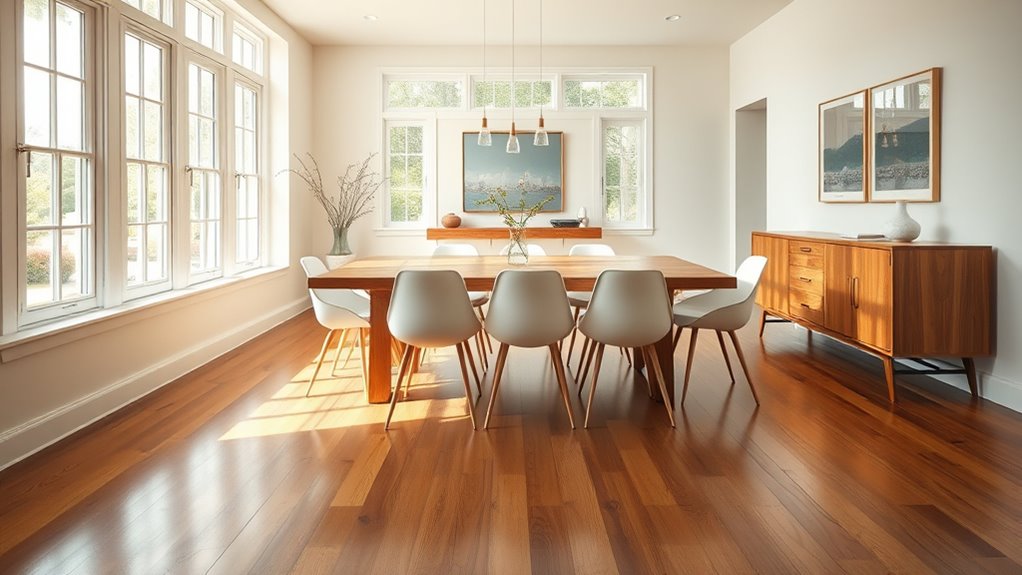

To create a dining room with clear pathways, start by measuring your space and planning furniture placement to avoid obstructions. Opt for appropriately scaled tables and chairs, positioning them to allow at least 36 inches of walkways. Use rugs, floor markings, and visual cues like color contrasts or artwork to guide movement. Regularly reassess your layout and make adjustments to keep pathways open. Keep clutter minimal; exploring these tips will help you establish a smooth, unobstructed flow.

Turn quiet afternoons into listening time
- Thousands of audiobooks, podcasts and originals
- Listen on your phone, tablet or Echo — also offline
- Cancel anytime
Key Takeaways
- Plan room layout to keep pathways at least 36 inches wide and free of clutter.
- Choose appropriately scaled furniture and arrange it to facilitate smooth traffic flow.
- Use visual cues like rugs, color schemes, and artwork to delineate clear pathways.
- Incorporate layered lighting to enhance visibility and guide movement around the space.
- Regularly reassess and rearrange furniture to eliminate obstructions and maintain open routes.
dining room furniture with appropriate scale
As an affiliate, we earn on qualifying purchases.
As an affiliate, we earn on qualifying purchases.
Assessing Your Space and Planning Your Layout
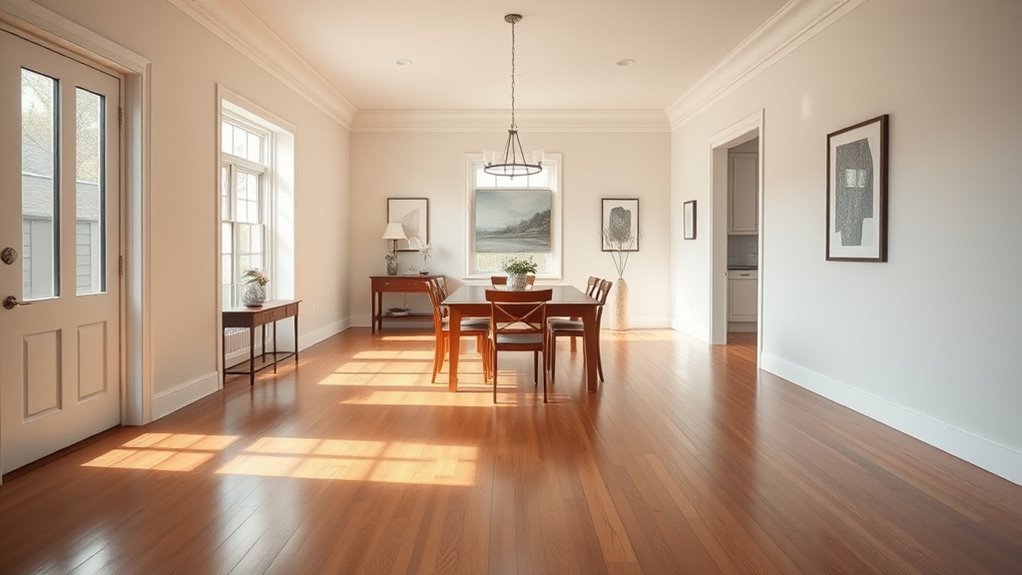
How do you determine the best way to arrange your dining room? Start by evaluating your space carefully. Measure the room’s dimensions to understand what fits comfortably. Think about how you want to incorporate decorative accents, such as wall art or centerpieces, without cluttering pathways. Decide on a color scheme that enhances the room’s size and flow—light, neutral tones can make the space feel larger, while bold colors add personality. Visualize different layouts, considering how furniture placement affects movement and accessibility. Keep pathways clear by avoiding overcrowding, especially near entry points or windows. Planning ahead ensures your dining room feels inviting yet functional, with enough space for guests to move freely while highlighting your style through thoughtful decorative accents and harmonious color choices. Incorporating proper space planning can further optimize both comfort and aesthetics in your layout.
Choosing the Right Furniture Size and Scale
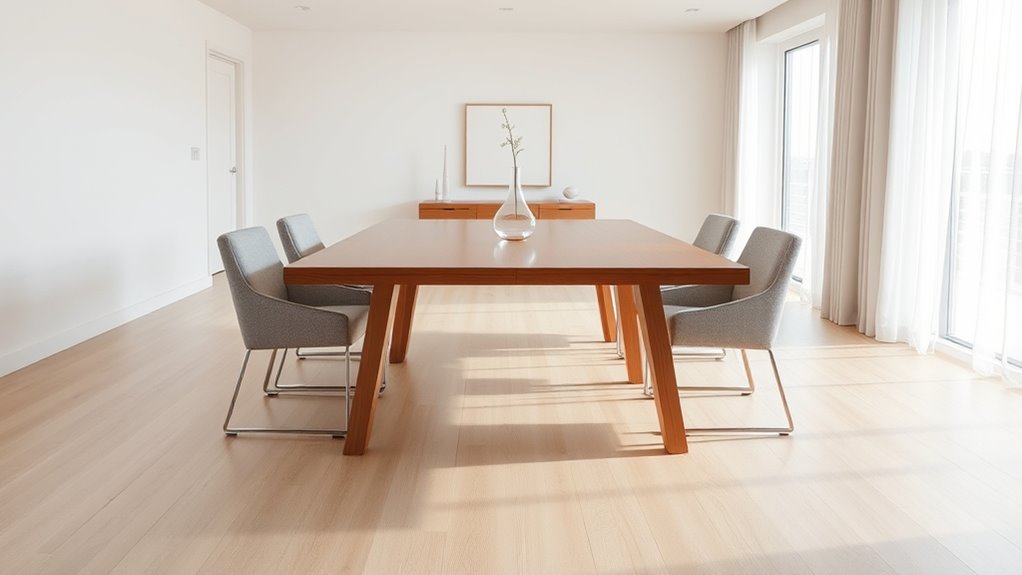
Selecting furniture that matches your dining room’s size is essential to creating a balanced and functional space. Proper furniture proportions ensure your table, chairs, and sidepieces don’t overwhelm or underwhelm the room. Aim for scale harmony by choosing pieces that complement the room’s dimensions, maintaining visual and physical balance. For smaller spaces, opt for a compact table and streamlined chairs to avoid crowding. In larger rooms, larger tables with appropriately scaled chairs will create a sense of proportion. Remember, oversized furniture can make a room feel cramped, while undersized pieces may appear out of place. By paying close attention to furniture proportions and scale harmony, you’ll foster an inviting atmosphere that’s both practical and aesthetically pleasing.
Strategic Placement of Dining Table and Chairs

Once you’ve chosen appropriately scaled furniture, the next step is to carefully plan the placement of your dining table and chairs. Position your table centrally, ensuring enough space around it for easy movement. Use decorative centerpieces to enhance visual appeal without cluttering the space. Maintain consistent color coordination between the table, chairs, and surrounding decor to create harmony. Consider the following layout options:
| Placement Option | Benefits | Key Considerations |
|---|---|---|
| Centered in room | Balanced look | Adequate aisle space |
| Against wall | Maximizes space | Accessibility for chairs |
| Off-center | Dynamic design | Flow with room features |
Strategic placement ensures your dining area remains functional, inviting, and free of obstructions. Additionally, thoughtful arrangement can contribute to the overall ambience of your farmhouse-style space.
Maintaining Adequate Walking Aisles
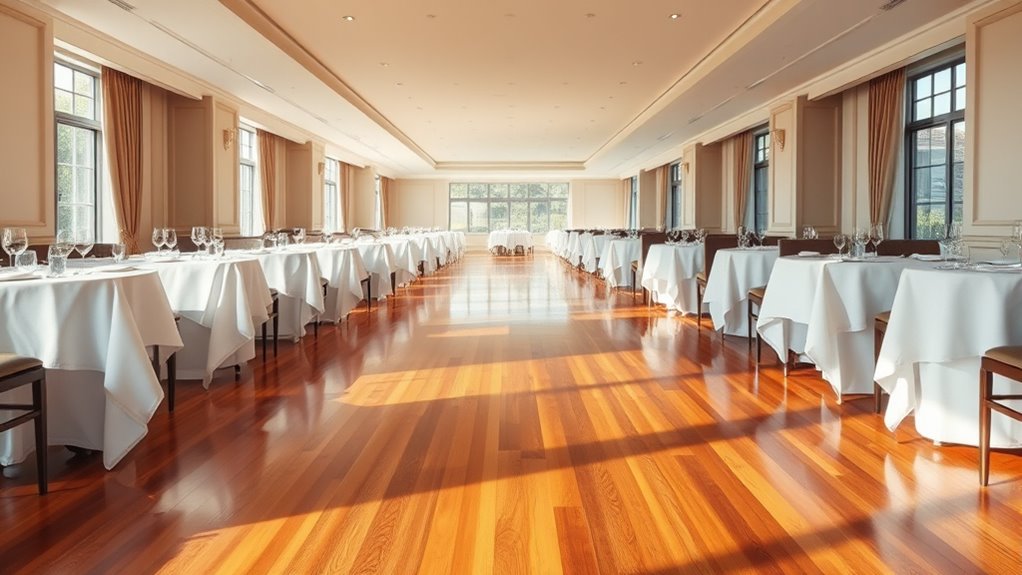
To guarantee your dining room remains both functional and safe, maintaining clear and adequate walking aisles is essential. You should keep pathways wide enough for easy movement, ideally at least 36 inches. Avoid cluttering the aisles with decorative centerpieces that can obstruct movement. Instead, choose slim, low-profile decorations that add style without blocking the way. When arranging furniture, consider color coordination to create a cohesive look that guides guests naturally along the aisles. Consistent spacing between chairs and tables also helps prevent congestion. Regularly check for any obstructions or misplaced items that could hinder flow. Keeping your pathways clear ensures guests can move comfortably and safely, making your dining experience more enjoyable and accessible for everyone. Standardize communication for all guests by using clear signage or visual cues to direct traffic flow.
Using Rugs and Floor Markings to Define Pathways
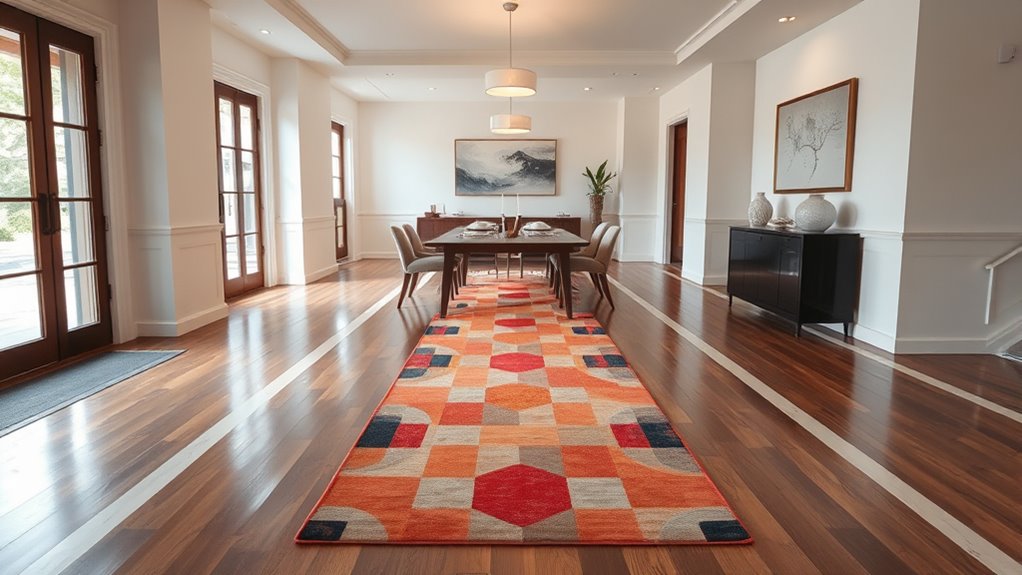
Have you ever considered how rugs and floor markings can subtly guide your guests through the dining space? Proper rugs placement helps create visual boundaries that define pathways without blocking movement. Position rugs along the main walkways, making certain they don’t interfere with chairs or tables. Use rugs to highlight entry points or transition zones, making navigation intuitive. Floor markings, such as painted lines or tape, can further delineate clear routes, especially in open or multi-use areas. They’re discreet yet effective, helping guests naturally follow designated pathways. Combining rugs and floor markings enhances the room’s flow, reduces confusion, and maintains a tidy appearance. Additionally, floor markings can be used to indicate safe walking distances or areas to avoid, further improving safety and organization. By thoughtfully integrating these elements, you ensure a smooth, unobstructed dining experience while adding style and organization to your space.
Incorporating Built-In Storage to Reduce Clutter
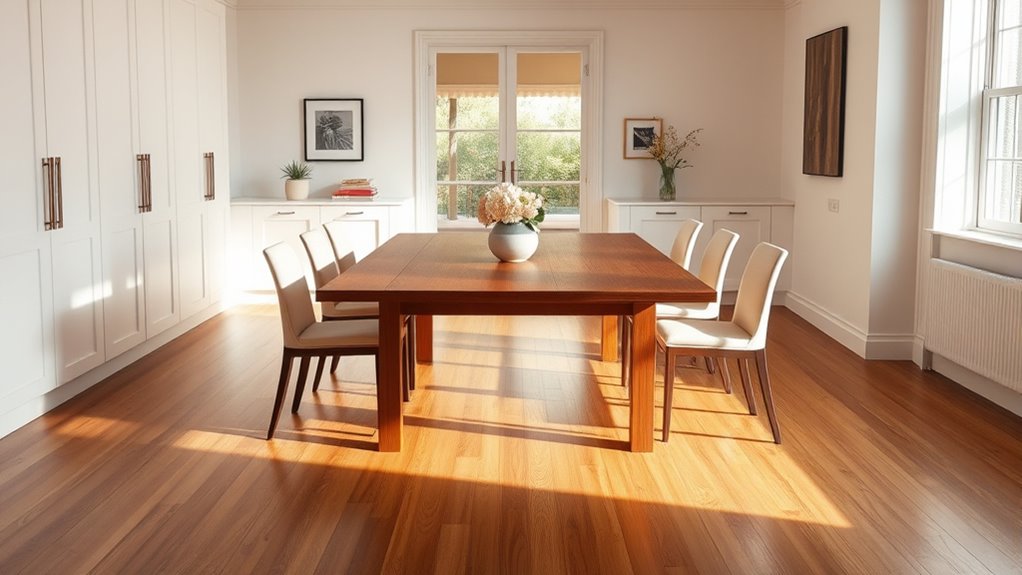
To keep your dining room tidy and open, consider maximizing vertical space with tall built-in shelves or cabinets. You can also hide clutter in discreet compartments integrated into walls or furniture. These solutions help maintain a clear pathway while providing convenient storage. For a modern touch, incorporating built-in storage options inspired by electric bike storage solutions can further enhance organization and accessibility.
Maximize Vertical Space
Maximizing vertical space in your dining room is an effective way to keep the area organized and clutter-free. By utilizing your walls, you create more storage without sacrificing floor space. Consider these options:
- Install built-in shelves or cabinets that blend with your wall color, making storage seamless and visually appealing.
- Use tall, slim storage units or sideboards topped with decorative accents to add personality while providing extra space.
- Hang decorative wall-mounted racks or hooks for utensils, napkins, or plant displays, keeping essentials within reach and enhancing the room’s style.
- Incorporate storage solutions that maximize your room’s height and help maintain a clear pathway.
These strategies help you reduce clutter, showcase decorative accents, and maintain a clear pathway. Vertical storage solutions are practical, stylish, and make the most of your dining room’s height.
Integrate Hidden Compartments
Incorporating hidden compartments into your dining room offers a sleek way to hide clutter and keep the space tidy. Hidden compartments, or concealed storage, seamlessly blend into your furniture or walls, providing discreet places to stow away essentials. You might consider built-in cabinets with secret drawers or a table with hidden compartments for linens and utensils. These concealed storage options keep everyday items out of sight, reducing visual clutter and maintaining a clean, open feel. By integrating these clever features, you enhance functionality without sacrificing style. Hidden compartments are especially useful for storing seasonal or rarely used items, freeing up space for more frequent use. Additionally, Vetted options like built-in storage solutions are designed for easy installation and durability, ensuring long-term satisfaction. With thoughtful design, you can enjoy a clutter-free dining area that feels spacious and inviting.
Selecting Multi-Functional Furniture for Flexibility
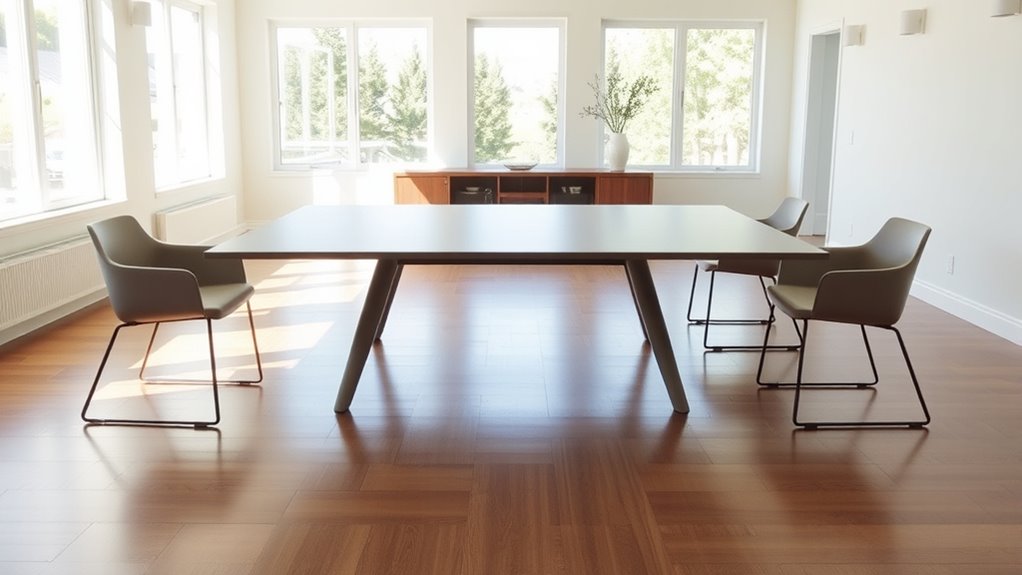
Choosing multi-functional furniture can greatly enhance the flexibility of your dining room, especially when space is limited. It allows you to create flexible arrangements that adapt to different needs. To maximize this, consider these options:
- Opt for extendable tables that can seat more guests when needed and fold down for everyday use.
- Use benches with built-in storage to save space and keep your dining area tidy.
- Incorporate sideboards or credenzas that double as serving stations or display areas.
- Additionally, understanding the symbolism behind certain furniture choices can help you select pieces that resonate with your personal or spiritual preferences.
These pieces of multifunctional furniture help maintain clear pathways by reducing clutter and offering versatile solutions. With thoughtful selections, you can enjoy a dynamic dining space that easily shifts between intimate family meals and larger gatherings, all while keeping the room open and accessible.
Optimizing Lighting to Highlight Clear Routes
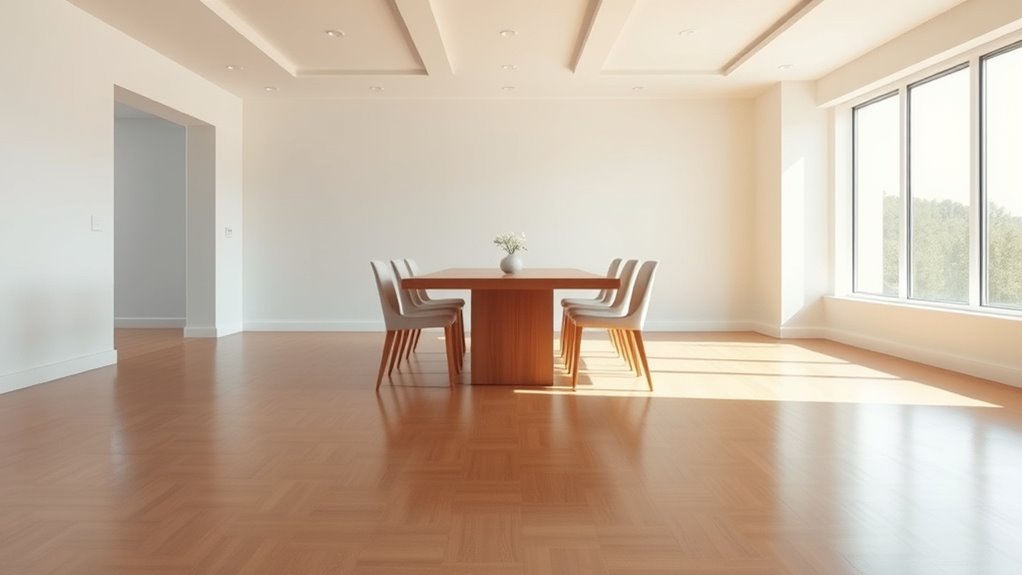
To keep your dining room’s pathways clear and inviting, you should focus on optimizing your lighting. Using layered lighting, like ceiling fixtures combined with task and ambient lights, creates depth and clarity. Incorporating accent lights and maximizing natural illumination further highlights your routes while enhancing the overall ambiance.
Use Layered Lighting
Layered lighting is essential for creating clear pathways in your dining room, ensuring safe and easy navigation. It combines different light sources to optimize lighting and highlight pathways effectively. First, install overhead fixtures like chandeliers or pendant lights to provide general illumination and set the mood. Second, add task lighting, such as wall sconces or adjustable spotlights, to brighten specific areas and prevent shadows. Third, consider accent lighting to subtly enhance ambiance without cluttering the space. This layered approach not only highlights clear routes but also boosts ambiance enhancement, making your dining room inviting and functional. By combining these lighting layers, you create a balanced environment that emphasizes pathways while elevating the overall atmosphere. Additionally, understanding the importance of attention can help you focus on designing a well-lit space that guides the eye naturally along intended routes.
Incorporate Accent Lights
Incorporating accent lights is a smart way to emphasize clear pathways in your dining room. By strategically placing accent lighting along walls, architectural features, or underneath cabinets, you create visual cues that guide movement and define space. Use ambient lighting to set a warm, inviting mood while highlighting key areas and pathways. Accent lighting adds depth and focus, making pathways more noticeable without overwhelming the room. For example, installing small spotlights or LED strips along the edges of walkways ensures safe navigation and enhances the overall aesthetic. Keep the lighting subtle yet deliberate, so it draws attention to clear routes without cluttering the space. This balance helps maintain an open, organized dining area that naturally directs guests and family members along designated paths.
Maximize Natural Illumination
Have you considered how natural light can transform the way you see and navigate your dining room? Maximizing natural illumination enhances clarity and creates an inviting atmosphere. To do this, start with these tips:
- Use light, airy window treatments like sheer curtains to let sunlight flow freely while maintaining privacy.
- Place indoor plants near windows to reflect light and add freshness, making the space feel vibrant and open.
- Keep pathways clear of heavy furniture that might block light or create obstacles, ensuring easy movement.
Incorporating Visual Cues to Guide Movement
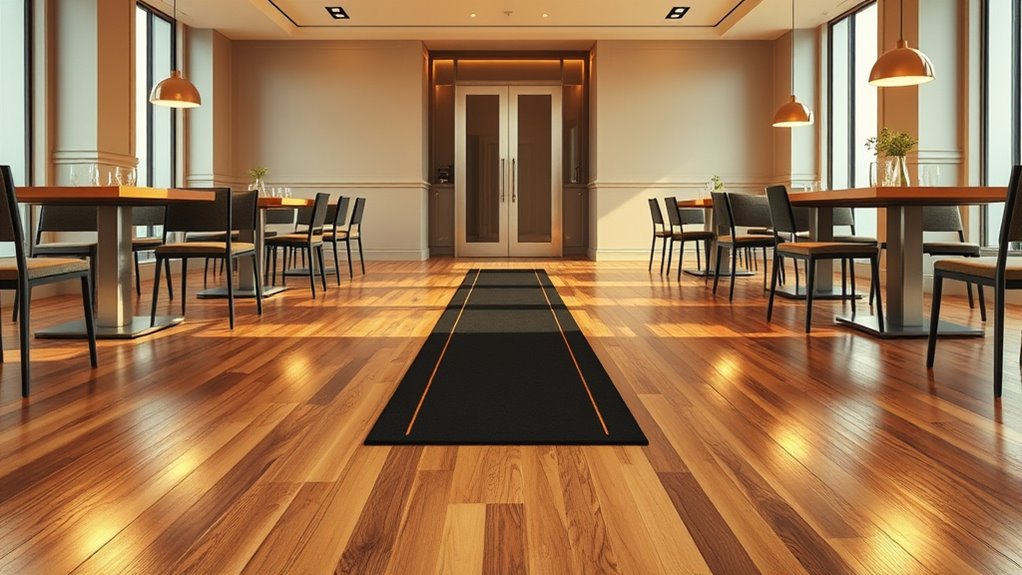
Visual cues are essential for guiding movement through a dining room, especially when space is limited or multiple people are present. You can achieve this by using color coordination to subtly direct flow—differently colored rugs or placemats can signal pathways or zones. Decorative accents, such as artwork or strategically placed sculptures, also serve as visual markers that naturally draw attention away from clutter and toward clear routes. These cues help your guests navigate comfortably without confusion or obstruction. Keep in mind that consistency in color schemes and placement reinforces the message, making movement intuitive. By thoughtfully incorporating visual cues like coordinated colors and decorative accents, you create a welcoming space that promotes smooth, unobstructed circulation around your dining table.
Regularly Reassessing and Rearranging for Optimal Flow
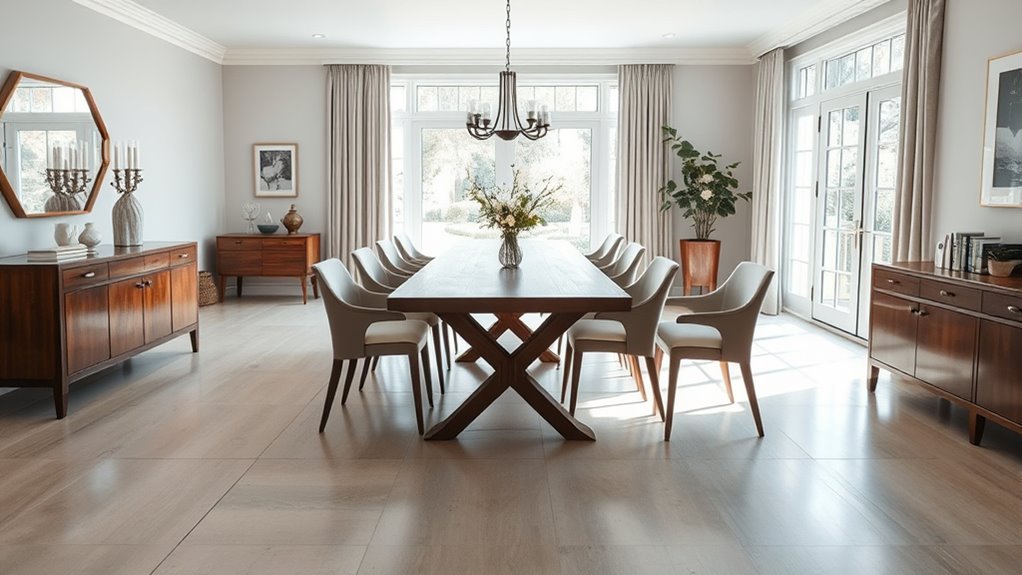
To keep your dining room flowing smoothly, you should regularly check for obstructions and clear any clutter. Don’t hesitate to try different layouts until you find the arrangement that works best. Consistently reassessing your space guarantees pathways stay open and functional.
Evaluate Obstructions Regularly
Regularly reassessing your dining room layout guarantees that pathways remain clear and functional. Over time, decorative accessories or changes in your color schemes can unintentionally create obstructions. To keep things flowing smoothly, check for things like clutter, misplaced furniture, or overly bulky decor.
Here are three ways to evaluate obstructions:
- Move around your space during different times of the day to spot new obstacles.
- Remove or reposition decorative accessories that block walkways or doorways.
- Adjust furniture placement as your color schemes or decor evolve to maintain open pathways.
Experiment With Layouts
Rearranging your dining room layout periodically can reveal better ways to optimize flow and functionality. Try different configurations to see what works best for your space. Incorporate decorative accents thoughtfully, placing them where they add visual interest without cluttering pathways. Experiment with various color schemes to create a cohesive look that enhances the room’s ambiance. Moving furniture and accents regularly helps you identify awkward spots and improve traffic flow. Consider swapping the placement of your table, sideboards, or chairs to maximize space and accessibility. Keep your eye on maintaining clear pathways, and don’t hesitate to try new arrangements until you find the perfect balance of style and practicality. Regularly reassessing your layout keeps your dining area functional and inviting.
Maintain Clear Pathways
Maintaining clear pathways in your dining room requires ongoing attention and periodic adjustments. You should regularly reassess your layout to ensure traffic flows smoothly and the space feels inviting. As you update decorative accents, consider how they affect movement—avoid clutter that blocks pathways. Revisit your color schemes; lighter shades can make the space feel more open and accessible.
Here are some tips:
- Rearrange furniture seasonally to optimize flow and accommodate different gatherings.
- Keep decorative accents minimal near walkways to prevent obstructions.
- Use contrasting colors to highlight pathways and create visual cues for easy navigation.
Frequently Asked Questions
How Can I Maximize Space in a Small Dining Room?
To maximize space in a small dining room, opt for space-saving furniture like foldable tables and stackable chairs. Use wall-mounted storage to keep essentials organized without cluttering the floor. Keep pathways clear by choosing slim furniture and avoiding bulky pieces. Incorporate mirrors to create an illusion of more space, and position furniture strategically to maintain easy movement. These tips help you create a functional, open dining area even in tight spaces.
What Safety Tips Ensure Clear Pathways During Gatherings?
To guarantee clear pathways during gatherings, always keep fire escapes and emergency exits unobstructed. Arrange furniture to create wide walkways, ideally at least 36 inches, so guests can move freely. Use rugs with non-slip backing and avoid clutter near exits. Regularly check that pathways remain clear as the room fills. These safety measures help prevent accidents and ensure everyone can evacuate quickly if needed.
How Do I Choose Durable Furniture for High-Traffic Areas?
Did you know that choosing durable furniture can extend its lifespan by up to 50%? To guarantee your high-traffic area stays functional, focus on furniture maintenance and material comparison. Opt for robust materials like hardwood or metal, which withstand daily wear better than softer options. Regular cleaning and prompt repairs keep your furniture in top shape. This way, you create a space that’s both stylish and resilient for everyday use.
Can Lighting Placement Affect the Perception of Space?
Lighting placement definitely affects perception enhancement in your space. Properly positioned lighting effects can make your room feel larger and more inviting, while poorly placed lights can create shadows and reduce openness. By using layered lighting—such as ceiling lights, wall sconces, and accent lighting—you emphasize key areas and improve overall spatial perception. You should aim for balanced, strategic lighting that highlights the room’s features and promotes a sense of openness.
What Are Eco-Friendly Options for Flooring in Dining Rooms?
You can choose eco-friendly flooring options like biodegradable materials or recycled flooring to make your dining room sustainable. Some biodegradable options include cork and bamboo, which grow quickly and are renewable. Recycled flooring, such as reclaimed wood or composite tiles, reduces waste and environmental impact. These choices not only benefit the environment but also add unique character to your space. Plus, they’re durable and stylish, making them perfect for a functional dining room.
Conclusion
By prioritizing clear pathways in your dining room, you create a more inviting and functional space. Did you know that cluttered layouts can reduce movement efficiency by up to 30%? Regularly reassessing your setup guarantees smooth traffic flow and enhances overall comfort. Keep pathways unobstructed, choose versatile furniture, and use lighting and visual cues to guide movement. With these simple steps, you’ll enjoy a dining area that’s both stylish and easy to navigate.
Halloween Picks
halloween
As an affiliate, we earn on qualifying purchases.