To arrange your bedroom for easier transfers, clear clutter and create wide, unobstructed pathways. Adjust your bed to a height where your feet touch the floor easily when sitting, and add support rails if needed. Make certain good lighting with contrast between walls and furniture, and keep pathways well-lit at night. Practice safe transfer techniques and regularly update your setup to improve safety and comfort. Keep exploring for more tips to make your space even safer.

Turn quiet afternoons into listening time
- Thousands of audiobooks, podcasts and originals
- Listen on your phone, tablet or Echo — also offline
- Cancel anytime
Key Takeaways
- Position the bed close to a sturdy support, like a wall or support rails, to facilitate easier transfers.
- Ensure pathways are wide, clutter-free, and well-lit to prevent trips and support safe movement.
- Adjust bed height to allow feet touch the floor comfortably for ergonomic, easier transfers.
- Install support devices such as grab bars or rails near the bed for added stability during transfers.
- Keep essential items within reach to minimize movement and reduce transfer risks.
As an affiliate, we earn on qualifying purchases.
Assess Your Bedroom for Accessibility

Before rearranging your bedroom, it’s essential to evaluate its current setup for accessibility. Look at the placement of furniture, ensuring pathways are clear and wide enough for easy movement. Remove clutter and bulky decorative accessories that could cause tripping hazards. Assess your color schemes, opting for high-contrast colors between walls, floors, and furniture to improve visibility. Consider whether decorative accessories, like lamps or artwork, are within easy reach or could be repositioned to avoid unnecessary stretching or bending. Check that your bed is positioned for smooth transfers and that there’s enough space around it for assistive devices. Incorporating visual contrast can significantly enhance safety by making objects more distinguishable. Additionally, understanding inclusive design principles can help you create a more accessible space tailored to your needs. Planning your space layout carefully can further optimize safety and ease of movement around your bedroom. Conducting a safety assessment can help identify potential hazards before making changes. Taking these steps helps create a safer, more functional environment, making transfers easier and reducing the risk of accidents.
Choose the Right Bed Height for Easy Transfers

Choosing the right bed height can make a significant difference in how easily you can transfer in and out of bed. A bed that’s too high or too low can increase effort and reduce transfer ease. Ideally, your bed height should allow your feet to touch the floor comfortably when sitting on the edge. This position helps you stabilize yourself and reduces strain. If your current bed is too tall, consider using risers or a platform to lower it. Conversely, if it’s too low, adding a firm mattress or a bed frame extension can help. The goal is to find a height that aligns with your natural movement and minimizes effort during transfers. When your bed height is right, you’ll notice smoother, safer transfers and less fatigue. Incorporating ergonomic considerations can further enhance comfort and safety during transfers. Additionally, understanding body mechanics can help you maintain proper posture and prevent injury during transfers, especially when combined with an appropriate bed height. A well-designed environment that supports proper transfer techniques can significantly improve safety and independence.
Clear Clutter and Remove Obstacles

Clutter and obstacles can considerably hinder your ability to transfer safely in and out of bed. To improve safety, remove unnecessary items like decorative accessories and personal belongings from the area around your bed. Keep surfaces clear and avoid placing objects on the floor that could cause tripping. Store items in drawers or shelves instead of leaving them in walkways. Clear clutter not only reduces the risk of falls but also makes it easier to move freely. Regularly assess your space, removing anything that isn’t essential or that blocks your path. A tidy, obstacle-free zone creates a safer environment, giving you confidence and independence during transfers. Incorporating calming soundscapes can also promote relaxation and reduce stress during movement. Keeping your bedroom organized minimizes hazards and promotes easier, safer movements in and out of bed. Understanding the emerging trends in digital health technology can further enhance your safety strategies. For example, installing smart home devices can help monitor movement and alert caregivers if assistance is needed. Additionally, employing requirements traceability principles in designing safety features can ensure all necessary safety measures are consistently implemented. Recognizing nail biology and proper hygiene can also contribute to overall comfort and health, especially if you spend extended periods in bed or have mobility challenges.
Arrange Furniture for Safe and Easy Pathways

Arranging your furniture thoughtfully helps create clear, unobstructed pathways for safe transfers in and out of bed. Keep the space open by positioning your bed away from doorways and high-traffic areas. Use decorative accents like rugs and artwork to add personality without cluttering pathways. Consider a calming color scheme to promote relaxation and ease. When arranging furniture, keep these tips in mind:
- Place essential items like a chair or nightstand within easy reach.
- Avoid blocking windows or vents to guarantee good airflow.
- Use versatile furniture that can serve multiple purposes without crowding.
- Keep pathways wide enough for mobility aids like walkers or wheelchairs.
- Incorporate visual cues such as contrasting colors or patterns to help identify pathways easily. Additionally, adding household safety products like non-slip rugs can enhance safety and reduce the risk of falls. Creating a layout with accessible pathways also supports independence and confidence in daily routines. Properly arranged furniture can further improve safety by minimizing obstacles and sharp corners that could cause injury. Paying attention to ergonomic principles can make transfers more comfortable and reduce strain. This setup not only improves safety but also creates a welcoming, functional space.
Add Support Rails and Assistive Devices Safely
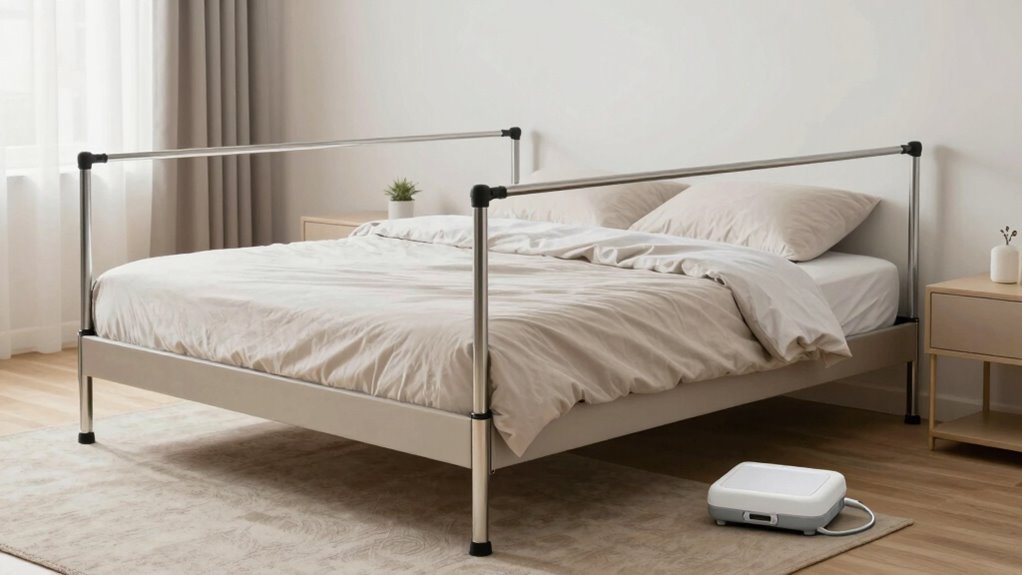
Ever wondered how to enhance safety when getting in and out of bed? Installing assistive devices, like support rails, can make a big difference. When adding support rail types, choose ones suited to your needs, such as bed-mounted or clamp-on rails. Confirm assistive device installation is secure—follow manufacturer instructions carefully and check stability regularly. Properly installed support rails provide steady support, reducing the risk of falls. Position them where they’re most helpful, like beside the bed’s head or foot. Always test the stability before use, and consider consulting a professional for installation if needed. Additionally, understanding gear care tips can help maintain the longevity and reliability of your assistive devices. Regular inspection and maintenance of support rails, including cleaning and checking for wear, are essential for safety and durability. Being aware of projector technology can also help in choosing the right devices for visual needs, ensuring both safety and functionality. Familiarizing yourself with assistive device safety standards can further ensure your devices remain secure over time. Incorporating proper installation techniques can significantly improve device stability and user confidence. These steps ensure your support rails and assistive devices are safe and reliable, giving you confidence during transfers.
Improve Lighting and Visual Contrast

Improving lighting and visual contrast can considerably enhance safety when transferring in and out of bed. Proper lighting design creates clear visual cues, reducing the risk of missteps. Brighten the room with adjustable lighting so you can easily modify it based on your needs. Use contrasting colors for furniture, bedding, and flooring to help your eyes distinguish different surfaces quickly. Keep pathways free of clutter and guarantee that light switches are within easy reach. Consider installing nightlights or bedside lamps for gentle illumination during nighttime transfers. These small adjustments help your brain process spatial information better, making each transfer safer and more confident. Focus on creating a well-lit environment that highlights critical visual cues, making your bedroom a safer space. Additionally, incorporating security measures such as motion-activated lighting can further prevent accidental falls or missteps during nighttime hours.
Practice Safe Transfer Techniques and Tips
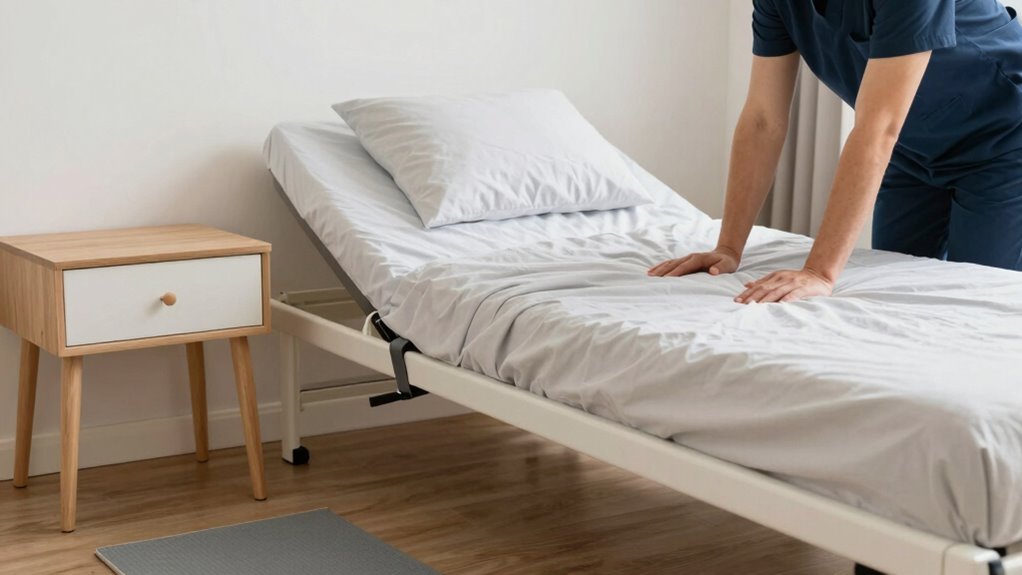
Practicing safe transfer techniques is essential to prevent falls and injuries when getting in and out of bed. Use proper transfer techniques to maintain balance and control. Always lock the bed wheels or use a bed with sturdy rails for added safety. When transferring, keep your feet flat on the floor, bend your hips and knees, and avoid twisting your body. Use safety tips like asking for assistance if needed and moving slowly. Here’s a quick guide:
| Transfer Technique | Safety Tips |
|---|---|
| Use a transfer belt | Confirm the area is clear |
| Keep close to bed | Wear non-slip footwear |
| Pivot on your feet | Communicate with helpers |
| Use handrails | Move at a comfortable pace |
| Sit before standing | Follow your healthcare provider’s advice |
Adjust Your Bedroom Setup Over Time

As your needs change, adjusting your bedroom setup can make transfers safer and more comfortable. Over time, small tweaks can enhance safety and style. Consider updating decorative accents to improve visibility and create a calming environment. Changing color schemes can also boost mood and help you better identify key areas. Regularly evaluate your space and make these adjustments:
- Add or reposition grab bars for easier support
- Switch to contrasting color schemes for better visibility
- Incorporate decorative accents that highlight essential pathways
- Rearrange furniture to ensure clear, unobstructed transfer zones
These simple updates keep your bedroom functional and inviting, adapting to your evolving needs and preferences. Staying proactive with your setup ensures safer, more comfortable transfers every day.
Avoid Common Mistakes in Bedroom Arrangement

Many common mistakes in bedroom arrangement can hinder safe and easy transfers, so it’s important to recognize and avoid them. For example, cluttered space or narrow pathways make moving around difficult. Avoid placing decorative pillows in the way, as they can cause tripping hazards or block easy access to the bed. Poor bedding arrangements, like high or bulky blankets, can also make transferring in and out of bed more challenging. Make certain your bed is positioned with enough clearance on all sides, especially if you use mobility aids. Keep pathways clear and furniture arranged to maximize open space. By paying attention to these details, you create a safer, more accessible environment that supports easier transfers and reduces risk.
Frequently Asked Questions
How Can I Modify Furniture for Better Accessibility?
You can modify furniture for better accessibility by placing essential pieces like the bed and chair close to the entrance, ensuring clear pathways. Adjust furniture height to make transfers easier, and avoid clutter. Incorporate proper lighting adjustments, such as bedside lamps or nightlights, to improve visibility at night. This setup reduces movement, enhances safety, and makes it easier to get in and out of bed comfortably.
What Are the Best Materials for Non-Slip Flooring?
Think of your floor as the foundation of a sturdy bridge—you want it secure and reliable. Non-slip flooring options like textured vinyl, rubber, and cork provide excellent safety features, reducing the risk of slips. These materials offer durability and grip, making transfers safer and easier. Prioritizing such flooring options guarantees your space is both accessible and secure, giving you peace of mind during daily movements and transfers.
How Do I Choose the Right Assistive Devices?
To choose the right assistive devices, consider your specific needs and safety features, like grab bars or transfer handles. Look for assistive technology that enhances stability and ease of movement, ensuring it’s easy to operate and fits your space. Consult with a healthcare professional or occupational therapist who can recommend devices tailored to your condition, helping you stay safe and independent during transfers in and out of bed.
Can I Customize My Bed Frame for Easier Transfers?
Yes, you can customize your bed frame for easier transfers by choosing personalized bed frames and adjustable bed heights. Opt for a frame that allows height adjustments to match your needs, making transfers smoother. Personalized frames can include features like side rails or low-profile designs, which provide added support and stability. Adjusting the height helps reduce strain, making bed transfers safer and more comfortable for you.
How Often Should I Reassess My Bedroom Setup?
You should reassess your bedroom setup regularly, ideally every few months or when your mobility or health changes. During these checks, focus on lighting adjustments to improve visibility and guarantee safe navigation. Also, evaluate color contrast between furniture and the floor to prevent accidents. Adjustments might be needed as your needs evolve, helping you maintain a safe, accessible environment that supports your independence and comfort.
Conclusion
By tailoring your bedroom with care and attention, you create a sanctuary where transfers feel like gentle streams flowing smoothly, not turbulent rapids. Clear pathways become your guiding rivers, support rails your sturdy trees, and good lighting your shining stars. With each thoughtful adjustment, you turn your space into a safe harbor where you can navigate with confidence. In this well-arranged haven, every transfer becomes a graceful dance, empowering you to move freely and comfortably through your day.
Fall Picks
fall essentials
As an affiliate, we earn on qualifying purchases.