Decibel ratings measure how loud appliances and sounds are, directly impacting your home comfort and wellness. A lower decibel number means quieter operation, which can help reduce stress, improve sleep, and create a calmer environment. Understanding these ratings helps you choose appliances and devices that won’t disturb your peace. If you want to learn how to use decibel levels to enhance your living space, there’s more to discover below.
Key Takeaways
- Decibel (dB) measures sound intensity, with higher values indicating louder sounds that can impact health and comfort.
- Noise ratings for appliances are determined through standardized tests simulating real-world conditions.
- Different environments have typical noise levels: quiet (~30 dB), moderate (~50 dB), loud (~70+ dB).
- Lower dB ratings generally mean quieter devices, but soundproofing and insulation also influence perceived noise.
- Managing noise involves understanding decibel levels and using strategies like soundproofing and noise-canceling devices for better wellness.
Understanding Decibels: The Basics of Noise Measurement

Decibels are the units used to measure the intensity of noise, providing a standardized way to quantify sound levels. Understanding decibels helps you evaluate how loud an environment is and decide on effective soundproofing techniques. Higher decibel levels indicate louder sounds that can impact your hearing health over time, so knowing these measurements is essential for creating a safer space. When noise reaches damaging levels, it can cause hearing loss or stress, making it essential to monitor and control sound exposure. By grasping the basics of decibel measurement, you can better assess your environment and implement strategies to reduce noise, protecting your hearing health. This knowledge empowers you to build a quieter, more comfortable living space.
How Noise Ratings Are Determined in Appliances and Devices

To determine noise ratings in appliances and devices, manufacturers conduct standardized tests that measure sound output under specific conditions. These tests replicate real-world scenarios, considering factors like sound insulation and noise cancellation features. You might imagine:
Manufacturers use standardized tests to measure appliance noise levels under realistic conditions.
- An appliance running in a soundproof chamber, with minimal external noise interference.
- The device operating at various speeds, revealing how noise levels change.
- The use of microphones positioned at a set distance to capture consistent sound data.
- The testing environment mimicking typical home settings, accounting for sound insulation qualities of surrounding walls.
This process guarantees the noise rating reflects real-world performance. The measurements help you compare appliances and understand how sound insulation or noise cancellation features impact perceived noise levels, allowing you to choose quieter, more comfortable devices.
The Impact of Noise Levels on Home Comfort and Health
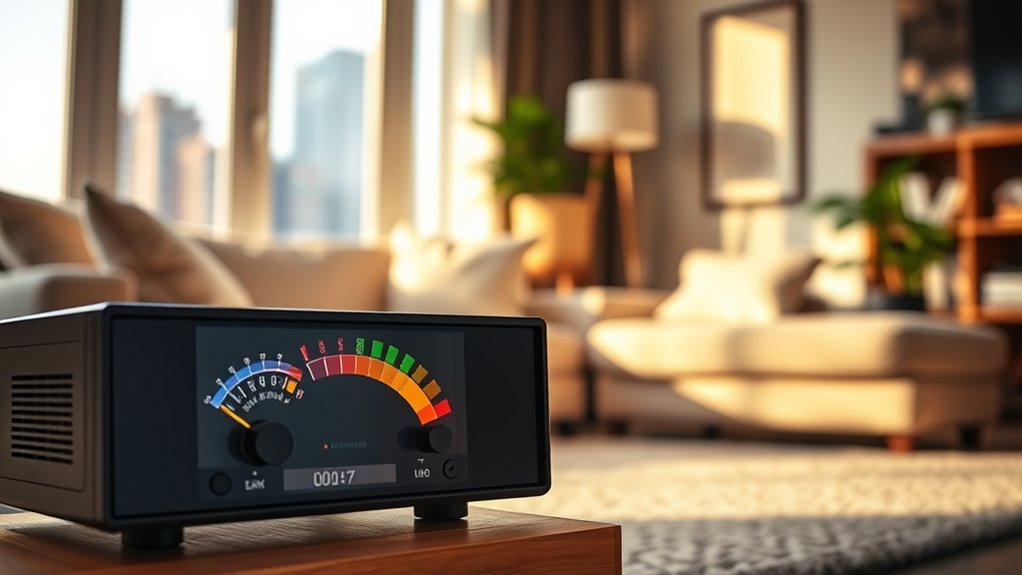
High noise levels in your home can substantially affect your comfort and overall well-being. Excess sound pollution can lead to stress, sleep disturbances, and difficulty concentrating. When noise exceeds comfortable levels, it disrupts your acoustic comfort, making relaxation and restful sleep harder to achieve. Continuous exposure to loud sounds can also increase blood pressure and elevate stress hormones, impacting your health over time. Reducing unwanted noise creates a calmer environment, improving your mental clarity and physical health. Managing noise levels isn’t just about comfort; it’s about safeguarding your long-term wellness. By understanding the impact of sound pollution, you can take steps to create a quieter, more peaceful home that promotes relaxation and overall health.
Common Noise Level Categories and What They Sound Like

You’ll notice that quiet zones, like a whisper or rustling leaves, produce very low decibel levels. Moderate noise, such as conversation or background music, falls into a comfortable range but can become distracting if loud. When noise reaches loud and disruptive levels, it can interfere with your daily activities and rest.
Quiet Zone Sounds
Quiet zone sounds fall within a range of low noise levels that are often considered peaceful and unobtrusive. These sounds are key to achieving sound insulation and urban quiet, making your environment more comfortable. Imagine yourself immersed in these serene moments:
- Soft rustling of leaves on a gentle breeze
- Distant muffled footsteps on a quiet street
- Whispering wind through open windows
- Subtle humming of distant appliances
These sounds create a calming backdrop, reducing the impact of louder noises and enhancing your sense of peace. They’re typical of environments with effective sound insulation, where external noise is minimized, allowing you to enjoy urban quiet. Recognizing these sounds can help you better understand and optimize your home’s soundscape for wellness.
Moderate Noise Levels
Have you ever noticed sounds that are noticeable but not overwhelming? Moderate noise levels typically range from 30 to 60 decibels, including normal conversation, background music, and quiet office environments. These sounds can be managed with good sound insulation and noise cancellation techniques, making your space more comfortable. While they aren’t disruptive, they can still be distracting if persistent. To improve your environment, focus on sealing gaps and adding soft furnishings that absorb sound. Sound insulation helps reduce the transmission of moderate noise, and noise-canceling devices can further minimize disturbances. Understanding these common noise levels allows you to better evaluate your space and implement simple measures to maintain a peaceful and productive home or office setting.
Loud and Disruptive
Loud and disruptive noises typically range from 70 to 120 decibels and can considerably impact your environment. These sounds are jarring and often difficult to ignore, making effective sound insulation or noise cancellation essential. Imagine hearing:
- A lawnmower revving nearby, loud enough to penetrate walls.
- Sirens blaring in the distance, cutting through quiet moments.
- Heavy traffic outside, vibrating through windows.
- Loud music or construction work, overpowering conversation.
Such noise levels can cause stress and disrupt sleep or focus. To combat this, consider investing in better sound insulation or noise-canceling devices. These solutions help reduce the intensity of disruptive sounds, creating a calmer, more comfortable space despite the chaos outside.
Why Noise Ratings Matter When Choosing Home Equipment
Choosing equipment with appropriate noise ratings helps you enjoy a quieter and more comfortable home. It can also improve your sleep quality by reducing disruptive sounds. By selecting peaceful, low-noise devices, you create a more relaxing environment for everyone.
Ensuring Quiet Comfort
When selecting home equipment, understanding noise ratings is essential for maintaining a peaceful living environment. To guarantee quiet comfort, consider how soundproofing techniques and acoustic treatment can reduce noise infiltration. Visualize:
- Installing soundproof curtains that block out external noise
- Adding acoustic panels to walls for better sound absorption
- Upgrading to quieter appliances with low decibel ratings
- Using rugs and soft furnishings to dampen sound reflections
Impact on Sleep Quality
Quiet environments contribute substantially to restorative sleep, making noise levels a key factor when selecting home equipment. High noise ratings can lead to sleep disturbance, disrupting your ability to reach deep, restorative sleep stages. Even minor sounds can cause you to wake or shift frequently, reducing sleep quality. Additionally, noise induced stress triggers your body’s stress response, making it harder to relax and fall asleep. Over time, persistent noise can contribute to chronic sleep issues and affect overall wellness. When choosing appliances or devices, paying attention to their noise ratings helps you create a calmer sleep environment. By minimizing noise, you support better sleep quality, boost your immune system, and promote overall health. Prioritizing quietness is a simple but impactful step toward improved well-being.
Selecting Peaceful Equipment
Understanding noise ratings is essential because they directly influence how peaceful your home environment will be. When selecting equipment, consider how sound insulation and noise cancellation features impact noise levels. Imagine:
- An air conditioner emitting a gentle hum, barely noticeable.
- A dishwasher with noise levels so low it’s almost silent.
- A ventilation system designed with sound insulation to block external noise.
- A television with advanced noise cancellation to reduce background sounds.
Choosing devices with lower decibel ratings ensures a quieter space, helping you relax and sleep better. Noise ratings guide you to pick equipment that minimizes disruptions, creating a calm atmosphere. Prioritizing these factors makes your home a peaceful sanctuary.
Debunking Myths About Decibel Levels and Noise Perception

Many people assume that decibel levels directly correlate with how loud a sound feels, but this isn’t always true. Myth busting reveals perception differences play a big role. For example, a sound at 60 dB might seem loud in a quiet room but barely noticeable in a busy street. Your environment, hearing sensitivity, and background noise influence perception. Here’s a quick comparison:
| Decibel Level | Perceived Loudness |
|---|---|
| 30 dB | Quiet whisper, rustling leaves |
| 60 dB | Normal conversation |
| 85 dB | Heavy traffic, lawnmower |
| 100 dB | Live music, motorcycle |
| 120 dB | Jet engine, fireworks |
Understanding perception differences debunks myths and helps you interpret noise levels accurately.
Tips for Managing and Reducing Noise in Your Living Space
To effectively manage and reduce noise in your living space, start by identifying the main sources of sound and addressing them directly. Implement soundproofing techniques like sealing gaps around windows and doors to block outside noise. Consider adding heavy curtains or rugs to absorb sound within rooms. Use noise canceling devices such as white noise machines or headphones to mask disruptive sounds. Additionally, install acoustic panels or wall inserts to dampen echoes and minimize sound transmission. These strategies create a calmer environment by targeting specific noise sources. By combining soundproofing techniques with noise canceling solutions, you’ll experience a significant reduction in unwanted noise, improving your overall comfort and wellness at home.
Comparing Noise Ratings: What to Expect From Different Products

When comparing noise ratings of different products, it’s important to recognize what the numbers really mean for your environment. A lower decibel (dB) rating generally indicates quieter operation, but it doesn’t tell the whole story. For example, products with strong sound insulation can dampen external noise, making a higher-rated device seem quieter in your space. Noise canceling technology also plays a big role—headphones, for instance, can block ambient sounds even if their dB rating isn’t extremely low. When evaluating options, consider both the noise rating and features like sound insulation or noise canceling capabilities. This helps you set realistic expectations and choose products that effectively reduce noise in your specific environment, ensuring better comfort and wellness at home.
Practical Examples of Noise Ratings in Everyday Life
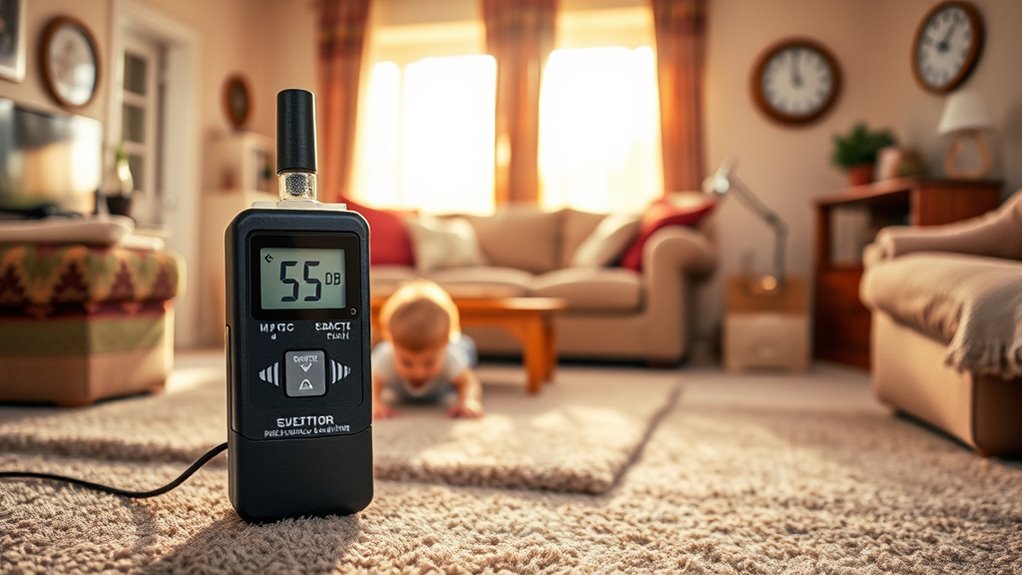
Understanding noise ratings in everyday life helps you better gauge how loud or quiet your surroundings really are. For example, when you’re working from home, consider these noise levels:
Knowing noise levels helps you choose the right soundproofing for a quieter, more comfortable space.
- Whispering neighbors (~30 dB) with minimal sound insulation.
- A quiet office (~50 dB), where noise cancellation can improve focus.
- City traffic (~70 dB), which may require enhanced sound insulation for comfort.
- A loud concert (~110 dB), where noise cancellation devices are essential for protection.
Recognizing these ratings helps you choose appropriate sound insulation for your home or office. Whether you want to reduce background noise or block out loud environments, understanding the dB levels guides you in selecting products that improve home comfort and wellness.
Frequently Asked Questions
How Do Noise Ratings Affect Long-Term Health Risks?
Noise ratings directly impact your long-term health risks by influencing your exposure to noise pollution, which can harm your hearing health over time. When noise levels are high, you might experience hearing loss, stress, or sleep disturbances. Lower noise ratings mean less risk, so paying attention to these ratings helps you protect your hearing health and overall well-being in the long run. Reducing exposure to loud noises benefits your health today and tomorrow.
Can Noise Levels Influence Sleep Quality at Different Times?
Yes, noise levels can definitely influence your sleep quality at different times. If you’re sensitive to noise, even moderate disturbances can cause sleep disturbances, making it harder to fall asleep or stay asleep. During quieter periods, you’re less likely to experience sleep disruptions, but sudden loud noises can trigger awakenings. Managing noise exposure and understanding your noise sensitivity can help improve your overall sleep quality and guarantee restful nights.
Are Higher Decibel Ratings Always Louder in Real Life?
No, higher decibel ratings aren’t always perceived as louder in real life. Your noise level perception depends on factors like the decibel comparison between sounds and the environment. For example, a 70 dB sound might seem quieter than a 60 dB sound if you’re in a noisy setting. So, understanding how decibel comparison influences perception helps you better gauge actual loudness, rather than relying solely on the decibel rating.
How Does Environmental Noise Impact Indoor Noise Perception?
Imagine your indoor space as a quiet pond. Environmental noise is like ripples from outside, influencing how you perceive sounds inside. It affects indoor acoustics and can make normal noise seem louder or more intrusive. Sound masking helps blend external sounds, reducing their impact. When outdoor noise is loud, it amplifies your perception of indoor noise, making your environment feel less peaceful and more chaotic.
What Are the Best Practices for Measuring Home Noise Accurately?
To measure home noise accurately, start by using sound insulation to minimize external interference. Use reliable noise monitoring equipment, like a digital sound level meter, placed at ear level in different rooms during typical activity times. Record multiple readings to account for variability, and compare results against recommended noise levels. This approach guarantees you capture an accurate picture of your home’s noise environment and identify areas needing improvement.
Conclusion
Understanding noise ratings helps you make smarter choices for a quieter, healthier home. By knowing what decibel levels mean, you can better manage sound and improve your comfort. Don’t you deserve a peaceful living space that supports your wellness? Next time you shop for appliances, remember—noise matters more than you think. Take control of your environment and create a space where tranquility truly thrives. Your home’s silence is worth the effort.