

If you’re designing visuals for low vision users, understanding contrast ratios is essential. High contrast between text and background makes content clearer, easier to distinguish, and reduces eye strain. Aim for at least a 7:1 ratio for small text and 4.5:1 for larger content. Using tools to measure contrast and choosing the right colors can improve accessibility markedly. Keep exploring to discover how to optimize your visuals for everyone’s needs.
Key Takeaways
- Contrast ratios measure luminance differences between text and background to improve readability for low vision users.
- High contrast (e.g., 7:1 or more) enhances visual clarity and reduces eye strain.
- Tools like WebAIM Contrast Checker help verify if color combinations meet accessibility standards.
- Using contrasting colors such as black on white or blue on yellow increases visibility.
- Regularly calibrate displays and test color schemes under different lighting for optimal low vision accessibility.
SVPRO 5MP USB Camera Module for 3D Printer Without Distorition, Aptina MI5100 Sensor, High Color Saturation,USB Plug and Play for PC,Laptop
【5MP HD Resolution & Aptina MI5100 Sensor】This USB camera delivers sharp 5MP (2592×1944) images at 15fps and 1080p…
As an affiliate, we earn on qualifying purchases.
As an affiliate, we earn on qualifying purchases.
Understanding Contrast Ratios and Their Significance

Understanding contrast ratios is essential for creating visual content that is accessible to people with low vision. Contrast ratios directly impact how you perceive color and how clearly you see details. When the contrast between text and background is high, it improves color perception, making it easier to distinguish different elements. This is especially important for individuals with reduced visual acuity, who may struggle with subtle differences in shades or low contrast. By understanding and applying appropriate contrast ratios, you guarantee your content is more readable and accessible. It’s not just about aesthetics; it’s about making information more inclusive. When you prioritize contrast ratios, you enhance visual clarity, helping people with low vision navigate your content more comfortably and effectively. Additionally, awareness of visual accessibility standards can help ensure your designs meet necessary guidelines for inclusivity.

Yogo Vision Magnifying Glasses for Reading, High Magnification One Power Magnifier Readers Black 6
SEE FINE PRINT in newspapers, on packaging and on the computer with Yogo Vision Reading Magnifying Glasses. These…
As an affiliate, we earn on qualifying purchases.
As an affiliate, we earn on qualifying purchases.
How Contrast Ratios Are Calculated

Calculating contrast ratios involves measuring the difference in luminance between two colors, typically text and background. Your color perception is influenced by how our eyes interpret differences in brightness, which digital color models quantify precisely. To determine contrast ratio:
Measuring contrast ratios involves assessing luminance differences between text and background for optimal readability.
- Convert colors into digital color models like RGB or sRGB.
- Measure the luminance of each color using standardized formulas.
- Calculate the ratio by dividing the lighter luminance by the darker one.
- Ensure the resulting ratio reflects enough contrast for visibility.
- Use tools or contrast ratio calculators for accuracy.
- Remember that protective styling benefits can influence color choices and contrast considerations for individuals with low vision.
Understanding this process helps you choose colors that enhance readability for low vision individuals. By leveraging digital color models, you can accurately assess and optimize contrast to improve visual accessibility for all users.

Calibrite ColorChecker Digital SG Color Reference Target with Storage Sleeve, 140 Patch Chart for Advanced Camera Profiling, White Balance and Color Analysis, 8 x 11.5 inch for Photo and Video (CCDSG)
SPECIFICATIONS: 140 patch ColorChecker Digital SG target with protective storage sleeve, includes expanded color space coverage with additional…
As an affiliate, we earn on qualifying purchases.
As an affiliate, we earn on qualifying purchases.
The Impact of Contrast on Visual Accessibility

High contrast between text and background makes content easier to read and understand. It also helps reduce your eye strain during extended viewing. By prioritizing contrast, you can improve accessibility and make information more accessible for everyone. Incorporating organization strategies in your visual design can further enhance clarity and reduce clutter, making content even more user-friendly.
Enhances Readability Significantly
When contrast is strong enough, text becomes much easier to read for individuals with low vision. High contrast improves readability by making key information stand out. It also influences color psychology, shaping how users perceive your content. For businesses, contrast plays a crucial role in branding considerations, ensuring your message is clear and accessible. To maximize impact, focus on:
- Using bold, contrasting colors for text and backgrounds
- Choosing color combinations that evoke the right emotional response
- Avoiding low-contrast pairings that cause confusion
- Ensuring consistency across all visual elements
- Considering how contrast affects overall brand perception
Reduces Visual Strain
Clear contrast between text and background markedly reduces visual strain for individuals with low vision. Effective color pairing creates visual harmony, making content easier to process without unnecessary effort. When contrast levels are optimized, your eyes don’t have to work as hard to distinguish text from its background. This reduces fatigue and minimizes discomfort during prolonged reading. High contrast enhances clarity, especially when colors complement each other, fostering visual harmony that’s easy on the eyes. Avoiding low-contrast combinations prevents unnecessary strain, making your reading experience more comfortable and sustainable. By choosing appropriate contrast ratios, you help ensure that your content remains accessible and less taxing, ultimately supporting better visual health and easier comprehension for users with low vision. Proper beneficiary designation in your content can also help prevent misunderstandings and improve overall accessibility.

Big and Bold SPRING MOMENTS Large Print Coloring Book for Seniors: 40 Easy-to-Color Illustrations with Animals, Birds , Flowers & Nature for Low Vision, Arthritis, Tremors & Relaxing Stress Relief
As an affiliate, we earn on qualifying purchases.
As an affiliate, we earn on qualifying purchases.
Recommended Contrast Ratios for Different Visual Needs

Understanding the recommended contrast ratios helps you meet various visual needs effectively. Standard accessibility standards set a baseline, but high-contrast suggestions are essential for those with severe vision impairments. By considering low vision specifics, you can choose the right contrast levels to improve readability and accessibility for everyone. Incorporating visual perception principles ensures that your choices support optimal clarity and reduce visual strain.
Standard Accessibility Standards
To guarantee accessibility for individuals with low vision, it’s essential to follow established contrast ratio standards. These standards help ensure that text and background colors are distinguishable. When selecting colors, consider the color wheel to understand complementary hues and their impact on contrast. Adjust hue saturation to enhance clarity, especially for users with color vision deficiencies. The recommended contrast ratios vary based on visual needs:
- Text smaller than 14pt should have a ratio of at least 7:1
- Larger text can succeed with a ratio of 4.5:1
- UI elements need clear differentiation
- Background and foreground should be distinctly separated
- Use consistent contrast standards across all platforms
- Contrast ratios are also influenced by factors like ambient lighting and display quality, which should be considered for optimal accessibility.
Following these standards helps create a more inclusive experience, catering to diverse visual abilities and ensuring readability for everyone.
High-Contrast Recommendations
Have you ever wondered how high-contrast color combinations can improve readability for people with varying visual needs? To optimize visibility, consider contrast adjustment by selecting color pairs with sufficient contrast ratios. For most users, a contrast ratio of at least 4.5:1 between text and background ensures better color perception and easier reading. If you’re designing for users with more significant visual challenges, aim for even higher contrast ratios, around 7:1 or more. These recommendations help accommodate different visual needs by making content stand out clearly. Remember, the goal is to enhance color perception without sacrificing aesthetic appeal. Modifying contrast effectively allows individuals with low vision to navigate content comfortably, improving accessibility and overall user experience. Incorporating visual aids such as color contrast analyzers can further ensure your design meets these guidelines effectively.
Low Vision Specifics
When designing for low vision, selecting appropriate contrast ratios becomes vital to guarantee readability across different needs. People with visual impairment experience varied challenges in color perception and contrast sensitivity. To accommodate these differences, consider tailored contrast levels:
- High contrast (at least 7:1) for severe visual impairment
- Moderate contrast (4.5:1) for moderate visual challenges
- Use bold, distinct colors to improve color perception
- Avoid subtle color differences that may be hard to distinguish
- Prioritize clarity over aesthetics for essential information
- Understanding contrast sensitivity can help optimize design choices for inclusivity. Adjusting contrast ratios based on individual needs helps assure your design is accessible. Different levels of visual impairment require specific contrast considerations to enhance readability and reduce eye strain. By understanding these specifics, you make your content more inclusive and easier to navigate.
Tools for Measuring Color Contrast
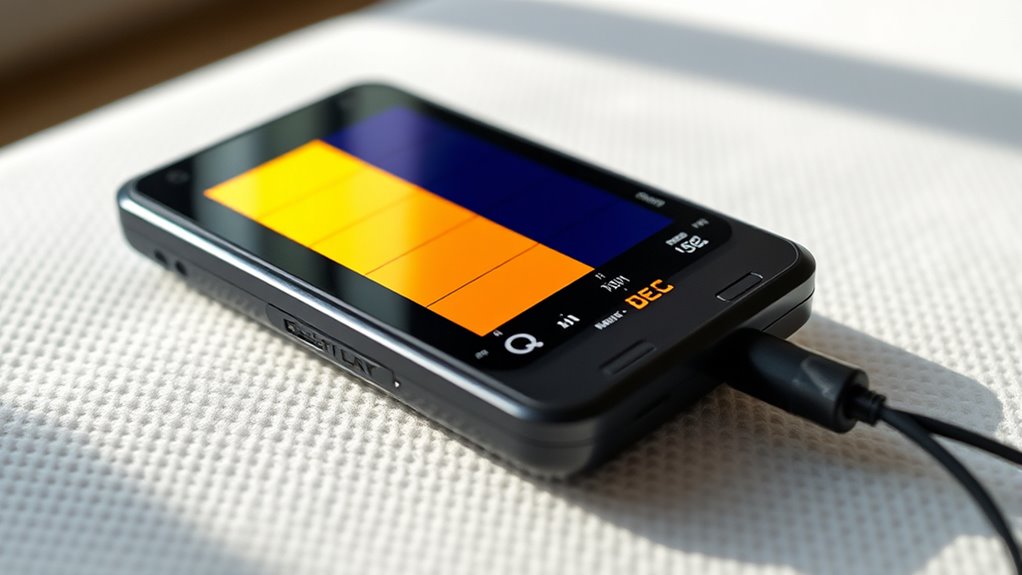
Measuring color contrast accurately is essential for designing visuals accessible to individuals with low vision. To do this effectively, you can use various tools that analyze color perception and evaluate contrast ratios. Digital color contrast analyzers, like the WebAIM Contrast Checker or Color Contrast Analyzer, allow you to input foreground and background colors to determine if they meet accessibility standards. These tools help you verify if your design supports visual acuity limitations by guaranteeing sufficient contrast. Additionally, some software programs offer real-time feedback on contrast levels, making adjustments straightforward. By using these tools, you ensure your visuals are optimized for low vision users, making information clearer and more accessible without guesswork. Understanding contrast ratios helps you create inclusive designs that meet accessibility guidelines and improve overall readability.
Selecting Colors to Maximize Contrast

Choosing the right colors is essential for maximizing contrast and ensuring content remains visible to those with low vision. To do this effectively, use the color wheel to select hues that stand out against each other. Adjust hue saturation to make colors more distinct; higher saturation often improves visibility. Focus on pairing colors with high contrast ratios, such as black and white or dark blue and yellow. Avoid combinations that are similar in hue or saturation, which can reduce readability. Keep these tips in mind:
- Choose contrasting hues from the color wheel
- Increase saturation for better separation
- Use light and dark color pairings
- Avoid low-contrast, muted tones
- Test combinations in real-world settings
- Understanding contrast ratios is key to selecting effective color combinations
These strategies help you select colors that enhance visibility and accessibility.
Common Mistakes That Reduce Contrast Effectiveness
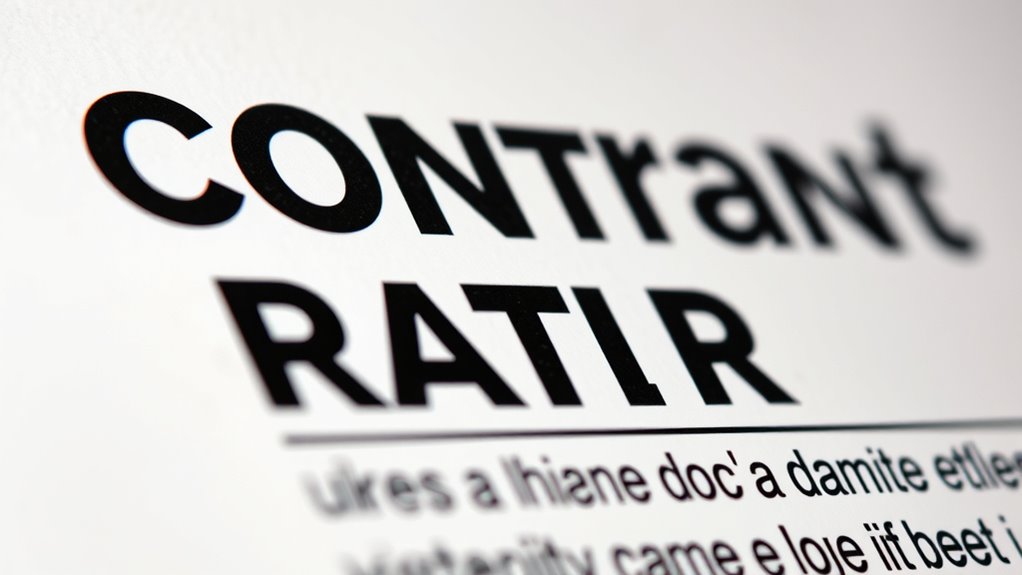
Even with the right color choices, common mistakes can undermine your efforts to create effective contrast. One mistake is neglecting proper monitor calibration, which can distort colors and reduce contrast visibility. Additionally, choosing incompatible color combinations, like low contrast reds and greens, hampers clarity. Here’s a visual to illustrate typical errors:
| Incorrect Color Pair | Proper Contrast Level | Effect on Visibility |
|---|---|---|
| Pale yellow & white | Low contrast | Hard to distinguish text |
| Bright red & green | Low contrast | Causes confusion |
| Light gray & white | Very low contrast | Difficult to read |
| Navy & black | Poor contrast | Strains eyes |
| Soft pastel & beige | Insufficient contrast | Fades into background |
Avoid these pitfalls by selecting better color combinations and calibrating your monitor regularly for maximum contrast.
Practical Tips for Improving Color Visibility

To improve color visibility effectively, start by calibrating your monitor regularly to guarantee that colors display accurately and consistently. Understanding color symbolism and cultural perceptions helps you select the most effective color combinations. Bright, high-contrast colors can enhance readability, but be mindful of cultural meanings that might influence interpretation. Here are practical tips:
Calibrate your monitor regularly, consider cultural meanings, and use high-contrast colors for improved visibility.
- Use high-contrast color schemes, like black on white or yellow on blue.
- Avoid relying solely on color to convey information; add labels or textures.
- Test colors in different lighting conditions to ensure visibility.
- Choose colors with sufficient contrast ratios, considering cultural perceptions.
- Keep color symbolism in mind to avoid miscommunication or unintended meanings.
Applying these strategies ensures better color visibility and more effective communication for low vision users.
Frequently Asked Questions
How Do Contrast Ratios Affect Individuals With Specific Eye Conditions?
Contrast ratios substantially impact your color perception and eye health, especially if you have specific eye conditions. Higher contrast makes text and objects stand out, reducing strain and improving visibility. Low contrast can cause you to struggle with reading or identifying items, worsening eye fatigue. By choosing colors with appropriate contrast ratios, you support better eye health and enhance your ability to distinguish details, making everyday tasks easier and more comfortable.
Are There Industry Standards for Contrast Ratios Across Different Regions?
Yes, there are industry standards for contrast ratios across different regions. You should follow regional guidelines like the ADA in the US or the EN 301 549 in Europe. International standards, such as WCAG, also provide clear contrast ratio recommendations to guarantee accessibility. Adhering to these standards helps you create content that’s accessible to people with low vision, regardless of where they are located.
Can High Contrast Ratios Cause Visual Discomfort or Fatigue?
Yes, high contrast ratios can cause visual discomfort or fatigue, especially if you’re sensitive to glare. When contrast is too stark, it can strain your eyes and reduce reading comfort, leading to fatigue over time. To avoid this, look for a balance that minimizes glare sensitivity while maintaining sufficient contrast. Adjusting screen brightness and using anti-glare filters can help improve overall visual comfort and reduce fatigue.
How Do Lighting Conditions Influence Effective Contrast Visibility?
Think of your eyes as a lighthouse, guiding you through foggy conditions. Ambient lighting plays a vital role in how well you see; too bright or dim can obscure details. Proper lighting, combined with glare reduction, enhances contrast visibility, making text and objects stand out clearly. Adjusting these factors guarantees you experience less strain and better clarity, helping your eyes navigate even challenging environments with confidence and ease.
What Are the Limitations of Digital Tools in Measuring Real-World Contrast?
Digital tools, like contrast simulation software, help you understand contrast differences but have limitations. They rely on digital calibration, which may not accurately reflect real-world lighting and display conditions. These tools can’t fully account for environmental factors like glare, shadows, or ambient light, so your actual contrast perception might differ. Always verify with real-world testing to guarantee maximum visibility, especially for low-vision users.
Conclusion
mastering contrast ratios is like fine-tuning a musical instrument—you’ll notice the harmony in visibility and accessibility. By understanding how to measure and choose the right colors, you can make your content more accessible to everyone. Remember, small adjustments can have a big impact, just like a gentle brushstroke enhances a masterpiece. Keep experimenting and applying these tips to guarantee your visuals are clear and inclusive for all, no matter their vision.