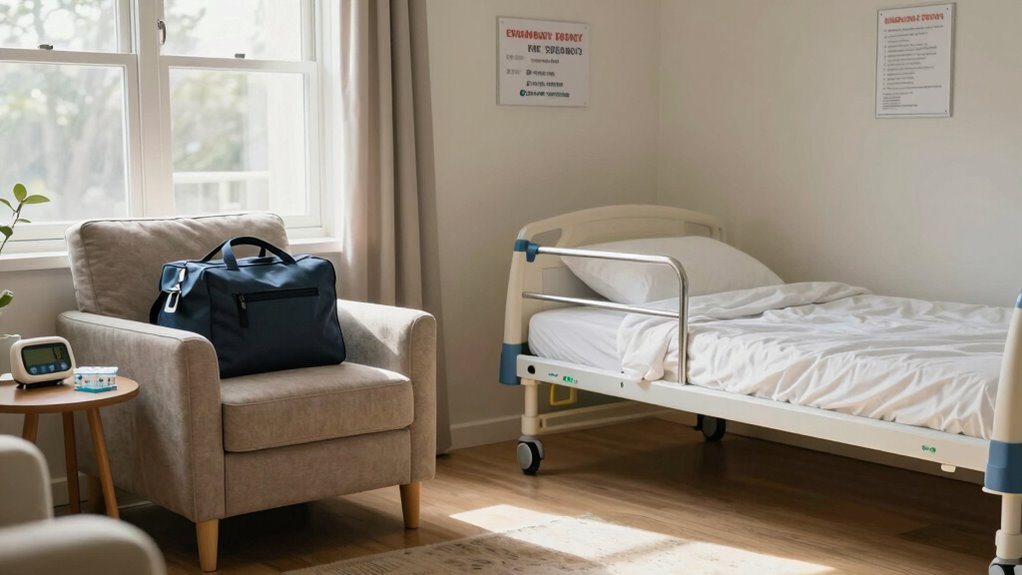

To prepare your home for rotating caregivers, focus on creating a safe, organized, and welcoming space. Clear pathways, install safety features, and label supplies for easy access. Develop routines, establish clear communication channels, and keep detailed documentation, including emergency plans. Personalize the environment with familiar touches to promote comfort and confidence. Managing these areas thoroughly guarantees smooth handovers and reduces stress for everyone involved—continue exploring ways to make your home even more caregiver-friendly.

Turn quiet afternoons into listening time
- Thousands of audiobooks, podcasts and originals
- Listen on your phone, tablet or Echo — also offline
- Cancel anytime
Key Takeaways
- Develop clear handover protocols and communication channels to ensure seamless caregiver transitions and accurate information sharing.
- Organize and label medical supplies, medications, and essential items for easy access and regular inventory checks.
- Improve home safety by removing hazards, installing safety features, and ensuring secure, accessible spaces for mobility and emergencies.
- Establish consistent routines and visual schedules to promote stability and easy caregiving for rotating staff.
- Create a comfortable, personalized environment with appropriate lighting, decor, and calming elements to support caregiver and patient well-being.
As an affiliate, we earn on qualifying purchases.
Identify Common Challenges When Planning Caregiver Rotations

Planning caregiver rotations can be complex, and several common challenges often arise. One major issue is caregiver burnout, which happens when caregivers become overwhelmed or exhausted from continuous responsibilities. To prevent this, you need to schedule regular breaks and guarantee caregivers have enough time to rest. Additionally, establishing clear communication protocols can help ensure everyone stays informed and coordinated, reducing misunderstandings. Incorporating outdoor transformation essentials such as creating designated rest areas can also support caregiver well-being. Creating a supportive environment that recognizes emotional health can help caregivers manage stress more effectively. Recognizing and planning for these challenges early on will help develop effective strategies, making transitions smoother and providing better care for your loved one. It’s also beneficial to consider home safety measures to minimize risks and ensure a secure environment for both caregivers and the individual receiving care.
Make Your Home Safer and Easier to Access for Caregivers

Ensuring your home is safe and accessible can substantially ease the workload for caregivers and improve the quality of care your loved one receives. Focus on home accessibility by removing physical barriers like loose rugs, clutter, and uneven flooring. Install safety modifications such as grab bars in bathrooms, non-slip mats, and stairlifts if needed. Consider wide doorways and ramps to accommodate mobility aids. Adequate lighting throughout the house helps prevent falls and accidents. Clear pathways and designate specific areas for supplies and essentials to streamline caregiver visits. Making these safety modifications creates a more welcoming environment and reduces the risk of injury, making daily care easier and safer for both your loved one and rotating caregivers. Additionally, monitoring indoor air quality with microplastics in dust and using air purifiers can help create a healthier environment for everyone. Regularly checking for indoor air pollutants can further improve overall air quality and safety. Incorporating home safety assessments can identify and address potential hazards proactively, ensuring continuous safety for all residents and visitors.
Organize Supplies and Keep Them Stocked
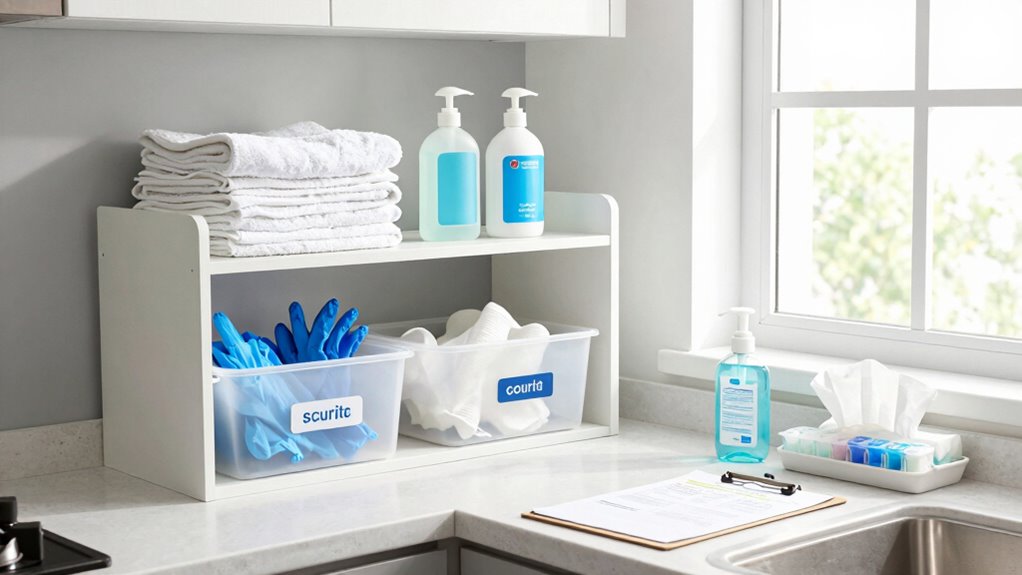
Keeping supplies organized and stocked guarantees caregivers can find what they need quickly. Clearly labeling medical supplies helps prevent confusion, especially when multiple people are involved. Regularly checking your inventory assures you won’t run out of essentials when it matters most. Incorporating emerging trends in digital publishing can also help you stay updated on best practices for managing caregiving information. Additionally, understanding the importance of user privacy can guide you in handling sensitive health and caregiving details securely. Ensuring that all safety protocols are documented and accessible can further support toxin-free spaces, promoting a safe environment for your curious baby. Staying informed about electric dirt bike horsepower can inspire you to consider versatile tools for outdoor mobility and safety, which might be useful for caregivers managing outdoor activities. Incorporating knowledge about freshness and quality ensures that supplies like medications or perishable items are used effectively and safely.
Label Medical Supplies Clearly
Labeling medical supplies clearly is essential for quick and safe access, especially when multiple caregivers are involved. Use clear labeling essentials like waterproof labels, permanent markers, or pre-printed tags to identify each item. Incorporate color coding supplies for easy recognition—assign specific colors to different types of supplies, such as red for emergency items or blue for daily necessities. This visual system helps caregivers quickly locate what they need without confusion, saving valuable time during urgent situations. Make certain labels are legible and placed consistently on containers, bottles, and storage bins. Regularly update labels if supplies change or are replenished. Proper labeling ensures everyone knows where everything is, reducing mistakes and creating a safer, more organized environment for your loved one. Understanding affiliate disclosure and privacy policies can also help you navigate online resources for organizing supplies more effectively. Additionally, using secure storage methods can protect sensitive medical supplies from damage or theft, and understanding emergency preparedness can help caregivers respond swiftly in urgent situations. Implementing organization strategies can further streamline the process and improve overall safety, especially considering the importance of training and communication among caregivers for proper handling and responsiveness.
Maintain Inventory Regularly
To prevent shortages and last-minute scrambling, it’s essential to regularly organize and stock your supplies. Maintaining an updated inventory helps with medication management and guarantees caregivers have what they need. Set a routine to check supplies weekly, refilling essentials and removing expired items. Use effective supply organization methods, like labeled bins or drawers, to quickly locate items. Keep a list of stocked items and note what needs replenishing. This proactive approach minimizes confusion for rotating caregivers and ensures consistent care. Here’s a simple overview:
| Supplies to Track | Organization Tips |
|---|---|
| Medications | Use labeled containers |
| Wound care items | Store in accessible bins |
| Daily essentials | Keep in designated areas |
Establish Daily Routines and Handover Procedures
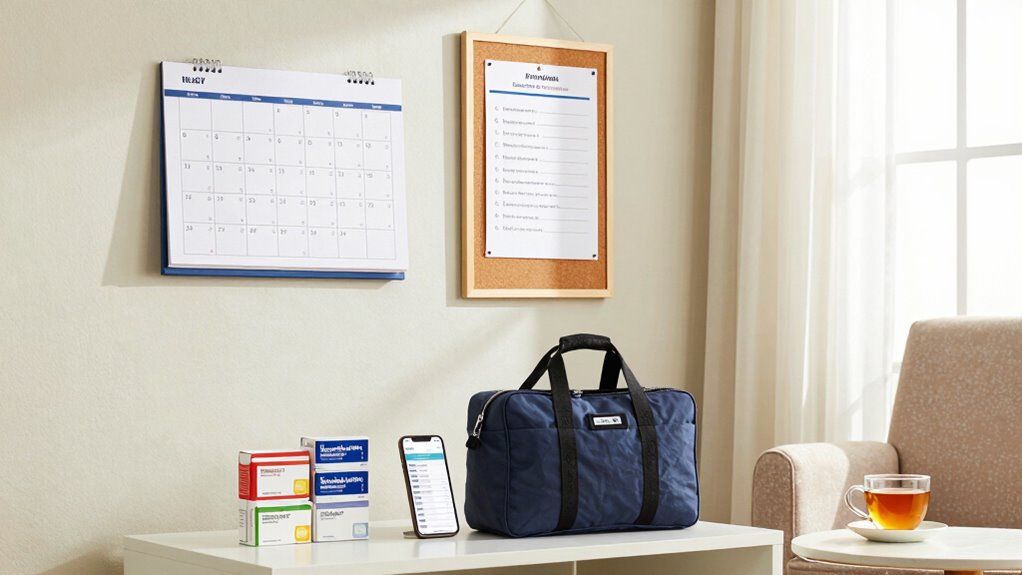
Creating consistent daily routines helps caregivers understand what to expect and guarantees your loved one’s needs are met smoothly. Clear handover procedures make shifts seamless and reduce the risk of important information being overlooked. By establishing these protocols, you set a solid foundation for reliable and coordinated care.
Consistent Daily Schedules
Establishing a consistent daily schedule is essential for ensuring seamless care when rotating caregivers. Clear routines help everyone know what to expect and reduce confusion. Start by establishing regular meal planning, so caregivers can prepare and serve meals consistently. Incorporate activity scheduling, ensuring that daily activities like medication, walks, or therapy are performed at the same time each day. Keep a visual or written routine accessible for new caregivers to follow easily. This consistency minimizes disruptions and makes handovers smoother. When routines are predictable, caregivers can focus on providing attentive care instead of figuring out daily tasks. Regular schedules also help your loved one feel secure and reduce anxiety, creating a stable environment despite caregiver changes.
Clear Handover Protocols
When multiple caregivers rotate in and out, having clear handover protocols is essential for maintaining consistent care. You should create a detailed handover checklist that covers daily routines, medication schedules, recent changes, and specific needs. This checklist ensures nothing gets overlooked during handovers. Switching planning involves briefing the incoming caregiver on the current status and upcoming tasks, reducing confusion and errors. Consistent communication helps build trust and keeps everyone on the same page. Establish a routine for verbal handovers, either at the start or end of each shift, to reinforce important details. Clear protocols streamline care, minimize mistakes, and create a smoother experience for both your loved one and rotating caregivers.
Set up Clear Communication Channels With Caregivers

Clear communication channels are essential to guarantee everyone stays on the same page and your loved one receives consistent care. Establishing effective communication tools ensures you stay connected with caregivers, whether in person or remotely. Use a combination of methods like messaging apps, phone calls, or shared digital calendars to keep everyone informed. Incorporate feedback methods such as regular check-ins, surveys, or direct conversations to address concerns and improve care. Pomade Vs Putty Vs Styling Cream Clear channels help prevent misunderstandings and ensure important updates are shared promptly. To make this work smoothly, consider setting expectations for response times and preferred communication methods. By creating a reliable system, you foster collaboration and ensure your loved one’s needs are always prioritized.
Document Important Information and Emergency Plans

Having detailed and accessible information about your loved one’s medical history, medications, and daily routines is essential for seamless care. Create a thorough document that includes emergency contacts, such as family members, neighbors, and healthcare providers, so caregivers can quickly reach help when needed. Clearly outline medical history, including diagnoses, allergies, and recent hospitalizations, to guarantee caregivers understand their responsibilities. Include a list of current medications with dosages and schedules, along with instructions for administering them. Also, prepare an emergency plan that covers steps to take during medical crises or accidents. Keep this information in a secure, easily accessible place, and review it regularly to verify accuracy. Proper documentation helps caregivers respond swiftly and confidently, providing peace of mind for everyone involved. Additionally, understanding wave and wind safety considerations can be crucial during outdoor or emergency situations, especially in storm-prone areas where weather can change rapidly. Being aware of weather patterns can help caregivers prepare appropriately for sudden changes, including potential hazards caused by climate variability. It is also beneficial to include information about piercing care and hygiene, as these details can be relevant if the individual has recent or ongoing piercings that require special attention.
Personalize Your Home to Support Caregiver Comfort and Confidence

Personalizing your home can profoundly boost a caregiver’s comfort and confidence in providing care. Adding personalized decor and comfort-enhancing features makes the environment more welcoming and familiar. Consider incorporating items like family photos or favorite artwork to create a sense of connection. Comfortable seating and accessible storage can reduce stress and physical strain. Adjust lighting to suit different needs, such as reading or relaxing. Including familiar smells, like a favorite candle or essential oils, can also promote calmness. These small touches help caregivers feel at ease and confident in their surroundings, which improves the quality of care. Focusing on privacy policies and understanding cookie management can also help create a secure environment for both caregiver and patient alike. Focus on creating a space that feels both functional and warm, supporting both caregiver and patient alike.
Frequently Asked Questions
How Can I Ensure Privacy for Both Caregivers and the Person Receiving Care?
You can guarantee privacy for both caregivers and the person receiving care by establishing clear privacy protocols and confidentiality measures. Set designated spaces where caregivers can discuss sensitive issues privately. Use locks or privacy screens on personal areas. Communicate your privacy expectations clearly, and remind caregivers to respect confidentiality at all times. Regularly review these protocols to maintain a secure environment, fostering trust and comfort for everyone involved.
What Legal Documents Should I Prepare for Caregiver Transitions?
Get your ducks in a row by preparing essential legal documents before caregiver shifts. You should have caregiver agreements outlining duties, schedules, and compensation, along with powers of attorney and healthcare directives. These documents guarantee smooth sailing and prevent misunderstandings. Having everything in place is like having a safety net, giving everyone peace of mind and safeguarding your loved one’s best interests during each caregiver change.
How Do I Manage Conflicting Caregiving Styles Among Multiple Caregivers?
To manage conflicting caregiving styles among multiple caregivers, prioritize open caregiver communication. Set clear expectations and encourage everyone to share their approaches. Use conflict resolution techniques like active listening and compromise to address disagreements calmly. Regularly check in with caregivers to guarantee consistency and clarity. By fostering teamwork and understanding, you create a harmonious environment that benefits your loved one and maintains a smooth caregiving rotation.
What Technology Tools Can Assist in Coordinating Caregiver Schedules?
You can use scheduling software to coordinate caregiver schedules effectively, ensuring everyone stays on the same page. These tools facilitate caregiver communication by providing real-time updates, shared calendars, and task assignments. Apps like CareSmartz or SignUpGenius streamline shift planning, reduce conflicts, and improve overall coordination. By leveraging these technology tools, you make managing rotating caregivers more organized, transparent, and less stressful for everyone involved.
How Can I Prepare My Home for Unexpected Emergencies During Caregiver Shifts?
You prepare your home for unexpected emergencies by organizing emergency supplies, conducting safety assessments, and establishing clear protocols. Keep a well-stocked kit with first aid, medications, and essential tools. Regularly review safety hazards like loose rugs or blocked exits. Make sure all caregivers know how to access emergency contacts and equipment. By staying proactive, you create a safe environment that responds swiftly and effectively during any unforeseen situation.
Conclusion
Preparing your home for rotating caregivers might seem overwhelming, but with the right planning, you can make it smoother than silk. By addressing safety, organization, communication, and comfort, you help facilitate seamless transitions and quality care. Remember, “a stitch in time saves nine”—taking these steps now can save you headaches later. When your home is ready, you’ll breathe easier, knowing your loved ones are in good hands and everything’s under control.
Halloween Picks
halloween
As an affiliate, we earn on qualifying purchases.