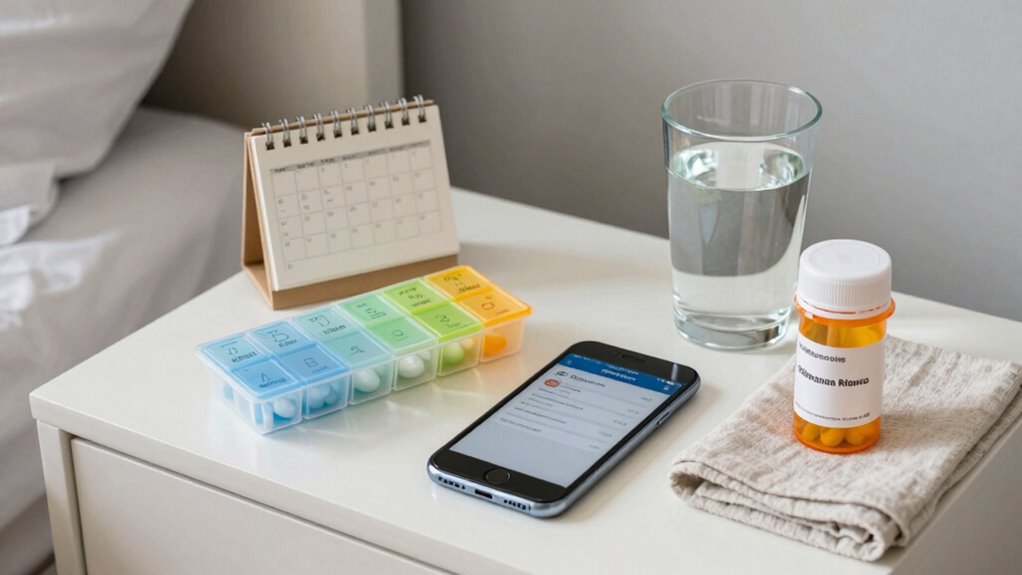

To improve medication and appointment visibility at home, use clear systems like pill organizers sorted by day and time, and place them in visible spots. Set up digital reminders or alarms on your phone, and customize alerts for your routines. Incorporate visual tools like calendars with color coding for easy tracking. Stay consistent with your schedules, and review reminders regularly. Continue exploring ways to strengthen your management plan for better health outcomes.

Turn quiet afternoons into listening time
- Thousands of audiobooks, podcasts and originals
- Listen on your phone, tablet or Echo — also offline
- Cancel anytime
Key Takeaways
- Use clearly labeled, color-coded pill organizers to easily identify medications and doses at a glance.
- Place medication and appointment reminders in prominent, visible locations around your home.
- Utilize digital calendars with alarms to schedule and display upcoming medications and appointments.
- Incorporate visual aids like charts or sticky notes in high-traffic areas for quick reference.
- Regularly review and update your medication and appointment schedules to maintain clarity and accuracy.
As an affiliate, we earn on qualifying purchases.
Why Managing Medications and Appointments Is Important

Managing medications and appointments is crucial because it directly impacts your health and well-being. When you stay organized, you reduce the risk of medication errors and ensure medication safety. Proper management helps you follow your prescribed treatment plan, preventing missed doses or double dosing. Patient education plays a key role here, as understanding why each medication is necessary empowers you to take control of your health. Keeping track of appointments ensures you don’t miss critical check-ins and screenings, which are essential for early detection and ongoing care. When you manage your medications and appointments effectively, you build a routine that supports better health outcomes and peace of mind. This proactive approach helps you stay in control and reduces stress related to your healthcare. Additionally, using reminders and alerts can improve your adherence to medication schedules and appointment times. Recognizing the importance of medical record management can also inspire emotional resilience and a positive mindset during your health journey. Regularly reviewing your medication list helps you stay aware of your current treatments and any potential interactions, further supporting your overall wellness. Understanding how hive health impacts overall wellness can motivate you to maintain consistent health routines.
Choosing the Right Tools for Medication Management and Tracking
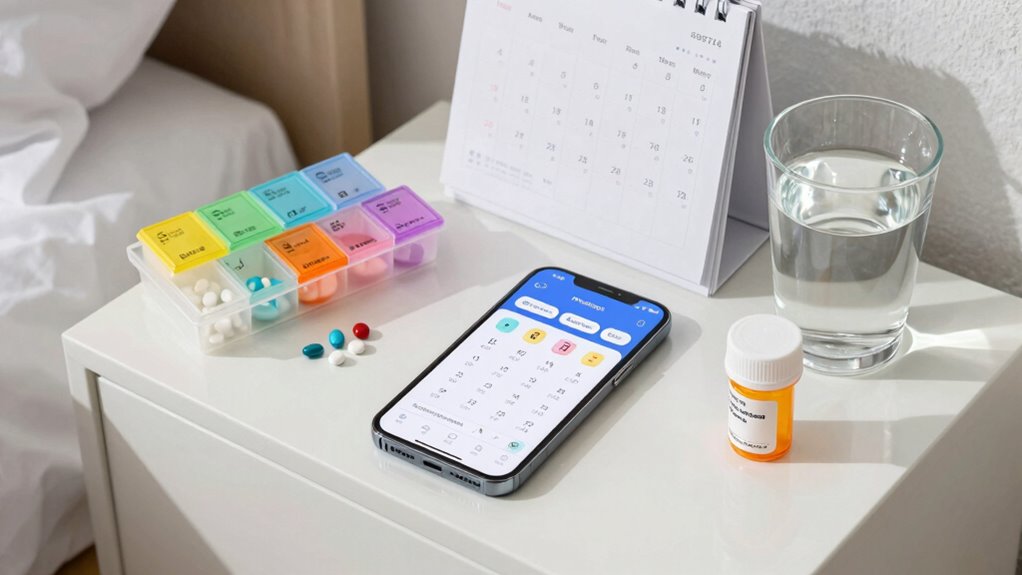
- Medication reminder apps: These help you set alarms, ensuring doses aren’t missed. Incorporating reminder notifications can also help reinforce medication routines and reduce forgetfulness. Utilizing emerging digital tools can further enhance your adherence to medication schedules. Additionally, choosing apps with solar system safety features can ensure your medication management remains secure and reliable.
- Pill organizers: Color-coded or labeled compartments make it easy to see if medication is taken.
- Digital health records: Access your medication list anytime for better awareness and communication with healthcare providers.
- Educational resources: Use online guides or print materials to understand medication purpose and side effects.
- Incorporating weatherproof storage for your medication supplies can help protect them from environmental damage and maintain their effectiveness.
Organizing Your Medications With Simple Systems

Organizing your medications with simple systems can make daily routines more manageable and reduce the risk of missed doses. Using pill organizers helps you sort your medications by day and time, making it easy to see what you need to take and when. Choose a multi-compartment pill organizer for multiple doses or days, so nothing gets overlooked. Additionally, keeping medication charts can give you a clear overview of your schedule, reminding you of dosage times and refills. Regularly updating these charts ensures you stay on track and avoid confusion. Keep your pill organizers and medication charts in a consistent, visible spot to reinforce your routine. Simple organization systems like these help you stay on top of your medications and maintain your health with less stress. Incorporating routine consistency into your organization can further enhance your ability to manage your medication routine efficiently. Recognizing medical history and tracking it can also help prevent potential medication interactions or errors. Utilizing traditional Indonesian decor masks as visual cues or inspirational symbols can add a cultural touch to your organizational space, making it more inviting and meaningful. Additionally, integrating natural elements like plants or water features can create a calming environment that encourages regular medication adherence.
How to Set Up Effective Reminders and Alerts

Setting up effective reminders and alerts can keep you on track with medications and appointments. You should use digital reminder tools, schedule regular alerts, and personalize notification settings to suit your routines. These steps guarantee you get timely prompts that fit your lifestyle and preferences. Incorporating visual cues like color-coded alerts or icons can further enhance your ability to recognize important notifications quickly. A consistent reminder system can also help you better understand your medication regimen, ensuring you adhere to prescribed schedules. Implementing troubleshooting techniques for alert issues can prevent missed notifications and improve your overall organization. To improve your writing and communication, consider using tools that help detect passive voice, making your messages clearer and more direct. For an added layer of organization, consider integrating your reminders with your portable restroom solutions to keep essential supplies or schedules easily accessible during events or outings.
Use Digital Reminder Tools
Have you ever missed a medication dose or an appointment because a reminder didn’t go off? Using digital reminder tools can improve medication safety and help you stay organized. To set up effective alerts, consider these steps:
- Choose user-friendly apps or device alarms that match your digital literacy level.
- Set multiple reminders for critical medications or appointments.
- Label reminders clearly with medication names or appointment details.
- Regularly update and review your reminders to keep them accurate.
- Incorporate inclusive casting and diverse representation to stay motivated and adaptable in managing your schedule. Additionally, integrating connected fitness technology can enhance your overall health management by providing real-time updates and support.
- Being aware of toilet flushing mechanisms and efficiency can help you understand how to conserve resources and avoid unnecessary water waste, which can be especially useful when managing medication routines in areas with water restrictions. Understanding privacy policies related to your digital tools can also ensure your personal information remains protected while staying connected.
Schedule Regular Alerts
Once you’ve chosen helpful reminder tools, the next step is to schedule regular alerts to keep medications and appointments top of mind. Consistent alerts boost medication safety and help you prioritize important appointments. Use digital calendars or apps to set recurring notifications, guaranteeing you don’t forget vital tasks. Here’s a simple overview:
| Reminder Type | Frequency | Purpose |
|---|---|---|
| Medication Alerts | Daily/Per dose | Medication safety |
| Appointment Reminders | Weekly/Before | Appointment prioritization |
| Refill Notices | Monthly | Guarantee medication stock |
| Follow-up Alerts | After appointments | Track progress or next steps |
Scheduling these alerts creates a reliable system, reducing missed doses and overlooked appointments. Incorporating biosensors can further enhance your health insights by providing real-time data that supports your reminder system.
Personalize Notification Settings
Personalizing your notification settings guarantees that reminders are both effective and unobtrusive, helping you stay on top of medications and appointments without feeling overwhelmed. Tailored alerts ensure you receive relevant notifications at the right time. To set up personalized notifications:
- Choose your preferred alert type—sound, vibration, or visual.
- Set specific times for reminders to match your daily routine.
- Adjust the frequency of alerts to avoid burnout.
- Customize the message content for clarity and motivation.
These personalized notifications adapt to your habits, making sure you don’t miss essential medications or appointments. By fine-tuning your alerts, you create a system that supports your health without unnecessary interruptions, keeping you organized and in control.
Creating a Visual Calendar for Medications and Appointments

Creating a visual calendar for medications and appointments helps you keep track of important health tasks at a glance. Use color coding techniques to categorize different medications, making it easy to identify what to take and when. For example, assign a specific color for morning doses and another for evening ones. Incorporate visual scheduling methods like charts, sticky notes, or printed calendars to clearly display dates and times. Place your calendar in a prominent spot, such as your kitchen or bedroom, so you see it daily. This visual approach reduces missed doses and forgotten appointments. By combining color coding techniques with visual scheduling methods, you create a simple, effective system that keeps your health routine organized and accessible.
Using Digital Tools to Access Your Schedule Anywhere

Using digital tools makes it easy to access your schedule wherever you are. By syncing your calendars across devices, you guarantee your appointments and medications are always up to date. Don’t forget to set reminders to stay on track throughout the day.
Sync Schedules Across Devices
To stay on top of your medications and appointments, syncing your schedules across all your devices is essential. First, check device compatibility to guarantee your calendar app works seamlessly on your phone, tablet, and computer. Next, adjust synchronization settings so updates happen instantly across devices. Here are some tips:
- Use cloud-based apps like Google Calendar or Apple Calendar for easy sync.
- Enable automatic synchronization to avoid manual updates.
- Confirm all devices are logged into the same account.
- Periodically review synchronization settings to prevent delays or errors.
Use Reminders Effectively
Because your schedule can change unexpectedly, leveraging digital reminders guarantees you never miss a medication or appointment. Set timely alerts to help you manage medication interactions, ensuring you take the right dose at the right time. Use reminders to prioritize appointments, especially when multiple commitments compete for your attention. Digital tools like smartphone apps or calendar alerts make it easy to customize notifications, so you’re always aware of upcoming doses or visits. These reminders also help you review medication instructions and prevent accidental missed doses. By actively engaging with your schedule through reminders, you reduce the risk of missed medications or overlooked appointments, promoting better health management. Consistent use of digital reminders keeps you on track, no matter how busy or unpredictable your day might be.
Strategies to Improve Medication Adherence and Stay on Track
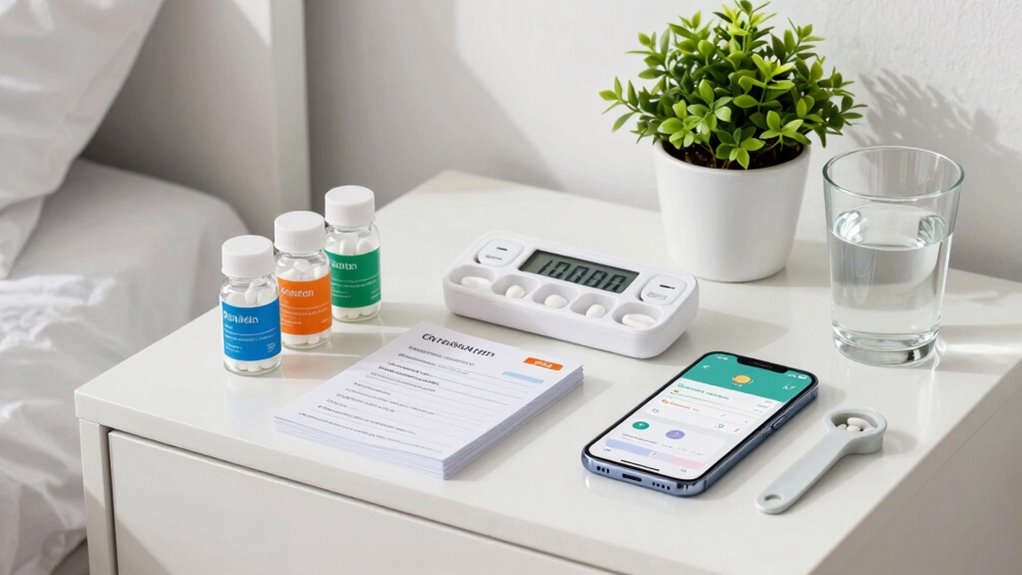
Staying consistent with medication can be challenging, but adopting practical strategies makes it more manageable. To improve adherence, focus on medication safety and patient education. Here are four effective tips:
- Set clear routines: Take your medication at the same time daily to build habits.
- Use pill organizers: Simplify your schedule and reduce errors with clearly labeled compartments.
- Stay informed: Understand why each medication is important, which boosts motivation.
- Communicate regularly: Keep your healthcare provider updated about side effects or concerns, ensuring proper medication safety.
These strategies help you stay on track, minimize missed doses, and foster a better understanding of your treatment plan. Remember, staying informed and organized is key to maintaining medication adherence and overall health.
Frequently Asked Questions
How Can I Involve Family Members in Medication Management?
You can involve family members in medication management by encouraging open communication and sharing medication schedules. Educate them about your medications, their purpose, and possible side effects to foster understanding. Ask for their help in organizing pills or reminders, making sure everyone stays informed and engaged. Family involvement boosts accountability and safety, ensuring medications are taken correctly and on time, which ultimately improves your overall health management at home.
What Should I Do if I Miss a Medication Dose?
If you miss a medication dose, don’t panic. Check your medication instructions for dose timing and guidance. Usually, if it’s soon after the missed dose, take it as soon as you remember. If it’s close to your next dose, skip the missed one to avoid overdose. Prioritize medication adherence by setting reminders. Consistently following your schedule helps maintain your health and prevents complications.
How to Handle Medication Changes or New Prescriptions?
Handling medication changes or new prescriptions requires careful caution. First, confirm clear communication with your healthcare provider about prescription updates to guarantee medication safety. Keep a current medication list, noting any changes, and double-check labels for accuracy. Discuss any concerns or side effects promptly. By staying organized and attentive, you safeguard your health, simplifying the process of managing medication modifications, and maintaining safe, effective treatment.
Are There Privacy Concerns With Digital Medication Tracking Tools?
Yes, privacy concerns and data security are valid when using digital medication tracking tools. You should guarantee the app or platform you choose has robust security measures, like encryption and secure login protocols. Be cautious about sharing sensitive information, and review the privacy policy to understand how your data is stored and used. Taking these steps helps protect your personal health information from unauthorized access and potential breaches.
How Can I Customize Reminders for Different Medications?
You can customize reminders for different medications by using medication scheduling apps that offer reminder customization features. Set specific times, frequencies, and alert tones tailored to each medication. Many apps allow you to label reminders clearly, add notes, or adjust notifications based on your preferences. This way, you guarantee that your medication schedule stays organized, and you receive timely alerts suited to each medication’s needs.
Conclusion
So, despite all these tech-savvy tools and clever systems, it’s almost funny how a simple reminder or a well-placed calendar can do wonders. You’d think managing medications and appointments would be complicated, but sometimes, the best solution is just a little organization and a nudge in the right direction. Ironically, the easiest fixes are often the most effective—proof that a little planning can make your health routine way easier.
Fall Picks
fall essentials
As an affiliate, we earn on qualifying purchases.