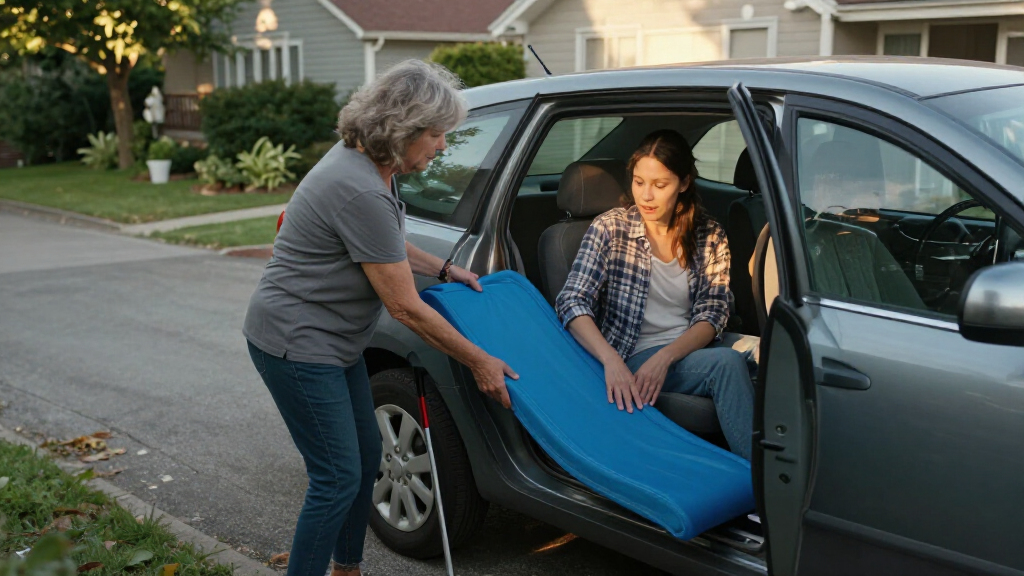

The Car Transfer Aid Slide Sheet is a portable tubular aid designed to reduce friction when helping someone move between a bed, wheelchair, recliner, stretcher, or vehicle seat. Its strongest case is for caregivers who make frequent, short transfers and want to reduce the pulling effort involved. The main drawback is its 26-by-18-inch size, which may not provide enough coverage for larger people or full-body repositioning. It is a useful, focused mobility aid for the right transfer routine, but it is not a substitute for a larger repositioning sheet or a support handle when the main challenge is getting into a car.

Turn quiet afternoons into listening time
- Thousands of audiobooks, podcasts and originals
- Listen on your phone, tablet or Echo — also offline
- Cancel anytime
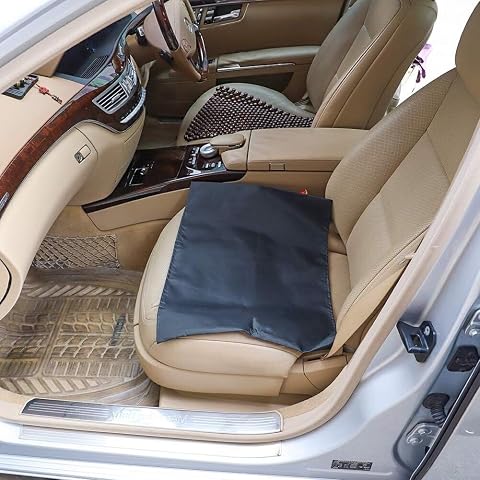
Car Transfer Aid Slide Sheet
- ✔ Material: Coated nylon fabric
- ✔ Design: Tubular (usable without folding)
- ✔ Size: 26" x 18"
Why This Product Stands Out
Transfer sheets are practical tools for reducing resistance between a person and the surface beneath them. This model’s tubular construction is its most useful convenience: because it can be used without folding, it makes setup simpler for caregivers who already know where the sheet needs to sit. That saves a small step during a routine transfer, though it does not make placement foolproof. The low-friction coating is the feature that matters most to the buyer: when positioned under the area being moved, it is intended to reduce the pulling force needed to slide someone across a seat or mattress. This can make repeated short transfers less tiring for caregivers, but it will not lift or stabilize the person.
For its segment, the sheet’s strongest combination is portability and use across several settings. A caregiver who handles similar seated transfers at home and on trips can carry one washable aid between a bed, wheelchair, recliner, and car. Its 26-by-18-inch dimensions keep it compact, but they also make it a compromised choice for broad repositioning. Buyers should treat the size as a fit requirement, not just a convenience: it needs to cover the area that will slide, and larger users or full-body tasks may need a larger sheet. The compact format is compelling when coverage is sufficient; otherwise, its portability does not make up for the missing support.
The product also differs from a car assist handle. A slide sheet reduces friction while a person moves across a surface; a handle gives the user a place to grip while standing or lowering into a seat. Those tools address different parts of a vehicle transfer. If sliding across the seat is the main difficulty, this sheet may help. If the person needs leverage, balance, or a secure grip, the sheet falls short and an assist handle is the more relevant purchase.
Key Features and What They Mean
The coated nylon surface is designed to reduce resistance between the person and the mattress or seat. For a caregiver who regularly helps someone slide across these surfaces, less resistance can mean less pulling effort and a more manageable repeated routine. The benefit is greatest when the person can participate in a guided slide but needs help overcoming friction. The sheet does not lift or support the person, so caregivers must still control the movement and follow the recommended transfer method.
The tubular shape lets the caregiver use the sheet without folding it into a sleeve. That removes a setup step, which can make familiar, routine transfers quicker to prepare, especially for caregivers helping several times a day. The outcome depends on putting the tube beneath the area being moved; incorrect placement can leave the low-friction fabric out of position and limit its usefulness. It simplifies setup but does not replace safe placement and handling.
The 26-by-18-inch dimensions make the sheet compact enough to pack in a vehicle or caregiver bag and store in a small space. This suits people who travel with mobility aids or need a portable option for localized transfers, such as shifting across a car seat or wheelchair. The same size limits coverage, so larger users or caregivers repositioning someone across a broader area may need a larger sheet. Checking that it covers the area being moved helps determine whether portability translates into a useful transfer aid.
Waterproof, breathable fabric is intended to make regular care easier to manage. Water resistance can help with spills and care-related moisture, while breathability may make contact more comfortable. Because the material is washable and quick-drying, caregivers can clean it between uses and return it to a routine without complicated upkeep. This is particularly useful in busy households where the aid may be used often, though periodic checks for wear or loose threads remain sensible.
Portability across settings means one aid can serve similar sliding tasks at home and while traveling. Caregivers who assist between a bed, wheelchair, recliner, stretcher, and car may value not having to carry a separate sheet for each location. That flexibility saves storage and packing space when the task is reducing friction and the compact area fits. If the user instead needs leverage, extra height, or broad body support, a handle, step stool, or larger repositioning aid addresses that need more directly.
Performance and Real-World Use
In day-to-day use, the likely benefit is a reduction in resistance during a short, guided slide. A caregiver may need less pulling force to reposition someone across a seat or mattress when the fabric is correctly placed. The amount of help will vary with the person’s mobility, body size, clothing, and the surface involved. The sheet does not lift the user, hold them upright, or prevent a fall, so the transfer still calls for appropriate support.
Setup should be fairly simple because the tubular design does not require folding, but correct placement matters. A caregiver must put the sheet under the part of the body being shifted and maintain control throughout the movement. On a trip, the foldable form should be convenient to carry, though it needs to be accessible when a transfer is planned. Its multi-setting design is useful if the caregiver understands how the same low-friction principle applies to each surface.
For upkeep, the washable and quick-drying material is a practical match for regular care routines. Owner concerns described in the supplied context include occasional loose threads, which may call for trimming with scissors. That signal does not establish that every sheet will have the issue, but it supports checking the seams and fabric periodically. The product is described as tear-resistant; no service life or durability guarantee is specified, so long-term wear will depend on frequency of use and care.
Who Should Buy This
This sheet makes the most sense for a family caregiver or home-care aide who regularly helps someone with limited mobility slide across a bed, wheelchair, recliner, or vehicle seat. It is a better fit when the user’s transfer needs are localized and the sheet’s 26-by-18-inch coverage is sufficient. People who travel between home and appointments may also value a washable aid that folds into a bag or vehicle compartment. The buyer should be prepared to place it correctly and continue guiding the transfer rather than relying on the fabric to do the work alone.
Who Should Skip This
Skip this model if the person needs full-body repositioning support or is likely to outgrow the available coverage; a larger transfer sheet is a more suitable direction. It is also a poor match when the hardest part of entering a car is standing, balancing, or lowering into the seat. In that situation, a car assist handle may provide the grip the user needs. Someone who needs a raised step and stable support may be better served by a medical step stool with a handle. The sheet should not be chosen as a general substitute for equipment matched to those specific needs.
Value for Money
Value depends less on how many settings appear on the product description and more on whether the sheet fits the caregiver’s actual transfer routine. For repeated short slides, its portable, washable design and low-friction surface can justify choosing a dedicated transfer aid. Its multi-setting use adds value for households moving between a bed, wheelchair, and car. But the compact size limits that versatility: if a larger user or broad repositioning task is involved, a bigger sheet may be a better purchase even if it is less convenient to carry. Without a verified price, a precise value comparison is not possible; the practical judgment is that it is worth buying only when its coverage matches the task. Choose an assist handle or supported step stool when the user needs leverage or height rather than reduced sliding friction.
Car Transfer Aid Slide Sheet
Transfer sheets are practical tools for reducing resistance between a person and the surface beneath them. This model’s tubular construction is its most useful convenience: because it can be used without folding, it makes setup simpler for caregivers who already know where the sheet needs to sit.
Pros:
- The low-friction coated surface can reduce the force needed to shift someone across a seat or mattress, which may make repeated transfers less taxing for caregivers.
- Its tubular design is ready to use without folding, simplifying a routine transfer when the sheet is placed beneath the area that needs to move.
- Lightweight, foldable construction makes it easier to keep in a vehicle or caregiver bag for appointments and trips.
- Waterproof, breathable coated nylon is designed to handle spills while remaining gentle against skin, a helpful mix for everyday care.
- Use across beds, wheelchairs, vehicles, stretchers, and recliners gives it more utility than a vehicle-only transfer aid.
Cons:
- At 26 by 18 inches, it offers limited coverage; larger users and full-body repositioning may call for a broader sheet.
- It reduces friction but does not provide a handhold or lift, so it cannot solve every part of standing up or getting into a vehicle.
- Loose threads may appear and could need trimming, adding a small maintenance step and a reason to check the fabric periodically.
- Caregivers still need to position the sheet correctly and guide the transfer; it is an aid to movement, not a replacement for safe transfer technique.
Best for: Caregivers who assist with short, seated transfers and want a compact, washable sheet for use at home or while traveling.
Not ideal for: People who need broad support for full-body repositioning, or vehicle users who mainly need a stable handhold to stand or lower themselves.
Bottom line: The Car Transfer Aid Slide Sheet is worth considering for caregivers who need a compact way to make short, guided transfers easier across seats and other surfaces.
Frequently Asked Questions
Can this slide sheet help someone get into a car?
It may help when the difficult part is sliding across the vehicle seat. It does not provide a handhold or help someone stand, so a car assist handle is a closer fit when the user needs grip and leverage.
Is the 26-by-18-inch size suitable for larger users?
It may be too small for some larger users, particularly when the transfer requires support across a wider area. Compare the dimensions with the intended placement and consider a larger repositioning sheet if broader coverage is needed.
Does the sheet lift or hold the person in place?
No. Its role is to reduce friction during a guided slide. The caregiver still needs to support and control the movement using an appropriate transfer method.
Can it be used outside a vehicle?
Yes. It is designed for use with wheelchairs, beds, stretchers, and recliners as well as vehicles. It is most useful when the task involves moving someone across a surface and the sheet can be positioned beneath the area being shifted.
What should I check before buying?
Check whether the 26-by-18-inch coverage suits the person and transfer task, and whether the need is for sliding assistance rather than a grip, lift, or step. Also plan to inspect the washable fabric periodically for loose threads or wear.
Final Thoughts
The Car Transfer Aid Slide Sheet is worth considering for caregivers who need a compact way to make short, guided transfers easier across seats and other surfaces. Its low-friction coating, washable fabric, and portable tubular design address real care tasks, while its limited dimensions and lack of a grip or lifting support define its boundaries. Buy it if the user needs help sliding and the sheet covers the transfer area; choose a larger repositioning sheet for broader support or a car assist handle when standing and balance are the main obstacles.
Fall Picks
fall essentials
As an affiliate, we earn on qualifying purchases.