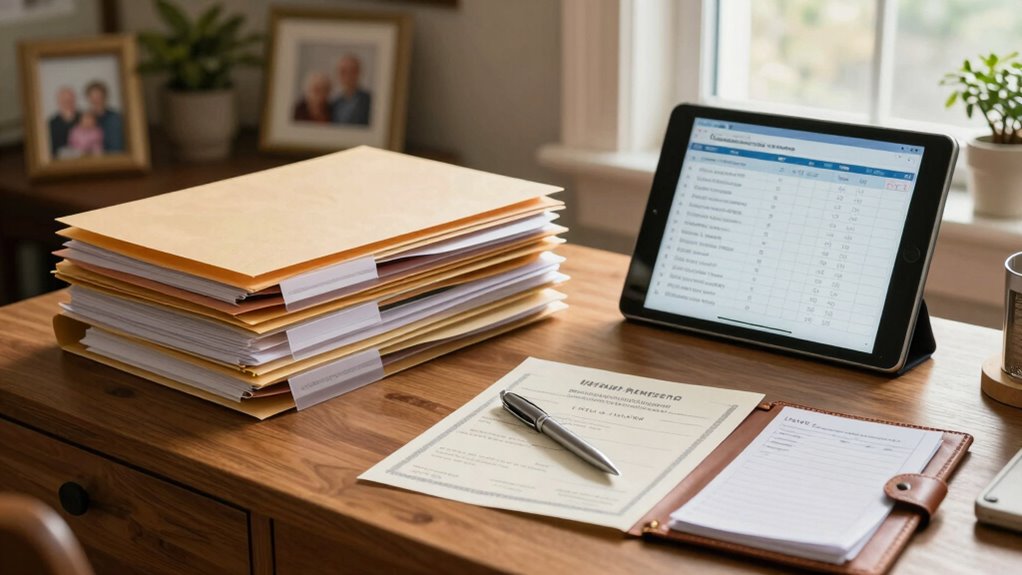

In a senior household, you should have your important identification documents, like your driver’s license, passport, and state ID, easily accessible. Keep essential medical records, including health history, allergies, and emergency contacts, in a safe spot. Also, organize legal papers such as wills, powers of attorney, and medical directives. Don’t forget financial records, insurance policies, and property documents. Staying on top of updates and security helps protect your assets—continue for more tips on how to stay prepared.

Turn quiet afternoons into listening time
- Thousands of audiobooks, podcasts and originals
- Listen on your phone, tablet or Echo — also offline
- Cancel anytime
Key Takeaways
- Keep essential identification documents like driver’s licenses, passports, and state IDs accessible and backed up digitally.
- Store important legal papers such as wills, powers of attorney, and medical directives in a fireproof, organized manner.
- Have up-to-date medical records, including allergies, medications, and emergency contacts, readily available for quick access.
- Maintain current insurance policies, bank statements, and financial documents securely online and in physical safe storage.
- Regularly review, update, and securely store all documents to ensure accuracy and protect against fraud or loss.
fireproof document safe for seniors
As an affiliate, we earn on qualifying purchases.
As an affiliate, we earn on qualifying purchases.
Why Seniors Need a Document Preparedness Plan
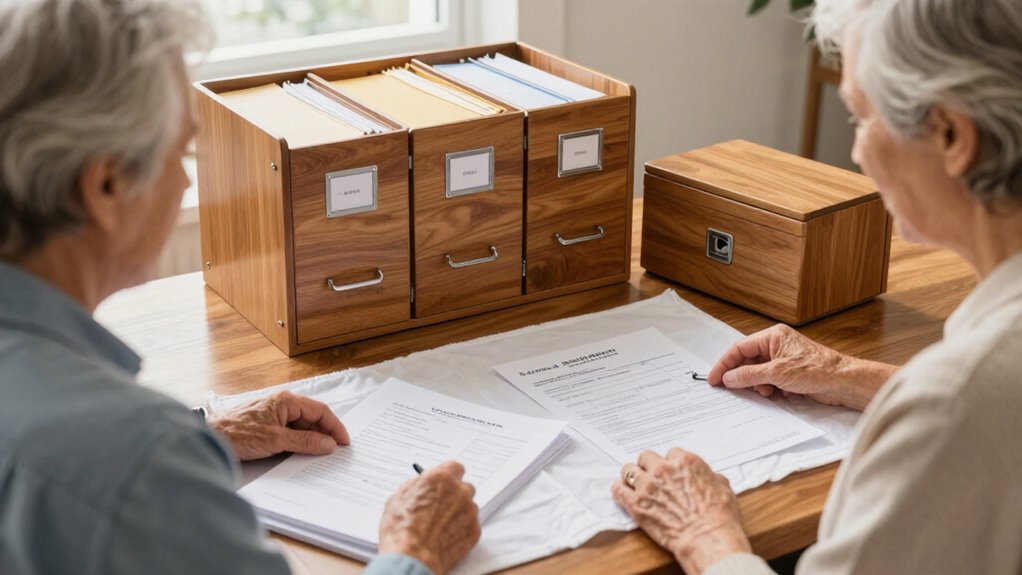
Having a document preparedness plan is essential for seniors because it guarantees that important papers are organized and accessible when needed most. With a solid plan, you can quickly locate medical records, insurance policies, and legal documents, reducing stress during emergencies. Incorporate digital security by securely storing scanned copies of critical documents online or on encrypted drives, protecting them from physical damage or loss. Document scanning helps create digital backups, ensuring you have access even if original papers are misplaced or destroyed. By establishing a system now, you save time and prevent chaos later. It also makes sharing documents with trusted family members or caregivers easier. Additionally, understanding the importance of digital security in safeguarding sensitive information can help in selecting secure methods for storing critical papers online. Ultimately, a preparedness plan provides peace of mind, knowing your essential papers are protected, organized, and readily available when life’s unexpected moments arise.
What Important Personal ID Documents Seniors Should Keep
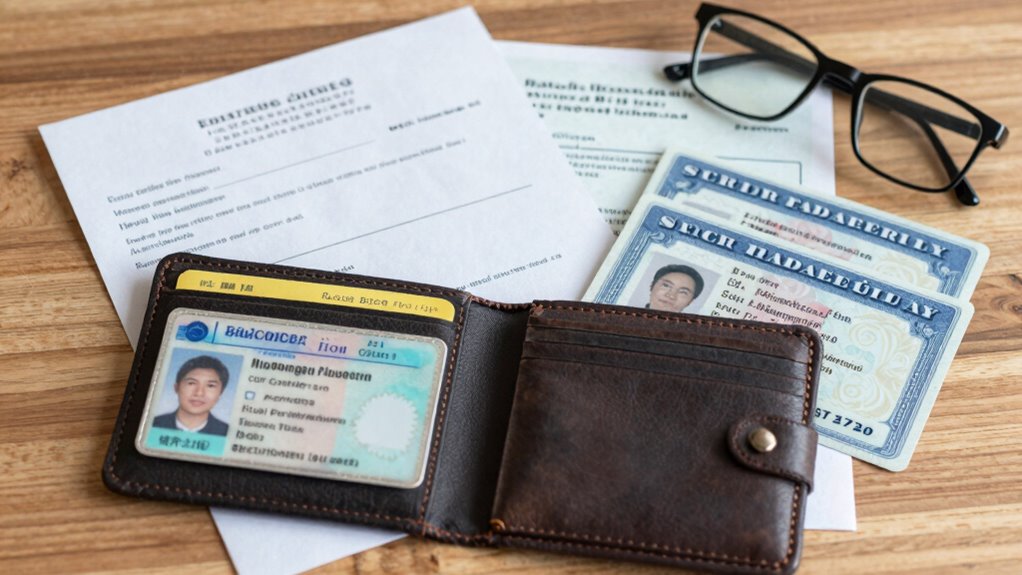
You should keep your essential identification cards, like your driver’s license and Social Security card, in a safe, easily accessible place. Along with these, important legal documents such as a will or powers of attorney are critical for your estate planning. Having these documents ready guarantees your important information is protected and readily available when needed.
Essential Identification Cards
| Card Type | Purpose | Keep in |
|---|---|---|
| Driver’s License | Proof of identity, driving | Safe, accessible location |
| State ID | Personal identification | Digital backups |
| Passport | International travel | Secure digital copies |
Having these essentials on hand simplifies identification and travel in urgent situations. It is also helpful to keep important personal documents in mind when organizing these documents for easy access.
Vital Legal Documents
What legal documents should seniors prioritize keeping close at hand? These crucial legal documents include wills, power of attorney, medical directives, birth certificates, marriage licenses, and Social Security cards. To guarantee easy access, store these documents in a secure, organized document storage system, preferably in a fireproof and waterproof container. Additionally, create digital backups by scanning each document and saving copies securely online or on encrypted drives. Digital backups are essential in case physical copies are lost or damaged. Keeping these documents accessible helps you or your loved ones manage legal and medical decisions efficiently, especially during emergencies. Regularly review and update your legal documents to reflect any changes in your circumstances, ensuring they remain current and valid. Incorporating important legal documents related to healthcare and estate planning, such as advanced directives and wills, ensures comprehensive preparation. Also, consider including natural pool documentation if you have installed eco-friendly pools, as these can be part of your property records. Ensuring proper document organization can prevent delays in critical situations and streamline the process of legal procedures. Maintaining a well-organized system also aligns with compliance standards for legal document handling, which can be crucial during audits or legal reviews. For instance, understanding the horsepower of electric dirt bikes can be useful if seniors or their families are considering eco-friendly transportation options or recreational activities.
Key Medical Records and Emergency Health Info to Have Ready

Having your essential medical history and emergency contact details easily accessible can make a critical difference in urgent situations. Make certain these records are up-to-date and stored in a safe, readily available place. Being prepared helps guarantee swift, effective care when it’s needed most. Regularly reviewing your household safety measures, such as bath mats and hotel safety, can also help prevent accidents that lead to emergencies. Implementing a troubleshooting plan for common tech and vehicle alerts can ensure that any issues are addressed quickly, reducing the risk of further complications. Additionally, maintaining awareness of privacy policies and understanding how your data is managed can help you make informed decisions about your information security. Incorporating HVAC maintenance checklists can also improve overall safety and comfort in the household, particularly for seniors with specific health needs. Staying informed about emergency procedures and community resources further enhances your household’s preparedness for unexpected situations.
Vital Medical History
Keeping a detailed record of your loved one’s vital medical history is essential for quick access in emergencies. This includes documenting past illnesses, surgeries, allergies, and current medications. To guarantee these records are always available, create digital backups stored securely online, making access easy for family members or healthcare providers. Clear documentation helps prevent errors and delays during urgent situations. Additionally, maintain open family communication about the medical history, so everyone is informed and prepared. Having comprehensive, up-to-date information readily available streamlines emergency responses and assures your loved one receives appropriate care swiftly. Regularly review and update these records to reflect any new diagnoses or treatments, keeping the information accurate and reliable in every critical moment. Incorporating safety measures for medical records can further enhance the protection and accessibility of this vital information, especially by understanding digital security best practices.
Emergency Contact Details
Are you prepared with the essential emergency contact details and key medical information for your loved one? Having accurate emergency preparedness documents guarantees quick communication during crises. Keep a list of family members, neighbors, and healthcare providers readily accessible. Include phone numbers, addresses, and relationship details. Also, compile key medical records like allergies, current medications, and known health conditions. This information helps emergency responders provide appropriate care and supports family communication when it matters most. Store these details in a visible, easily accessible location, such as a designated folder or digital file, and make sure trusted family members know where to find them. Being organized with emergency contact details can considerably reduce confusion and delays, ensuring your loved one receives prompt, effective assistance.
Essential Legal Papers Every Senior Should Maintain

Ensuring you have all essential legal documents organized and accessible is critical for managing your affairs effectively. Start with your estate planning documents, like your will and trust, to specify your wishes and designate beneficiaries. Keep important legal papers such as power of attorney and healthcare directives in a secure, easily accessible location. Digital security is also imperative—store digital copies of these documents securely online or on encrypted drives. Regularly review and update your legal papers to reflect any changes in your circumstances. Using a vetted system for document storage can help ensure your records are both secure and easily retrievable. Additionally, understanding early warning signs of document mishandling or potential fraud can help you take prompt action to protect your assets. Being aware of common security breaches related to legal documents can further help you prevent unauthorized access. Maintaining a comprehensive record of your legal documents can also streamline the process for family members or executors when needed. Implementing secure storage methods can further safeguard your sensitive information. By maintaining these records, you guarantee your wishes are clear and your loved ones can access necessary information quickly, reducing stress during difficult times. Proper organization of legal documents provides peace of mind for you and your family.
Financial and Insurance Documents Seniors Must Organize
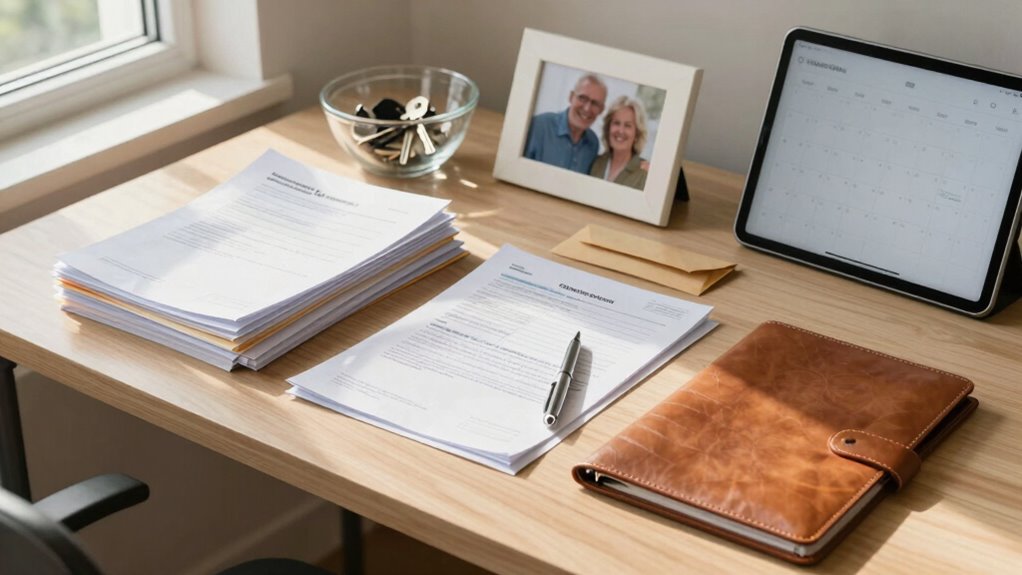
Having your legal documents organized helps protect your wishes, but it’s equally important to manage your financial and insurance information carefully. Keep copies of bank and investment account statements, insurance policies, and retirement plan details in a safe, accessible location. Regularly review these documents to guarantee accuracy and update beneficiary information as needed. Prioritizing proper document handling ensures that your sensitive information remains secure and reduces the risk of errors or fraud. Additionally, monitor for any changes in policy terms or coverage to stay well-informed about your protections. Prioritize digital security by storing sensitive information securely online or using password-protected files. Proper estate planning documents, like wills and trusts, should be included to clarify your wishes and simplify the process for your loved ones. Keeping these records organized reduces stress during emergencies and ensures your financial affairs are handled smoothly. Being aware of solar/power safety practices can also help you protect your home and loved ones in case of emergencies involving your solar system. Remember, well-maintained financial and insurance documents safeguard your assets and provide peace of mind.
Why Power of Attorney and Advance Directives Are Critical
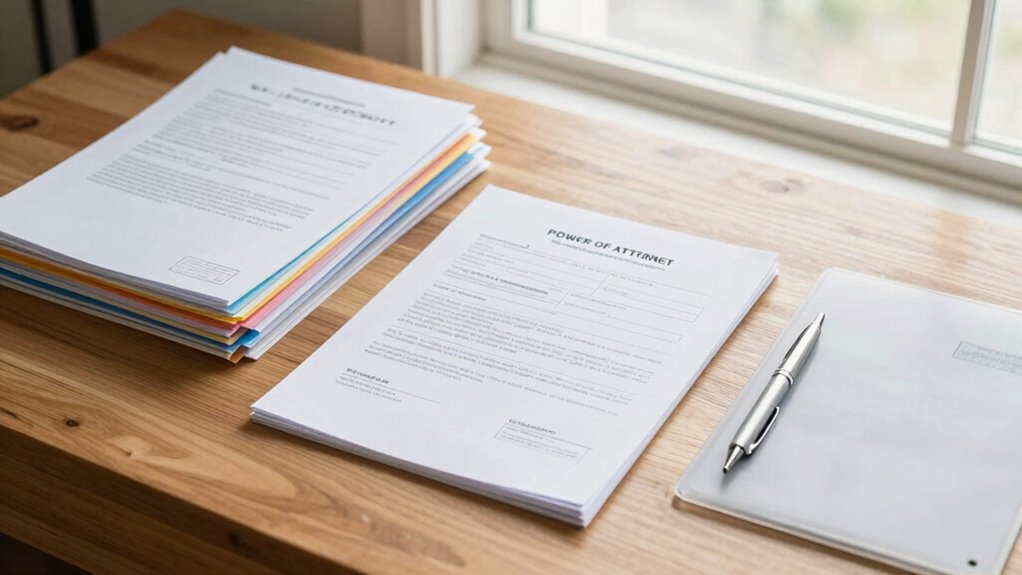
Power of Attorney and advance directives are essential tools that give you control over your healthcare and financial decisions if you’re unable to communicate or make choices yourself. They are crucial components of estate planning, ensuring your wishes are respected. By setting up these documents, you prevent confusion during emergencies and reduce stress for loved ones. Additionally, they help manage your digital legacy, guiding how your online presence is handled.
Key reasons to have these documents include:
- Ensuring your healthcare preferences are followed
- Protecting your financial assets
- Simplifying decision-making for family members
- Preserving your digital legacy according to your wishes
Having these documents ready provides peace of mind, knowing your wishes will be honored during difficult times.
How to Organize and Store Important Documents for Easy Access

Once your important documents, like powers of attorney and advance directives, are in place, organizing and storing them securely becomes the next essential step. Start by establishing a clear system for document storage that suits your needs. Use file categorization to keep everything organized—consider separate folders for legal papers, medical records, insurance policies, and financial statements. Label each folder clearly and keep them in a dedicated, easily accessible location. Use a sturdy filing cabinet or a fireproof safe for added security. Keep a master list of all stored documents, noting their location. Regularly review and update your files to guarantee they remain current. Proper organization makes it simple to find what you need quickly, reducing stress during emergencies.
Keeping Your Documents Secure and Up to Date

To guarantee your important documents remain protected and accurate, it’s vital to regularly update and secure them. Digital security is essential—use strong passwords and encryption for digital copies. Document scanning creates digital backups, reducing the risk of loss or damage. Keep physical copies in a locked, fireproof safe, and store digital files securely online or on external drives. Review and update your documents annually, especially insurance policies and legal papers. Consider using a password manager for sensitive information. Regularly check that scanned files are clear and accessible. Keep a master list of where all documents are stored, both physical and digital, so you can find them quickly when needed. Staying proactive ensures your documents stay safe and current.
Frequently Asked Questions
How Often Should Seniors Review and Update Their Important Documents?
You should review and update your important documents at least once a year to guarantee your estate planning and financial management stay current. Life changes like marriage, divorce, or the birth of a grandchild, as well as shifts in laws or financial situations, warrant more frequent checks. Regular reviews help you avoid potential issues and ensure your wishes are accurately reflected, giving you peace of mind.
What Digital Options Are Available for Storing Senior Household Documents Securely?
You can securely store senior household documents using cloud storage services that employ strong encryption methods. These platforms often offer two-factor authentication for added security. By choosing reputable providers like Google Drive, Dropbox, or OneDrive, you guarantee your documents are protected and accessible from anywhere. Confirm that the service uses end-to-end encryption to keep your sensitive information safe, giving you peace of mind.
Who Should Be Designated as a Trusted Person to Access These Documents?
You should designate a trusted person, like a close family member or legal advisor, to access your essential documents. Make sure they understand your wishes through a power of attorney, granting them legal authority. Also, discuss digital security measures with them, so they can access digital storage safely. This way, your important information remains protected and accessible when needed, giving you peace of mind.
How Can Seniors Ensure Their Documents Are Accessible During Emergencies?
To guarantee your documents are accessible during emergencies, focus on emergency preparedness by creating a clear, organized system. Keep essential documents in a secure, yet easily reachable location, like a fireproof safe or a digital cloud storage with offline access. Regularly update and review your document organization to avoid confusion. Share access details with trusted individuals, so they can assist or retrieve important papers swiftly when needed.
Are There Any Legal Restrictions on Sharing Medical or Legal Documents?
Think of your medical and legal documents as sacred scrolls, protected by an invisible shield. Legal confidentiality and privacy considerations mean sharing is guarantee—only with trusted individuals or authorized entities. Laws like HIPAA safeguard your health information, while legal restrictions ensure sensitive documents aren’t disclosed without your permission. Always keep these documents secure and share them carefully, respecting the boundaries that keep your personal information safe from unauthorized access.
Conclusion
Stay savvy and safeguard your significant papers by staying organized, accessible, and up-to-date. Secure your safety with a strong system that stacks essential documents—medical, legal, and financial—so you can swiftly summon what’s needed when it matters most. Keep key records close and confidently clear, creating a calm, collected corner of your caregiving. With diligent document diligence, you’ll protect your peace, preserve your privacy, and prepare perfectly for any pressing problem.
Cold & flu season Picks
humidifiers
As an affiliate, we earn on qualifying purchases.