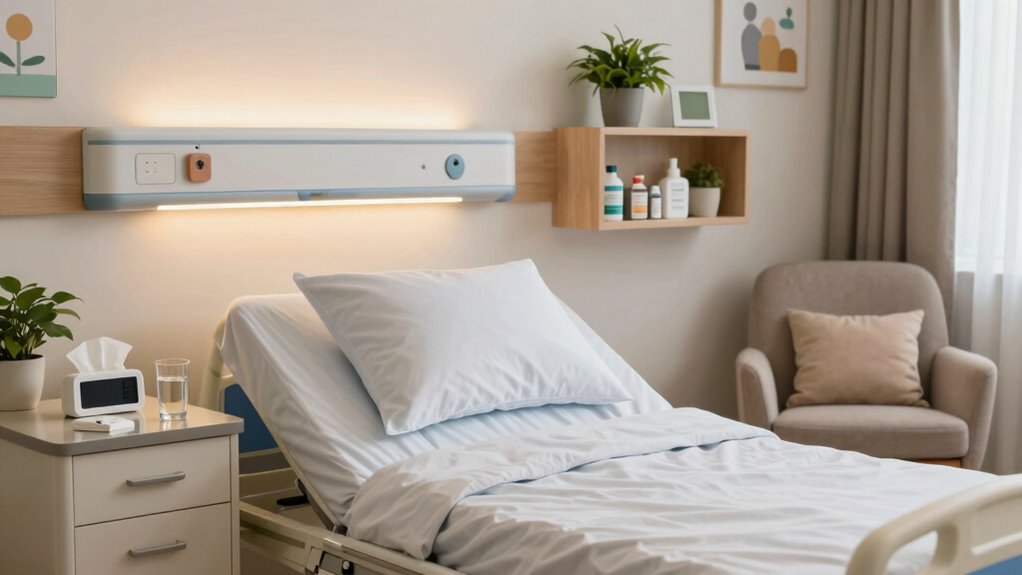

Start by evaluating your space to guarantee safety, comfort, and easy access. Arrange furniture to maximize open areas and leave clear pathways around the bed. Organize supplies in labeled, reachable containers and keep essential items within arm’s reach. Incorporate good lighting and curtains for privacy, and add calming colors and soft lighting to create a healing environment. Safety features like alarms and ramps are essential. For more tips on creating an ideal caregiving space, explore further below.

Turn quiet afternoons into listening time
- Thousands of audiobooks, podcasts and originals
- Listen on your phone, tablet or Echo — also offline
- Cancel anytime
Key Takeaways
- Maximize space by arranging furniture for easy access and clear pathways around the bed.
- Organize and label supplies, ensuring frequently used items are within arm’s reach for efficiency.
- Optimize lighting with adjustable fixtures and natural light, minimizing glare and shadows for safety.
- Incorporate privacy features like curtains and soundproofing to promote dignity and comfort.
- Add safety measures such as alarms, non-slip rugs, and accessible ramps to prevent falls and ensure safety.
As an affiliate, we earn on qualifying purchases.
Assess Your Space and Determine Your Needs
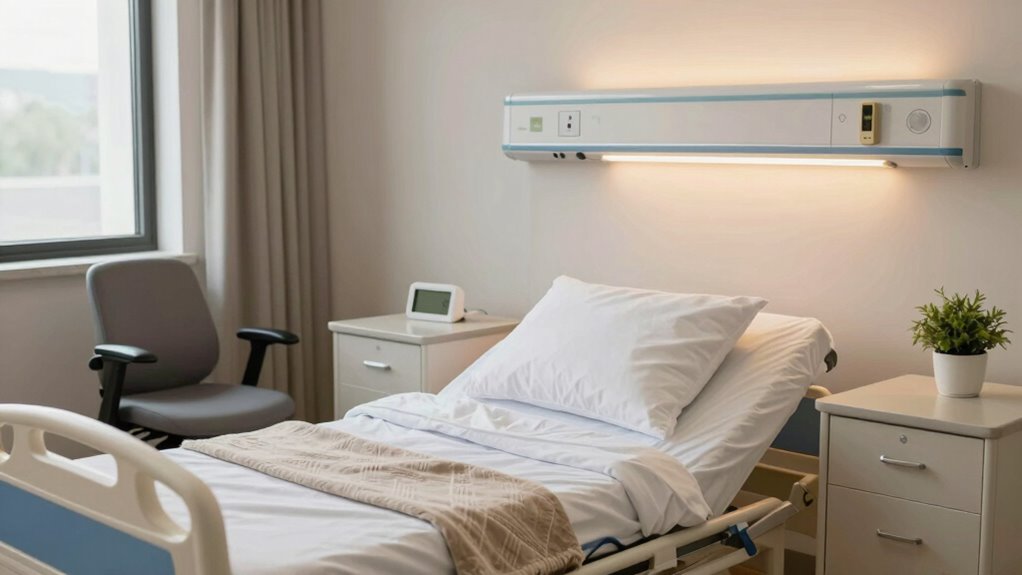
Have you ever wondered how much space you really need to create a comfortable caregiving environment? Effective space planning is essential for ensuring safety and ease of movement. Start by measuring the room and noting any existing furniture or equipment. Consider the furniture arrangement carefully to maximize open areas, making it easier to access the hospital bed and other essentials. Think about the caregiver’s workflow—where you’ll need space for tasks like turning the patient or reaching for supplies. Don’t forget to leave enough clearance around the bed for safety and comfort. Additionally, understanding ethical considerations related to patient privacy and autonomy can influence how you organize the space to respect the patient’s dignity. Incorporating landscaping ideas or natural elements can also create a calming atmosphere that promotes wellbeing. By evaluating your space and understanding your needs, you can create a layout that’s both functional and welcoming, helping you provide better care without feeling cramped or overwhelmed. Additionally, incorporating home organization tips can help keep supplies and equipment neatly arranged, reducing clutter and making caregiving tasks more efficient.
Choose Comfortable and Supportive Hospital Bed Accessories

Choosing the right hospital bed accessories can make a big difference in comfort and support. Consider supportive mattress options that prevent pressure sores and improve sleep quality, along with cushioned arm and headrests for added convenience. These choices help guarantee the bed is both comfortable and tailored to your loved one’s needs. Additionally, incorporating long-range drones for remote monitoring can enhance safety and provide peace of mind for caregivers. Regular use of glycolic acid products for skin care can also promote healthier skin, which is especially important during extended stays or recovery periods. Being aware of toilet maintenance and repairs can also prevent unexpected issues that might interfere with daily comfort. Understanding basic hydraulics can assist in ensuring smooth and reliable operation of the bed’s adjustable features. Moreover, understanding investment risks associated with various accessories can help prioritize safety and durability in your choices.
Supportive Mattress Options
Selecting the right mattress is crucial for guaranteeing comfort and proper support for your loved one. A good mattress reduces pressure points and promotes better sleep, which is essential during recovery. Consider options like memory foam mattresses, which contour closely to the body for personalized support. Gel infused mattresses are another excellent choice, as they help regulate temperature and keep your loved one cool throughout the night. Look for features such as:
- High-density memory foam for durability
- Gel infused layers for cooling comfort
- Adjustable firmness levels
- Waterproof and washable covers
- Non-slip bases for safety
Choosing a mattress that balances support and comfort can greatly improve your loved one’s well-being and recovery process. Proper outdoor furniture care and maintenance can also extend the lifespan of your mattress, especially if it’s stored or used in outdoor or semi-outdoor environments. Always prioritize quality and fit to ensure the best possible rest. Additionally, selecting a mattress with proper supportive features can prevent discomfort and aid in pressure relief, enhancing overall comfort during extended periods of bed rest.
Cushioned Arm and Headrests
When it comes to hospital bed accessories, cushioned arm and headrests play an essential role in guaranteeing comfort and support for your loved one. Look for options with an ergonomic design that fits the natural curves of the body, reducing strain and discomfort. The padding materials should be soft yet supportive, providing cushioning without losing shape over time. Memory foam or high-density foam are excellent choices, as they offer personalized comfort and durability. Properly chosen cushions help prevent pressure points, improve posture, and make resting or reading more comfortable. Confirm the arm and headrests are adjustable or easily removable for cleaning and repositioning. Additionally, selecting well-ventilated padding can help prevent heat buildup and ensure continued comfort. Incorporating ergonomic design principles into cushion selection can further enhance comfort and support. Using modern design trends in cushion materials and styles can also contribute to a more inviting and user-friendly environment. Considering patient safety features when selecting cushions can also help minimize risks of falls or injuries. Paying attention to material durability ensures the cushions remain supportive over time and are resistant to wear. With the right cushioning, your loved one can enjoy added comfort and support during their recovery or daily care.
Organize Supplies for Safety and Easy Access
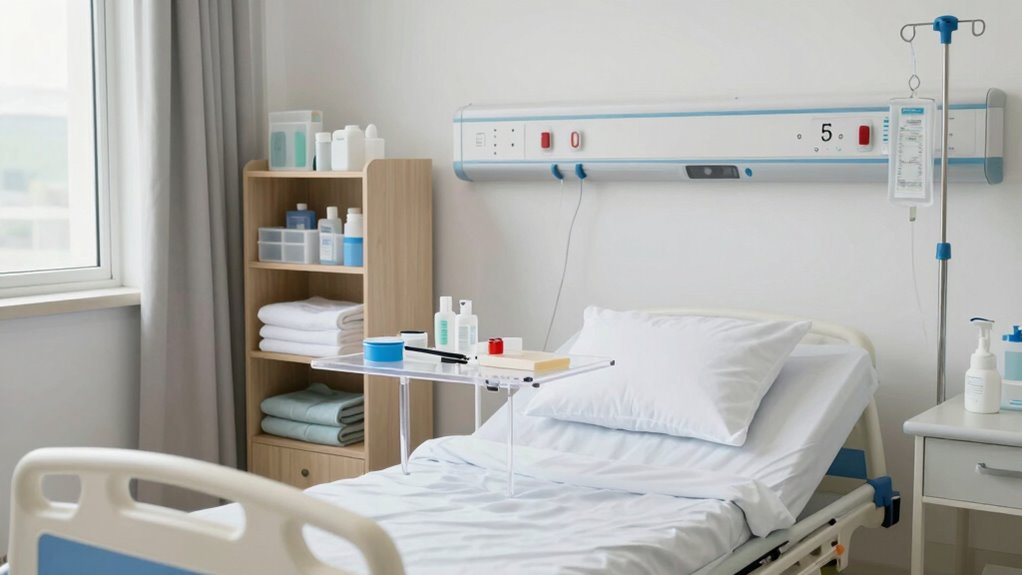
Organizing supplies for safety and easy access is essential to creating a functional caregiving space. You want everything within reach, so you can quickly respond to needs or emergencies. Keep medications organized in a labeled container to support medication management and prevent mix-ups. Store emergency supplies—like gloves, masks, and a flashlight—in a designated, accessible spot. Use clear containers to easily identify supplies and prevent clutter. Regularly check expiration dates and restock essential items. Keep frequently used items at eye level or within arm’s reach to save time and reduce frustration. Consider adding a small cart or shelf nearby to neatly hold these essentials, ensuring safety and efficiency during caregiving tasks.
Set Up Good Lighting and Privacy in the Caregiving Room

Good lighting and privacy are essential for a comfortable caregiving space. You should position lights to avoid glare and use adjustable levels for different needs. Installing curtains guarantees privacy when needed and creates a sense of security. Incorporating inclusive design ensures that the space accommodates diverse needs and promotes a welcoming environment. Additionally, choosing appropriate lighting fixtures can enhance the overall ambiance and functionality of the room. Considering ergonomic considerations can also improve comfort and ease of use for both caregivers and patients.
Optimize Lighting Placement
Proper lighting is essential for creating a comfortable and functional caregiving room, ensuring both safety and privacy. To optimize lighting placement, consider how natural illumination can brighten the space during the day, reducing energy use and creating a soothing environment. Use task lighting strategically around the bed for reading or medication management without disturbing your loved one. Position lights to minimize glare and shadows, especially near the bed and walkways. Avoid placing lights directly in the line of sight to prevent discomfort. Some tips include:
- Maximize natural illumination with window placements
- Use adjustable task lights near the bed
- Avoid harsh overhead lighting in sensitive areas
- Install wall-mounted fixtures to save space
- Place lights to evenly illuminate key zones
- Incorporating lighting techniques can further enhance comfort and safety in your caregiving environment. Additionally, choosing appropriate light bulbs can help regulate the room’s ambiance and reduce eye strain. Proper lighting placement not only improves visibility but also supports indoor air quality by reducing the need for excessive electrical lighting, which can generate heat and impact humidity levels. Well-designed lighting can also contribute to energy efficiency, lowering overall utility costs. Adjusting the lighting environment to suit different activities can promote a more calming and adaptable caregiving space. Effective lighting placement enhances safety and privacy in your caregiving space.
Use Adjustable Light Levels
Adjustable lighting is essential for creating a flexible environment that meets both safety and privacy needs. By varying light levels, you can easily switch from bright ambient illumination for tasks to softer mood lighting for relaxation. Use dimmable fixtures or lamps to control brightness quickly. This setup helps prevent eye strain and boosts comfort. Consider the table below for ideal lighting options:
| Light Type | Purpose |
|---|---|
| Ambient illumination | Overall brightness for safety |
| Task lighting | Focused light for activities |
| Mood lighting | Soft, relaxing ambiance |
Adjusting light levels keeps the space adaptable, ensuring safety during care tasks and privacy during rest or quiet moments. Proper lighting enhances both functionality and comfort in your caregiving room.
Ensure Privacy With Curtains
Curtains are an effective way to guarantee privacy in the caregiving room while also controlling light levels. Privacy curtains or room dividers create a private space around the hospital bed, reducing distractions and maintaining dignity. When setting up, make certain the curtains are easy to open and close for quick access. Use durable, washable fabric for hygiene and longevity. Position the curtains so they can be drawn completely around the bed, providing a secluded environment for rest or medical procedures. Consider installing ceiling tracks for smooth operation. Additionally, select curtains that block out excessive light to enhance comfort. Properly set up, privacy curtains help create a calm, secure atmosphere essential for patient comfort and caregiver efficiency.
- Easy-to-use privacy curtains or room dividers
- Durable, washable fabric for hygiene
- Ceiling tracks for smooth operation
- Curtains that block out excess light
- Positioning for maximum privacy and accessibility
Create a Calm, Healing Environment

Creating a calm, healing environment starts with thoughtful design choices that promote relaxation and comfort. Use soothing, calming color schemes like soft blues, gentle greens, or warm neutrals to create a peaceful atmosphere. Incorporate aromatherapy benefits by diffusing calming scents such as lavender or chamomile, which can reduce stress and promote restful sleep. Keep clutter to a minimum and add soft lighting to avoid harsh glare. The goal is to foster a space that feels safe and serene. Use the following table to guide your choices:
| Design Element | Purpose |
|---|---|
| Soft, calming colors | Promote relaxation and reduce anxiety |
| Aromatherapy scents | Enhance mood and ease stress |
| Gentle lighting | Create a soothing ambiance |
| Minimal clutter | Reduce visual stress |
| Comfortable textures | Increase physical comfort |
Add Safety Features and Ensure Accessibility
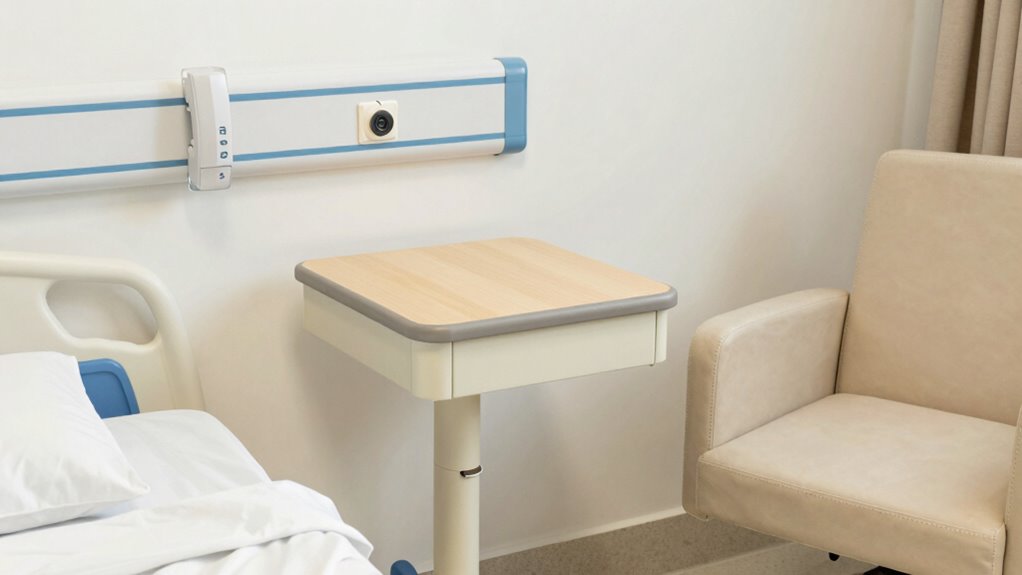
Ensuring safety and accessibility in a caregiving room requires deliberate modifications that prioritize the well-being of the occupant. You should install safety alarms to alert you of falls or other emergencies, providing immediate response. Accessibility ramps make it easier for wheelchairs or walkers to navigate the space comfortably. To further enhance safety, consider adding non-slip mats and securing loose rugs. Proper lighting reduces accidents and helps with visibility. Clear pathways prevent trips and falls, keeping essentials within easy reach. Regularly check safety alarms and confirm they’re functioning properly. Also, verify that accessibility ramps are stable and meet safety standards. These adjustments create a secure, accessible environment that supports independence and peace of mind for both caregiver and patient.
Keep Your Care Space Clean and Well-Stocked
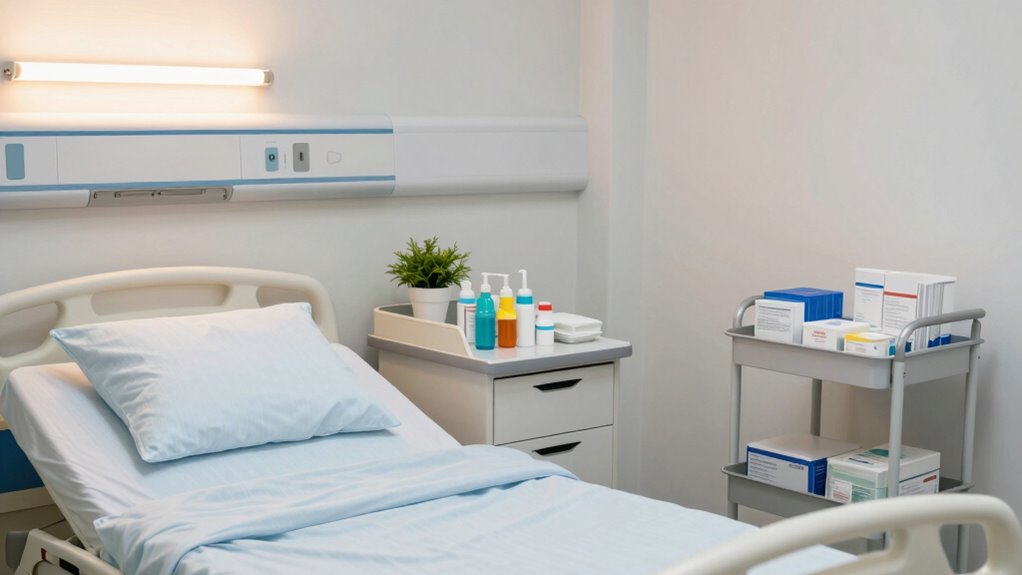
Have you organized your caregiving space to stay clean and fully stocked? Keeping everything tidy helps prevent infections and makes daily tasks easier. Regularly wipe down surfaces and dispose of trash promptly. Stock essentials like gloves, masks, and cleaning supplies within reach. For medication management, confirm medications are stored in a designated, organized container, and track doses carefully. This reduces errors and ensures timely administration. A well-stocked space also supports emotional comfort; having familiar items or calming supplies nearby can ease stress for both you and your loved one. Maintain a checklist to monitor supplies and refill as needed. Staying proactive in keeping your care area clean and stocked creates a safer, more supportive environment for everyone involved.
Frequently Asked Questions
How Can I Personalize the Caregiving Room to Comfort the Patient?
You can personalize the caregiving room by adding comforting items like soft blankets, favorite photos, or a beloved stuffed animal. Incorporate personalized decor such as artwork or a message board with uplifting notes. These touches make the space feel warmer and more familiar, helping the patient feel more at ease. Keep their preferences in mind, and regularly update the room to reflect their personality and comfort needs.
What Are the Best Ways to Manage Noise Levels in the Care Area?
To manage noise levels, start with soundproofing techniques like adding heavy curtains, weatherstripping doors, or installing acoustic panels to block out external noise. Use calming ambient sounds, such as gentle music or white noise machines, to create a soothing environment. Keep conversations at a low volume and minimize loud activities. These steps help maintain a peaceful caregiving space, making the patient feel more comfortable and less stressed.
How Often Should I Disinfect the Caregiving Space?
You should disinfect the caregiving space at least once daily to maintain infection control and prevent the spread of germs. If someone is sick or has been in contact with infectious agents, increase cleaning frequency. Follow a consistent cleaning schedule that targets high-touch surfaces like bed rails, doorknobs, and medical equipment. Regular disinfection keeps the environment safe, reduces infection risks, and promotes a healthier space for both caregiver and patient.
What Are Space-Saving Tips for Small Caregiving Rooms?
To maximize space in small caregiving rooms, choose compact furniture that fits comfortably without crowding. Use vertical storage solutions like wall-mounted shelves or tall cabinets to keep essentials accessible yet off the floor. Keep pathways clear and declutter regularly, storing items out of sight but within reach. This approach helps create a safer, more organized environment, making caregiving easier and more efficient without sacrificing comfort or accessibility.
How Can I Involve the Patient in Organizing Their Space?
You can involve the patient by encouraging their input in room customization, making them feel autonomous and empowered. Ask about their preferences for colors, furniture, or decorations, and let them choose what makes them most comfortable. Invite their participation in organizing daily essentials and personal items, fostering a sense of control. By doing so, you promote patient autonomy, boost morale, and create a space that truly feels like their own.
Conclusion
Creating a well-organized caregiving room can substantially improve comfort and safety for both you and your loved one. Did you know that a clutter-free environment can reduce fall risks by up to 50%? By evaluating your space, choosing supportive accessories, and maintaining cleanliness, you’ll foster a calm, healing atmosphere. With these simple steps, you’ll be better equipped to provide quality care and peace of mind, making each day a little easier for everyone involved.
Cold & flu season Picks
humidifiers
As an affiliate, we earn on qualifying purchases.