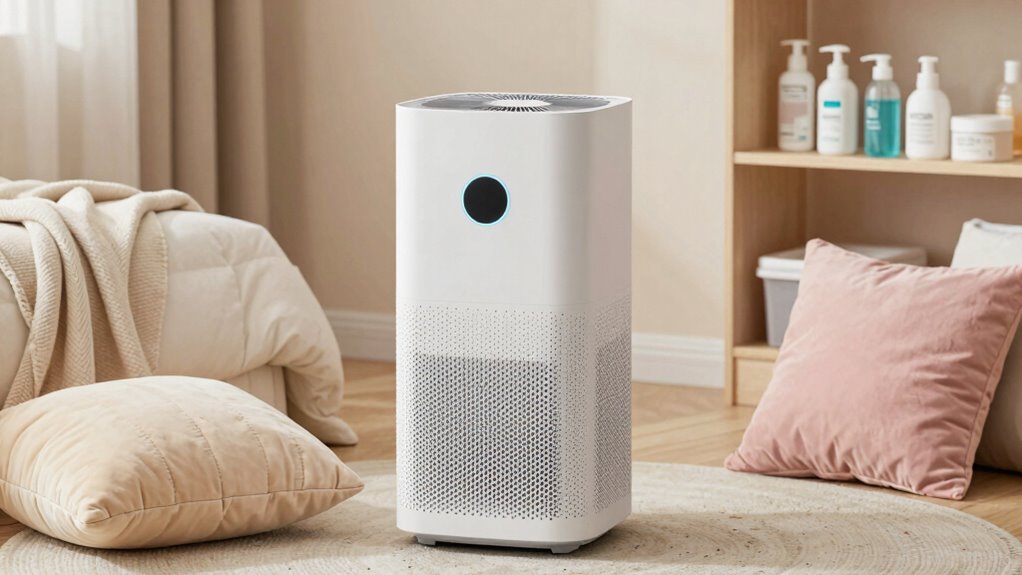

Before adding an air purifier to a care room, assess your space’s air quality needs by checking ventilation, humidity, and signs of stale air. Choose a purifier that targets the specific pollutants present, like HEPA filters for allergens or activated carbon for odors. Make sure it’s appropriately sized, easy to maintain, and placed for maximum airflow. Proper use and regular filter changes boost safety and comfort. Keep exploring for detailed tips to enhance your air quality improvements.

Turn quiet afternoons into listening time
- Thousands of audiobooks, podcasts and originals
- Listen on your phone, tablet or Echo — also offline
- Cancel anytime
Key Takeaways
- Assess ventilation and humidity levels to ensure proper airflow and prevent mold or bacteria growth.
- Select an air purifier suited for the room size and specific pollutants like allergens or odors.
- Prioritize models with easy filter access, low noise, and adjustable settings for comfort and safety.
- Place the purifier centrally, away from moisture and dust sources, to optimize airflow and efficiency.
- Follow maintenance guidelines for regular filter replacement and cleaning to maintain air quality.
HEPA air purifier for allergy relief
As an affiliate, we earn on qualifying purchases.
As an affiliate, we earn on qualifying purchases.
How Do You Determine Your Care Room’s Air Quality Needs?

Wondering how to figure out your care room’s air quality needs? Start by evaluating the room’s ventilation strategies. Proper ventilation ensures fresh air circulation and reduces pollutants. Check if your space has adequate airflow and consider adding exhaust fans or air exchange systems if needed. Next, focus on humidity control. Maintaining ideal humidity levels, typically between 40-60%, prevents mold growth and minimizes airborne bacteria. Use hygrometers to monitor moisture levels regularly. Identify if the room experiences stale air, musty odors, or excessive dryness, which signal a need for improved ventilation or humidity regulation. Incorporating indoor air quality gear such as HEPA filters, carbon filters, or UV-C sterilization can further enhance air purity. Additionally, understanding air quality metrics can help you better interpret your room’s needs and make informed decisions. Recognizing air filtration effectiveness can guide you in selecting the right devices for your space. To ensure optimal air quality, it’s also helpful to understand how pollutant sources within the room may impact overall air safety. Being aware of microplastics in dust and other pollutants can further inform your choices for air purification. By carefully examining these factors, you can determine the appropriate air quality measures, creating a safer, healthier environment for everyone in the care room.
Which Type of Air Purifier Is Best for Your Care Environment?
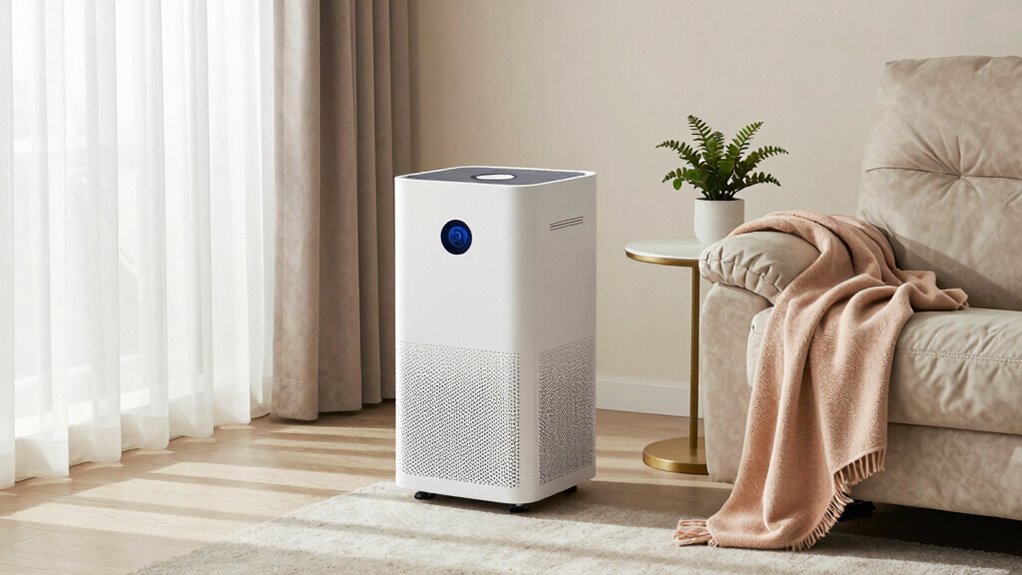
Choosing the right air purifier for your care environment depends on your specific air quality needs and the types of pollutants present. Different air purifier types use various filtration technologies to target pollutants effectively. HEPA filters excel at capturing airborne particles like dust, allergens, and bacteria, making them ideal for sensitive environments. Activated carbon filters are best for removing odors and volatile organic compounds (VOCs). Some units combine both technologies for thorough purification. Considering the effectiveness of filtration technology in removing specific pollutants can help optimize your choice. Consider the size of your space and pollutant sources when selecting a model. Here’s a quick comparison: air purification technologies.
What Features Should You Look for When Choosing an Air Purifier?
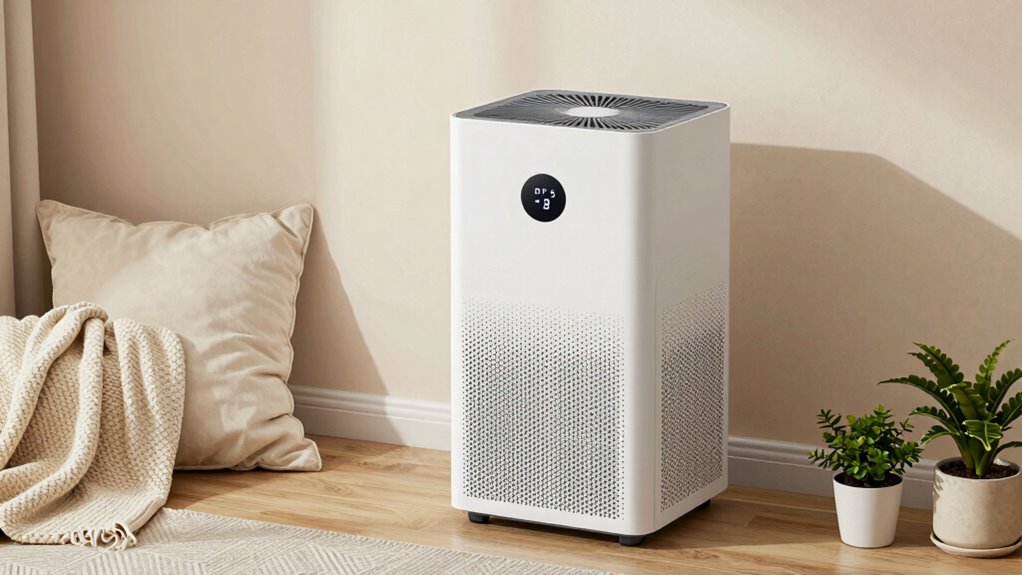
When selecting an air purifier for your care room, focusing on key features can guarantee you get the most effective device for your needs. First, consider the air purifier noise level; a quieter model ensures a peaceful environment, especially important in care settings. Check if the device offers adjustable fan speeds to control noise and airflow. Additionally, examine the filter replacement requirements—choose a model with easily accessible filters and clear indicators for when replacements are needed. High-quality filters, like HEPA, are essential for capturing allergens and pollutants. Durability and ease of maintenance also matter. By prioritizing these features, you’ll select an air purifier that operates quietly, is simple to maintain, and effectively enhances air quality in your care room. Being aware of potential scams and fraudulent companies can help you make safer purchasing decisions. Considering product reviews and recommendations from trusted sources can also guide you toward reliable options.
How Do You Properly Use and Maintain Your Air Purifier?
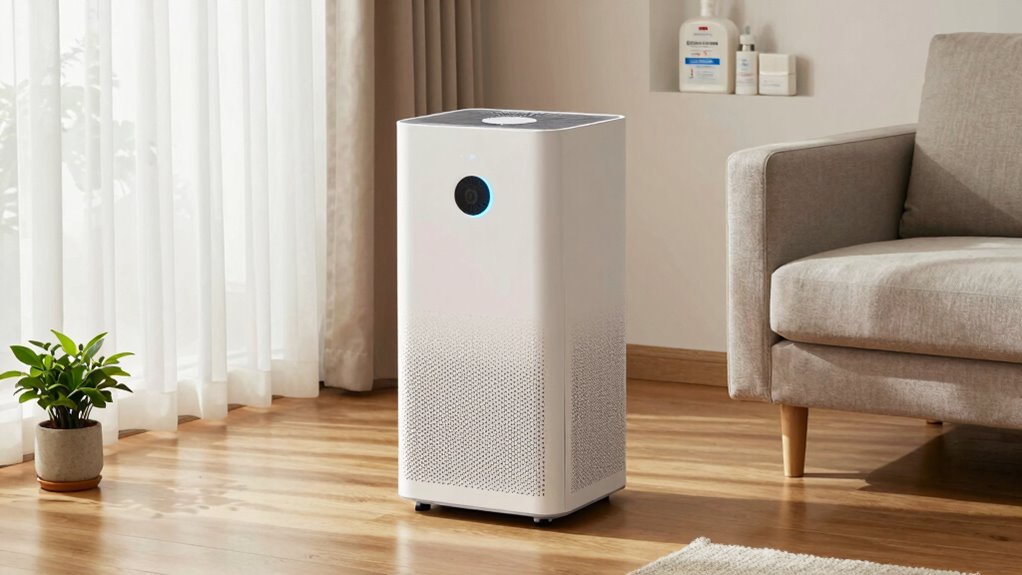
To guarantee your air purifier works effectively and lasts longer, it’s essential to use and maintain it properly. Start with proper air purifier placement—place it in a central location away from walls and furniture to maximize airflow and coverage. Avoid placing it near sources of moisture or dust, which can hinder performance. Regular filter replacement is vital; check your manufacturer’s instructions and change filters as recommended to maintain air quality. Keep the exterior clean by wiping it down to prevent dust buildup. Make certain the unit is turned off before cleaning or replacing filters. Additionally, understanding the importance of airflow optimization can help you position your purifier for the best results. Proper home safety practices, including regular maintenance, can prevent potential issues and ensure the device functions as intended. Maintaining correct air quality levels is crucial for a healthier environment, especially in a care room. Remember that proper device placement can significantly influence its effectiveness in improving air conditions. Ensuring the purifier has adequate filter maintenance can also extend its lifespan and improve its overall performance. By following these steps, you’ll optimize your air purifier’s efficiency and extend its lifespan, creating a healthier environment in your care room.
How Can You Ensure Safety and Comfort With Your Air Purifier?
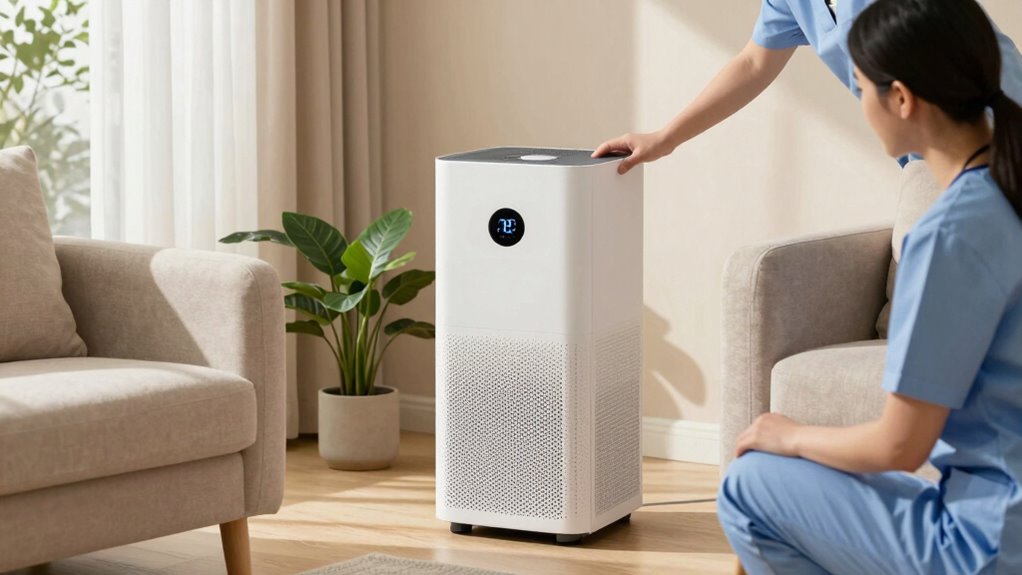
Ensuring safety and comfort with your air purifier starts with proper operation and placement. Place your air purifier in a central location, away from walls or furniture, to maximize airflow and avoid obstructions. This ensures effective air cleaning and reduces noise or discomfort. Regularly check and replace filters according to the manufacturer’s instructions; a clean filter maintains optimal performance and prevents allergen buildup. Avoid placing the purifier near sources of moisture or direct sunlight, which could damage the device or reduce its efficiency. Adjust settings for comfort, such as using a fan speed that balances noise and purification. By paying attention to air purifier placement and timely filter replacement, you create a safer, more comfortable environment for everyone in the care room.
Frequently Asked Questions
How Often Should the Air Purifier Be Replaced or Serviced?
You should check your air purifier’s filter maintenance schedule regularly, typically every 3 to 6 months, depending on usage and air quality. Replacement frequency varies with model and environment; some filters need replacing sooner if they become dirty or clogged. Keep an eye on indicator lights, and follow the manufacturer’s recommendations to guarantee peak performance. Regularly servicing your purifier helps maintain clean air and prolongs its lifespan.
Can Air Purifiers Help With Specific Medical Conditions?
Yes, air purifiers can help with specific medical conditions like allergies and asthma. You’ll find that they improve allergy relief by filtering out dust, pet dander, and pollen, reducing triggers. For asthma management, air purifiers help eliminate airborne irritants that can cause attacks. Keep in mind, choosing a purifier with HEPA filters and proper maintenance guarantees peak performance, making your care room a healthier environment.
Are There Noise Concerns With Using Air Purifiers in Care Rooms?
The noise from air purifiers can sometimes be loud enough to disturb your environment, making it feel like a thunderstorm in the room. You might worry about background noise causing sleep disturbance or distraction, especially during rest or quiet activities. However, many modern models operate quietly, so you can find one that minimizes noise and keeps the air clean without disrupting peace. Always check the decibel level before purchasing.
What Is the Energy Consumption of Different Air Purifier Models?
Different air purifier models vary in energy consumption based on their size and features. You’ll find that energy-efficient models use less power, helping you save on electricity bills. Look for purifiers with low power consumption ratings and high energy efficiency labels. Regularly maintaining and choosing the right size for your care room guarantees peak performance without wasting energy. This way, you keep the air clean while minimizing your energy costs effectively.
How Do Air Purifiers Affect Humidity Levels in Care Environments?
Air purifiers can influence humidity levels in care environments by assisting with humidity regulation and moisture control. While they primarily filter pollutants, some models include humidifying or dehumidifying features, helping maintain ideal humidity. You should choose an air purifier suited for your room size and needs, ensuring it supports moisture control without overly drying or humidifying the space, which is essential for patient comfort and health.
Conclusion
Choosing the right air purifier is like tending a delicate garden—you need to understand its unique needs, select the right tools, and care for it regularly. When you do, you create a safe, comfortable space where health can flourish. Think of your care room as a sanctuary; with proper air quality, it becomes a haven where every breath nurtures well-being. Your thoughtful choices today cultivate a healthier environment for tomorrow.
Fall Picks
fall essentials
As an affiliate, we earn on qualifying purchases.