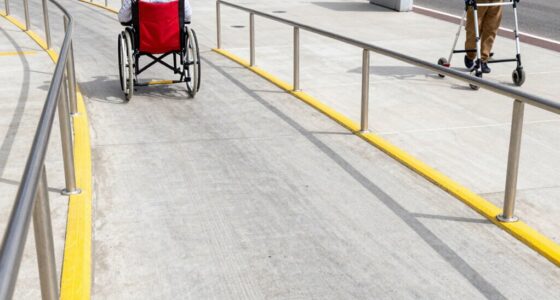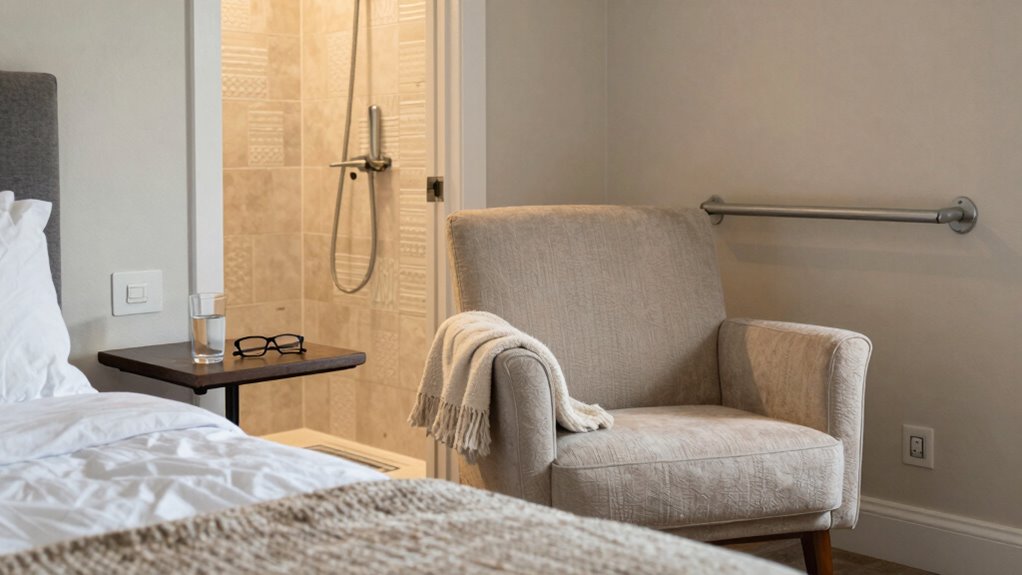

To stay safe and independent, you should keep essentials within easy reach from your bed, chair, and bath. This includes medications, glasses, a phone or emergency device, remote controls, toiletries, and water. Organize items in accessible containers or pockets, place frequently used items at waist level, and make certain pathways are clear. Regularly check that your setup matches your mobility needs. Keep exploring for more tips to create a safer, more comfortable environment.

Turn quiet afternoons into listening time
- Thousands of audiobooks, podcasts and originals
- Listen on your phone, tablet or Echo — also offline
- Cancel anytime
Key Takeaways
- Medications, glasses, remote controls, and tissues should be organized in accessible containers near the bed and chair.
- Use accessible storage pockets or trays to keep essential items within arm’s reach for quick and safe access.
- Keep pathways clear of clutter and obstacles to ensure safe movement and easy reach to necessary items.
- Place frequently used items like water, phone, and personal care products at waist level to minimize strain and falls.
- Install grab bars, non-slip mats, and adaptive furniture to support safe transfers and prevent accidents in bathroom and living spaces.
bedside medication organizer for seniors
As an affiliate, we earn on qualifying purchases.
As an affiliate, we earn on qualifying purchases.
How to Identify What Items Seniors Need Within Reach

To determine which items seniors need within reach, start by observing their daily routines and habits. Pay attention to how they manage medication, ensuring their pills and tools are easily accessible for medication management. Notice if they often need water or glasses, so these can be within arm’s reach. Consider emergency preparedness by identifying items like a phone or a flashlight they might need quickly. Think about their mobility and how they move around, so you can place frequently used objects where they won’t strain or risk falling. Ask them what they feel would help make their daily tasks easier or safer. By understanding their routines and potential risks, you can choose the right items to keep within reach, promoting independence and safety. Additionally, assessing their cognitive awareness can help determine if certain items should be more prominently positioned to prevent confusion or accidents, especially considering emerging trends in digital health technology that can support safety and independence. For example, using color accuracy techniques on labels or indicators can make essential items more distinguishable and easier to identify. Incorporating smart home devices can further streamline access to frequently used items and enhance safety. Paying attention to adaptability in their environment can also ensure that their needs are met as their abilities change over time.
Essential Items to Keep by the Bed for Safety and Comfort
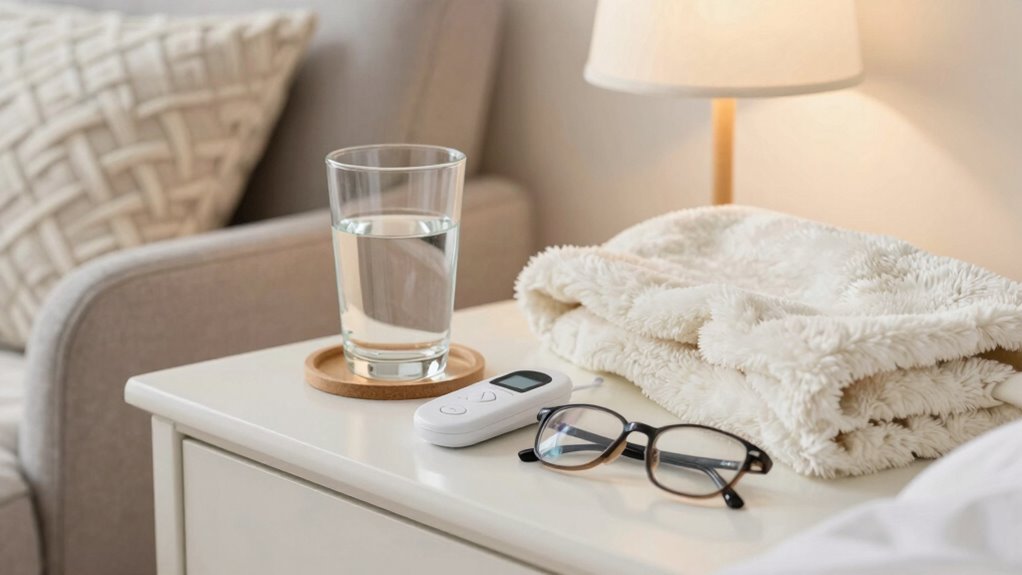
Having essential items within reach by the bed can markedly enhance safety and comfort for seniors. Keep your medications nearby to support medication management, avoiding missed doses or mix-ups. Use a small, organized container or medication box for easy access. Additionally, have a phone or emergency alert device close to summon help quickly if needed. Consider placing a flashlight within arm’s reach for emergency preparedness during power outages. Keep necessary items like glasses, a water glass, and tissues handy to address daily needs without unnecessary movement. By organizing these essentials at your bedside, you reduce the risk of falls or accidents, ensuring you’re prepared for both routine needs and unexpected emergencies.
Best Places in the Living Room or Chair Area to Keep Important Items
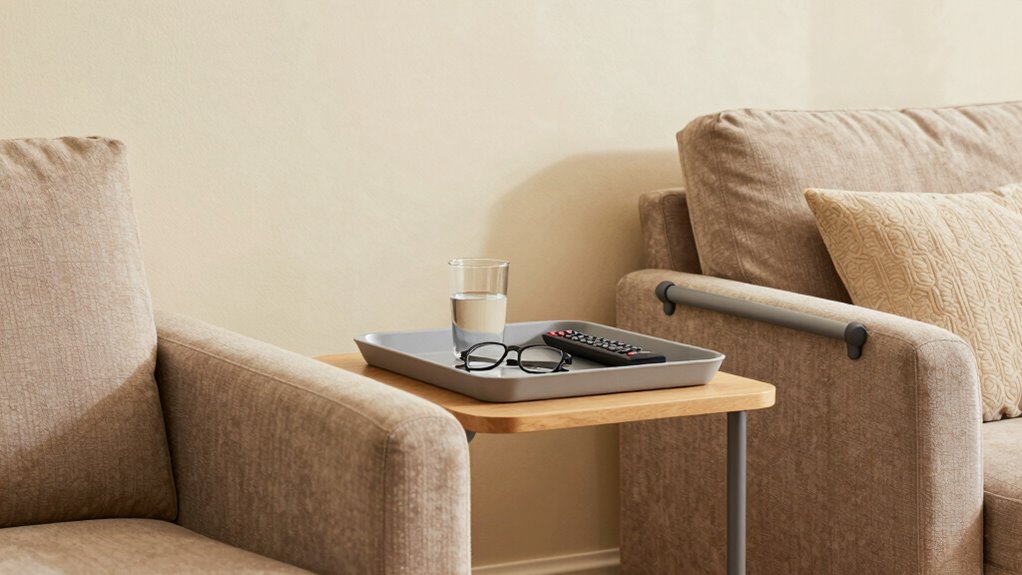
Placing important items within arm’s reach makes daily living easier and safer. Use a nearby table or tray, accessible storage pockets, and keep pathways clear to prevent accidents. These simple choices guarantee you can find what you need quickly, without unnecessary strain. Incorporating smart home technology can further enhance safety and convenience by automating lighting or alert systems. Additionally, selecting safe storage options helps prevent items from falling or causing clutter, reducing the risk of trips and falls. Proper cabling solutions and secure mounts can also help keep living spaces organized and safe. Understanding the horsepower of electric dirt bikes and their power capabilities can also be useful when considering mobility aids or adaptations for seniors who enjoy outdoor activities. Implementing automated lighting can greatly improve visibility and safety during nighttime or low-light conditions.
Nearby Table or Tray
Ever wonder where the best spot is in your living room or chair area to keep important items within easy reach? A nearby table or tray is perfect for this. Place it close to your seating to hold essentials like your bedside gadgets—such as remotes, glasses, or medication. This keeps everything accessible without stretching or standing. You can also add decorative accents like a small plant or a photo frame to make the space inviting. Make sure the table or tray is sturdy and at a comfortable height, so reaching for items feels natural. Keeping your essentials organized on a dedicated surface minimizes clutter and reduces the risk of falls. Selecting appropriate furniture can further enhance accessibility and safety. Choosing the right battery inverter generator for your needs can ensure you have reliable power nearby in case of outages or emergencies. Incorporating accessible furniture into your space can also help maintain independence and ease of use. Using ergonomic design principles in your setup can improve comfort and safety. Additionally, adding adaptive accessories can further tailor the space to individual needs. This simple setup helps you stay independent and comfortable, right within arm’s reach.
Accessible Storage Bockets
Accessible storage pockets are a smart way to keep your everyday essentials within easy reach while relaxing in your chair or living room. They provide a convenient spot for items like glasses, remote controls, medications, or a flashlight, making daily routines smoother. Integrating these pockets into your smart home setup enhances emergency preparedness, ensuring important items are always accessible during urgent moments. Position pockets on the side of your chair or nearby wall, so they’re within arm’s reach without cluttering your space. This setup minimizes the need to get up or search for items, reducing fall risks and frustration. Using accessible storage fixtures can further improve organization and safety in your living area. Overall, accessible storage pockets promote independence, safety, and quick access—key factors for staying comfortable and prepared in your living area. Additionally, incorporating AI-powered home assistants can help remind you to grab essential items before leaving your chair, further supporting your independence and peace of mind. Supporting caregivers’ emotional well-being by reducing daily stress is also an important benefit of organizing your space effectively.
Clear Pathways for Reach
Creating clear pathways in your living room or near your chair guarantees you can reach important items quickly and safely. Position your essentials—like gardening tips, reading glasses, or your phone—within easy reach on nearby tables or shelves. Keep pathways free of clutter to prevent tripping hazards, making daily activities smoother. Store financial planning documents in a dedicated, accessible spot to avoid last-minute searches. This setup helps you stay organized and independent, especially when mobility is limited. Clear pathways also support safe movement, reducing fall risks. Regularly assess your space to make sure pathways remain unobstructed. By keeping important items close and pathways open, you promote safety and ease of access, helping you maintain your routines comfortably and confidently. Household products like bath mats can also help prevent slips and falls, further enhancing safety.
Accessible Toiletries and Bath Items for Seniors
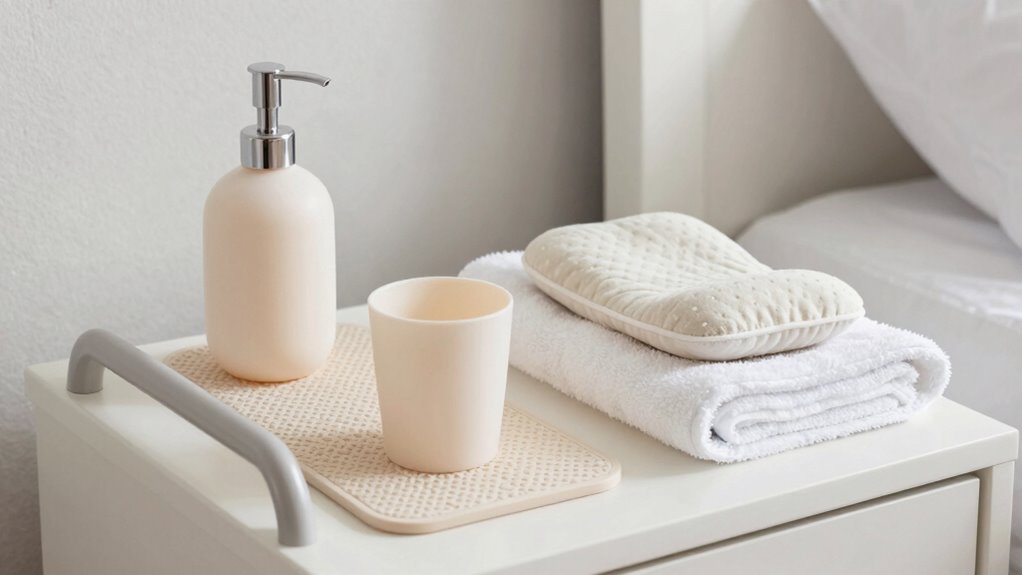
Ensuring that toiletries and bath items are easy to use can considerably improve a senior’s daily routine. When your personal hygiene tools are within reach and simple to handle, it becomes easier to maintain skincare routines and stay clean. Opt for bottles with large, easy-grip caps or pump dispensers to minimize effort. Consider using shower caddies or mounted shelves at accessible heights to keep everything organized and within arm’s reach. Non-slip mats and grab bars can also prevent accidents during bath time. Simplifying your toiletries setup reduces frustration and encourages consistent hygiene habits. By choosing user-friendly, accessible bath items, you can maintain independence and feel confident in your daily self-care routine. Incorporating ergonomic design in your bathroom accessories can further enhance safety and ease of use. Additionally, selecting accessible storage solutions can help keep essentials organized and easy to find, reducing the need for reaching or bending. Using adaptive tools designed specifically for seniors can also make bathing and grooming more manageable and safe. Proper lighting design in the bathroom can significantly improve visibility and safety during daily routines, especially in areas with limited natural light.
Organizing Tips for Easy Access and Safety
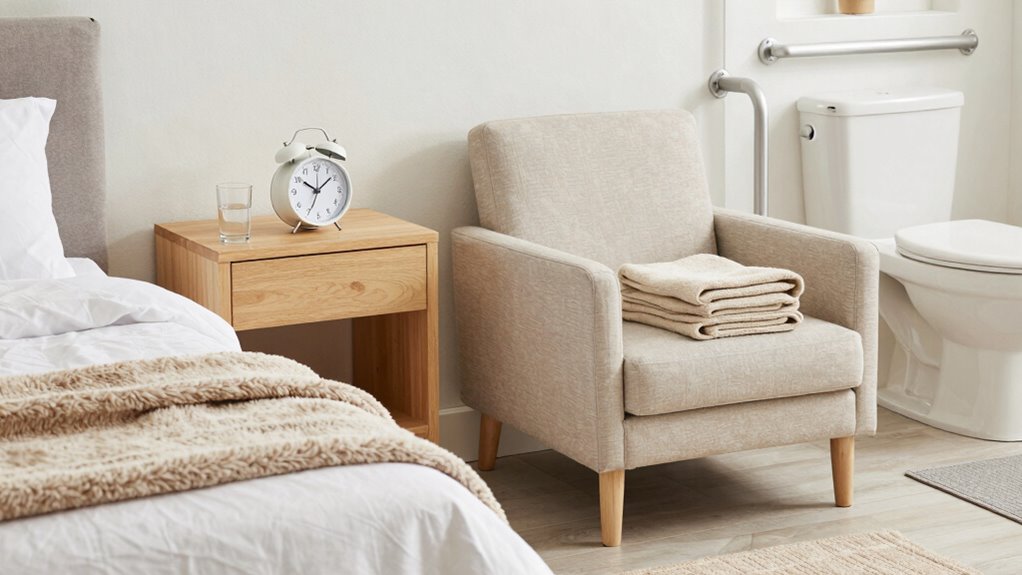
Keeping pathways clear guarantees you can move safely without tripping. Use non-slip surfaces in areas prone to moisture, like bathrooms and kitchens. Organizing items within easy reach helps prevent accidents and makes daily routines smoother. Consider incorporating compact storage solutions that are easy to access and maintain, ensuring essential items are always within reach.
Clear Pathways Maintain Safety
To maintain safety and make daily activities easier, it’s essential to keep pathways clear of clutter and obstacles. A tidy space prevents trips and falls, especially when moving between your bed, chair, or bathroom. Clear pathways also support medication management by ensuring you can easily access your medications without delays or hazards. Removing unnecessary items reduces stress and creates a calmer environment, providing emotional support during challenging moments. Keep walkways wide enough for mobility aids, and regularly check for loose cords or small objects that could cause accidents. Proper organization encourages independence and confidence, letting you navigate your space comfortably and safely. Maintaining clear pathways is a simple yet crucial step to protect your well-being and promote a sense of security at home.
Use Non-Slip Surfaces
Using non-slip surfaces is one of the simplest ways to enhance safety in your home. Placing non-slip rugs in high-traffic areas, like the bathroom and kitchen, helps prevent falls. Make certain rugs have a textured surface or non-slip backing to stay securely in place. In the shower or bathtub, use textured surfaces such as anti-slip mats or adhesive strips to reduce slipping risks. Installing non-slip tape on stairs or slippery floors adds extra grip where needed. These small changes make a big difference, providing stability and confidence as you move around. Regularly check your non-slip rugs and textured surfaces to verify they are secure and in good condition. Safety starts with simple, effective solutions that keep you steady and secure.
Organize Items for Reach
Have you ever struggled to reach items you need daily? Organizing your essentials within easy reach can make a big difference. Keep frequently used items like kitchen gadgets on open shelves or in accessible drawers. Store garden tools in lightweight, easy-to-grab containers or hooks near your door or garden area. Group similar items together to save time and effort. Use clear containers so you can quickly see what’s inside, reducing unnecessary bending or stretching. Place heavy or bulky items at waist level to prevent strain. Regularly declutter your space to maintain order and safety. Good organization minimizes falls and injuries, making daily tasks more manageable and safe. With a little effort, your essential items will always be within reach, enhancing your independence.
Safety Tips for Placing Items Within Reach
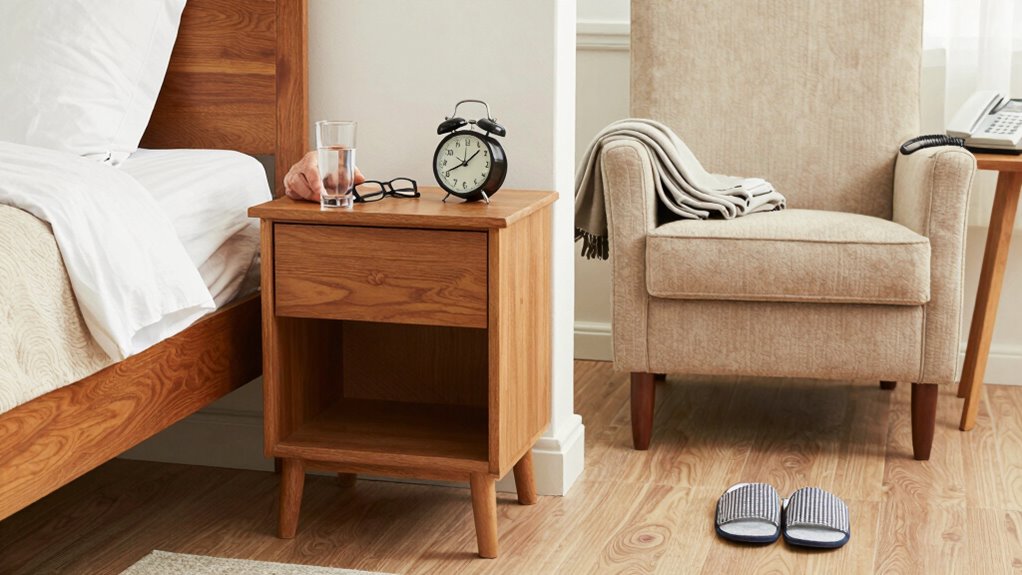
Ensuring that frequently used items are within easy reach can considerably reduce the risk of falls and injuries. Proper placement supports medication management and emergency preparedness, making daily routines safer. To optimize your space, consider these tips:
- Keep essential medications and health supplies at arm’s reach to prevent unnecessary movement and delays during emergencies.
- Store frequently used items like glasses, remote controls, and phones on bedside tables or accessible shelves.
- Use non-slip mats and secure storage to avoid items falling, which could cause injury or make quick access difficult.
Adapting Your Space for Changing Mobility Needs
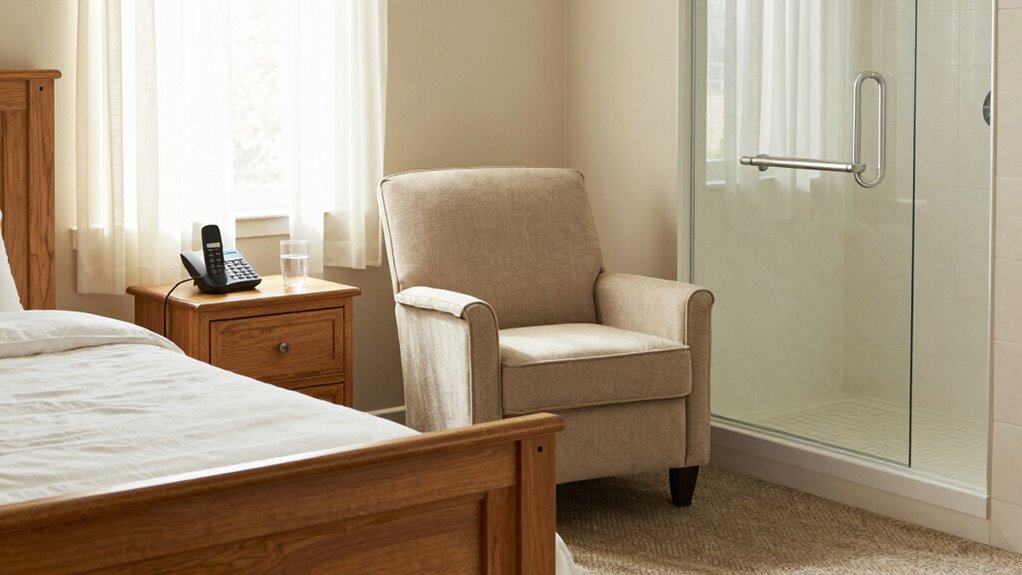
As your mobility needs change, it’s important to adjust your living space to maintain safety and independence. Incorporate adaptive furniture that supports your new requirements, such as raised beds or chairs with easy-to-use arms. These modifications make it easier to sit, stand, and transfer safely. Assistive devices like grab bars, handrails, and reachers also play a vital role in reducing falls and making daily tasks manageable. Rearrange your furniture to create clear, unobstructed pathways, minimizing tripping hazards. Consider installing non-slip mats or flooring to enhance stability. Regularly evaluate your space as your needs evolve, and don’t hesitate to seek professional advice to optimize your environment for safety and comfort.
Product Recommendations for Senior-Friendly Accessibility
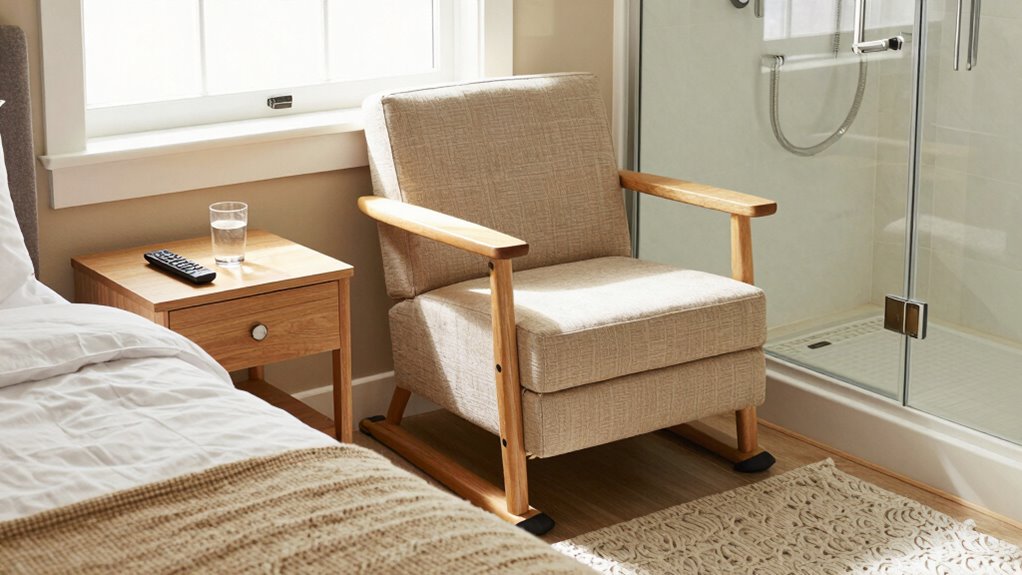
Choosing the right products can make a significant difference in maintaining safety and independence at home. When selecting senior-friendly accessibility tools, focus on items that support senior mobility and ease caregiver support. Here are three essential products:
Selecting the right accessibility tools enhances safety and independence at home for seniors.
- Reachers and Grabbers: These help you pick up objects from the floor or reach items on high shelves, reducing strain and risk of falls.
- Non-slip Bath Mats and Grab Bars: These improve safety in the bathroom, making bathing less risky and more comfortable.
- Adjustable Bed Rails and Seat Cushions: These assist with getting in and out of bed or chairs safely, supporting independence and reducing caregiver assistance needs.
Investing in these products guarantees safety, promotes mobility, and makes caregiving easier.
Routine Checks to Maintain Independence and Safety
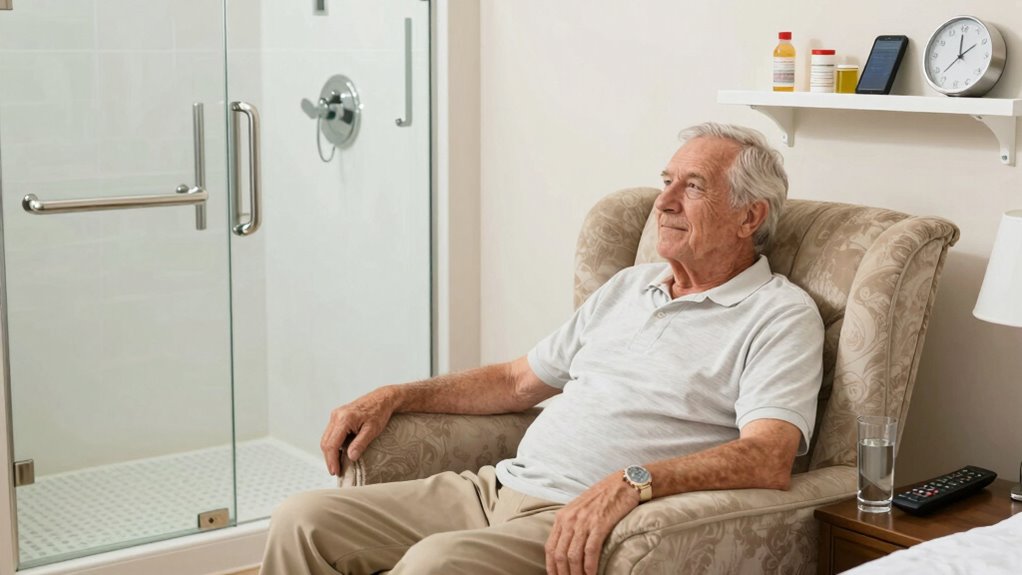
Regularly checking your loved one’s home and health routines is essential to maintaining safety and independence. Keep an eye on medication management to guarantee they take the right doses at the correct times, preventing missed or duplicated doses. Review their emergency preparedness plan, making sure they know how to contact help and have essentials like a flashlight and phone within reach. Regularly inspect safety features like grab bars, non-slip mats, and lighting to prevent falls. Check that emergency contact information is current and accessible. Encouraging routine health and home safety checks helps you spot potential issues early, allowing for prompt action. Staying proactive ensures your loved one remains safe, comfortable, and independent in their daily environment.
Frequently Asked Questions
How Often Should I Reassess My Senior Loved One’s Accessible Items?
You should reevaluate your senior loved one’s accessible items at least every three to six months, or sooner if their needs change. Regular checks ensure safe medication management and that emergency preparedness items are reachable. Stay alert to any mobility or health updates, and adjust items accordingly. Consistent reassessment helps prevent falls, promotes independence, and ensures they have what they need within reach for safety and comfort.
What Signs Indicate a Senior Needs More Accessible Storage Solutions?
You should consider more accessible storage solutions if you notice your senior loved one struggling with medication management or emergency preparedness. Signs include frequently misplaced items, difficulty reaching essential supplies, or delays in responding during emergencies. If they seem overwhelmed or unsafe when accessing everyday essentials, it’s time to upgrade storage options. Clear, easy-to-reach storage diminishes frustration, enhances safety, and guarantees critical items are always within their grasp.
Are There Specific Products Recommended for Seniors With Cognitive Impairments?
Ever wonder how to make daily tasks easier for seniors with cognitive impairments? You should consider products like memory aids and cognitive tools specifically designed for their needs. Items such as labeled storage, visual cues, and simple-to-use devices help them stay organized and safe. These solutions encourage independence, reduce confusion, and create a more supportive environment, making everyday routines less stressful for both seniors and caregivers.
How Can I Make Bathroom Items More Accessible Without Compromising Safety?
To improve bathroom accessibility without compromising safety, focus on safety-focused accessibility upgrades like grab bars, non-slip mats, and lever-style faucets. Keep frequently used items within easy reach on shelves or mounted racks. Guarantee adequate lighting and remove tripping hazards. These steps enhance bathroom safety, making it easier for seniors to use the space independently while reducing fall risks. Proper accessibility upgrades promote confidence and safety during daily routines.
What Are Common Mistakes to Avoid When Organizing Senior Living Spaces?
Like walking a tightrope, organizing senior living spaces requires balance. Avoid clutter, which can cause accidents, and forget to include clear pathways. Use thoughtful decorating tips and proper lighting arrangements to enhance safety and comfort. Don’t place frequently used items too high or low, and keep essentials within easy reach. Overcrowding the space makes it harder to navigate, so prioritize simplicity and accessibility to guarantee safety and independence.
Conclusion
By keeping essential items within reach, you make daily life safer and smoother for seniors. Think of it as having everything at your fingertips—no need to chase after things or take unnecessary risks. Regularly check and adapt your space to match changing needs. When you set up thoughtfully, you’re not just organizing; you’re empowering independence. After all, it’s better to be safe than sorry, so start making those small changes today.
Evergreen bestsellers Picks
bestsellers
As an affiliate, we earn on qualifying purchases.