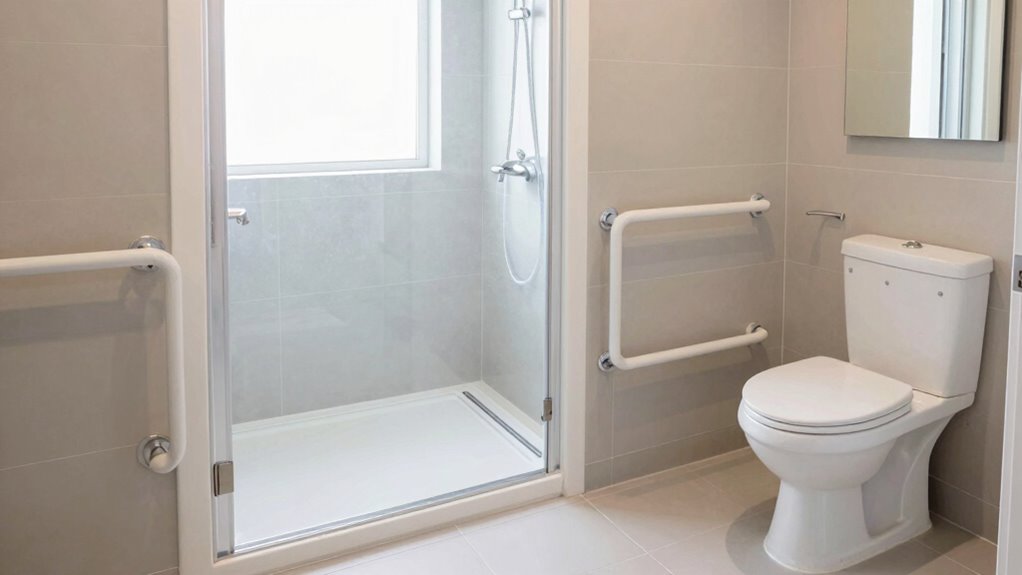

You can improve bathroom accessibility without a full remodel by installing grab bars, non-slip mats, and textured flooring to prevent slips. Adjust fixture heights for easier use, choose easy-to-operate fixtures like lever handles, and add better lighting to reduce accidents. Incorporate shower seats and consider walk-in showers with low thresholds for safer entry. Organizing your space and regularly updating features will support safety and independence—continue to discover simple ways to make your bathroom more accessible.

Turn quiet afternoons into listening time
- Thousands of audiobooks, podcasts and originals
- Listen on your phone, tablet or Echo — also offline
- Cancel anytime
Key Takeaways
- Install non-slip mats and textured flooring to prevent slips and falls.
- Add grab bars in strategic locations for support and stability.
- Adjust fixture heights and positioning for easier access and reduced bending or stretching.
- Improve lighting with natural, task, and motion-activated lights for enhanced visibility.
- Incorporate shower seats and walk-in, no-step showers to facilitate safer, easier use.
As an affiliate, we earn on qualifying purchases.
How Small Changes Can Improve Bathroom Safety

Have you ever considered how small adjustments can considerably boost bathroom safety? Improving bathroom ergonomics makes a big difference in user comfort and reduces accidents. Simple changes like installing a non-slip mat or placing frequently used items within easy reach can prevent slips and falls. Adjusting the height of shelves or mirrors ensures comfortable use for everyone. Good bathroom ergonomics also means reducing strain—think about positioning fixtures so they’re easy to access without stretching or bending. These small tweaks create a safer environment and enhance user comfort daily. You don’t need a full remodel; just focus on modifications that make movement easier and safer. Incorporating bathroom safety standards can help guide your modifications to ensure they meet safety guidelines. Additionally, considering hydrotherapy techniques such as installing accessible hot tubs or walk-in showers can further improve comfort and safety for users with specific needs. These minor changes can make your bathroom more accessible and reduce the risk of injury.
How to Install Grab Bars for Bathroom Accessibility

To guarantee your grab bars provide the support you need, you’ll want to choose the right type and placement for your bathroom. Proper installation techniques are essential to keep them secure and safe to use. Let’s explore how to select the best grab bars and install them correctly. For added safety, consider using tracking gear to monitor and ensure proper installation and stability. Additionally, understanding the horsepower of electric dirt bikes can be helpful when considering the overall strength and durability needed for secure grab bar installation, especially in high-use areas. It’s also important to use the right DIY tools and follow safety tips to prevent accidents during installation. Ensuring the grab bars are mounted in proper wall anchoring locations will significantly enhance their stability and safety during use. Being aware of the load capacity of your grab bars can help prevent failure under stress and improve overall safety.
Choosing the Right Grab Bars
Choosing the right grab bars is essential for guaranteeing safety and support in your bathroom. With so many grab bar styles available, it’s important to select options that suit your needs and space. Consider material options like stainless steel for durability, or plastic and composite materials for easier cleaning. Think about the grip texture—knurled or contoured styles provide better hold, especially when hands are wet. The length and shape also matter; straight bars are common, but angled or curved styles can offer more versatile support. Matching the style and material to your bathroom décor helps maintain aesthetic appeal while enhancing safety. Incorporating eco-friendly craft ideas such as using sustainable materials or environmentally conscious manufacturing practices can further promote eco-awareness while enhancing safety. When choosing grab bars, evaluating material options and durability ensures you select a product that lasts and withstands daily use. Additionally, considering how these choices influence energetic alignment can create a more harmonious and supportive environment. Ultimately, selecting appropriate grab bars ensures a secure, comfortable grip and promotes independence during bathroom activities. Incorporating specialized gear such as ergonomic designs can further improve usability and safety.
Proper Installation Techniques
Proper installation of grab bars is key to guaranteeing they provide the safety and support you need. To achieve proper installation, locate wall studs using a stud finder, as securing grab bars into studs provides maximum strength and stability. Avoid drywall alone, which can’t support the weight or force applied during use. Follow the manufacturer’s instructions carefully for placement height and drilling techniques. Use a level to ensure the bars are straight, and drill pilot holes before inserting screws to prevent cracking. Technique safety is vital—wear safety glasses and use appropriate tools. Tighten all screws securely without over-tightening, which could damage the wall or strip the screw threads. Additionally, verify the installation with a stud registration, ensuring the bars are anchored into the strongest part of the wall structure. Proper installation ensures your grab bars are reliable, safe, and ready to support you when needed most. Proper anchoring into wall support structures is essential for safety and durability, and understanding the wall composition can help prevent installation issues. Knowing how to identify wall support types can further improve your installation success. Being aware of support structure variations can help you choose the best installation method for your specific wall type.
Adjusting Fixture Heights to Make Your Bathroom More Accessible
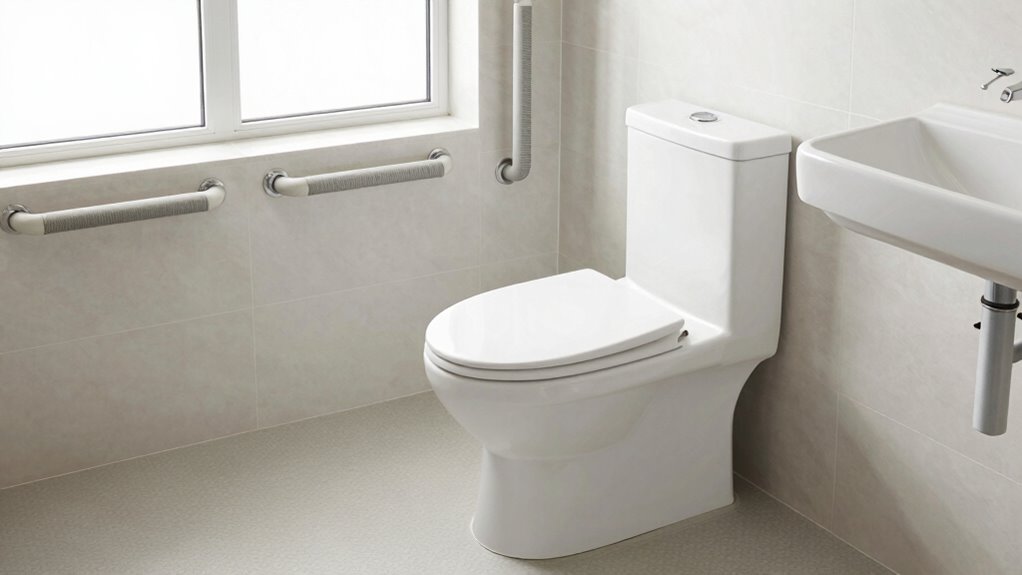
Adjusting fixture heights can greatly enhance your bathroom’s accessibility. You’ll want to take into account the ideal toilet height, guarantee sinks have adjustable positions, and make shower controls easy to reach. These changes make daily routines more comfortable and safer for everyone.
Optimal Toilet Heights
The height of your toilet plays a essential role in making your bathroom more accessible. Choosing the right toilet height improves bathroom ergonomics, reducing strain and increasing comfort during use. Standard toilets typically sit about 15 inches from the floor, but taller options, around 17 to 19 inches, are often better for seniors or those with mobility challenges. Comfort height or ADA-compliant toilets are designed specifically for accessibility, making sitting down and standing up easier. When selecting a toilet, consider your specific needs and space constraints. Proper height helps prevent falls, minimizes joint pain, and promotes independence. Additionally, space planning can help you optimize bathroom layout alongside fixture choice. Selecting the appropriate battery inverter generator capacity can also ensure your bathroom features, like lighting and ventilation, operate efficiently during power outages. Understanding accessibility standards can guide you in choosing fixtures that meet regulatory requirements. Incorporating ergonomic design principles into your bathroom setup can further enhance safety and comfort. A thoughtful approach to toilet height can significantly improve usability and safety for all users, especially those with mobility issues. By adjusting the toilet height, you create a safer, more comfortable bathroom environment that meets accessibility standards without a full remodel.
Adjustable Sink Positions
To make your bathroom more accessible, you should consider the height of your sink and how easily it can be used by everyone. Adjustable sink positions allow you to customize the sink height, ensuring comfort and usability for all users. Here are four ways to improve sink accessibility through sink height customization:
- Install a height-adjustable vanity or wall-mounted sink.
- Use adjustable mounting brackets to change the sink’s position easily.
- Opt for a sink with a flexible mounting system for quick adjustments.
- Consider portable or wall-mounted sinks that can be lowered or raised as needed.
Additionally, choosing traditional techniques and materials can ensure that your modifications blend seamlessly with your existing decor. These options help create a more inclusive bathroom environment, making daily activities easier for everyone without a full remodel.
Shower Controls Accessibility
When designing an accessible bathroom, ensuring that shower controls are within easy reach is essential for safety and independence. You can choose from various shower control types, such as lever handles, single-handle fixtures, or thermostatic controls, to suit your needs. Adjusting the fixture heights makes water temperature management simpler, especially for those with limited mobility. Installing controls at a lower, accessible height allows you to operate them comfortably without stretching or bending. This minimizes the risk of slips or burns from sudden temperature changes. Make sure controls are clearly labeled and easy to grip. By selecting the right fixture types and positioning them thoughtfully, you create a safer, more user-friendly shower environment that promotes independence and reduces frustration.
Choosing Non-Slip Flooring and Mats for Better Safety
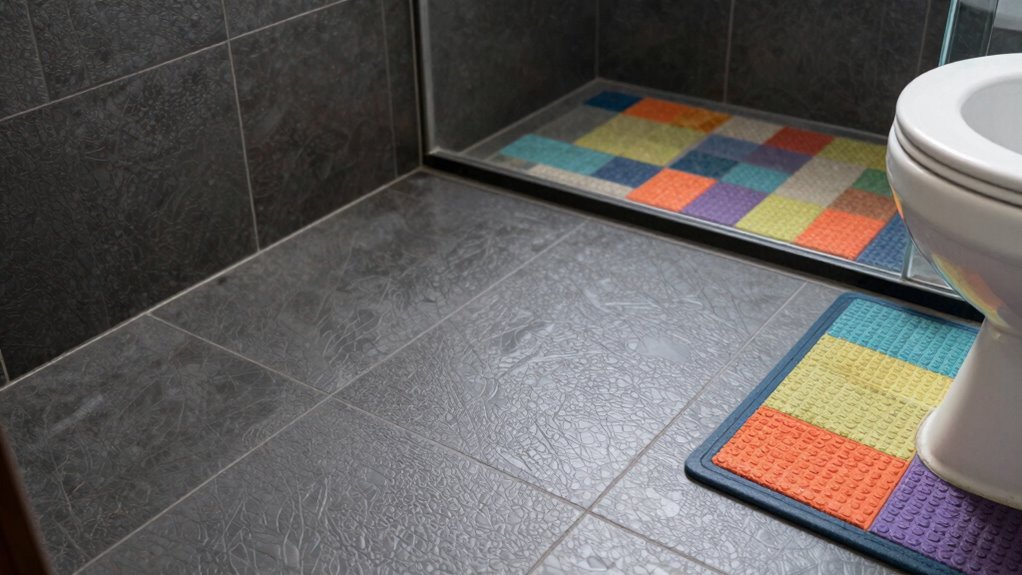
Choosing the right non-slip flooring and mats can substantially reduce the risk of slips and falls in your bathroom. Non-slip flooring options like textured vinyl, rubber, or textured ceramic tiles provide better grip, especially when wet. Safety mats are essential for added security in high-risk areas such as the shower or near the bathtub. Here are four tips to enhance safety:
- Select textured surfaces that increase traction.
- Use waterproof, non-slip safety mats on the floor and inside the shower.
- Ensure mats have non-slip backing to prevent sliding.
- Regularly clean and dry flooring and mats to maintain their slip-resistant properties.
Easy-to-Use Fixtures and Lever Handles for Everyone

Using easy-to-use fixtures and lever handles can make a significant difference in bathroom safety and accessibility. Lever handles are simple to operate, requiring less grip strength and dexterity, making them ideal for everyone, especially those with arthritis or limited mobility. Incorporating smart technology, like touchless faucets, adds convenience and reduces the need for physical contact, promoting hygiene and safety. Modern fixtures also blend seamlessly with aesthetic design, ensuring your bathroom remains stylish while functional. These fixtures eliminate the difficulty of turning knobs, providing smoother operation for all users. Upgrading to user-friendly, smart fixtures creates a more inclusive space, making daily routines easier and safer without the need for a full remodel.
Enhancing Lighting to Prevent Bathroom Accidents
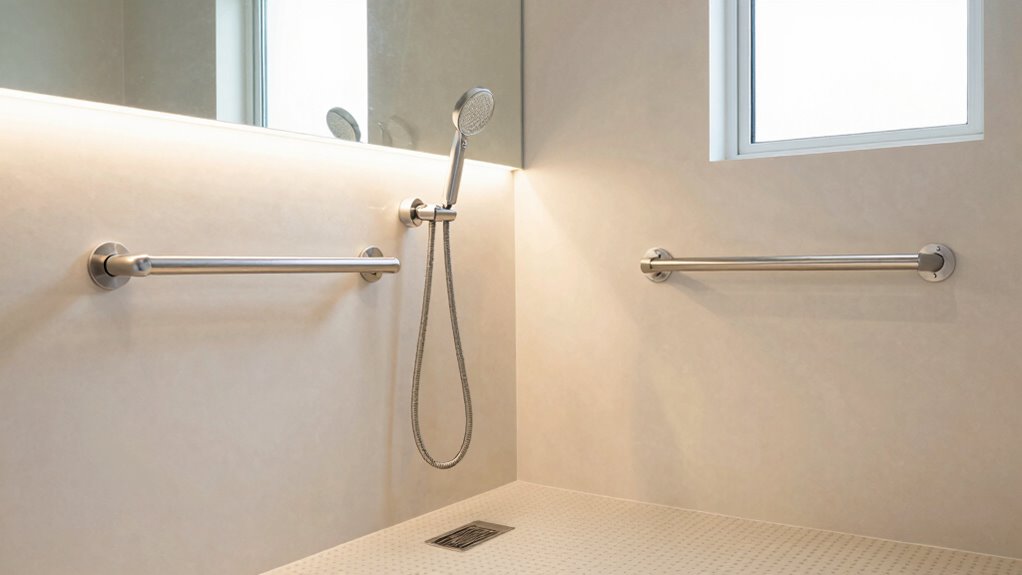
Proper lighting is essential for preventing bathroom accidents, especially for those with limited vision or mobility. Enhancing lighting can make a big difference in safety. To maximize visibility:
Good lighting reduces bathroom accidents, especially for those with limited vision or mobility.
- Use natural light during the day by installing larger or additional windows.
- Add task lighting above mirrors and sinks for focused illumination.
- Install motion-activated lights to ensure consistent lighting without fumbling.
- Use LED bulbs for bright, energy-efficient light that reduces shadows.
These strategies help create a well-lit environment, reducing the risk of slips or falls. Combining natural light with targeted task lighting ensures every corner of your bathroom is safely illuminated, making it easier to navigate confidently. Proper lighting is a simple yet effective way to improve accessibility without a full remodel.
Installing Shower Seats and Designing Walk-In Showers

Installing shower seats and designing walk-in showers can considerably enhance bathroom safety and accessibility. Shower seat installation provides a stable, comfortable place to sit while bathing, reducing the risk of slips and falls. When planning walk-in shower design, prioritize a low threshold or no-step entry to make entering and exiting easier. Clear space inside the shower allows for better movement and safety. Consider non-slip flooring and grab bars to further prevent accidents. A well-designed walk-in shower minimizes obstacles and creates a safer environment for everyone. Incorporating a sturdy shower seat and thoughtful layout not only boosts safety but also adds convenience, making daily routines easier and more comfortable.
Organizing Your Bathroom to Reduce Clutter and Hazards
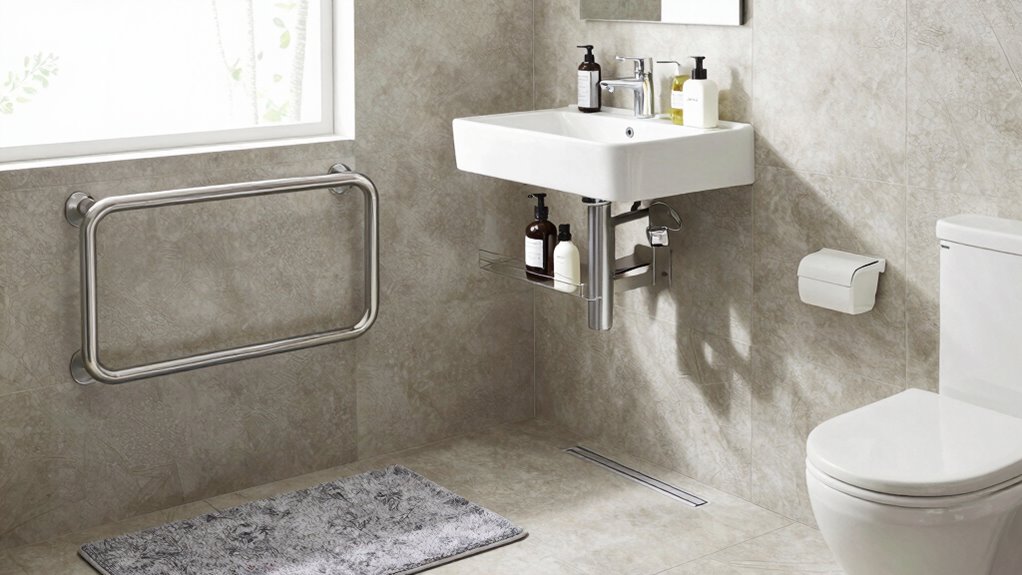
After adding shower seats and designing walk-in showers to improve safety, the next step is to focus on organizing your bathroom to keep clutter at bay. Effective bathroom organization reduces hazards and makes daily routines smoother. Here are four tips for clutter reduction:
- Use wall-mounted shelves to free up counter space.
- Install storage baskets or bins for toiletries, keeping items accessible yet tidy.
- Hang hooks for towels and robes to prevent floor clutter.
- Keep frequently used items within easy reach, and store less-used products elsewhere.
Maintaining and Updating Accessibility Features Over Time
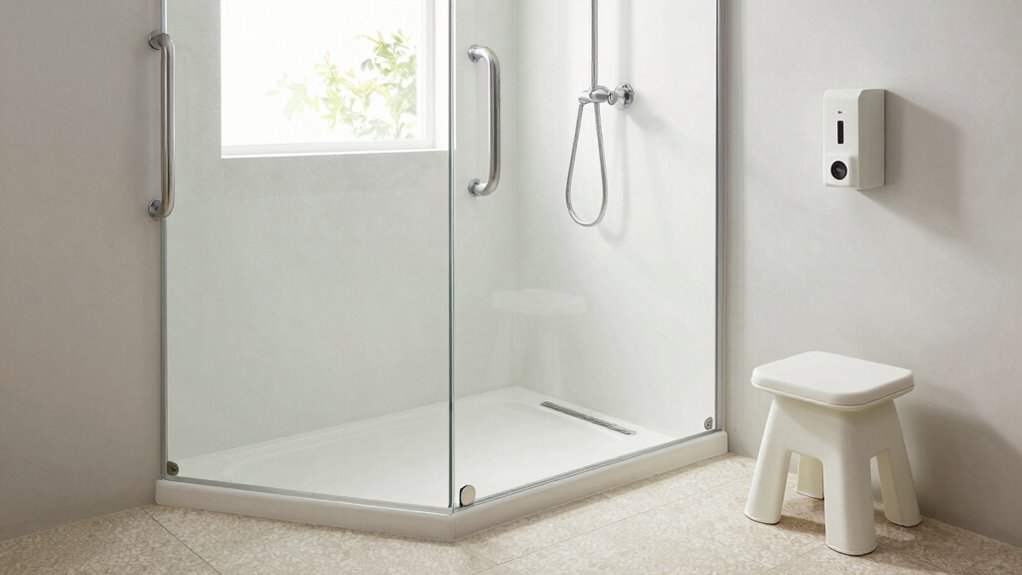
As your needs and the bathroom environment change over time, it’s essential to regularly maintain and update your accessibility features to guarantee ongoing safety and convenience. Aging in your home means staying proactive with adjustments, like checking grab bars for stability or replacing worn-out fixtures. Incorporating principles of universal design ensures your bathroom remains accessible for everyone, regardless of changing mobility. Regularly evaluating your setup helps identify potential hazards and updates that could enhance safety. Keep pathways clear, guarantee non-slip surfaces, and adjust fixtures as needed. Staying attentive to these updates prevents accidents and supports independence. By maintaining a flexible, adaptable bathroom environment, you create a space that continues to meet your needs as they evolve over time.
Frequently Asked Questions
Can Portable Accessibility Aids Improve Bathroom Safety Effectively?
Yes, portable accessibility aids can effectively improve bathroom safety. You can use assistive technology like grab bars, transfer seats, or non-slip mats to prevent falls and enhance stability. These safety enhancements are easy to install and remove, making them perfect for temporary or additional support. By incorporating such aids, you create a safer bathroom environment, reducing risks without needing a full remodel, and empowering you to maintain independence.
Are There Temporary Modifications for Renters to Enhance Bathroom Accessibility?
You can definitely use temporary solutions as renter modifications to boost bathroom accessibility. For example, a tenant in a rental used grab bars that stick securely to tiles without drilling, providing extra support when needed. These non-permanent fixes are ideal for renters, as they’re easy to install and remove. Such modifications enhance safety and independence without risking damage or violating lease agreements, making bathroom accessibility achievable for everyone.
How Do I Choose the Right Height for Grab Bars and Fixtures?
Choose the right height for grab bars and fixtures by considering your specific needs. For grab bar placement, install them around 33-36 inches from the floor, near toilets and showers, ensuring they’re secure and comfortable to grasp. Adjust fixture height based on your height and mobility, typically setting sinks and counters at 34-36 inches. Test different heights to find what feels safest and most accessible for you.
What Are Cost-Effective Ways to Improve Bathroom Accessibility on a Budget?
To improve bathroom accessibility on a budget, focus on affordable solutions like upgrading bathroom lighting for better visibility and adding shower seating for safety. You can install affordable grab bars or reposition existing fixtures to the right height. Consider using non-slip mats and reorganizing space for easier movement. These small changes are cost-effective and markedly enhance safety and comfort without a full remodel.
How Often Should Accessibility Features Be Inspected and Maintained?
You should inspect your bathroom accessibility features at least twice a year, balancing proactive maintenance with unexpected issues. A regular maintenance schedule guarantees safety and functionality, preventing accidents. During inspections, check grab bars, ramps, and door handles for stability and wear. By maintaining a consistent inspection frequency, you catch problems early, saving money and ensuring everyone’s safety. Don’t wait for a breakdown—stay ahead with routine upkeep.
Conclusion
By making small, thoughtful changes, you can considerably boost your bathroom’s safety and accessibility without a full remodel. Think of it like planting seeds—each upgrade grows into a safer, more comfortable space over time. Just as a tiny seed can become a mighty tree, these simple updates can transform your bathroom into an accessible oasis. With consistent effort, you’ll create a safer environment where everyone can move around with confidence and independence.
Fall Picks
fall essentials
As an affiliate, we earn on qualifying purchases.