

TL;DR
A study tracking 316,542 Korean adults found that people with very low hemoglobin had a higher rate of later dementia diagnoses; very high levels were also associated with higher risk for some outcomes. The observational findings do not show that hemoglobin causes dementia or that changing its level prevents it.
A study of 316,542 adults in South Korea found that hemoglobin levels recorded during a routine health screening were associated with dementia diagnoses over as long as 15 years, with higher rates among people in the lowest hemoglobin group. The results, presented at the ECNP Congress and published in the Journal of Alzheimer’s Disease, suggest a possible long-term health marker—not a test that can diagnose dementia or establish an individual’s future risk.

Give the gift of listening to someone you love
- Choose a 1-, 3-, 6- or 12-month membership
- They pick the audiobooks they love
- Easy to send by email
The researchers used screening data from adults aged 40 and older who attended a national health check in 2004–2005, then followed national health insurance records for new dementia diagnoses through the end of 2019. They divided participants into five groups according to hemoglobin level, from the lowest fifth to the highest fifth. Hemoglobin is the red blood cell protein that carries oxygen around the body.
Compared with the group that had the lowest dementia rate, participants in the lowest hemoglobin fifth had a 16% higher risk of all-cause dementia. Those in the highest fifth had a 7% higher risk. The pattern varied by diagnosis: the lowest fifth had a 14% higher risk of Alzheimer’s disease, while the lowest and highest fifths had 19% and 18% higher risks of vascular dementia, respectively. The vascular dementia association did not follow a simple step-by-step pattern across all five groups.
The researchers also reported that associations were clearer and more consistent in women than in men. These percentages describe comparisons between groups in this study, not the chance that a particular person will develop dementia. The supplied report does not give absolute dementia rates for each group, so the findings cannot be used to calculate an individual’s risk from a hemoglobin result.
What Routine Screening Could Reveal
Hemoglobin is already measured in many standard blood tests, making it a practical measure to investigate in large health records. If further research confirms a relationship, routine measurements could help scientists examine how whole-body health and brain health interact over time. The study may also support research into risk patterns that emerge years before a dementia diagnosis.
That potential should not be confused with a new screening recommendation. The findings do not show that hemoglobin alone can predict who will develop dementia, or that adjusting it would lower risk. Low levels can be associated with anemia, while unusually high levels may reflect smoking, dehydration, lung or heart disease, or other conditions. A result outside the usual range has many possible explanations and needs to be interpreted in its medical context.
Lead researcher Dr. Hyun Soo Kim, an assistant professor at Dong-A University College of Medicine, said the results suggest abnormal levels may be a “visible marker of wider physical vulnerability relevant to brain health.” He said the study does not establish that hemoglobin itself causes dementia.
Products Worth Considering
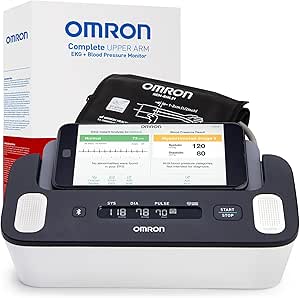
OMRON Complete 2-in-1 Upper Arm Blood Pressure Monitor with EKG

Bowflex SelectTech 840 Adjustable Kettlebell

Therabody JetBoots Prime Wireless Compression Boots, Regular, 30–34 in Inseam
As an affiliate, we earn on qualifying purchases.
How Researchers Tracked Dementia
The project linked a one-time measurement from South Korea’s national health screening in 2004–2005 with later health insurance records, following participants until the end of 2019. This allowed the researchers to study a large cohort over an extended period, but it also means the analysis was observational: participants were not assigned to different hemoglobin levels, and the study cannot isolate cause and effect.
Hemoglobin can be lower in anemia and may be elevated for a range of reasons, including smoking, dehydration, and some heart or lung conditions. Those underlying factors, and general health more broadly, could be relevant to both hemoglobin and later dementia diagnoses. The report describes the study as recently published in the Journal of Alzheimer’s Disease and presented at the 39th ECNP Congress in Munich.
Dr. Lindsey Sinclair of the University of Southampton, commenting on the findings, said evidence increasingly points to links between physical and brain health. She also cautioned that more work is needed to learn whether the association applies across people from a wider range of backgrounds and what, if anything, could reduce risk for people at either end of the hemoglobin range.
“The findings do not show that hemoglobin itself causes dementia, but suggest that abnormal hemoglobin levels may be a visible marker of wider physical vulnerability relevant to brain health.”
— Dr. Hyun Soo Kim, lead researcher and assistant professor at Dong-A University College of Medicine
Limits of the Hemoglobin Findings
Because the study was observational, it cannot show that low or high hemoglobin directly leads to dementia. The report also notes a possible alternative: early dementia processes that had not yet been diagnosed could affect nutrition, frailty, weight, or anemia, contributing to the association seen later. The researchers cannot rule out such influences based on the reported findings.
It is also unclear whether the same patterns would appear in populations with different backgrounds, health systems, and risk profiles. The associations differed by dementia type and were reported as more consistent in women than men; the findings do not establish why those differences occurred. Nor do the reported group comparisons establish a clinical threshold that could be used to predict dementia for an individual.
Most importantly, there is no evidence from this study that changing hemoglobin prevents dementia. The report gives no intervention results showing that supplements, treatment to raise levels, or measures to lower high levels reduce dementia diagnoses. Kim advised discussing an abnormal test result with a doctor because it may point to other health issues—not treating it as a dementia forecast.
Research Needed Before Clinical Use
The next step is further research to test whether the association holds in people from a wider range of backgrounds and to clarify what factors may explain it. Studies will also need to examine whether hemoglobin adds useful information beyond other health measures and whether the patterns differ by sex and dementia subtype.
For now, the study does not change routine care or support a hemoglobin-based dementia screening recommendation. People with an unusual result should discuss it with a qualified health professional, who can assess possible causes in light of their overall health. The researchers’ findings are best treated as a prompt for additional investigation into links between physical health and dementia, not as a reason to change hemoglobin levels to try to prevent the condition.
Key Questions
Does a routine hemoglobin test predict whether I will develop dementia?
No. The study found an association between hemoglobin groups and later diagnoses across a population. It does not provide a way to predict an individual’s future or diagnose dementia from a blood test.
Did low hemoglobin cause dementia in the study?
The research cannot establish cause and effect. It was observational, and other health factors—or early undiagnosed changes—could help explain the association.
Should I take iron or try to change my hemoglobin level to prevent dementia?
No such benefit was tested. Lead researcher Dr. Hyun Soo Kim specifically said the findings should not be interpreted as advice to take iron or to raise or lower hemoglobin for dementia prevention. Discuss an abnormal result with a qualified health professional.
What did the study find about different types of dementia?
The lowest hemoglobin fifth had a 14% higher risk of Alzheimer’s disease than the reference group. For vascular dementia, the lowest and highest fifths had 19% and 18% higher risks, respectively. These are study group comparisons, and the vascular pattern was not consistent across all five groups.
Source: rss