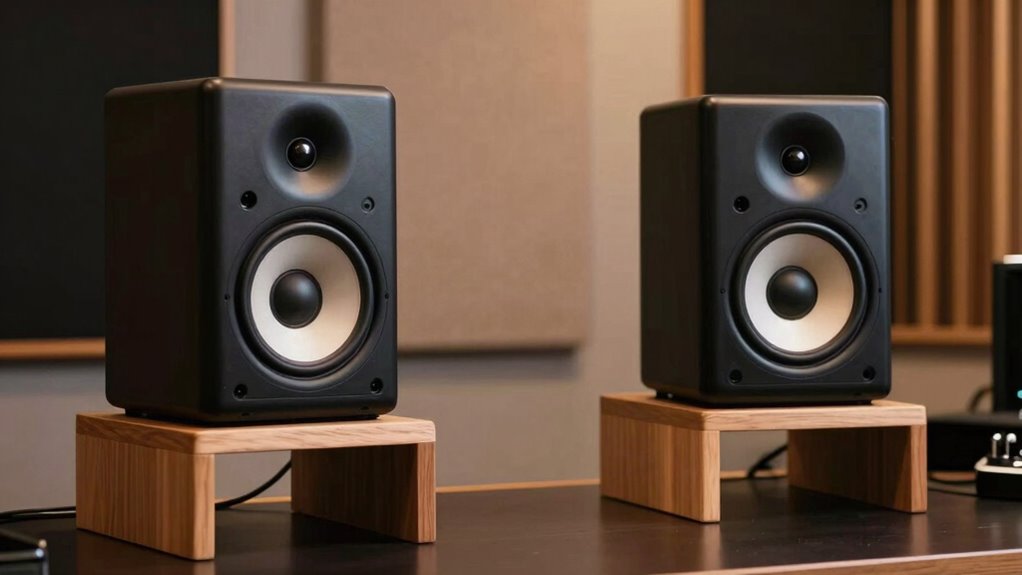

Finding the right studio monitors for a home studio involves balancing sound quality, size, budget, and versatility. The Yamaha HS4 stands out as the best overall for its accurate sound and reliability, making it suitable for most users. The JBL 305P MkII offers excellent value with a balanced sound profile, ideal for those on a budget. Meanwhile, the PreSonus Eris E7 XT caters to more serious producers needing larger, more detailed sound. These options highlight the common tradeoffs: more affordable monitors often sacrifice some accuracy or power, while premium models deliver clarity at a higher cost. Keep reading for a full breakdown on how to choose the perfect monitor for your space and needs.
Complete the kit


Key Takeaways
- The top monitors balance sound accuracy with size and budget, often trading off one for the other.
- Near-field monitors like the Yamaha HS4 and PreSonus Eris E4.5 excel in small home spaces due to their size.
- Sound quality and flat response are critical for mixing, making higher-end models preferable for serious production.
- Connectivity options vary, so matching inputs to your gear can influence your choice.
- Budget monitors can be surprisingly capable, but often lack the clarity and power of premium options.
| Yamaha HS4 Powered Studio Monitor (Pair) |  | Best Overall for Balanced Home Studio Monitoring | Type: 2-way bass-reflex powered speaker | Woofer Size: 4.5 inches | Tweeter Size: 1 inch | VIEW ON AMAZON | See Our Full Breakdown |
| Mackie CR3.5 3.5-inch Creative Reference Powered Studio Monitors |  | Best for Versatile, Compact Desktop Use | Speaker Size: 3.5 inches | Tweeter Type: Silk dome | Woofer Type: Woven | VIEW ON AMAZON | See Our Full Breakdown |
| Pioneer DJ DM-40D 4-Inch Desktop Monitor System, Black |  | Best for DJing and Music Production with DSP Modes | Type: Desktop Monitor System | Size: 4-inch | Color: Black | VIEW ON AMAZON | See Our Full Breakdown |
| Edifier MR3 Powered Studio Monitor Speakers, Hi-Res Audio Certified Bluetooth V5.4 Active Bookshelf Loudspeakers |  | Best for High-Resolution Audio with Wireless Flexibility | Power Output: 18W*2 RMS | Peak SPL: 92.5dB | Frequency Response: 52Hz – 40kHz | VIEW ON AMAZON | See Our Full Breakdown |
| JBL 305P MkII 5″ 2-Way Active Studio Monitors (Pair) |  | Best for Accurate, Broad-Image Sound in Larger Home Studios | Size: 5 inches | Power: 2 x 41 Watts | Inputs: XLR/TRS | VIEW ON AMAZON | See Our Full Breakdown |
| PreSonus Eris E4.5 2-Way 4.5-Inch Near Field Studio Monitor (Pair) |  | Best Compact Nearfield Monitor for Precise Sound | Woofer Size: 4.5 inches | Amplification: 50 Watts (25W per speaker) | Inputs: ¼-inch TRS, RCA, ⅛-inch TRS aux | VIEW ON AMAZON | See Our Full Breakdown |
| Edifier MR5 2.0 Studio Monitor Bookshelf Speakers, 110W RMS, Hi-Res Audio, Bluetooth 6.0, 3-Way Active Design, Room Compensation, XLR/TRS/RCA Inputs, Compact Size for Home Studio & Music – Black |  | Best Versatile Wireless Studio Monitor for Home Use | Power: 110W RMS | Frequency Response: 46Hz–40kHz | Connectivity: Bluetooth 6.0, XLR, TRS, RCA, AUX, 3.5mm | VIEW ON AMAZON | See Our Full Breakdown |
| M-Audio BX3 Pair 3.5″ Wired Studio Monitors and PC Speakers for Recording and Multimedia with Music Production Software |  | Best Compact Desktop Monitors for Precision and Versatility | Driver Size: 3.5 inches | Woofer Material: Kevlar | Tweeter Type: Silk Dome | VIEW ON AMAZON | See Our Full Breakdown |
| Yamaha HS3 Powered Studio Monitor (Pair) |  | Best Entry-Level Compact Monitor for Accurate Monitoring | Woofer: 3.5-inch cone | Tweeter: 0.75-inch dome | Frequency Response: 70Hz – 22kHz | VIEW ON AMAZON | See Our Full Breakdown |
| PreSonus Eris E7 XT 2-Way Active Studio Monitor |  | Best for Professional Mixing and Extended Frequency Response | Driver Size (Low Frequency): 6.55 inches | Driver Type (High Frequency): Silk-dome, 32 mm | Waveguide: EBM waveguide 100° x 60° | VIEW ON AMAZON | See Our Full Breakdown |
| PreSonus Eris E5 2-Way 5.25-Inch Near Field Studio Monitor |  | Best Overall for Balanced Professional Sound and Versatile Connectivity | Woofer Size: 5.25 inches | Tweeter Size: 1 inch | Power: 80 watt | VIEW ON AMAZON | See Our Full Breakdown |
| PreSonus Eris 3.5 Powered Studio Monitors, Pair |  | Best Compact Choice for Space-Constrained Setups and Versatile Use | Power: 50W | Woofer: 3.5 inch woven-composite | Tweeter: 1 inch silk-dome | VIEW ON AMAZON | See Our Full Breakdown |
| studio monitors for home studio | Inputs |
|---|---|
| Yamaha HS4 Powered Studio Moni | XLR/TRS combo, RCA, Stereo Mini |
| Mackie CR3.5 3.5-inch Creative | — |
| Pioneer DJ DM-40D 4-Inch Deskt | — |
| Edifier MR3 Powered Studio Mon | — |
| JBL 305P MkII 5" 2-Way Active | XLR/TRS |
| PreSonus Eris E4.5 2-Way 4.5-I | ¼-inch TRS, RCA, ⅛-inch TRS aux |
| Edifier MR5 2.0 Studio Monitor | — |
| M-Audio BX3 Pair 3.5" Wired St | 1/4-inch, 1/8-inch, RCA |
| Yamaha HS3 Powered Studio Moni | XLR/TRS/RCA |
| PreSonus Eris E7 XT 2-Way Acti | — |
| PreSonus Eris E5 2-Way 5.25-In | XLR, 1/4-inch, RCA |
| PreSonus Eris 3.5 Powered Stud | TRS, RCA, front-panel aux |
More Details on Our Top Picks
Yamaha HS4 Powered Studio Monitor (Pair)
The Yamaha HS4 stands out for its high-quality, transparent sound that accurately represents mixes, making it ideal for serious home studio setups. Compared with the JBL 305P MkII, the HS4 offers a more neutral frequency response, which benefits critical listening rather than bass-heavy genres. Its smaller 4.5-inch woofer limits deep bass extension, but this tradeoff results in clearer mid and high frequencies. The inclusion of room control and high trim response adjustments allows precise tailoring to your space, a feature not always available on budget monitors like the Mackie CR3. While lacking wireless connectivity, its wired inputs provide reliable, studio-grade signal transfer. This pick is best suited for producers and mixing engineers who prioritize accuracy and detailed sound. It may not satisfy those needing deep bass or wireless convenience.
Pros: Clear, detailed sound with accurate high/mid frequencies; Versatile input options; Room and high trim controls for customization; Reliable wired connectivity
Cons: Limited bass response due to small woofer; No wireless or Bluetooth features
Verdict: This monitor works best for professionals or enthusiasts seeking transparent, precise monitoring in a dedicated home studio environment.- Type:2-way bass-reflex powered speaker
- Woofer Size:4.5 inches
- Tweeter Size:1 inch
- Frequency Response:60 Hz – 22 kHz (-10 dB)
- Output Power:26 W
- Inputs:XLR/TRS combo, RCA, Stereo Mini
Our verdict“Best Overall for Balanced Home Studio Monitoring — a strong pick in this lineup.”
Mackie CR3.5 3.5-inch Creative Reference Powered Studio Monitors
The Mackie CR3.5 monitors excel in versatility, offering multiple input options and adjustable tone controls that suit a variety of desktop applications. Compared to the Edifier MR3, the CR3.5’s switchable placement modes (desktop or bookshelf) enhance its adaptability for different environments. Its compact 3.5-inch drivers limit deep bass reproduction, which may be noticeable with bass-heavy tracks, but the adjustable tone knob compensates for some frequency imbalance. The headphone output and multiple wired inputs make it a flexible choice for creators who work across devices. However, the small drivers mean these monitors are less suited for critical mixing in larger rooms. This makes the CR3.5 ideal for casual producers, gamers, or podcasters with limited space. It isn’t the best choice if deep bass or professional audio accuracy are priorities.
Pros: Compact size ideal for small spaces; Multiple input options; Adjustable tone controls; Switchable placement modes
Cons: Limited bass depth; No subwoofer compatibility; Small drivers restrict deep low frequencies
Verdict: This monitor is perfect for users needing flexible, space-saving monitors for casual or multifunctional desktop setups.- Speaker Size:3.5 inches
- Tweeter Type:Silk dome
- Woofer Type:Woven
- Connectivity:TRS, RCA, 3.5 mm input
- Features:Tone knob, location switch, headphone output
- Design:Compact, versatile placement options
Our verdict“Best for Versatile, Compact Desktop Use — a strong pick in this lineup.”
Pioneer DJ DM-40D 4-Inch Desktop Monitor System, Black
The Pioneer DJ DM-40D offers tailored sound profiles for DJing and music production, with DSP modes that optimize the sound for different tasks. Compared to the Yamaha HS4, the DM-40D’s built-in DSP modes allow quick adjustments for various listening environments, which is advantageous for DJs or live performers. Its 4-inch woofer provides a bit more bass than smaller monitors but still isn’t designed for large-room bass extension. The time-aligned woofer and tweeter ensure precise imaging, crucial for detailed mixing and live monitoring. Connectivity options are straightforward, including RCA, mini-jack, and headphone inputs—less versatile than the Edifier MR3 but sufficient for most home use. This model is best for those who need a monitoring system with quick, mode-based sound adjustments rather than pure flat response. It’s less suitable for critical studio mixing in large or untreated rooms.
Pros: DSP modes optimized for different tasks; Easy multiple connectivity options; Precise time alignment; Suitable for DJ and production use
Cons: Limited to 4-inch speakers; Not ideal for large-room bass; No wireless features
Verdict: This monitor is ideal for DJs and producers needing adaptable sound profiles within a compact setup.- Type:Desktop Monitor System
- Size:4-inch
- Color:Black
- Connectivity:RCA, mini-jack, headphone socket
- DSP Modes:2-WAY SOUND MODE
- Sampling Rate:96kHz
Our verdict“Best for DJing and Music Production with DSP Modes — a strong pick in this lineup.”
Edifier MR3 Powered Studio Monitor Speakers, Hi-Res Audio Certified Bluetooth V5.4 Active Bookshelf Loudspeakers
The Edifier MR3 monitors stand out for their high-resolution, flat response from 52Hz to 40kHz, making them suitable for critical listening and professional monitoring. Unlike the JBL 305P MkII, the MR3 offers extensive wireless connectivity via Bluetooth V5.4, along with multiple wired inputs, providing flexibility for different setups. Its app-based EQ adjustments and customizable sound modes give users control over their listening experience. The MDF cabinet construction reduces distortion, ensuring cleaner sound. However, its 3.5-inch drivers limit bass depth, which might be a drawback for those requiring full-range sound without a subwoofer. It’s best suited for audio enthusiasts who want detailed, accurate sound with modern wireless features. Casual listeners seeking simple, plug-and-play speakers might find the MR3 slightly over-complicated or unnecessary.
Pros: High-res flat frequency response; Wireless Bluetooth connectivity; App-based EQ customization; Well-built MDF cabinet
Cons: Limited bass extension; Slightly more complex setup for non-enthusiasts; No included accessories or stands- Power Output:18W*2 RMS
- Peak SPL:92.5dB
- Frequency Response:52Hz – 40kHz
- Connectivity:Bluetooth V5.4, RCA, AUX, Balanced TRS, Headphone
- Drivers:3.5″ mid-low, 1″ tweeters
- Design:MDF cabinet
Our verdict“Best for High-Resolution Audio with Wireless Flexibility — a strong pick in this lineup.”
JBL 305P MkII 5″ 2-Way Active Studio Monitors (Pair)
The JBL 305P MkII is a favorite among home studio producers for its impressive imaging and wide sweet spot, making it easier to hear details across a mix. Compared with the Yamaha HS4, the 305P MkII’s larger 5-inch driver provides deeper bass, which benefits genres requiring more low-end presence. Its dual 41-watt amplifiers and adjustable EQ settings help tailor the sound to your room, though proper placement remains essential to avoid imaging issues. The MDF enclosure ensures durability and reduces unwanted resonance. While it’s more demanding in terms of space and placement, this monitor is well-suited for those working in sizable rooms or with mixes that benefit from a broader soundstage. Casual users with limited space or those focused solely on vocal or acoustic work might prefer smaller monitors like the Yamaha HS4.
Pros: Excellent imaging and sound clarity; Wide sweet spot; Adjustable EQ; Robust build
Cons: Requires ample space for proper placement; Overkill for small, casual setups; Slightly more complex setup processBest for: Home producers and sound engineers needing broad imaging and bass depth in medium to large rooms
Not ideal for: Small space users or casual listeners who don’t require wide soundstage or deep bass
- Size:5 inches
- Power:2 x 41 Watts
- Inputs:XLR/TRS
- Enclosure:MDF
- Included:Pair of monitors
Our verdict“Best for Accurate, Broad-Image Sound in Larger Home Studios — a strong pick in this lineup.”
PreSonus Eris E4.5 2-Way 4.5-Inch Near Field Studio Monitor (Pair)
The PreSonus Eris E4.5 stands out for its accurate, studio-quality sound in a compact design, making it ideal for small home studios. Compared to the Yamaha HS3, it offers a wider frequency response and more customizable tuning options, which helps in optimizing sound for different room acoustics. However, it lacks built-in Bluetooth, unlike some other options, meaning it’s less versatile for casual listening. Its 4.5-inch woofer provides clear mids and highs but requires a subwoofer to handle deep bass in larger spaces, which adds to the overall setup cost. This pick makes the most sense for producers needing precise monitoring without space for larger monitors.
Pros:- Delivers accurate, studio-quality sound
- Wide listening sweet spot with high-frequency extension
- Multiple input options for versatile setup
- Customizable tuning controls for room optimization
Cons:- Lacks built-in Bluetooth connectivity
- Requires external subwoofer for deep bass
- Power output may be insufficient for very large rooms
Best for: Small home studio owners who prioritize accurate sound and space efficiency
Not ideal for: Larger rooms or those seeking Bluetooth connectivity for multimedia use
- Woofer Size:4.5 inches
- Amplification:50 Watts (25W per speaker)
- Inputs:¼-inch TRS, RCA, ⅛-inch TRS aux
- Power Saving Mode:Yes
- Additional:Compatible with Eris Sub 8BT subwoofer
Our verdict“This monitor is perfect for users needing precise sound in a small space, with room for a subwoofer if bass extension is critical.”
Edifier MR5 2.0 Studio Monitor Bookshelf Speakers, 110W RMS, Hi-Res Audio, Bluetooth 6.0, 3-Way Active Design, Room Compensation, XLR/TRS/RCA Inputs, Compact Size for Home Studio & Music – Black
The Edifier MR5 combines high-resolution audio with robust power and versatile connectivity, making it suitable for those who want a blend of studio accuracy and multimedia flexibility. Unlike the M-Audio BX3, which focuses more on desktop-centric use, the MR5’s 110W RMS output and room tuning features enable richer sound for both music production and casual listening. Its wireless Bluetooth 6.0 adds convenience, but this feature can introduce latency that’s not ideal for critical monitoring. The three-way design improves clarity across frequencies but may be overkill for very small or minimalist setups. This monitor makes sense for users seeking a stylish, powerful, and adaptable speaker system for multiple roles in a home environment.
Pros:- High-resolution audio with Bluetooth 6.0 and multiple wired inputs
- Room compensation and app-based EQ for tailored sound
- Powerful 110W RMS output for room-filling sound
- Compact yet stylish design
Cons:- Complex setup for users unfamiliar with tuning features
- Limited bass response for very large rooms
- Requires space for proper calibration
Best for: Home studio owners who want a high-power, wireless, and tunable speaker setup
Not ideal for: Beginners or those with very limited space who don’t need extensive customization
- Power:110W RMS
- Frequency Response:46Hz–40kHz
- Connectivity:Bluetooth 6.0, XLR, TRS, RCA, AUX, 3.5mm
- Drivers:5″ woofer, 3.75″ mid driver, 1″ silk dome tweeter
- Build Material:MDF cabinets
- Additional Features:Room compensation, app-based EQ
Our verdict“This system suits users who want flexible, high-powered sound with wireless convenience and room tuning capabilities.”
M-Audio BX3 Pair 3.5″ Wired Studio Monitors and PC Speakers for Recording and Multimedia with Music Production Software
The M-Audio BX3 offers professional-grade sound in a small, desktop-friendly form, making it a smart choice for space-constrained setups. Its 3.5-inch Kevlar woofers and silk dome tweeters deliver clear highs and punchy mids, but the small drivers limit deep bass response, unlike larger monitors such as the PreSonus Eris E4.5. Compared to the Yamaha HS3, the BX3 provides more inputs and included software, adding value for creators who want a complete package. Its wired-only design means no wireless convenience, and it needs proper placement to avoid sound coloration. This model is best for those who need reliable, precise monitoring at a budget-friendly size.
Pros:- High-quality studio-grade sound with clear highs and punchy mids
- Multiple input options for flexible connectivity
- Front panel headphone and AUX input for convenience
- Included software enhances production workflow
Cons:- Limited to small drivers, restricting bass depth
- No wireless or Bluetooth features
- Requires careful placement for best sound
Best for: Desktop producers and streamers who need accurate sound without space for larger monitors
Not ideal for: Large-room setups or users seeking wireless connectivity
- Driver Size:3.5 inches
- Woofer Material:Kevlar
- Tweeter Type:Silk Dome
- Inputs:1/4-inch, 1/8-inch, RCA
- Cabinet Material:Acoustically-Inert MDF
- Included Accessories:Passive and active speakers, software
Our verdict“This monitor is ideal for desktop creators who want accurate, reliable sound in a small footprint without the need for wireless features.”
Yamaha HS3 Powered Studio Monitor (Pair)
The Yamaha HS3 offers dependable sound quality in a small, affordable package, making it suitable for beginners or limited spaces. Its 3.5-inch cone woofer and 0.75-inch dome tweeter provide a balanced frequency response from 70 Hz to 22 kHz, which is narrower than larger models like the PreSonus Eris E4.5. While it includes room control and high trim adjustments, its limited bass response and modest amplification make it less suited for larger rooms or professional mixing. Compared with the PreSonus Eris E7 XT, it lacks the extensive tuning options and power, but it remains a reliable choice for entry-level users prioritizing simplicity and affordability.
Pros:- Reliable sound quality with clear high and mid frequencies
- Easy to set up with multiple input options
- Includes room control and high trim adjustments
- Affordable price point
Cons:- Limited bass response due to small woofer
- No built-in amplifier, requires external power source
- Size may be too small for large or demanding spaces
Best for: Beginners or students seeking straightforward, reliable monitoring in small spaces
Not ideal for: Professional producers or those needing deep bass or extensive tuning
- Woofer:3.5-inch cone
- Tweeter:0.75-inch dome
- Frequency Response:70Hz – 22kHz
- Inputs:XLR/TRS/RCA
- Included Accessories:Anti-slip pads, cables
- Additional Features:Room control, high trim
Our verdict“This monitor is suited for beginners who want dependable sound without complex features or large size.”
PreSonus Eris E7 XT 2-Way Active Studio Monitor
The PreSonus Eris E7 XT excels in delivering broad, accurate sound thanks to its 6.55-inch low-frequency driver and advanced waveguide, making it ideal for serious mixing and production. Compared with the Yamaha HS3, which is more compact and limited in bass, the E7 XT offers much deeper low-end and a wider stereo imaging. Its acoustic tuning controls and waveguide design allow precise room correction, but the larger size and higher price point make it less suitable for compact or budget-conscious setups. This monitor suits users who need detailed, wide-coverage sound for professional work in a home studio environment.
Pros:- Wide sweet spot with innovative waveguide design
- Accurate, detailed sound reproduction for mixing
- Includes professional software bundle
- Extensive acoustic tuning controls
Cons:- Higher cost may be prohibitive for casual users
- Large footprint requires ample space
- Requires calibration for optimal performance
Best for: Advanced home producers and mixers requiring accurate, full-range sound
Not ideal for: Casual listeners or those with very limited space or budgets
- Driver Size (Low Frequency):6.55 inches
- Driver Type (High Frequency):Silk-dome, 32 mm
- Waveguide:EBM waveguide 100° x 60°
- Included Software:Studio One Prime, Studio Magic
- Features:Acoustic tuning controls
Our verdict“This monitor is best suited for serious producers who need detailed, full-range sound in a dedicated space.”
PreSonus Eris E5 2-Way 5.25-Inch Near Field Studio Monitor
The PreSonus Eris E5 stands out for its exceptional balance of high-quality sound and flexible features, making it a top choice for serious home studio owners. Compared with the Yamaha HS4, the Eris E5 offers more comprehensive input options, including RCA, XLR, and 1/4-inch jacks, which enhances versatility in different setups. Its acoustic tuning controls allow for precise sound customization, a feature not as refined in many competitors. While its $200 price tag may be steep for beginners, it delivers professional-grade audio with an 80-watt power output and a maximum SPL of 102 dB, suitable for mixing and mastering. The included software suite adds value but might be less appealing for those who already own digital audio workstations. Proper placement is essential to unlock its full potential, making setup slightly more involved than simpler monitors.
Pros:- Exceptional balanced sound with clear highs and lows
- Multiple input options for flexible connectivity
- Includes professional-quality software suite
- Acoustic tuning controls for customized sound
Cons:- Higher price point may deter beginners
- Requires proper placement for optimal performance
Best for: Audio engineers and advanced hobbyists seeking a versatile, high-fidelity monitor with extensive connectivity and software support.
Not ideal for: Beginners or casual users with limited budgets who may find the price prohibitive and prefer plug-and-play simplicity.
- Woofer Size:5.25 inches
- Tweeter Size:1 inch
- Power:80 watt
- Maximum SPL:102 dB
- Inputs:XLR, 1/4-inch, RCA
- Protection Features:RF interference, output current limiting, over-temperature, transient, subsonic
Our verdict“This monitor offers a comprehensive package for serious users who prioritize sound accuracy and connectivity, despite its higher cost.”
PreSonus Eris 3.5 Powered Studio Monitors, Pair
The PreSonus Eris 3.5 offers a compelling blend of clarity and power in a small footprint, making it ideal for tight spaces or desktop setups. Compared to the larger Yamaha HS4, the 3.5-inch woofer limits low-end extension, but its 50W power output and 80 Hz–20 kHz frequency range still provide clear, balanced sound suitable for music production, gaming, and streaming. The built-in tuning controls enable quick sound adjustments suited to different environments, though some users may find the smaller size restricts bass response in larger rooms. Its multiple input options—TRS, RCA, and front-panel aux—make it highly adaptable, but setup and tuning require some effort to achieve optimal sound. This model is perfect for those needing a compact, reliable monitor that doesn’t sacrifice clarity for size.
Pros:- High-quality, studio-grade sound in a compact size
- Powerful 50W output with distortion-free performance
- Adjustable acoustic controls for tailored sound
- Multiple input options for flexible connectivity
Cons:- Limited low-frequency response due to small woofer
- Requires setup and tuning to maximize sound quality
Best for: Home studio owners with limited space who need versatile, accurate monitors for multi-purpose use including music, gaming, and content creation.
Not ideal for: Larger production environments or users seeking deep bass performance, as the 3.5-inch woofer can’t fill big rooms or deliver substantial low frequencies.
- Power:50W
- Woofer:3.5 inch woven-composite
- Tweeter:1 inch silk-dome
- Frequency Range:80 Hz–20 kHz
- Inputs:TRS, RCA, front-panel aux
- Color:Black
Our verdict“This monitor pair is a smart choice for space-limited users who want clarity and flexibility without sacrificing core audio quality.”

How We Picked
In selecting these studio monitors, I prioritized performance, build quality, and usability specifically for home studio environments. I considered frequency response, power output, and accuracy, since precise sound reproduction is vital for mixing. Ease of setup and connectivity options were also important, as many home users need straightforward integration with their existing gear. Price-to-performance was a key factor, ensuring options across various budgets. Monitors with reliable reviews and consistent performance across different settings were rated higher, with a clear emphasis on how each suited different user needs and space constraints.Factors to Consider When Choosing Studio Monitors For Home Studio
Choosing the right studio monitor depends on several factors beyond just brand names and specs. Understanding your space, budget, and intended use can significantly impact your decision. A monitor that sounds great in a large room might overwhelm or sound muffled in a small home studio. Similarly, more expensive models often provide higher accuracy and durability but may not be necessary for casual or beginner setups. Carefully weighing these factors ensures you select a monitor that enhances your workflow without overspending or compromising quality.Size and Power Output
Monitor size, typically 3.5 to 8 inches, impacts bass response and overall volume. Larger drivers produce deeper bass but can be less suitable for small rooms, where bass can become muddy. Power output determines how loud and clear your sound can get without distortion. For small home studios, 50-100W is usually sufficient, but larger or more professional setups benefit from higher wattage for headroom and clarity at higher volumes.
Frequency Response and Sound Accuracy
Accurate frequency response ensures your mixes translate well across systems. Flat response is preferred since it provides a true representation of your audio, avoiding exaggerated bass or treble. Cheaper monitors often boost certain frequencies to sound more appealing but can mislead mixing decisions. Investing in monitors with a neutral response helps you make more precise adjustments and produce mixes that sound good everywhere.
Connectivity and Compatibility
Check what inputs your monitor offers—XLR, TRS, RCA, or Bluetooth—so it matches your audio interface and other gear. Monitors with multiple input options provide flexibility, especially if you plan to upgrade or expand your setup later. Wireless or Bluetooth models add convenience but may introduce latency or audio quality issues, so for critical listening, wired connections are often better.
Build Quality and Size
Sturdy construction ensures longevity and consistent sound performance. Compact monitors save space and are easier to position in small rooms, but they might lack the low-end punch of larger models. Consider your room size and desk space—larger monitors with bigger drivers deliver fuller sound but require more space and proper placement for best results.
Budget and Use Case
Entry-level monitors are suitable for hobbyists or beginners, offering decent sound at lower prices. For professional or semi-professional work, investing in higher-end models might be worthwhile for the accuracy and durability they provide. Define your primary use—mixing, casual listening, or multimedia—and allocate your budget accordingly to avoid overspending on features you won’t use.
Frequently Asked Questions
How do I choose the right size monitor for my small home studio?
For small spaces, 3.5 to 5-inch monitors are often the best choice, as they provide enough clarity without overwhelming the room. Larger monitors, like 6 or 8 inches, deliver deeper bass but can be overpowering in tight environments, causing muddiness or frequency masking. Proper placement is also key—position your monitors at ear level and avoid placing them too close to walls to minimize bass buildup. If space is limited, consider compact models with good bass response to maximize your room’s potential without sacrificing sound quality.
Do I need active or passive monitors for my home studio?
Most home studio setups benefit from active monitors, which include built-in amplification, simplifying setup and reducing cable clutter. Active monitors are generally more convenient for beginners and those with limited space, as they are ready to connect directly to your audio interface or mixer. Passive monitors require an external amplifier, adding complexity and cost, but can be advantageous if you want to customize your amplification or upgrade components separately. For simplicity and reliability, active monitors typically serve most home studio users well.
Is it worth investing in high-end monitors for a home studio?
High-end monitors often provide superior accuracy, better build quality, and more detailed sound, making them worthwhile if your goal is professional-grade mixing or mastering. They allow you to hear subtle nuances in your recordings, which can significantly improve your final product. However, for casual use or hobbyist projects, budget monitors can deliver surprisingly good results. Consider your intended use, room size, and future plans before spending on premium models—sometimes, a well-chosen mid-range monitor offers the best balance of performance and value.
How important is room treatment when using studio monitors at home?
Room acoustics play a significant role in how your monitors sound. Even the most accurate monitor can produce misleading results if your room has reflective surfaces, bass buildup, or dead spots. Investing in basic room treatment, such as bass traps, foam panels, or diffusers, can dramatically improve sound clarity and translation. Proper placement of monitors—away from walls and corners—also helps reduce unwanted resonances. Combining quality monitors with proper room treatment ensures you get the most accurate listening environment possible.
Can I use regular bookshelf speakers as studio monitors?
While some bookshelf speakers can be used for casual mixing, they often lack the flat frequency response and low-distortion design of dedicated studio monitors. Regular speakers might color the sound, leading to inaccurate mixes that don’t translate well across other systems. Studio monitors are designed for neutrality, allowing you to hear your recordings as they truly are. If accuracy is your priority, investing in monitors specifically built for audio production is advisable, although good-quality bookshelf speakers can serve as a temporary or secondary option.
Conclusion
For most home studio users, the Yamaha HS4 offers a balanced mix of accuracy, size, and reliability, making it the best overall choice. Budget-conscious creators will appreciate the JBL 305P MkII for its value and solid performance. Serious producers or those with larger rooms should consider the PreSonus Eris E7 XT for its detailed sound and larger drivers. Beginners and casual users might start with smaller, more affordable options like the Mackie CR3.5 or PreSonus Eris 3.5. Ultimately, your decision should align with your space, budget, and production needs—choose wisely to ensure your mixes translate accurately and sound great across all systems.