If you’re limited in mobility, choosing the right dressing aids can make daily routines much easier and safer. Tools like long-handled shoehorns, dressing sticks with hooks, zipper pullers, and sock aids help reduce bending and stretching. Comfort grips and adjustable lengths ensure better control and ease of use. To find out which options suit your needs best and how to pick the perfect tools, you’ll want to explore some top recommendations and tips shared here.
Key Takeaways
- Features like extended handles and ergonomic grips reduce bending and strain, making dressing easier for limited mobility users.
- Combination tools such as shoe horns with dressing aids provide versatile assistance in one device.
- Lightweight, adjustable, and portable designs promote independence and simplify storage or travel.
- Safety features like non-slip grips and rounded edges help prevent injuries during dressing tasks.
- Compatibility with various clothing types and fabrics ensures gentle handling and minimizes fabric damage.
Juvo Long Handle Shoehorn and Dressing Aid
If you’re someone with limited mobility or recovering from surgery, the Juvo Long Handle Shoehorn and Dressing Aid is a game-changer. Its 25-inch handle allows you to dress comfortably from a seated position, reducing the need to bend or stoop. The soft textured tip helps you hook and pull up pants, socks, or shirts with ease. The shoe horn end makes putting on and taking off shoes simple and strain-free. The soft rubber grip keeps it comfortable to hold, and it’s easy to assemble without tools. This versatile tool promotes independence and makes dressing safer and more manageable during recovery or for everyday mobility challenges.
Best For: individuals with limited mobility, seniors recovering from surgery, or anyone needing assistance with dressing and shoe wearing.
Pros:
- Extends reach with a 25-inch handle, reducing the need to bend or stoop
- Combines dressing aid and shoe horn in one lightweight, easy-to-use tool
- Soft textured tip and rubber grip enhance comfort and ease of use
Cons:
- May be too long or bulky for users preferring a more compact dressing aid
- Requires proper assembly, which might be challenging for some users with dexterity issues
- Limited color options or designs may not appeal to all aesthetic preferences
27” Dressing Stick, Long Dressing Aid for Elderly & Disabled
Looking for a simple way to dress independently despite limited mobility? The 27-inch long dressing stick is a great solution. Its lightweight, smooth finish makes it easy to handle, and the two-piece design allows for compact storage. The vinyl-coated hook gently grips fabrics without causing damage or slipping, perfect for dressing shoes, shirts, or pants. The C-shaped hook helps pull zippers or loops, reducing the need to bend or reach. Whether recovering from surgery or managing arthritis, this dressing aid enhances independence and simplifies your daily routine. Plus, with a one-year guarantee, you can trust its quality and reliability.
Best For: individuals with limited mobility, such as the elderly, disabled, or those recovering from surgery, seeking independent dressing solutions.
Pros:
- Lightweight and easy to handle with a smooth finish for comfortable use
- Two-piece design allows for compact storage and portability
- Vinyl-coated hook gently grips fabrics without causing damage or slipping
Cons:
- May require some initial practice to use effectively for those unfamiliar with dressing aids
- Length of 27 inches might be less suitable for users who prefer shorter or longer tools
- The metal hooks could potentially cause minor fabric snags if not used carefully
Juvo Toilet Aid Personal Wiping Tool and Dressing Stick
The Juvo Toilet Aid Personal Wiping Tool and Dressing Stick are ideal for individuals with limited mobility who want to maintain independence in daily hygiene and dressing routines. The toilet aid helps with wiping, featuring a sanitary cover that’s easy to clean with soapy water, and a soft silicone grip on the push tip for comfort. The dressing stick is versatile, with one end to assist with pulling on or removing clothing and an extra-long shoehorn to help with shoes without bending. These tools support self-sufficiency, especially for seniors, pregnant women, or those recovering from surgery, making daily care tasks easier and more manageable.
Best For: individuals with limited mobility, including seniors, pregnant women, disabled persons, overweight individuals, and those recovering from surgery who need assistance with hygiene and dressing tasks.
Pros:
- Promotes independence by enabling self-care routines without assistance
- Easy to clean with soapy water and designed for durable, repeated use
- Versatile dressing stick with a built-in shoehorn to simplify shoe wearing and removing
Cons:
- May require some initial practice to use effectively for certain tasks
- The length and design might not suit all body types or personal preferences
- Not suitable for individuals with severe dexterity issues or very limited range of motion
RMS Deluxe 28-Inch Dressing Stick
The RMS Deluxe 28-Inch Dressing Stick is an excellent choice for individuals with limited mobility who need extra assistance reaching and dressing. Its extra-large vinyl-coated hook with a unique bend makes pulling shirts, pants, and skirts easier, while the C-shaped cup hook on the opposite end helps with zippers and shoelaces. Made from lightweight yet sturdy hardwood, it’s durable without being cumbersome. The 28-inch length offers extended reach, reducing strain and making dressing tasks more manageable. Recommended by health professionals, this dressing stick provides reliable support for those who need help with dressing, boosting independence and comfort.
Best For: individuals with limited mobility or those recovering from injury who need assistance with dressing and object retrieval.
Pros:
- Features an extra-large vinyl-coated hook with a unique bend for easy pulling of clothing items.
- Made from lightweight, sturdy hardwood for durability without added weight.
- Extends to 28 inches, providing increased reach and reducing strain during dressing tasks.
Cons:
- May be less effective for users with very fine motor control due to the size of the hooks.
- Requires some practice to use the bend in the hook efficiently for dressing assistance.
- The hardwood material, while sturdy, may be less comfortable for prolonged use compared to ergonomic alternatives.
Long Dressing Stick for Elderly and Disabled
A 27-inch long dressing stick is an essential tool for anyone with limited mobility, making dressing tasks much easier and more independent. Its lightweight, smooth finish design guarantees easy handling, while the two-piece construction allows for compact storage and portability. The vinyl-coated hook gently grips fabrics without causing damage or slipping, ideal for dressing shoes, shirts, or pants. The C-shaped metal hook helps with zipping or pulling loops, reducing the need for bending or twisting. This versatile tool boosts confidence, supports independence, and is suitable for recovery from surgeries or managing arthritis. Plus, the one-year guarantee gives added assurance of quality and reliability.
Best For: individuals with limited mobility, seniors, disabled persons, or those recovering from surgery who need assistance with dressing independently.
Pros:
- Enables easy dressing without bending or twisting, reducing strain and discomfort.
- Lightweight, smooth finish, and portable design for convenient use and storage.
- Vinyl-coated hook protects fabrics and ensures gentle, slip-free gripping.
Cons:
- May require some initial practice to use effectively for those unfamiliar with dressing aids.
- Not suitable for heavy or very bulky garments that require more force.
- The 27-inch length might not be ideal for users needing longer or adjustable tools.
RMS Deluxe Sock Aid – Socks Helper with Foam Handles (for Regular Socks)
Looking for an easy way to put on socks without bending or struggling? The RMS Deluxe Sock Aid is a great solution. It helps you put on regular socks or stockings independently, ideal if you have limited mobility, are recovering from surgery, or find bending difficult. The flexible plastic shell contours to your foot, making sock slipping simple. Soft foam handles provide a comfortable grip, and adjustable ropes let you customize the length. A slip-resistant foam pad keeps socks in place during donning. Keep in mind, it’s best for socks like ankle, knee, or dress socks—not compression stockings—and suits foot widths up to five inches.
Best For: individuals with limited mobility, recovering from surgery, or difficulty bending who need assistance with putting on regular socks or stockings independently.
Pros:
- Easy to use with contoured shell that simplifies sock insertion.
- Comfortable grip with soft foam handles for better control.
- Adjustable ropes allow customization to fit user height and preferences.
Cons:
- Not suitable for compression socks or stockings.
- Designed for foot widths up to five inches, limiting larger sizes.
- May require some practice to perfect sock placement and donning technique.
Juvo Long Handle Shoehorn and Dressing Aid
If you need help dressing or putting on shoes without bending or stooping, the Juvo Long Handle Shoehorn and Dressing Aid is an excellent choice. Its 25-inch handle allows you to stay seated while reaching your feet easily. The soft textured push-pull tip helps hook and pull up pants, socks, or skirts effortlessly. The shoe horn end simplifies slipping on shoes without bending down. Made with a comfortable rubber grip, it’s lightweight and easy to assemble—just slide the parts together. This all-in-one tool promotes independence, reduces strain, and is perfect for post-surgery recovery or limited mobility. It truly makes dressing safer and more convenient.
Best For: individuals with limited mobility, seniors, or those recovering from surgery who need assistance dressing and putting on shoes without bending or stooping.
Pros:
- 25-inch long handle allows easy use from a seated position, promoting independence.
- Combines multiple functions (dressing aid and shoe horn) into one lightweight, easy-to-use tool.
- Soft textured push-pull tip and rubber grip provide comfort and secure handling.
Cons:
- May require some initial practice to master the assembly and proper use of all features.
- Not as effective for very tight or difficult-to-manage clothing or footwear.
- Longer length might be cumbersome for users with limited arm reach or smaller storage space.
RMS 35.5 Inch Dressing Stick Aid with Travel Bag
The RMS 35.5 Inch Dressing Stick Aid with Travel Bag is an excellent choice for anyone who needs extra length and versatility to assist with dressing, especially wheelchair users or those who have difficulty reaching their feet or upper body. This combined dressing stick and shoe horn is fully assembled without tools, making setup easy. Its adjustable length allows for use while standing or sitting, reducing strain and promoting independence. The 35.5-inch design prevents bending, simplifying tasks like sock removal, dressing, and shoe wearing. Plus, the included travel bag makes it convenient to carry, ensuring support is always within reach wherever you go.
Best For: individuals with limited mobility, wheelchair users, and those who need assistance reaching their feet or upper body during dressing and shoe wearing.
Pros:
- Fully assembled without tools for quick setup.
- Adjustable length for versatile use while sitting or standing.
- Extra long 35.5-inch design reduces bending and strain.
Cons:
- May be too long for users needing a shorter reach.
- Limited to specific tasks like dressing and shoe assistance.
- The travel bag size might not accommodate additional mobility accessories.
27″ Dressing Stick, Sock Remover Tool, Independent Living Aid
A 27-inch dressing stick with a Z-shaped hook is an essential tool for anyone recovering from surgery, suffering from arthritis, or experiencing limited mobility. It helps you dress independently by allowing you to pull on clothing, socks, or shoes without bending or twisting. The stainless steel C-shaped cup hook assists with zippers and shoelaces, making dressing tasks easier. Made from durable beech wood and coated with smooth vinyl, it’s comfortable and snag-free. Its detachable design makes it portable, perfect for travel. Recommended by health professionals, this versatile aid promotes independence and simplifies daily routines for those with restricted mobility.
Best For: individuals recovering from surgery, seniors, or anyone with limited mobility seeking assistance with dressing and reaching items independently.
Pros:
- Promotes independence by making dressing easier without bending or twisting
- Durable beech wood construction with smooth vinyl coating for comfort and snag-free use
- Compact, detachable design perfect for travel and easy storage
Cons:
- May require some initial adjustment for new users unfamiliar with the tool
- Length of 27 inches might be too long or awkward for very petite users
- Limited to dressing-related tasks; not suitable for all mobility assistance needs
RMS Sock Aid Kit for Men and Women with Limited Mobility
Designed specifically for individuals with limited mobility, the RMS Sock Aid Kit helps simplify the process of putting on and removing socks. The kit includes a soft, flexible shell with an ergonomic foam handle, making it easier to slide socks on without snagging. It’s compatible with various regular socks, including ankle, knee, and calf-length styles, for foot widths up to 5 inches. The sock remover eases removal, reducing strain on weak hands or arms. Ideal for those recovering from surgery or with limited bending ability, this kit promotes independence and comfort during daily dressing tasks. It’s a practical, user-friendly solution for easier sock dressing.
Best For: individuals with limited mobility, weak hand strength, or recovering from surgery who need an easy, effective way to put on and remove socks independently.
Pros:
- Ergonomically designed shell and foam handle make sock insertion effortless
- Compatible with various regular sock styles up to 5 inches foot width
- Reduces strain and effort, promoting independence during dressing
Cons:
- Not suitable for compression socks or stockings
- May not fit foot widths exceeding 5 inches
- Requires some hand coordination to use effectively
35.5 Inch Long Handled Shoe Horn, Dressing Stick, Sock Remover Aid
If you struggle with bending or reaching, the 5-inch long handled shoe horn, dressing stick, and sock remover aid is an excellent choice to make dressing easier. This versatile tool combines multiple functions, helping you put on shoes, shirts, pants, and socks without unnecessary effort. Available in two lengths—35.5 and 22.5 inches—it allows you to sit or stand comfortably. Made from sturdy, durable materials, it resists bending or breaking. Its ergonomic, smooth design with no sharp edges protects your hands and clothing. Whether you’re dealing with limited mobility, arthritis, or back pain, this aid promotes independence and simplifies your dressing routine.
Best For: individuals with limited mobility, seniors, pregnant women, or anyone needing assistance with dressing due to back pain, arthritis, or bending difficulties.
Pros:
- Combines multiple dressing aids—shoe horn, dressing stick, and sock remover—into one versatile tool
- Available in two adjustable lengths (35.5 and 22.5 inches) for sitting or standing use
- Made from sturdy, durable materials with a smooth, ergonomic design that protects hands and clothing
Cons:
- May be too long or bulky for users with limited storage space
- Some users might find the assembly process slightly challenging initially
- Not suitable for those requiring extremely lightweight or compact dressing aids
50 Count Water-Resistant Adhesive Gauze Dressing Pads
Count Water-Resistant Adhesive Gauze Dressing Pads are an excellent choice for those needing reliable wound coverage that stays secure even in moist conditions. These sterile, 4″ x 4″ dressings are versatile for cuts, abrasions, or surgical wounds, offering excellent absorption and a breathable, water-resistant design. Their flexible, conforming shape adapts to body contours, while the latex-free, non-adherent pad minimizes pain during removal. The adhesive border ensures a gentle yet secure fit, reducing the risk of dressing displacement. Individually packaged for hygiene, these pads are easy to apply and remove, making wound care simpler for anyone with limited mobility.
Best For: individuals seeking reliable, water-resistant wound dressings that provide secure, comfortable coverage for cuts, abrasions, and surgical wounds.
Pros:
- Highly absorbent to lock in exudate and promote a sterile healing environment
- Water-resistant and breathable, enhancing comfort and protection in moist conditions
- Easy to apply and remove, reducing pain and dressing change time
Cons:
- May not be suitable for heavily exudating wounds requiring more advanced absorption
- Adhesive border might not adhere well to very oily or sweaty skin
- Limited to wounds that are compatible with 4″ x 4″ dressing size
Dimora Silicone Absorbent Dressing Pads (10 Pack)
Are you looking for a dressing solution that combines high absorption with gentle, skin-friendly application? The Dimora Silicone Absorbent Dressing Pads are perfect for managing heavy exudate from wounds like ulcers or surgical sites. Each pack contains 10 soft, waterproof dressings that quickly turn exudate into gel in just one second, absorbing up to 20 times their weight. Their breathable, lightweight design with a gentle silicone contact layer ensures comfort and easy repositioning without skin trauma. Ideal for prolonged wear, these dressings reduce dressing changes and help keep wounds protected, making wound care safer and more manageable for those with limited mobility.
Best For: individuals with moderate to heavy exudate wounds such as ulcers, surgical sites, or bedsores who need gentle, high-absorption dressings that minimize discomfort and dressing changes.
Pros:
- Rapid absorption with gel formation in just 1 second, reducing dressing change frequency
- Gentle silicone contact layer allows safe, painless removal and repositioning
- Breathable and lightweight design enhances patient comfort during prolonged use
Cons:
- Not suitable for dry or low-exudate wounds or wounds with minimal exudate
- Avoid use on eyes, mucous membranes, or deep wound cavities to prevent irritation
- May require careful monitoring to ensure proper adherence and wound healing progress
Pants Wearing Assist Clip and Pull Dressing Aids Tool for Elderly and Disabled
The Pants Wearing Assist Clip and Pull Dressing Aid is an ideal solution for elderly or disabled individuals who struggle with bending or twisting to pull up their pants. It features a sturdy alloy clip and adjustable nylon rope, making it easy to use with just three simple steps: clip onto your pants, insert your feet, and pull up. The high-quality materials prevent slipping, and the elastic rope adapts to different heights. Designed for comfort and convenience, it allows one-handed operation, reducing the need for bending or twisting. This tool simplifies dressing, offering independence and reducing strain during everyday activities.
Best For: elderly, disabled, or pregnant individuals who need assistance dressing without bending or twisting.
Pros:
- Easy to use with a simple three-step process, enabling one-handed operation.
- Made of durable materials with a high-bite alloy clip to prevent slipping or damage.
- Adjustable nylon rope provides customizable length for different users and comfort.
Cons:
- May require initial practice to perfect the technique of clipping and pulling.
- Not suitable for very tight or extremely loose clothing that doesn’t fit well with the clip.
- Limited to pulling up pants and may not assist with dressing other clothing items.
DMI Dressing Stick with Button Hook and Zipper Pull
If you’re looking for a practical dressing aid that makes everyday tasks easier, the DMI Dressing Stick with Button Hook and Zipper Pull is an excellent choice. Its durable wood handle feels comfortable and sturdy, making it easy to grip. One end features a button hole loop that simplifies fastening buttons on shirts, blouses, or jackets—just pass it through, over the button, then pull through. The other end has a small metal hook to grip and pull zippers on coats, sweatshirts, or pants. At just over 9 inches, it’s lightweight and portable, helping reduce bending and stretching while promoting independence during dressing.
Best For: individuals with limited mobility, recovering patients, or anyone needing dressing assistance to make dressing easier and reduce strain.
Pros:
- Durable wood handle provides comfort and a secure grip
- Combines button hook and zipper pull in a compact, lightweight design
- Promotes independence by reducing bending and stretching during dressing
Cons:
- May require some practice to use effectively for those unfamiliar with dressing aids
- Limited to standard-sized buttons and zippers, not suitable for unconventional fasteners
- Slightly longer than some similar tools, which might be less convenient for very compact storage
Factors to Consider When Choosing Dressing Aids for Limited Mobility
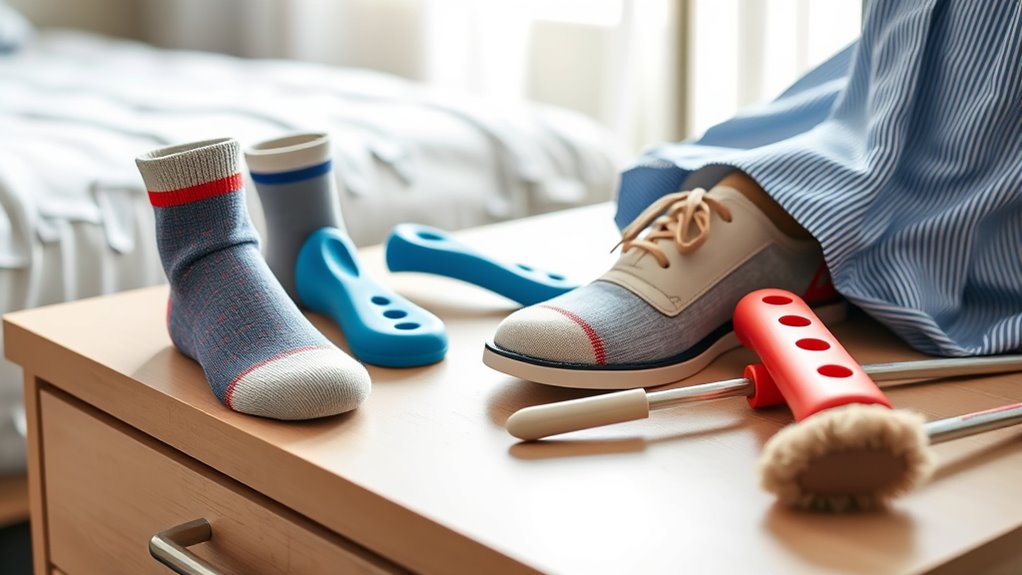
When choosing dressing aids, I consider how easy they are to use and whether they suit my reach and grip. I also look at how well they work with my clothing and if they’re portable for convenience. These factors help me pick tools that make dressing safer and more comfortable.
Ease of Use
Choosing dressing aids that are easy to use is essential for maintaining independence with limited mobility. An ergonomic design with textured grips or non-slip surfaces helps guarantee a comfortable, secure hold, reducing hand fatigue and slipping. Devices with intuitive mechanisms, like simple hooks or loops, require minimal effort, making dressing easier for those with limited dexterity. The length, typically between 25 to 35 inches, allows users to avoid bending or stretching, promoting comfort and safety. Additionally, a device that’s straightforward to assemble without tools and includes clear instructions saves time and frustration. When selecting a dressing aid, prioritize features that facilitate effortless manipulation and easy handling—these are key to making daily dressing tasks less challenging and more manageable.
Length and Reach
The length of a dressing aid plays a crucial role in guaranteeing you can reach your feet, shoes, or clothing comfortably without bending or overstretching. Typically, these aids range from 22 to 36 inches, providing enough reach for most users. Longer aids are especially helpful for those with severe mobility limitations, allowing them to perform dressing tasks while seated or from a safe distance. A longer reach reduces the need to bend or twist, lowering strain and decreasing fall or injury risks. The ideal length depends on your height, mobility level, and specific needs. For versatility, adjustable-length dressing aids are a great option, offering multiple reach settings to suit different tasks and preferences. Choosing the right length ensures safer, easier dressing routines.
Grip Comfort
A dressing aid with a comfortable grip makes dressing easier and safer, especially for those with limited hand strength or dexterity. A good grip reduces hand fatigue and gives better control during use. Soft rubber or foam handles offer cushioning and help prevent slipping, which is essential for weaker grips. Ergonomic designs that match the natural shape of the hand can improve stability and make dressing less tiring. Handles with textured or non-slip surfaces further reduce the risk of accidental slips, enhancing safety. Additionally, the right handle diameter and balanced weight distribution help lessen strain and improve overall comfort. Choosing aids with these grip features ensures a safer, more comfortable dressing experience, especially for those with limited strength or dexterity.
Compatibility With Clothing
When selecting dressing aids for limited mobility, it’s important to contemplate how well their design suits the clothing you wear most often. I look for tools with hooks or grips compatible with my clothing types, like buttons, zippers, or elastic waistbands. It’s also crucial to consider if the aid can handle different fabrics, such as delicate or stretchy materials, to avoid damage. The size and shape of the aid should allow me to manipulate various items like shirts, pants, or socks easily. I also prefer aids with padded or coated hooks to prevent fabric snags or tears. Finally, I check that the attachment points stay secure and don’t slip during use, ensuring I can dress comfortably and confidently without risking damage to my clothing.
Portability and Storage
Choosing dressing aids that are portable and easy to store can make a significant difference in managing limited mobility. Lightweight, compact designs help them fit into bags or small storage spaces without hassle. Tools with detachable or foldable parts are especially convenient, allowing quick packing and minimal storage needs. Adjustable or extendable features ensure the device can adapt to various storage options and user preferences. Easy assembly and disassembly are essential for quick setup and packing, saving time and effort. Additionally, look for products that come with a travel bag or protective case, which helps keep everything organized and prevents damage during transport. Prioritizing portability and storage options ensures your dressing aids are always accessible and easy to carry wherever you go.
Material Durability
Durable materials are essential for guaranteeing that dressing aids withstand daily use and last over time. High-quality plastics, stainless steel, and hardwoods provide the strength needed for long-lasting performance. Using abrasion-resistant surfaces helps prevent wear and tear from frequent use, keeping the aids effective and reliable. Waterproof and corrosion-resistant materials are especially important, as they allow for easy cleaning and sterilization without damage. Reinforced joints and secure fastening mechanisms reduce the risk of breakage during regular handling. Choosing sturdy construction minimizes the need for frequent replacements, making these aids a cost-effective solution. Ultimately, investing in durable materials ensures that dressing aids remain functional and dependable, providing consistent support for individuals with limited mobility.
Safety Features
Safety features are essential to guarantee that dressing aids are reliable and easy to use, especially for individuals with limited mobility. Non-slip grips and textured surfaces help prevent slips and accidents during dressing. Devices with rounded edges and smooth finishes reduce the risk of skin irritation or injury, making them safer to handle. Locking mechanisms or secure assembly parts keep the tool stable and prevent unexpected disassembly while in use. Ergonomic designs minimize strain and decrease the likelihood of dropping or mishandling the aid. Additionally, choosing materials that are hypoallergenic and free from sharp components enhances safety for users with sensitive skin or allergies. Prioritizing these features ensures that dressing aids provide both safety and confidence during daily routines.
Adaptability for Conditions
When selecting dressing aids for limited mobility, it’s important to contemplate how well they can adapt to different medical conditions and individual needs. For example, those with arthritis may require tools with adjustable handles or softer grips, while post-surgical users might need lightweight, flexible designs. Versatility is key—dressing aids should work with various clothing types, fabrics, and fasteners, ensuring they remain useful across different challenges. The mechanisms, such as hooks or grips, need to handle different textures comfortably and securely. Ergonomic, easy-to-use features are essential, especially for users with limited strength or dexterity. Ultimately, choosing adaptable dressing aids means prioritizing devices that can be customized to fit your unique condition and daily routine, making dressing safer and more manageable.
Frequently Asked Questions
How Do I Choose the Best Dressing Aid for My Specific Mobility Needs?
To choose the best dressing aid for your needs, I recommend evaluating your specific mobility challenges first. Think about what tasks are hardest—like reaching, bending, or gripping—and look for tools designed to address those issues. I also suggest trying out different options if possible, and consulting with a healthcare professional or occupational therapist. Their expertise can help you find the most comfortable, effective aid tailored to your lifestyle.
Are Dressing Aids Suitable for All Types of Clothing?
Did you know that over 60% of seniors find dressing aids helpful? Yes, dressing aids are suitable for most clothing types, including shirts, pants, and socks. I’ve found they make dressing quicker and less frustrating, especially with tricky items like buttons or zippers. While some aids work better with certain fabrics, most are versatile enough to assist with a wide range of clothing, making daily routines smoother for everyone.
Can Dressing Aids Help With Both Upper and Lower Body Dressing?
Yes, dressing aids can help with both upper and lower body dressing. I’ve found tools like button hooks and zipper pulls make it easier to manage shirts and pants independently. For lower body, sock aids and reachers assist with putting on socks and shoes without strain. These aids boost my confidence, save time, and reduce frustration, making dressing a smoother, more manageable process every day.
What Maintenance and Cleaning Do Dressing Aids Require?
I believe proper maintenance keeps dressing aids in top shape. I clean my tools regularly with mild soap and warm water, avoiding harsh chemicals that could damage them. For items with moving parts, I check for wear and lubricate if needed. Storing aids in a dry, clean place prevents rust and deterioration. Consistent cleaning and proper storage guarantee my dressing aids stay effective and safe to use every day.
Are There Any Safety Concerns When Using Dressing Aids Independently?
Yes, there are safety concerns when using dressing aids independently. I always make sure to verify that the tools are in good condition and not damaged, as broken aids can cause injuries. I also ensure my environment is clutter-free to prevent falls. It’s important to take your time, use aids properly, and never rush, reducing the risk of accidents or strains. If unsure, I consult a healthcare professional for guidance.
Conclusion
Choosing the right dressing aid is like finding a trusted compass—it makes your daily routine smoother and more manageable. Whether it’s a long-handled shoehorn or a versatile dressing stick, these tools empower you to maintain independence with confidence. Remember, the best aid is the one that feels natural and fits seamlessly into your life. With the right support, getting ready each day becomes easier—like a gentle breeze guiding you forward.