

To monitor your exertion during exercise, you can use the talk test and RPE scales. The talk test helps you judge effort by how easily you can speak—comfortable conversation means moderate effort, while difficulty indicates high effort. RPE enables you to rate how hard you feel you’re working, giving a nuanced measure. Combining these tools guarantees safer, more effective workouts. Keep exploring to learn how to apply these methods across different fitness goals.
Key Takeaways
- The talk test assesses exercise intensity by checking if you can comfortably converse; strained speech indicates higher effort.
- RPE provides a subjective rating of effort on a scale, reflecting breathing, muscle exertion, and fatigue levels.
- Combining talk test and RPE offers a comprehensive, real-time way to monitor exertion and prevent overexertion or injury.
- Using these tools enhances body awareness, allowing for safe effort adjustments during various exercise types, including aquatic workouts.
- Regularly applying both methods helps tailor workouts to fitness goals and ensures optimal effort levels for safety and effectiveness.
As an affiliate, we earn on qualifying purchases.
Understanding the Talk Test Method

The talk test method is a simple and effective way to gauge exercise intensity without any specialized equipment. As you exercise, pay attention to your breath control—if you can speak comfortably without gasping or struggling, you’re likely in the moderate intensity zone. If you notice vocal fatigue, such as your voice becoming strained or tired, it signals you’re pushing too hard. The goal is to find a balance where you can maintain conversation without difficulty, indicating you’re working at a sustainable effort. This method helps you stay within safe exertion levels, especially if you don’t have access to heart rate monitors. By tuning into how easily you speak and how your voice feels, you can effectively monitor your workout intensity. Monitoring exertion is important for hydrotherapy and aquatic exercise, where maintaining appropriate effort levels ensures safety and effectiveness.
How to Measure Perceived Exertion (RPE)

To accurately gauge how hard you’re working during exercise, many people use the Rating of Perceived Exertion (RPE) scale, which relies on your personal sense of effort. This scale helps you assess exercise intensity based on how hard you feel your body is working, including breathing, muscle effort, and overall fatigue. To measure your RPE, simply rate your effort on a scale typically from 6 to 20 or 0 to 10, depending on the version used. Consistently monitoring your perceived exertion allows you to adjust your workout intensity to prevent overexertion and promote effective fatigue management. By paying attention to how you feel during exercise, you can tailor your training to improve endurance, strength, and recovery without risking burnout. Additionally, incorporating smart features like auto functions can help you maintain appropriate exertion levels for optimal results.
Comparing Talk Test and RPE: Which Is Better?

While both the Talk Test and perceived exertion (RPE) are practical ways to monitor exercise intensity, they suit different needs. The talk test is simple: if you can comfortably hold a conversation, you’re likely exercising at a moderate level. It’s quick and doesn’t require tools, making it ideal for casual workouts or when you’re on the go. Perceived exertion, on the other hand, provides a more nuanced assessment. By rating how hard you feel you’re working, you can tailor intensity more precisely, especially during structured training. If you want an easy, real-time gauge without measuring effort numerically, the talk test works well. But if you prefer detailed feedback and better control over your workout intensity, perceived exertion is the better choice. Both tools have merits depending on your fitness goals. Understanding exercise monitoring methods can help you make more informed decisions about your workout intensity.
Benefits of Using These Tools During Workouts
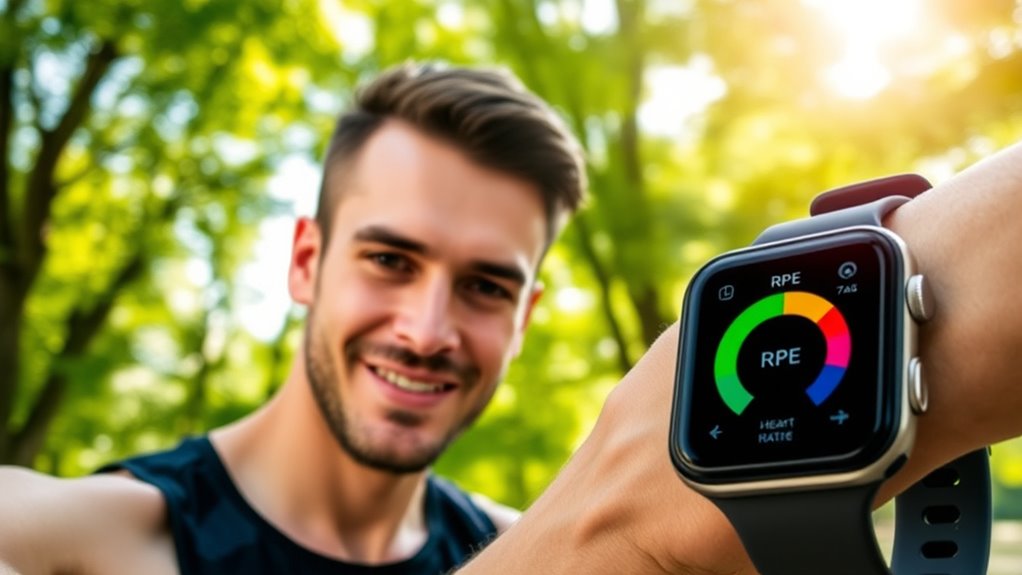
Have you ever wondered how to optimize your workouts and stay within safe intensity levels? Using tools like the talk test and RPE offers clear benefits. They help you adjust your effort in real-time, preventing overexertion. These tools also promote better breathing techniques, ensuring you maintain steady, controlled breaths that improve oxygen intake and reduce fatigue. Additionally, monitoring exertion encourages you to stay mindful of hydration strategies, as staying properly hydrated supports your body’s response to effort and prevents dehydration. Incorporating paint sprayer maintenance techniques into your routine can help ensure consistent performance and longevity of your equipment, similar to how monitoring exertion optimizes workout efficiency. By regularly evaluating your exertion levels, you can fine-tune your workout intensity for maximum efficiency and safety. These simple but effective tools empower you to listen to your body, avoid burnout, and achieve your fitness goals more confidently.
Practical Tips for Incorporating Exertion Monitoring
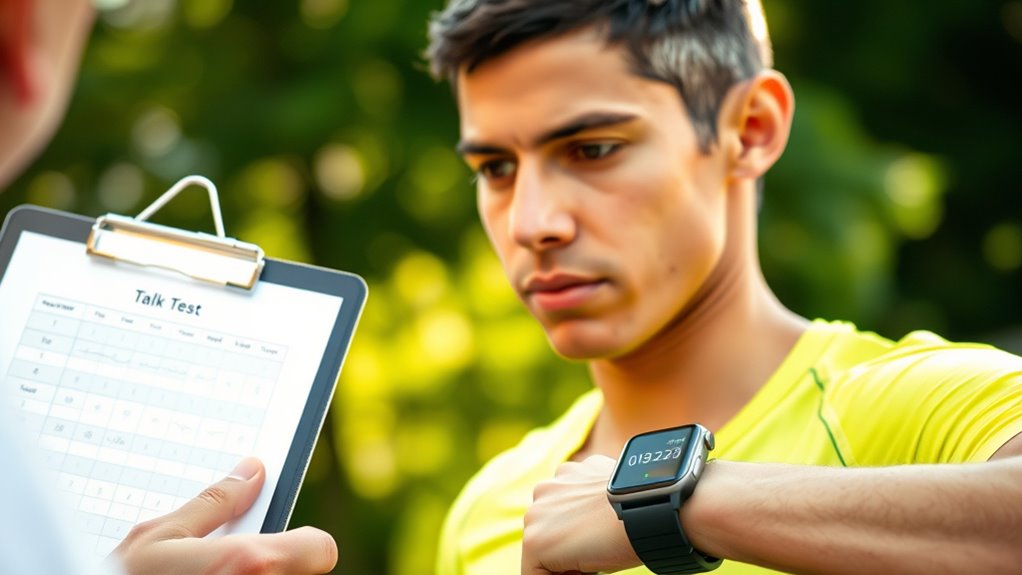
Incorporating exertion monitoring into your workouts becomes easier when you establish simple, consistent habits. Start by tracking your heart rate regularly, using a monitor or manual checks, to gauge your workout intensity. Set clear target zones based on your fitness goals, whether it’s for fat burning, endurance, or performance. Use the talk test during exercises—if you can hold a conversation comfortably, your intensity is likely moderate; if you’re gasping, it’s high. Make it a routine by checking your heart rate at specific intervals, like after warm-up or cool-down. Over time, you’ll develop an intuitive sense of exertion, helping you adjust intensity on the fly. Consistency and awareness are key to effectively monitoring exertion and maximizing your workout results. Incorporating expert voice actors and immersive soundscapes can also motivate and inform your training sessions.
Common Mistakes and How to Avoid Them

Many people overestimate how hard they’re working, which can lead to pushing too hard or risking injury. Inconsistent use of the talk test or ignoring RPE fluctuations can also skew your perception of exertion. To stay on track, pay close attention to these common mistakes and learn how to avoid them effectively. Incorporating proper monitoring techniques ensures a more accurate assessment of effort and helps prevent overexertion.
Overestimating Exertion Levels
It’s common to overestimate how hard you’re working during exercise, especially when you’re pushing yourself to improve. Your perceived effort can feel more intense than it actually is, leading you to believe you’re exerting more than necessary. To avoid this, consider these key points:
- Rely on your exertion perception rather than just feelings of fatigue.
- Use objective cues like talk test results to gauge intensity accurately.
- Remember that perceived effort can be influenced by factors like motivation or mood, which may skew your understanding.
- Using tools like the perceived exertion scale can help you quantify your effort more reliably.
Inconsistent Talk Test Usage
Using the talk test consistently is essential for accurately gauging your exercise intensity, but it’s a common mistake to do it irregularly or incorrectly. Talk test inconsistencies can lead to misjudging your effort, making it harder to maintain ideal training zones. When you don’t monitor your ability to speak comfortably, perceived exertion challenges increase, and your sense of effort becomes unreliable. Some people may speak normally during high-intensity workouts or struggle to speak during moderate efforts, skewing results. To avoid this, pay close attention to your speech during exercise, and apply the test regularly at the same intervals. Consistency helps you develop a better sense of your exertion levels, ensuring you stay within safe and effective effort ranges.
Ignoring RPE Variability
Ignoring RPE variability can lead to significant inaccuracies in evaluating your workout intensity because your perceived effort naturally fluctuates due to fatigue, stress, or environmental factors. This subjectivity bias can cause you to misjudge your effort levels and undermine measurement consistency. To avoid this, consider these points: 1. Recognize that RPE scores may change day-to-day, even at similar effort levels. 2. Track your RPE over time to identify patterns and reduce inconsistencies. 3. Use additional cues, like talk test or heart rate, to validate your perceived exertion. Additionally, understanding that emotional and physical factors influence RPE can help you interpret your efforts more accurately.
Applying Exertion Monitoring for Different Fitness Goals

When aiming for different fitness goals, monitoring exertion levels helps tailor your workouts for ideal results. For endurance, keep exertion moderate, focusing on steady breathing and consistent hydration strategies. For strength, push harder but avoid overexertion to prevent injury. Flexibility goals require gentle movements with light exertion, emphasizing controlled breathing. Use the table below to visualize your effort:
| Goal | Exertion Level | Breathing Techniques | Hydration Strategies |
|---|---|---|---|
| Endurance | Moderate | Rhythmic, deep breaths | Sip water regularly |
| Strength | High | Controlled, forceful breaths | Hydrate after sets |
| Flexibility | Light | Gentle, relaxed breathing | Small sips during breaks |
| Fat Loss | Slightly above moderate | Steady, controlled breaths | Stay consistently hydrated |
| Recovery | Very light | Calm, slow breaths | Hydrate to aid recovery |
Additionally, monitoring exertion levels can be especially helpful when working toward specific goals such as improving flexibility or reducing fatigue.
Frequently Asked Questions
Can These Methods Be Used for Rehabilitation Exercises?
Yes, you can use talk test applications and RPE customization for rehabilitation exercises. These methods help you gauge exertion levels safely, guaranteeing you don’t overstrain during recovery. By using the talk test, you can monitor your ability to speak comfortably, while RPE allows you to adjust effort based on personal feedback. Incorporating both ensures a tailored, safe approach to rehab, promoting effective progress without risking setbacks.
How Often Should I Reassess My Exertion Levels?
You should reassess your exertion levels at least once every session to guarantee exercise consistency and monitoring accuracy. If you’re progressing or feeling different, check more often to stay within your target zone. Listen to your body and adjust accordingly. Regularly evaluating your exertion helps prevent overexertion and keeps your workout effective, ensuring you’re exercising safely and effectively while maintaining consistent progress.
Are There Specific Tools for Children or Seniors?
While there are no one-size-fits-all tools, you’ll find child-friendly tools like simplified talk tests and visual RPE scales work well for kids, making exertion easier to gauge. For seniors, senior-specific assessments like large-print RPE charts and gentle pulse checks help guarantee safety and comfort. These tailored tools encourage honest feedback, allowing you to monitor exertion effectively without overwhelming them, ultimately promoting a safe and enjoyable activity experience.
How Do Environmental Factors Affect the Talk Test?
Environmental influences like high temperatures, humidity, or pollution can impact the talk test accuracy because they make breathing more difficult, causing you to tire faster. Wind or background noise might also interfere with your ability to speak comfortably during exertion. These factors can lead to misjudging your exertion level, so it’s important to take environmental conditions into account to ensure the talk test remains a reliable indicator of your exercise intensity.
Is There a Recommended RPE Scale for Beginners?
For beginners, a 0-10 RPE scale is recommended, focusing on perceived exertion. You should aim for a moderate level, around 4-6, where you can still talk comfortably using the talk test. If talking becomes difficult, you’re likely at a higher exertion level. This simple scale helps you gauge effort accurately without overexerting, making it ideal for those new to exercise.
Conclusion
By mastering the talk test and RPE, you hold the keys to optimizing every workout. Think of these tools as your personal compass, guiding you through your fitness journey with confidence. Don’t let guesswork steer your efforts—use these simple yet powerful methods to stay in tune with your body. Remember, when you listen closely, your exertion becomes your ally, turning each session into a step closer to your goals.