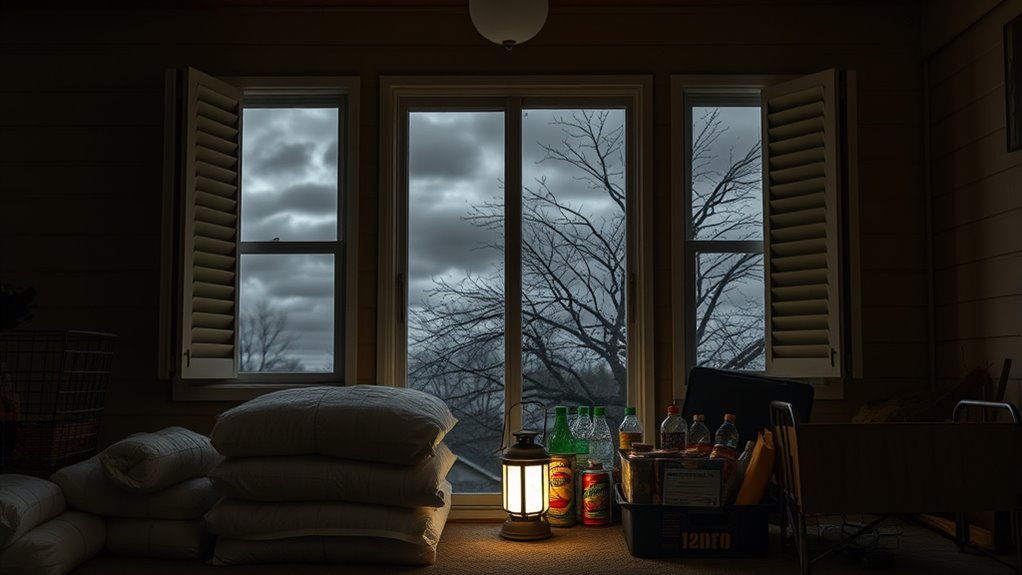

To prepare your home for storms and outages, start by reinforcing windows and doors with impact-resistant materials or storm shutters. Secure outdoor furniture and trim landscaping to prevent damage. Assemble an emergency kit with supplies and backup power options like generators. Safeguard important documents and electronics, and develop a family emergency plan. Regular maintenance of your roof and gutters guarantees proper drainage and reduces leaks. Staying informed with weather alerts keeps you ready—learn more about protecting your home in severe weather events.

Turn quiet afternoons into listening time
- Thousands of audiobooks, podcasts and originals
- Listen on your phone, tablet or Echo — also offline
- Cancel anytime
Key Takeaways
- Reinforce windows, doors, and entry points with impact-resistant materials to prevent damage during storms.
- Regularly trim trees, secure outdoor items, and clear gutters to minimize water and debris-related risks.
- Develop an emergency plan, assemble supplies, and ensure backup power sources like generators are maintained and accessible.
- Inspect and maintain the roof, gutters, and drainage systems to prevent leaks and water damage.
- Monitor weather updates, conduct family emergency drills, and prepare for quick response during severe weather events.
As an affiliate, we earn on qualifying purchases.
Assessing and Reinforcing Windows and Doors
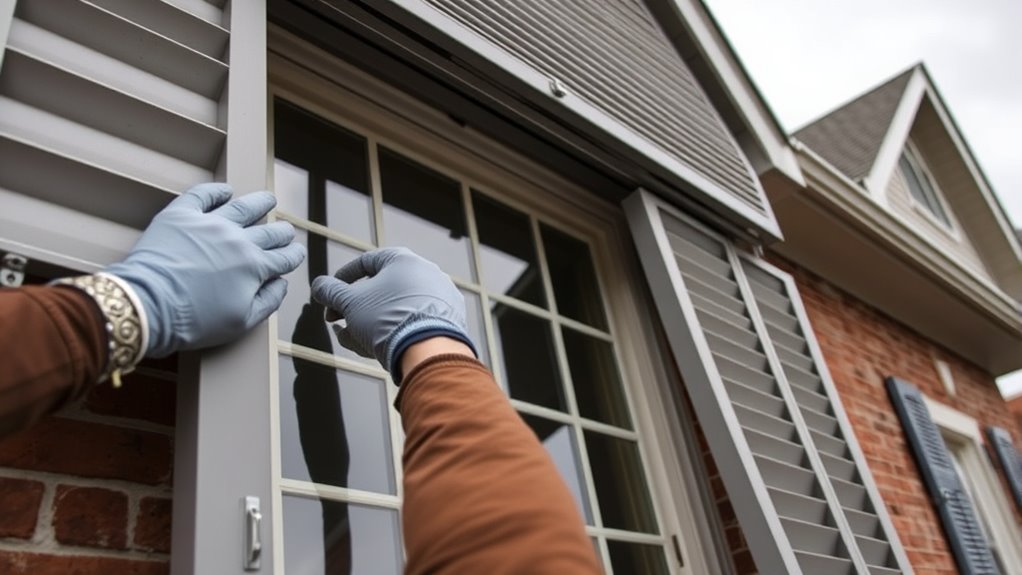
Since windows and doors are the primary points of vulnerability during storms, it is vital to assess their current condition and reinforce them accordingly. Start by inspecting for cracks, gaps, or damage that could worsen under high winds. To strengthen your windows, consider using storm resistant materials such as impact-resistant glass or plyboard covers. You can also apply window reinforcement techniques like installing window security film or adding storm shutters, which help hold glass in place during a storm. Reinforcing doors involves checking for loose hinges or frames and replacing them if necessary. Using heavy-duty, storm-resistant materials ensures your windows and doors can withstand strong gusts and flying debris, minimizing damage and keeping your home safe during severe weather events. Additionally, utilizing smart security features can provide real-time alerts and remote monitoring to enhance your home’s protection.
Securing Outdoor Items and Landscaping

Have you checked your outdoor items and landscaping lately? Securing outdoor furniture and garden decor is essential before a storm hits. Loose outdoor furniture can become dangerous projectiles in high winds, so anchor or store them safely indoors. Heavy items like garden decor should be secured or moved to sheltered areas to prevent damage or being blown away. Trim back overhanging branches and loose shrubs to reduce the risk of falling limbs. Clear your yard of lightweight or fragile decorations that could become airborne. If possible, weigh down larger items or place them in a secure spot. Taking these steps now minimizes the chance of damage and keeps your outdoor space safe during storms. Proper preparation helps protect your property and reduces cleanup afterward. Additionally, consider the power of electric dirt bikes in your emergency planning, as their quick acceleration and lightweight design can be useful in certain situations.
Creating an Emergency Preparedness Kit
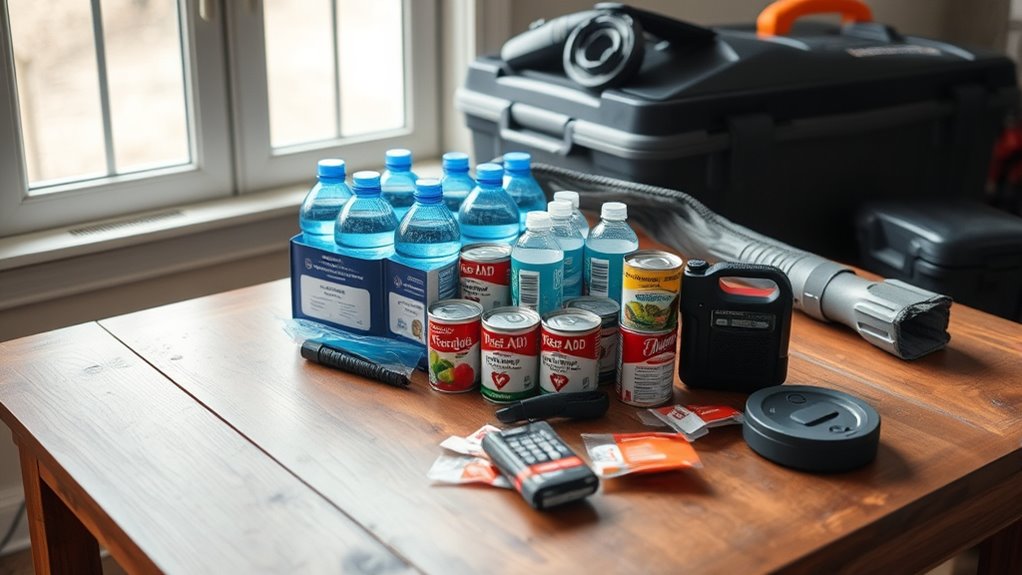
Preparing an emergency kit now guarantees you’re ready to handle power outages and other storm-related disruptions. Start by assembling essentials that keep you safe and self-sufficient. Focus on these key items:
- Emergency food and water supplies to sustain you for at least three days.
- First aid supplies to treat minor injuries and address medical needs.
- Flashlights, batteries, and a portable phone charger to stay informed and connected.
- Reliable backup power options can help ensure your critical devices stay operational during outages.
Keep these items in a sturdy, accessible container and regularly check expiration dates. Having a well-stocked emergency food supply guarantees you won’t go hungry, while first aid supplies help manage injuries quickly. Being prepared with these basics means you can face storms with confidence and minimal stress, knowing you’re ready for unexpected disruptions.
Installing Backup Power Solutions
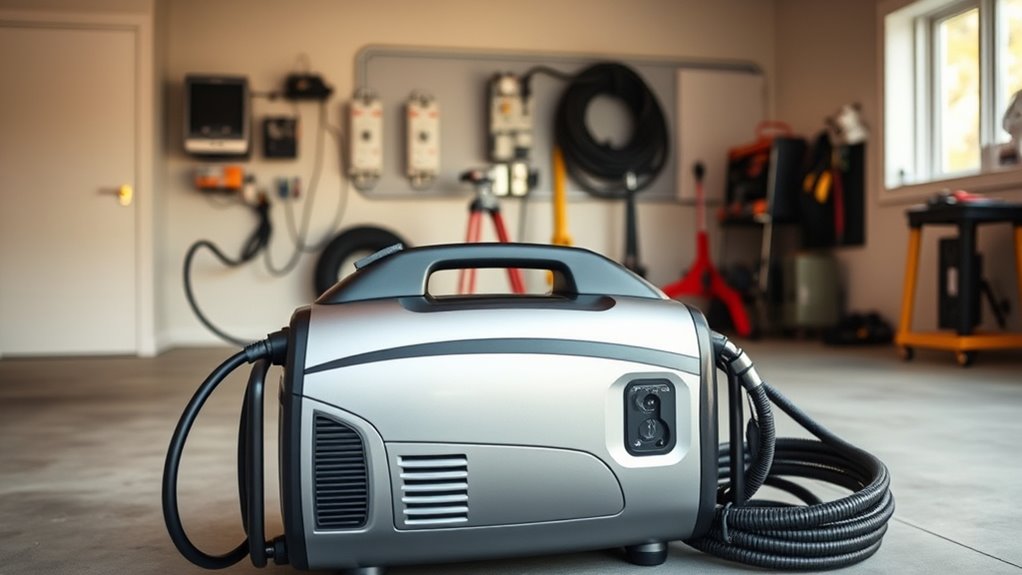
Installing backup power solutions guarantees your home stays functional during outages, providing essential electricity for lighting, heating, and communication. Regular generator maintenance is crucial to ensure your system operates smoothly when needed. Check and service your generator according to the manufacturer’s instructions, and test it periodically to catch any issues early. Proper fuel storage is also vital; store enough fuel in approved containers to run your generator for several days, and keep it in a cool, well-ventilated area away from your home. Guarantee your fuel supply is fresh and rotate it regularly to prevent degradation. Additionally, understanding the importance of generator capacity helps ensure you select the right size for your home’s power needs. By maintaining your generator and managing your fuel storage carefully, you’ll be prepared to keep your home powered when storms knock out the grid.
Safeguarding Important Documents and Electronics
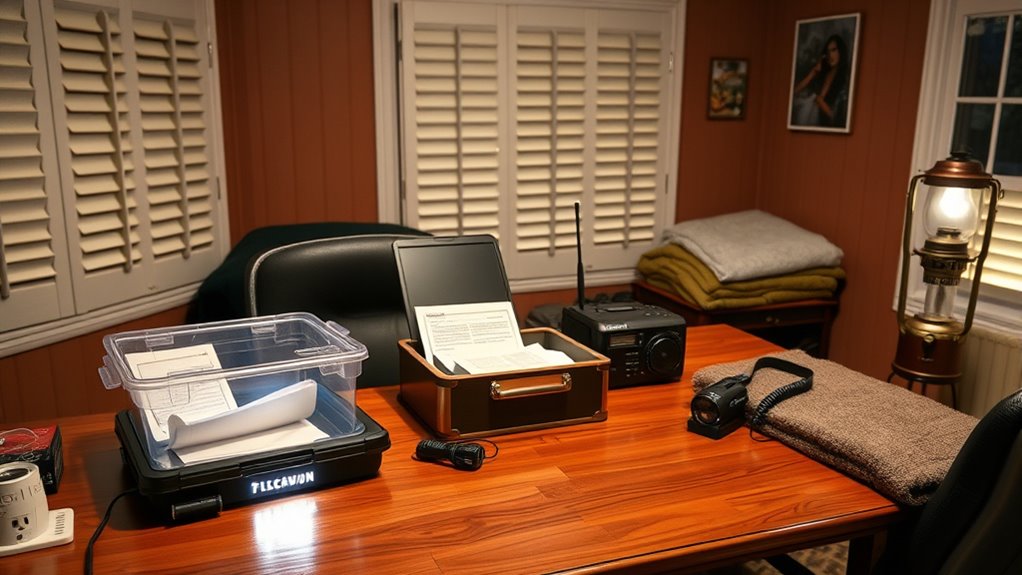
You should organize your important documents in waterproof, fireproof containers or digital backups to keep them safe. Safeguard your electronics with surge protectors and unplug devices before storms hit. Proper storage and protection strategies ensure your critical items stay secure during outages. Additionally, consider using protective skin treatments like glycolic acid toners to maintain your skin’s health and resilience during stressful weather conditions.
Document Storage Strategies
Having a reliable system for storing important documents and electronics is essential when storms threaten your home. To protect your crucial information, consider these strategies:
- Create digital backups of key documents, such as IDs, insurance policies, and medical records, and store them securely offline or on an external drive.
- Use cloud storage services for easy access and added security, ensuring your files are protected even if physical copies are damaged.
- Keep physical copies in a waterproof, fireproof safe or a designated secure location, so they remain accessible during outages or emergencies.
- Regularly review and update your document storage strategies to adapt to new circumstances and ensure ongoing protection.
Implementing these steps guarantees you won’t lose critical information and can recover quickly after a storm. Combining digital backups, cloud storage, and physical safekeeping offers holistic protection for your essential documents.
Electronics Protection Tips
Protecting your electronics is just as important as safeguarding your documents. To prevent damage during storms or outages, use surge protectors and ensure your devices have proper electronic surge protection. Unplug electronics when not in use, especially high-value items like computers and TVs. Keep backup copies of important files in a safe, off-site location. Consider investing in surge protectors with whole-home surge protection to shield multiple devices at once. Here’s a quick comparison:
| Tip | Why It Matters |
|---|---|
| Use surge protectors | Prevent power surges from damaging electronics |
| Unplug devices during storms | Eliminate risk of power surges and outages |
| Backup important data | Protect against data loss |
| Invest in electronic surge protection | Provides extra defense against surges |
| Keep devices off when not in use | Reduces wear and risk of damage |
Following these tips helps keep your electronics safe during storms. Additionally, choosing reliable surge protection devices can significantly enhance your home’s defense against unexpected power fluctuations.
Developing a Family Emergency Plan

Creating a family emergency plan is a crucial step in guaranteeing everyone stays safe during storms or outages. To make it effective, focus on these key areas:
- Establish clear family communication methods, like designated meeting spots and check-in procedures.
- Create and update emergency contact lists with phone numbers of family members, neighbors, and local authorities.
- Practice your plan regularly so everyone knows what to do, where to go, and how to stay connected.
- Be aware of signs of spoilage in supplies like lemon juice, to ensure food safety during extended outages.
Having a solid plan reduces confusion, keeps everyone informed, and ensures quick response during an emergency. By preparing these details in advance, you’ll help your family stay safe and reduce chaos when storms hit or outages occur.
Maintaining Home Drainage and Roof Integrity
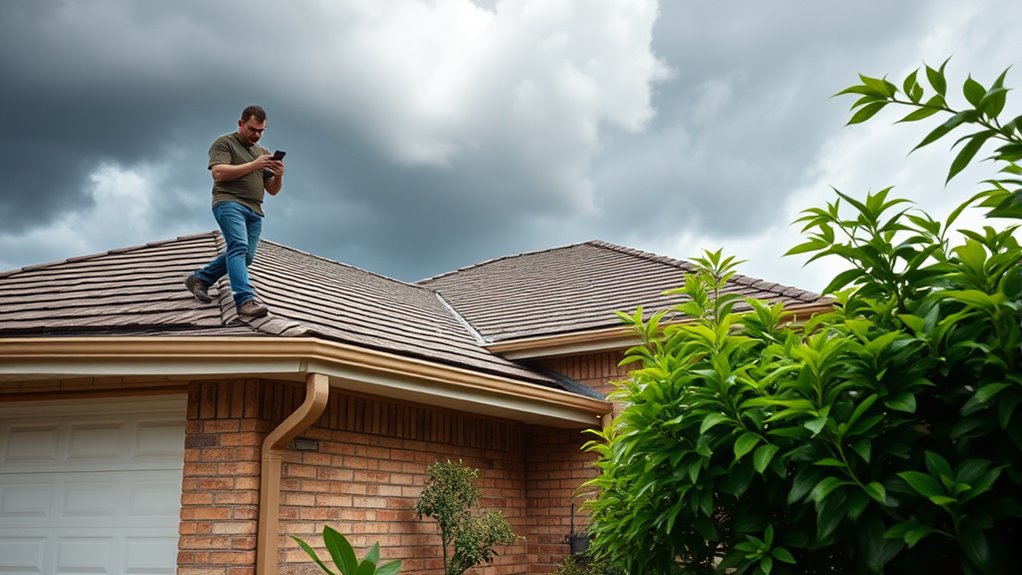
To keep your home safe during storms, you need to focus on drainage and roof upkeep. Make sure you regularly clear your gutters, inspect shingles and flashing for damage, and grade your landscaping away from the house. These steps help prevent water from pooling and protect your roof from storm-related damage. Additionally, inspecting your roof for damage or wear can help identify potential vulnerabilities before severe weather strikes.
Clear Gutters Regularly
Regularly clearing your gutters is essential to guarantee proper drainage and protect your roof from damage. Neglecting gutter maintenance can lead to clogs, water overflow, and potential structural issues. To stay ahead, focus on these key tasks: 1. Remove debris like leaves, twigs, and dirt that can block water flow. 2. Check for and repair any damaged or sagging sections. 3. Ensure downspouts are clear and directing water away from your foundation. Additionally, understanding self watering plant pots can help you maintain indoor plants during outages by reducing watering needs.
Inspect Shingles and Flashing
Inspecting your shingles and flashing is essential for maintaining your roof’s integrity and ensuring proper drainage during storms. Start by checking your shingles for signs of wear, such as curling, cracking, or missing pieces, which can compromise shingle durability. Damaged shingles can lead to leaks and water infiltration. Next, perform a flashing inspection around chimneys, vents, and roof joints. Look for corrosion, rust, or gaps that could allow water to seep in. Properly functioning flashing directs water away from vulnerable areas, preventing leaks and structural damage. Regularly inspecting these components helps catch issues early, saving you money and stress during storms. Keep your roof in top shape by maintaining its shingles and flashing, ensuring your home stays protected when it counts most.
Grade Landscaping Away From House
Ensuring your landscaping slopes away from your house is essential for proper drainage and protecting your roof from water damage. Proper yard maintenance prevents water from pooling near your foundation, reducing the risk of leaks and structural issues. To achieve this, consider these steps:
- Check the Grade – Ensure the soil slopes at least 6 inches within the first 10 feet of your home.
- Clear Gutters and Downspouts – Keep debris out to prevent water backup that can damage your roof.
- Add Soil or Mulch – Fill low spots and create a gentle slope away from the house for effective drainage.
Prioritizing landscaping safety and diligent yard maintenance helps safeguard your home during storms and heavy rainfall.
Staying Informed and Monitoring Weather Alerts
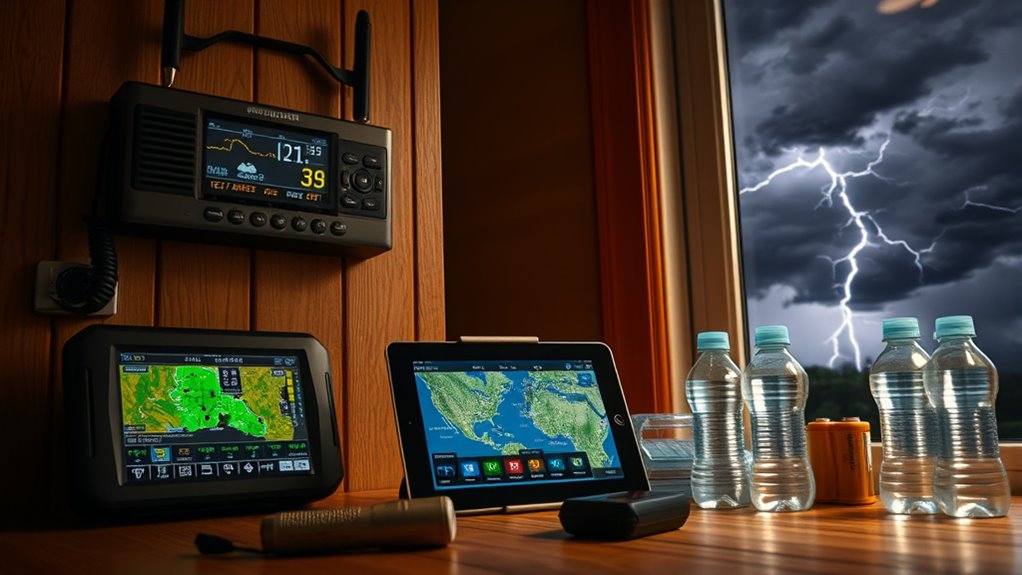
Staying informed about weather conditions is vital to prepare effectively for storms and outages. Keep up with weather forecasting updates from reliable sources like local news, weather apps, or the National Weather Service. These sources provide timely information on approaching storms, allowing you to make necessary preparations. Sign up for emergency alerts and notifications on your phone or through community alert systems to receive real-time warnings. Monitoring these alerts helps you stay ahead of severe weather, giving you essential moments to secure your home, gather supplies, or plan evacuation if needed. Consistently checking weather updates ensures you’re aware of changing conditions, enabling you to respond promptly and safely, minimizing risks during storms and outages.
Frequently Asked Questions
How Often Should I Review and Update My Emergency Preparedness Plan?
You should review your emergency preparedness plan at least once a year to make certain your home safety and emergency supplies are current. Regular updates help you adapt to changes in your household, such as new members or medical needs. After major storms or outages, reassess your plan to address any gaps. Staying proactive keeps you ready for emergencies, ensuring everyone knows what to do and your supplies are always stocked and accessible.
What Are the Most Cost-Effective Ways to Reinforce Windows and Doors?
A stitch in time saves nine, so start with storm shutters to shield your windows without breaking the bank. For door reinforcement, add heavy-duty braces or security strips that are both affordable and effective. You can also reinforce existing doors with sturdy hardware or metal plates. These cost-effective measures help prevent damage, giving you peace of mind when storms roll in. Don’t wait until the last minute—acting now saves money and stress later.
How Can I Protect My Home Against Flooding During Storms?
To protect your home against flooding during storms, you should improve your stormwater drainage system to direct water away from your foundation. Install flood barriers at vulnerable entry points like doors and windows to keep water out. Regularly clear gutters and drains, and consider elevating appliances and electrical outlets in flood-prone areas. These steps help minimize flood damage and keep your home safer during severe weather events.
What Types of Backup Power Solutions Are Safest for Home Use?
You should consider solar generators and battery backups for safe home power solutions. Solar generators are clean, renewable, and easy to use, providing reliable energy during outages. Battery backups, especially those connected to your home’s electrical system, offer seamless power without fumes or noise. Always choose systems with proper safety certifications, and confirm professional installation to prevent electrical hazards. These options keep your home powered safely during storms.
How Do I Choose the Best Location to Store Important Documents?
Think of your important documents as treasures; choose security locations like a fireproof safe or a waterproof lockbox. You’ll want these in spots that are both accessible and protected from risks like flooding, theft, or fire. Consider a discreet closet or a secure cabinet away from windows. By prioritizing document storage and security locations, you guarantee your essential papers stay safe during storms and outages.
Conclusion
By preparing your home as if you’re forging your own shield, you stand ready to face nature’s fury. Just like ancient sailors relied on steady ships and vigilant watches, staying informed and proactive keeps you safe through storms and outages. When you reinforce your defenses and plan ahead, you embody the resilience of a seasoned explorer steering through rough waters—confident, prepared, and ready to weather whatever comes your way.
Fall Picks
fall essentials
As an affiliate, we earn on qualifying purchases.