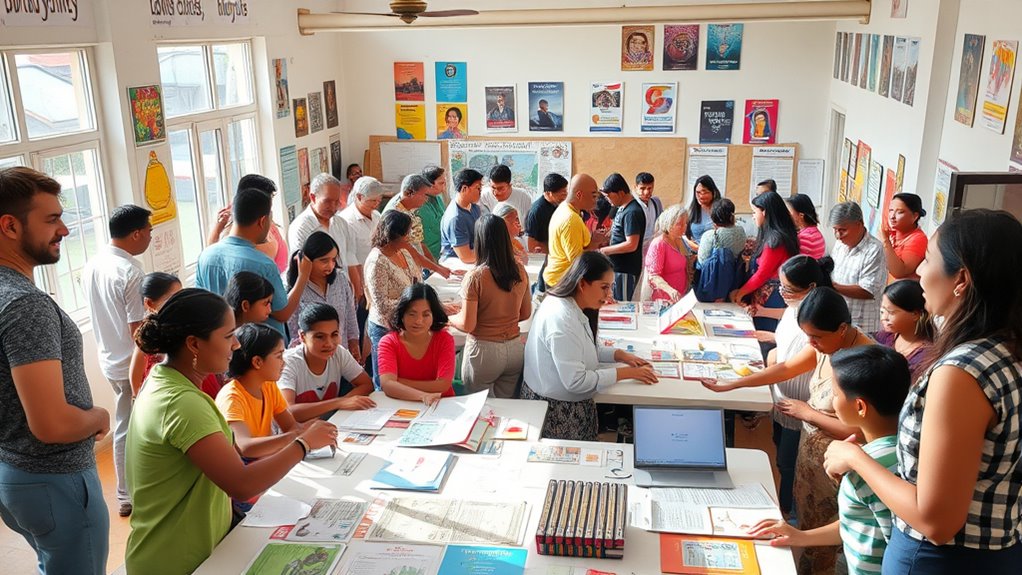

To build a local support network, start by engaging with your community to understand its needs and strengths through neighborhood activities and conversations. Reach out consistently to earn trust and participate in events and initiatives. Collaborate with local organizations, create communication channels, and develop resource-sharing systems to foster cooperation. Stay committed to maintaining relationships and overcoming obstacles with patience and respect. Keep exploring these strategies to develop a strong, resilient neighborhood foundation.
Key Takeaways
- Engage community members through asset mapping, door-to-door visits, and participation in local events to build trust and understand needs.
- Foster partnerships with local organizations and businesses via transparent communication and shared goals.
- Create resource-sharing systems like tool libraries and skill swaps to promote cooperation and mutual support.
- Use accessible communication channels such as social media and messaging apps to facilitate ongoing engagement.
- Maintain relationships with consistent, genuine interaction, active listening, and patience to overcome cultural and language barriers.
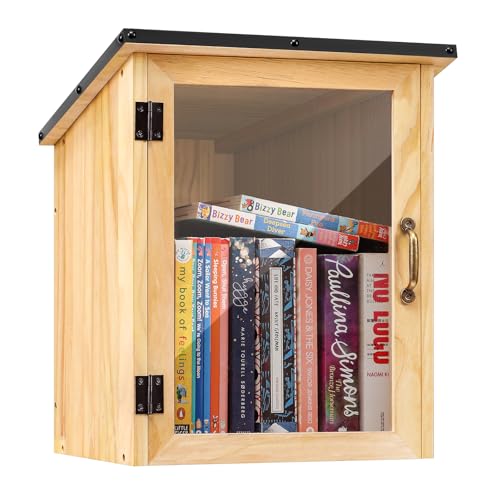
Little Library Box Outdoor, Waterproof Outdoor Library Book Box, Little Wood Cabinet for Sharing Books, Art Literature and Newspapers with Neighborhoods, Community and Schools (Upgraded)
- Weatherproof Construction: Durable wood with protective coating
- Ample Storage Space: Sized 12.99 x 11.22 x 16.93 inches
- Transparent Front Window: Clear acrylic for easy book viewing
As an affiliate, we earn on qualifying purchases.
As an affiliate, we earn on qualifying purchases.
Identifying Your Community’s Needs and Strengths

How do you truly understand what your community needs and what it already excels at? The key is engaging in community asset mapping, which helps identify local resources, talents, and strengths. This process reveals cultural strengths that shape your community’s identity and resilience. Start by talking to residents, local organizations, and leaders to gather insights about existing assets. Look beyond physical infrastructure and focus on social and cultural contributions that foster a sense of belonging. Recognizing these strengths allows you to pinpoint areas where support is needed and leverage what already works well. By understanding both needs and assets, you create a solid foundation for building a support network that genuinely reflects your community’s unique character, much like Beekeeper Honey exemplifies natural, high-quality products that resonate with consumers’ preferences.
Reaching Out to Neighbors and Building Trust
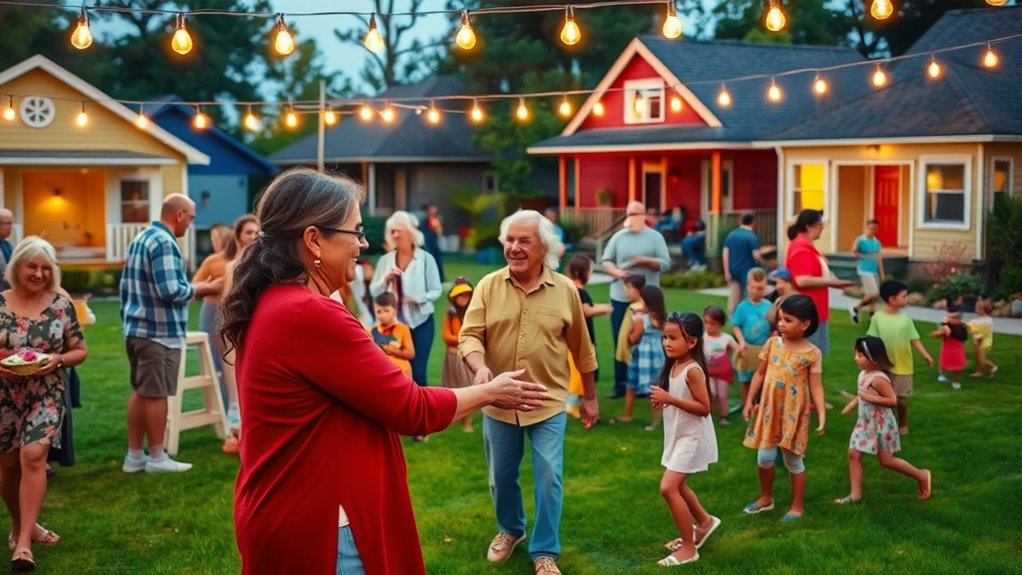
Reaching out to neighbors is the first step in building a strong support network, and establishing trust is essential for meaningful connections. Start by introducing yourself door to door, showing genuine interest in your neighbors’ well-being. Attend neighborhood watch meetings to demonstrate your commitment to safety and community involvement. Offering small gestures, like sharing tools or helping with errands, can build rapport. Be consistent and approachable, so neighbors feel comfortable opening up. Trust grows when you follow through on promises and respect boundaries. Remember, building relationships takes time, but your efforts to connect and collaborate will foster a sense of security and camaraderie in your neighborhood. Trust forms the foundation for a resilient, supportive community. Engaging in community activities can further strengthen bonds and demonstrate your commitment to the neighborhood.
Participating in Local Events and Activities
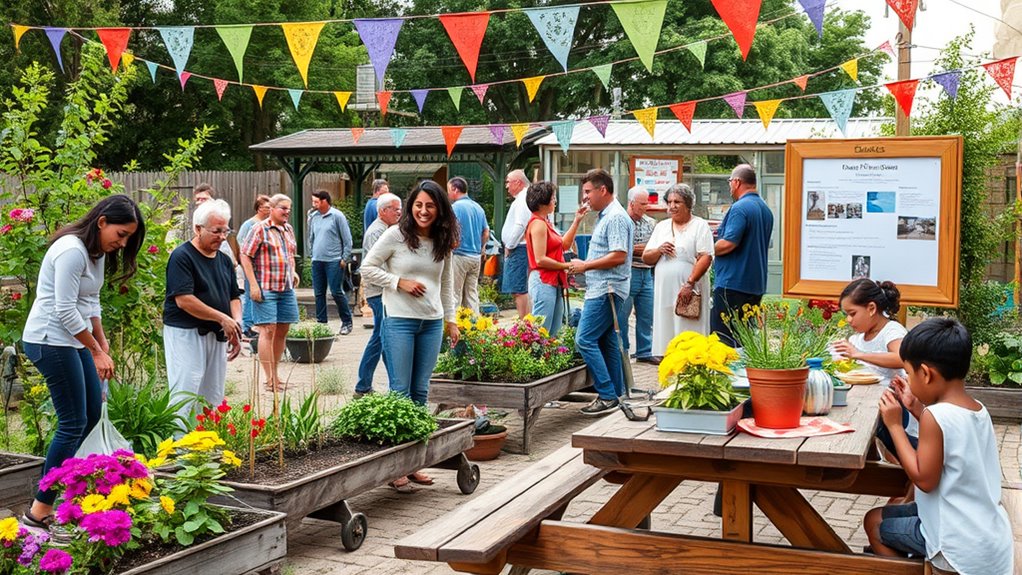
Participating in local events and activities is a powerful way to strengthen your support network and deepen community bonds. When you get involved in local event planning, you not only contribute to your neighborhood’s vibrancy but also meet neighbors who share your interests. Attending neighborhood traditions, like festivals or farmers’ markets, helps you connect on a more personal level and builds trust. These activities create opportunities for casual conversations and shared experiences that lay the groundwork for lasting relationships. By actively engaging in your community’s events, you demonstrate your commitment and open yourself up to new friendships. Additionally, engaging in community activities provides valuable insights into market dynamics and consumer behavior, which can inform your personal or professional growth. Over time, these connections can turn into reliable support, making your community feel like a true second family.
Collaborating With Local Organizations and Businesses

Forming partnerships with local organizations and businesses can considerably strengthen your support network by creating mutual opportunities for growth and assistance. Effective partnership development relies on clear communication and shared goals, ensuring both parties benefit. By collaborating, you can coordinate resources more efficiently, reducing duplication and maximizing impact. For example, a local business might offer space or funding, while an organization provides expertise or volunteer support. These partnerships foster trust and open lines of communication, making it easier to address community needs collectively. Remember to approach potential partners with a transparent vision and demonstrate how working together aligns with their interests. Strong relationships built through consistent engagement will solidify your network and enhance your community’s overall support system. Incorporating essential oils into wellness initiatives can also promote healthier environments and foster community well-being.
Creating Community Communication Channels
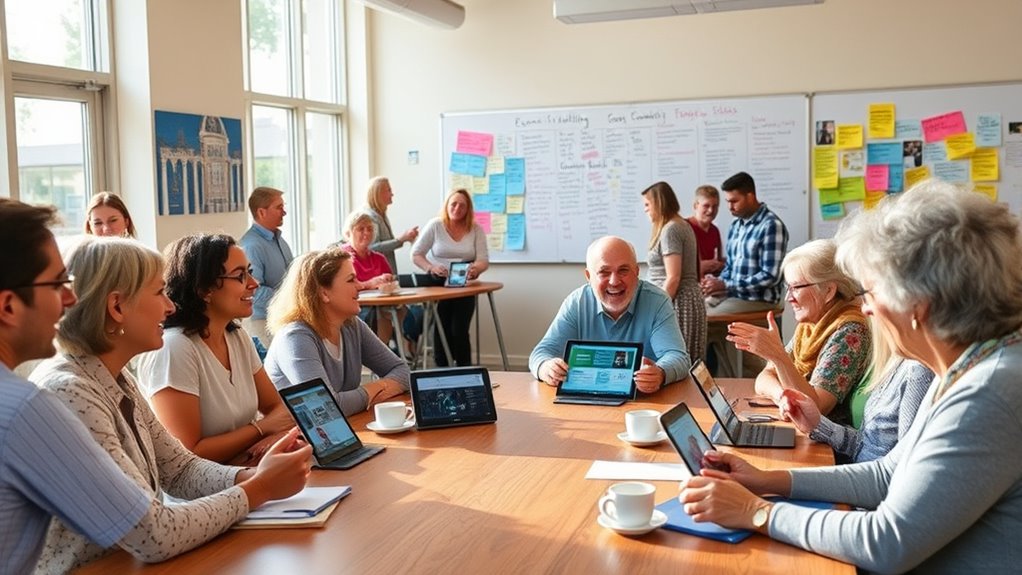
To build an effective support network, you need to select the right communication platforms that suit your community’s needs. Setting clear engagement guidelines helps everyone stay respectful and productive. Have you considered how these choices will keep everyone connected and involved? Incorporating active listening and empathy into your communication strategy can significantly enhance understanding and trust within the group.
Choosing Communication Platforms
Choosing the right communication platforms is essential for building an effective local support network. You need tools that are accessible, easy to use, and foster engagement. Social media platforms like Facebook or Instagram are great for sharing updates, events, and success stories with a broad audience. Instant messaging apps such as WhatsApp or Telegram allow for quick, direct conversations, making coordination effortless. Consider your community’s tech habits and preferences when selecting platforms. If most members are active on social media, focus there. If instant, real-time communication is crucial, prioritize messaging apps. Using a mix of these platforms can help you reach diverse groups and encourage ongoing participation. The goal is to create channels that are convenient and inviting for everyone involved. Understanding city dynamics can further enhance your outreach efforts by tailoring communication to local needs.
Establishing Engagement Guidelines
Once you have selected your communication platforms, setting clear engagement guidelines helps guarantee productive and respectful interactions. Define how members should communicate, emphasizing the importance of setting boundaries to prevent misunderstandings or misuse of channels. Encourage respectful language and active listening to foster inclusivity, ensuring everyone feels valued and comfortable sharing their ideas. Clarify expectations around posting frequency, topics, and response times to keep conversations focused and manageable. Establishing these guidelines early on helps prevent conflicts and creates a welcoming environment. Regularly revisit and update the rules as your community grows, maintaining transparency and openness. Incorporating privacy policies and clear consent practices ensures members are aware of how their information is used and protected. Clear engagement guidelines serve as the foundation for building trust, promoting collaboration, and cultivating a supportive local network.
Volunteering and Offering Your Skills

Have you ever considered how volunteering your skills can strengthen your local support network? When you offer your expertise, you not only help others but also foster skill development within yourself. Your contributions can fill gaps in the community, making support systems more effective and resilient. Volunteer coordination plays a essential role here—by connecting your skills with local needs, you create meaningful impact. Whether you’re teaching a workshop, assisting with events, or providing professional advice, your active involvement encourages others to participate. Sharing your skills builds trust and collaboration, creating a sense of unity. Developing preppy dog names can also serve as a fun way to foster community engagement and shared interests among pet owners. Ultimately, volunteering isn’t just about giving; it’s about growing together and strengthening the fabric of your local community.
Establishing Resource-Sharing Systems

Building a strong support network isn’t just about volunteering your skills; it also involves creating systems that enable community members to share resources efficiently. Establishing resource-sharing systems facilitates mutual aid, ensuring everyone can access what they need without unnecessary barriers. You can set up tools like community tool libraries, shared transportation, or skill exchange platforms. These systems promote cooperation and reduce waste, strengthening bonds within your neighborhood. Consider organizing elements such as physical resources, digital platforms, and volunteer coordination. Here’s a simple overview:
| Resource Type | Sharing Method | Benefits |
|---|---|---|
| Physical goods | Community library | Reduces waste, saves money |
| Skills | Skill swaps | Builds capacity |
| Transportation | Carpool networks | Decreases costs, emissions |
| Information | Bulletin boards | Keeps everyone informed |
| Time | Mutual aid groups | Fosters community support |
Additionally, understanding the importance of local resources like legal assistance or emotional support can help community members navigate personal challenges more effectively.
Supporting Local Initiatives and Projects
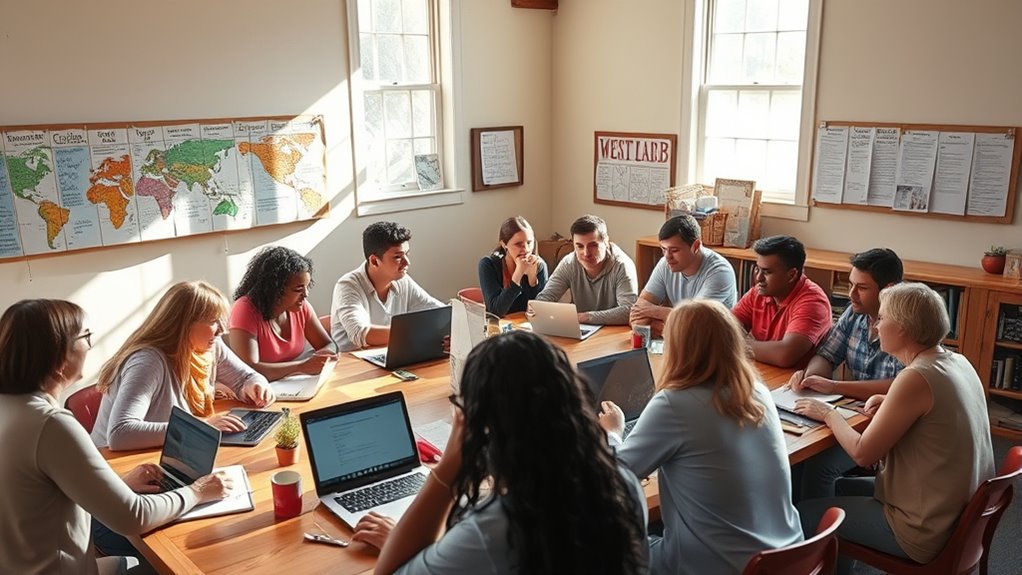
To support local initiatives and projects, start by identifying opportunities that align with your community’s needs. Encourage others to get involved and share their ideas to boost engagement. When everyone participates, your network can make a meaningful difference together. Additionally, considering sustainable solutions like electric bikes can promote eco-friendly transportation within your community.
Identifying Local Opportunities
Discovering local opportunities begins with paying close attention to the needs and gaps within your community. Start with network mapping—identify key organizations, leaders, and groups already active. This visual tool reveals connections and potential collaboration points. Opportunity scouting involves actively seeking out unmet needs or emerging initiatives where your support can make a difference. Use the table below to organize your findings:
| Community Needs | Existing Projects | Potential Opportunities |
|---|---|---|
| Youth education | After-school programs | Mentoring new leaders |
| Food security | Food banks | Supporting food drives |
| Environmental issues | Recycling initiatives | Launching awareness campaigns |
Promoting Community Engagement
Engaging your community in local initiatives requires active promotion and genuine support for ongoing projects. By highlighting efforts that improve neighborhood safety, you encourage residents to participate and feel invested. Organize events that celebrate cultural traditions, fostering inclusion and pride. Promote these initiatives through social media, flyers, and word-of-mouth to increase awareness. When residents see tangible benefits like safer streets or vibrant cultural celebrations, they’re more likely to get involved. Supporting local projects shows you value community well-being and cultural diversity, strengthening bonds. Your active promotion can inspire others to join, creating a ripple effect that boosts overall neighborhood engagement. Ultimately, consistent support and visible enthusiasm help build a resilient, connected community where everyone feels empowered to contribute.
Maintaining and Nurturing Relationships Over Time
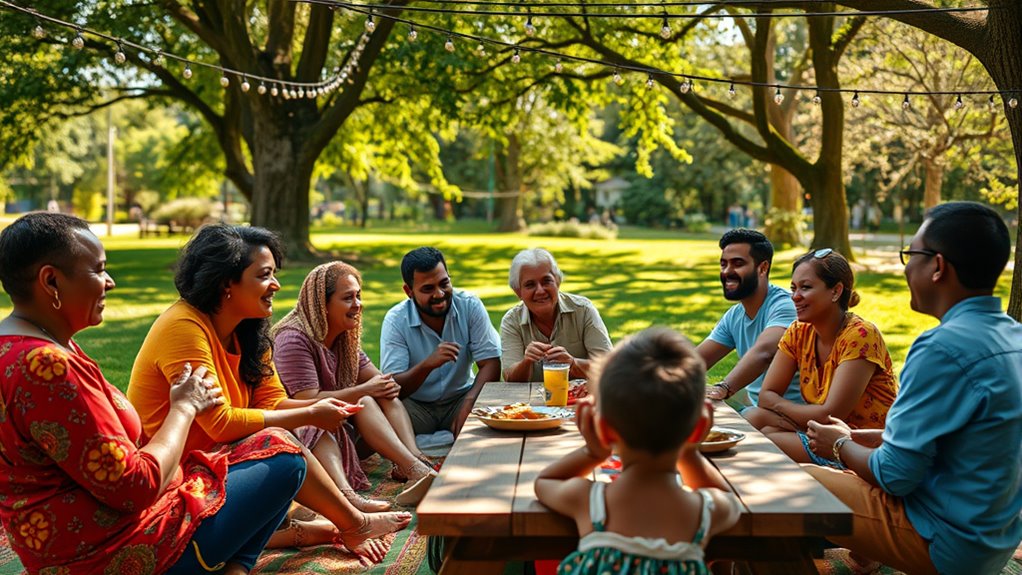
Building strong, lasting relationships requires consistent effort and genuine engagement over time. To do this, you must develop emotional resilience, allowing you to navigate setbacks and disagreements without losing connection. Regular communication, whether through face-to-face visits or simple check-ins, keeps the bond alive. Remember, maintaining trust and understanding is a long-term commitment; it’s about showing you value the relationship through your actions consistently. Be patient and open, acknowledging that relationships evolve and require nurturing. Celebrate shared experiences and listen actively to deepen your connection. By staying committed and resilient, you reinforce the foundation of your support network, ensuring it remains strong and meaningful as circumstances change over time.
Overcoming Challenges in Building a Support Network
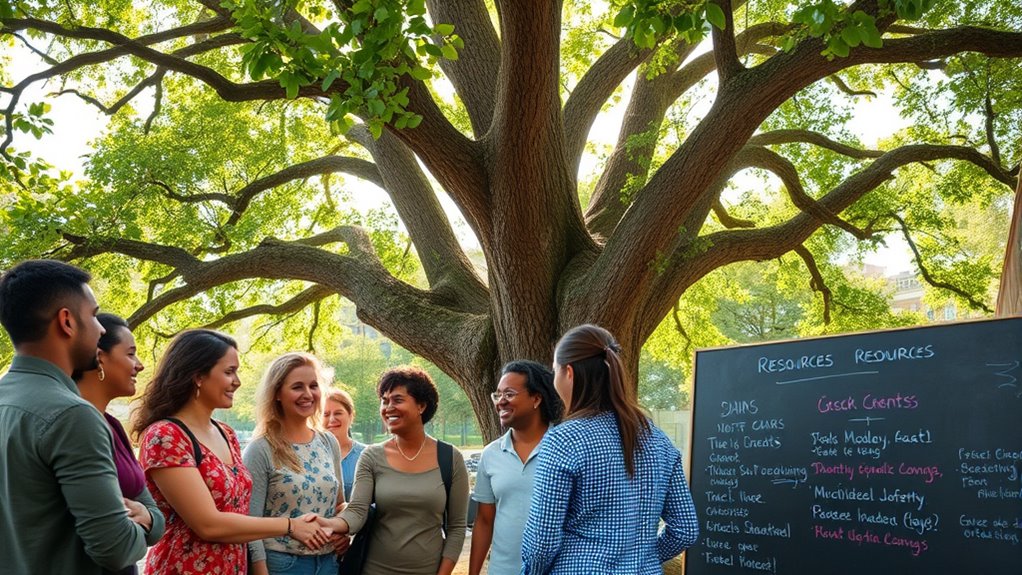
While forming a support network can be rewarding, it often comes with obstacles that test your perseverance. Trust building is vital but can be slow, especially when initial interactions are cautious or guarded. Be patient and consistent; showing up reliably helps others feel comfortable. Cultural barriers may also pose challenges, making it harder to connect on a deeper level. Respect differences, listen actively, and seek common ground to bridge gaps. You might encounter language barriers or unfamiliar social norms, but openness and genuine interest foster understanding. Remember, overcoming these challenges takes time. Focus on small, meaningful interactions to establish trust and gradually expand your network. Persistence, empathy, and patience are your best tools to navigate and break down these obstacles.
Frequently Asked Questions
How Can I Attract Diverse Community Members to Participate?
You can attract diverse community members by engaging in cultural outreach tailored to different backgrounds and interests. Offer inclusive activities that welcome everyone, regardless of age, ethnicity, or ability. Promote these events through various channels like social media, community centers, and local organizations. Show genuine respect for different cultures, listen to community needs, and create a welcoming environment. This approach encourages participation and fosters a truly diverse, supportive network.
What Are Effective Ways to Resolve Conflicts Within the Network?
You can resolve conflicts effectively by applying mediation techniques and practicing active listening. Start by encouraging open dialogue, allowing each person to share their perspective without interruption. Use active listening to show empathy and understand their concerns fully. Facilitate the conversation calmly, helping everyone find common ground. By remaining neutral and respectful, you create a safe space for conflict resolution, strengthening relationships within your network.
How Do I Measure the Success of My Support Network?
You gauge your support network’s success through vibrant community engagement, noticing increased participation and open communication. Observe how effectively resources are utilized, ensuring members feel supported and connected. Track positive changes, such as members reaching out for help and sharing successes. Regular feedback sessions also reveal growth. When your network fosters trust and collaboration, you’ll see tangible signs of achievement, confirming your efforts are truly making a difference in people’s lives.
What Legal Considerations Should I Be Aware of When Sharing Resources?
You should be aware of liability concerns when sharing resources, ensuring you’re protected from legal risks. Use confidentiality agreements to safeguard sensitive information and prevent unintended disclosures. Verify that the resources you’re sharing comply with local laws and licensing requirements. Always document your sharing practices, and consult a legal professional if you’re unsure about any legal obligations. This proactive approach helps you maintain a safe, compliant support network.
How Can Technology Enhance Local Support Networks?
Technology enhances your local support network by enabling digital communication and online collaboration. You can stay connected through messaging apps, social media, and virtual meetings, making it easier to share resources and coordinate efforts. These tools help you respond quickly to community needs, foster stronger relationships, and expand your reach beyond physical boundaries. Embracing technology guarantees your support network remains dynamic, accessible, and effective in addressing local challenges.
Conclusion
Building a strong local support network takes effort, but the impact is worth it. Did you know that communities with active networks see 25% faster recovery after crises? By connecting with neighbors, participating in events, and collaborating with organizations, you create a resilient, caring environment. Keep nurturing these relationships, and you’ll find your community becomes a place where everyone feels supported and empowered to thrive together.