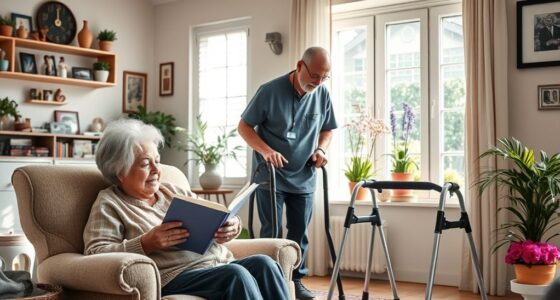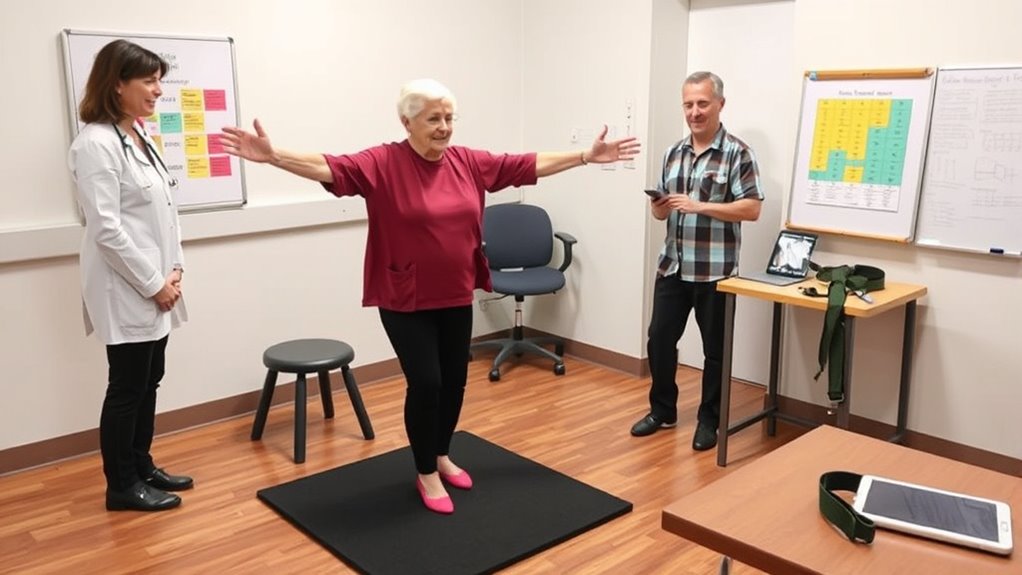

To assess your fall risk simply, start by checking your balance with tests like standing on one leg or walking heel-to-toe, and evaluate your gait with clear, well-lit pathways. Strengthen your ankles and hips through easy exercises, improve flexibility, and make sure your environment is free of clutter, loose rugs, and poor lighting. Use assistive devices correctly, with professional guidance if needed. Keep up with vision and hearing checks, and develop a safety plan—learn more to stay safe and steady.
Key Takeaways
- Conduct simple self-tests like single-leg stands and heel-to-toe walks to identify balance issues.
- Modify the environment by removing clutter, securing rugs, and improving lighting to prevent falls.
- Strengthen muscles and improve flexibility with exercises such as ankle circles and hip stretches.
- Ensure assistive devices fit properly, are well-maintained, and used correctly to support stability.
- Regularly assess vision, hearing, and gait, and seek professional help if fall risks or mobility issues are detected.

Mobility Aids Tool Help Seniors Get Up from Floor/Ground, Adjustable Standing Aids & Supports Equipment to Stand up, Stand Assist Aid for Elderly for Work or Housework- (Height 7-17")
【Design Purpose】 The mobility aids & equipment aim to assist the elderly rising from kneeling better and help…
As an affiliate, we earn on qualifying purchases.
As an affiliate, we earn on qualifying purchases.
Understanding Fall Risks in Everyday Life
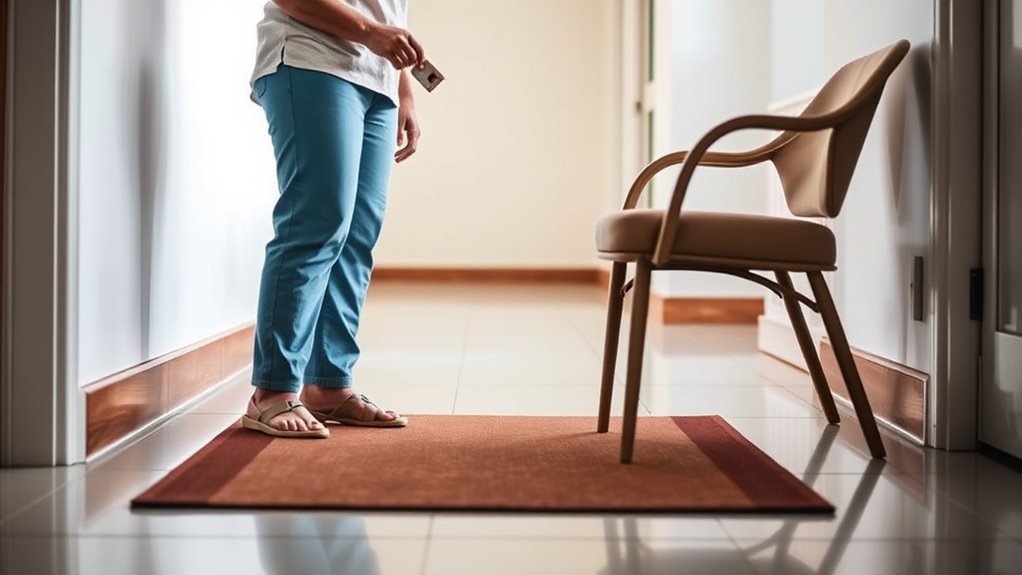
Understanding fall risks in everyday life is essential because many hazards are hidden in routine activities. You might not realize that a simple trip over a loose rug or cluttered pathway can lead to a fall incident. Certain medical devices, like canes or walkers, can also increase risk if not used properly or maintained. For example, a poorly fitted prosthetic or unstable support can cause you to lose balance unexpectedly. Recognizing these dangers helps you stay alert and prevent accidents. Many falls happen indoors or in familiar surroundings, making awareness even more vital. By understanding how everyday environments and equipment influence your stability, you can take steps to minimize hazards and reduce the chance of falling. Additionally, paying attention to home safety features can significantly decrease the likelihood of falls.

BraceAbility Toe Walking Braces for Kids – Patented Pediatric Foot Supports To Prevent Tip Toe Walking, Cerebral Palsy Equipment, Autism, ADHD, Aspergers, Youth Neurological Disorders (S – Pair)
Wide range of sizes available: To choose your size, measure using a flexible measuring tape and refer to…
As an affiliate, we earn on qualifying purchases.
As an affiliate, we earn on qualifying purchases.
Basic Self-Assessment Techniques for Balance

You can quickly check your balance with simple tests like standing on one leg or walking heel-to-toe. These exercises help identify areas where your stability might need improvement. Trying out sit-to-stand movements also provides insight into your overall balance and strength. Incorporating yoga poses such as Tree pose or Warrior III can further enhance your balance and stability.
Standing on One Leg
Have you ever tried standing on one leg to check your balance? This simple test, called the single leg stance, is an effective way to assess your balance challenge. To perform it, stand on one leg with your arms at your sides or on your hips, and hold the position for as long as possible.
- Maintain good posture without leaning or twisting
- Keep your eyes open and focus on a fixed point
- Aim for at least 10 seconds of balance
- Switch legs and repeat for comparison
If you find it difficult to hold the position or notice wobbling, it could indicate a fall risk. Regularly practicing this balance challenge can help improve stability over time.
Heel-to-Toe Walk Test
Curious about how well you can walk in a straight line and maintain your balance? The heel-to-toe walk test is a simple way to assess your gait stability. To perform it, walk in a straight line, placing your heel directly in front of your toes with each step. Focus on smooth, controlled movements without looking down. If you feel unsteady, stumble, or need to pause, it could indicate balance issues. This test highlights your ability to coordinate and balance during gait. Regularly practicing the heel-to-toe walk can help you monitor your gait stability over time. Remember, maintaining good gait stability is vital for fall prevention, especially as you age. If you find this test challenging, consider consulting a healthcare professional for further assessment. Improving your gait stability through exercises and balance training can reduce fall risk and promote overall mobility.
Sit-to-Stand Balance
The sit-to-stand balance test offers a straightforward way to evaluate your ability to move from sitting to standing, which is a key component of daily mobility. To perform this test, sit in a sturdy chair with your feet flat on the floor, then stand up without using your hands and sit back down smoothly. This movement reflects your leg strength and balance. Improving this ability involves simple steps like doing chair exercises regularly to strengthen leg muscles. Incorporate ankle strengthening exercises to enhance stability. Focus on maintaining proper posture during each repetition. Additionally, practicing these movements helps identify balance issues early, allowing you to address them before they become serious. Consistent effort can improve your overall balance and reduce fall risk effectively.

Lift Assist Standing Aid for Elderly & Disabled, Portable Standing Mobility Aid with Non-Slip Grip Handles, Fall Assist Device for Seniors, Bariatric Patients, Nurses & Caregivers (Purple)
【Safe Transfer Assistance】Our Lift Assist Standing Aid provides a a safe way for helping elderly, disabled, or bariatric…
As an affiliate, we earn on qualifying purchases.
As an affiliate, we earn on qualifying purchases.
Evaluating Gait and Mobility Safely at Home
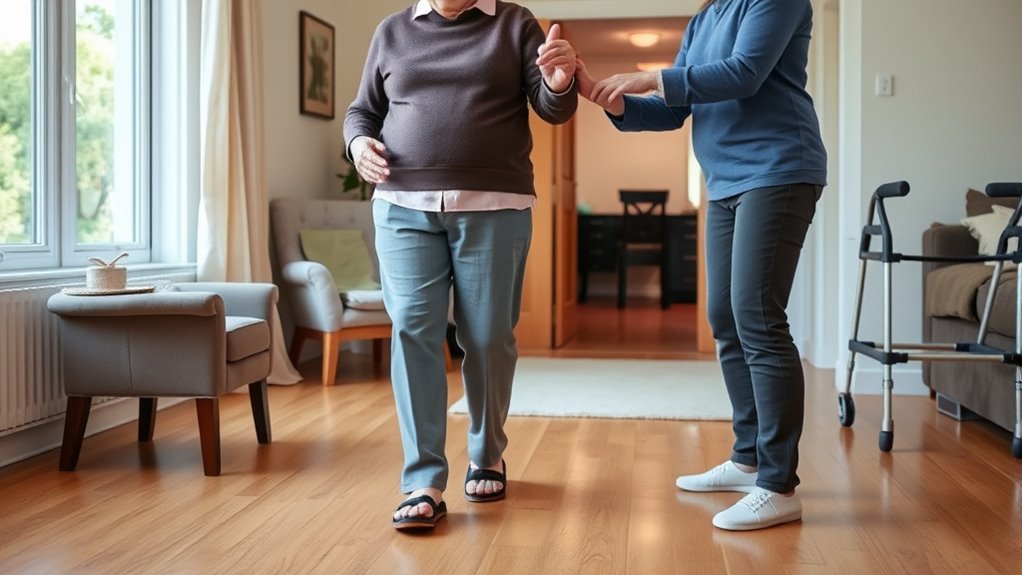
Evaluating gait and mobility at home requires careful planning to guarantee safety. Begin by observing how you walk, paying close attention to ankle mobility and gait symmetry. Limited ankle movement can cause uneven steps, increasing fall risk. Confirm you have a clear, well-lit space free of obstacles. Use sturdy furniture or walls for support if needed, but avoid over-reliance. When walking, focus on maintaining a steady rhythm and balanced stride. If you notice difficulty with ankle movement or noticeable gait asymmetry, consult a healthcare professional before proceeding with further tests. Remember, safety comes first; never push beyond your comfort zone. Regular, cautious assessments help identify mobility issues early, enabling timely interventions to reduce fall risk at home. Incorporating mindful decluttering can also create a safer environment by removing tripping hazards and maintaining clear pathways.

Rug Settlers Rug Pins Pack of 6 Rug Anchors Secure a Rug Over a Rug Anti Slip Pins for mats Runners Plastic Sheets and Throws
Please read the complete description before purchasing it. Please see the pictures and learn how it works before…
As an affiliate, we earn on qualifying purchases.
As an affiliate, we earn on qualifying purchases.
Strength and Flexibility Tests to Prevent Falls
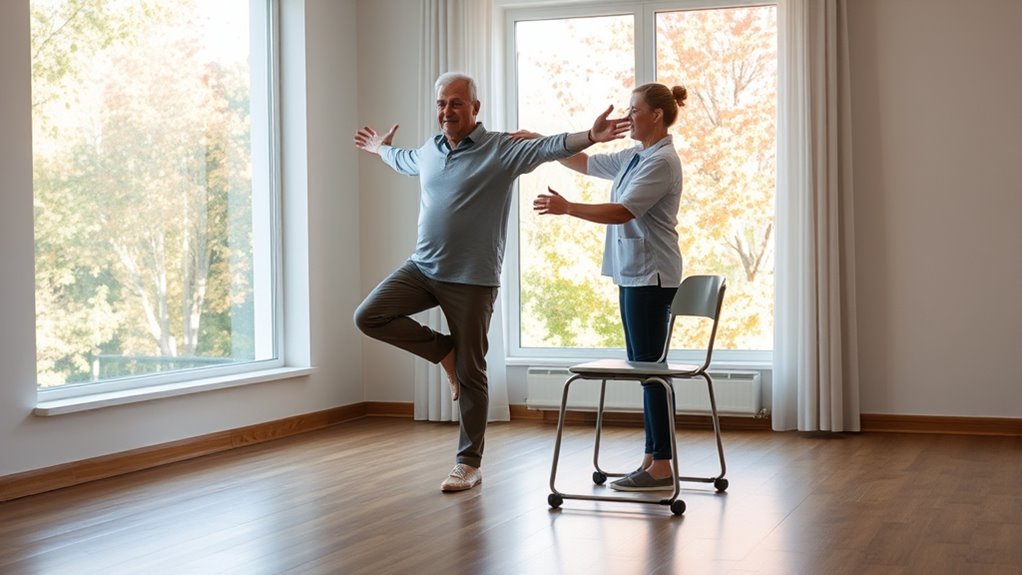
To help prevent falls, incorporating simple strength and flexibility tests into your routine can make a significant difference. These tests focus on key areas like ankle stability and hip flexibility, which are essential for maintaining balance. Engaging in boho-inspired lifestyle habits, such as mindful movement and natural exercises, can also enhance overall balance and well-being. You can:
- Perform ankle circles to assess ankle stability and improve mobility.
- Try gentle hip stretches, such as the seated forward bend, to enhance hip flexibility.
- Test your single-leg stance to check your balance and ankle strength.
- Practice leg lifts to strengthen hip muscles and boost stability.
These exercises are straightforward and can be done daily. Improving ankle stability helps prevent missteps, while increased hip flexibility supports smoother, safer movements, greatly reducing fall risk.
Vision and Hearing Checks That Support Stability
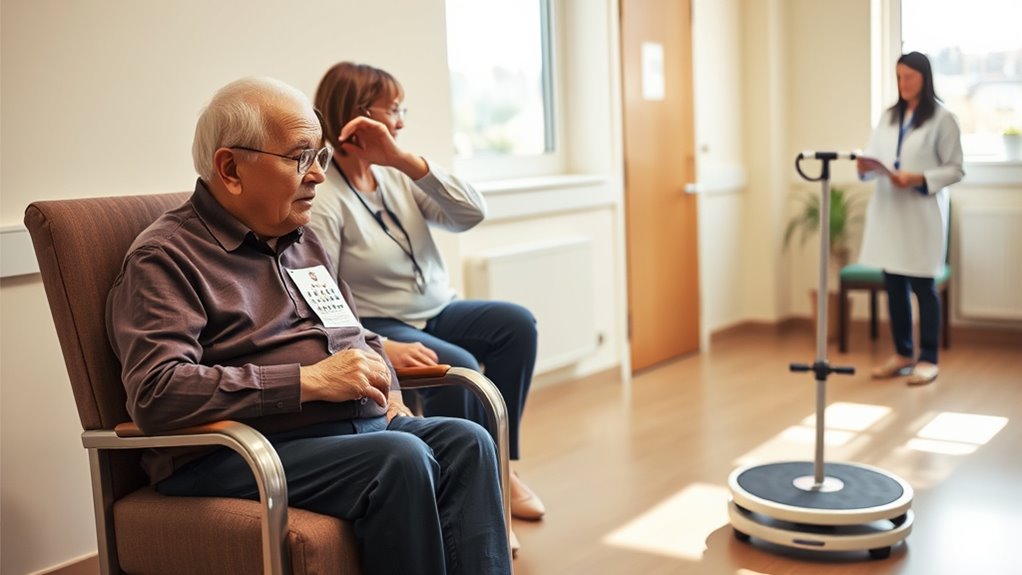
Have you considered how your vision and hearing impact your balance? Poor visual acuity can make it harder to see obstacles or changes in terrain, increasing your fall risk. Regular eye exams help guarantee your prescription is up-to-date, improving stability. Similarly, hearing sensitivity plays an essential role in spatial awareness; when your hearing diminishes, you might miss cues about your environment. Schedule hearing tests to detect any decline early. Addressing vision and hearing issues can considerably enhance your ability to stay steady on your feet. Simple checks like vision screenings and hearing assessments are critical steps in fall prevention. By maintaining healthy senses, you support your overall stability and reduce the chance of falls. Additionally, understanding the importance of digital literacy can help you stay engaged and active in modern environments, further supporting your balance and confidence.
Environmental Adjustments to Minimize Hazards
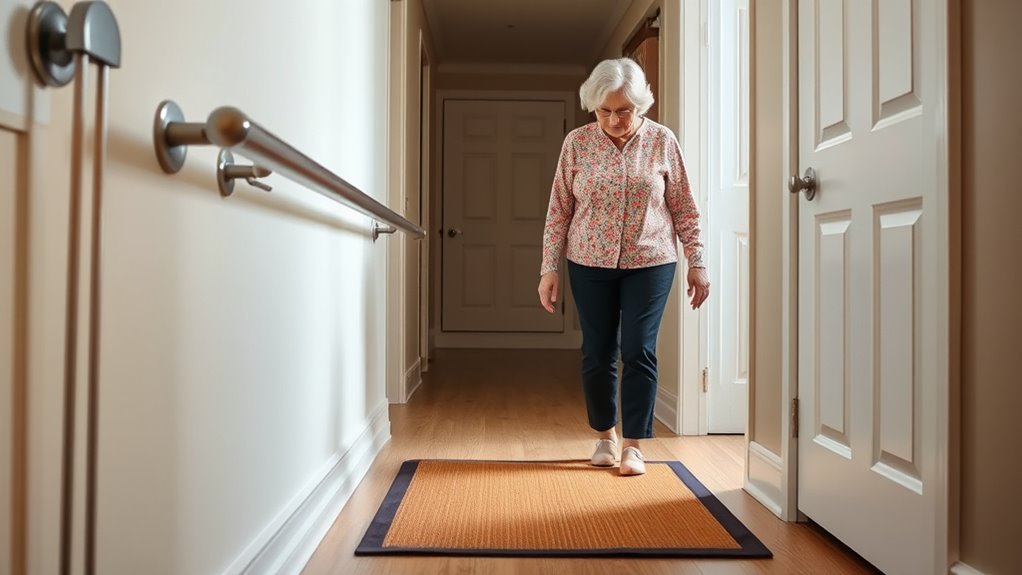
Environmental adjustments are essential for creating a safer living space and reducing fall hazards. By making simple changes, you can markedly lower your risk of falling. Start with lighting improvements—brighten stairways and hallways to improve visibility. Reduce clutter by removing unnecessary items from walkways, preventing tripping hazards. Install grab bars in bathrooms and secure loose rugs to add stability. Keep pathways clear and well-lit, especially at night, to ensure safe navigation. Regularly check for hazards like uneven flooring or sharp edges. Maintaining a clutter-free environment and enhancing lighting can drastically improve safety, helping you move confidently and avoid unnecessary falls. Understanding fall risks and implementing these environmental adjustments are quick, effective steps toward a safer, more secure home.
Simple Exercises to Improve Posture and Strength
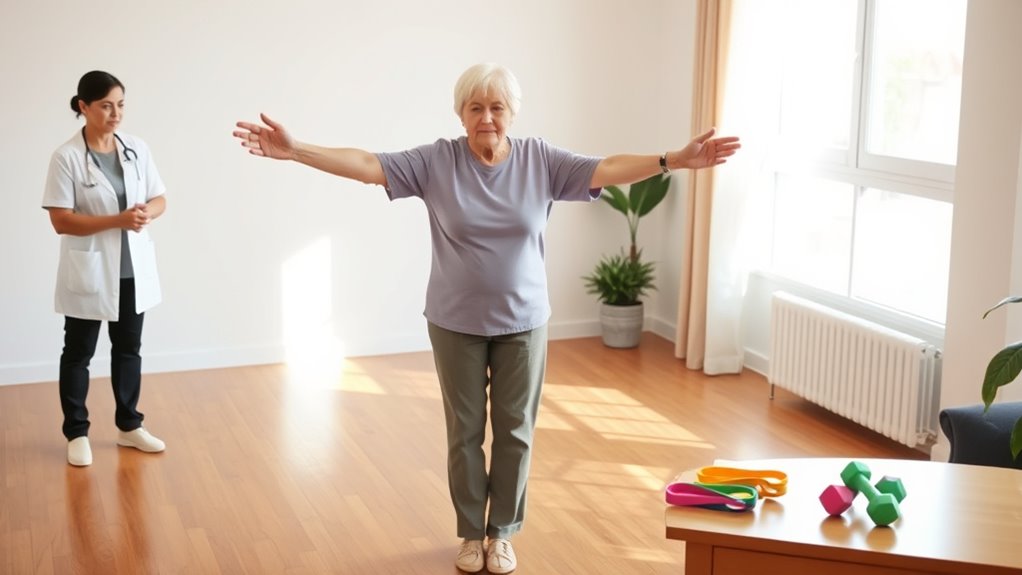
Improving your posture and strengthening your muscles can considerably reduce fall risks by enhancing balance and stability. Simple posture correction exercises, like shoulder rolls and neck stretches, help align your spine and reduce strain. Incorporate muscle strengthening routines such as seated leg lifts, wall push-ups, and calf raises to build core and leg strength. These exercises improve muscle tone and support your joints, making you steadier on your feet. Consistency is key—aim for daily or several times weekly. Focus on controlled movements to avoid injury. Over time, better posture and stronger muscles will boost your confidence and reduce the likelihood of falls. Regular practice of targeted exercises can contribute to advanced techniques that further enhance your stability. Remember, small, regular efforts can lead to significant improvements in your overall stability and safety.
Using Assistive Devices Effectively
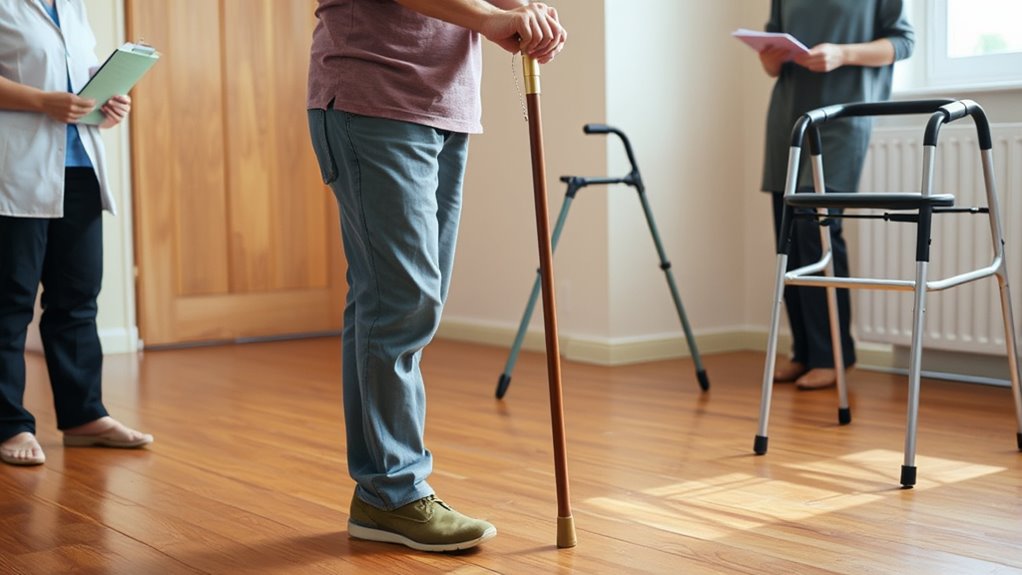
Using assistive devices properly can considerably enhance your balance and reduce fall risks. To get the most benefit, guarantee you’re using your assistive devices correctly. Proper usage involves adjusting the device to fit your height, maintaining good posture, and practicing safe techniques. When using a cane or walker, keep it close to your body for stability and avoid overreaching. Regularly check that the device is in good condition, free of damage or wear. Additionally, consult with a healthcare professional for training on the correct way to use your assistive devices. Remember, proper usage is key to avoiding slips, trips, and falls. Mastering these tips can build your confidence and support your independence safely. Incorporating assistive device training can further improve safety and effectiveness.
When to Seek Professional Fall Risk Evaluation
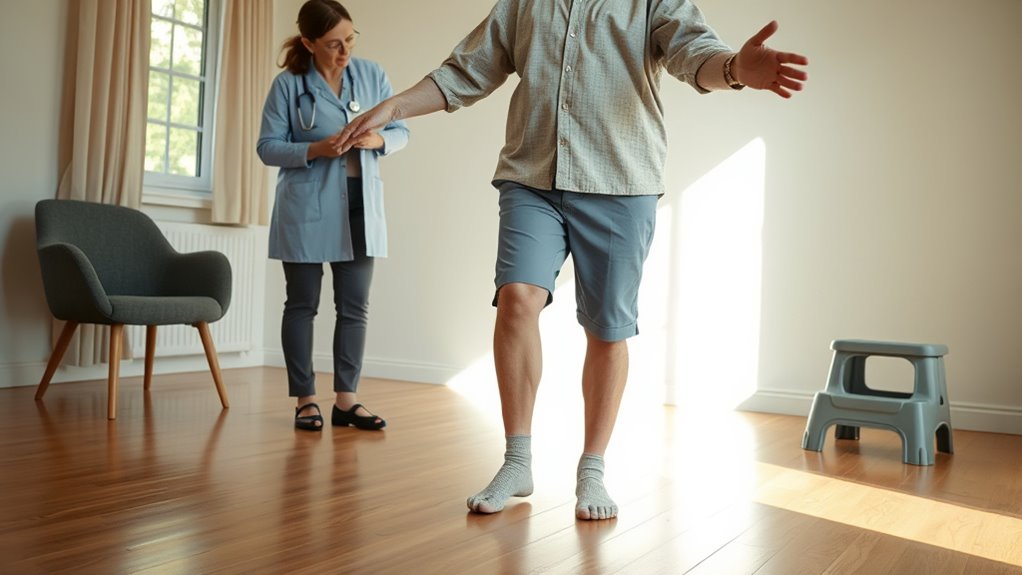
Knowing when to seek a professional fall risk evaluation is essential for maintaining your safety. If you notice increased dizziness, unsteady gait, or frequent falls, it’s time to consult a healthcare provider. Medication side effects can impair balance or cause weakness, making professional assessment critical. Changes in your emotional health, such as depression or anxiety, may also contribute to balance issues or decreased awareness of hazards. If you’re feeling overwhelmed or have concerns about your mental well-being affecting your stability, don’t wait—get evaluated. A professional can identify underlying issues and recommend tailored interventions. Regularly assessing your toilet flushing habits can also help prevent slipping hazards caused by water spills or clogs related to improper disposal. Early assessment helps prevent falls before they happen and ensures you receive the appropriate support to maintain your independence and safety.
Creating a Fall Prevention Plan for Longevity
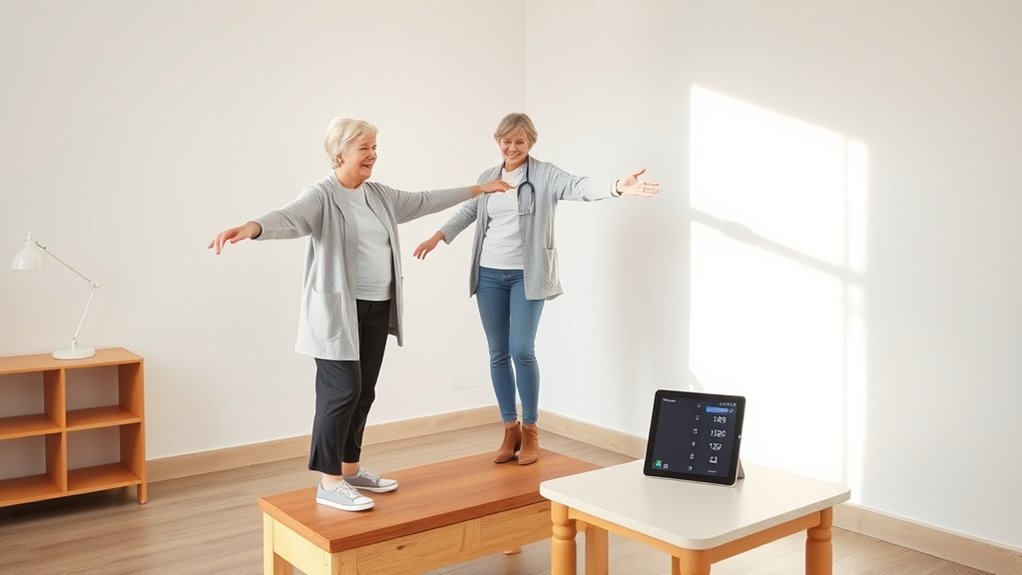
To create a fall prevention plan for longevity, start by identifying your personal risks and addressing any health concerns. Focus on strengthening your balance and mobility through targeted exercises and stay alert to potential hazards in your home. Implement safety measures like securing loose rugs and installing grab bars to reduce your fall risk effectively.
Identify Personal Risks
How can you effectively identify your personal risks for falling? Start by conducting hazard identification around your home and daily routine. Look for loose rugs, poor lighting, or clutter that could cause trips. Review your medications with your healthcare provider, as some drugs can increase dizziness or balance issues. Understand your health conditions that may contribute to fall risks, like arthritis or vision problems. Keep track of previous falls or near misses, which highlight areas needing attention. Regular check-ins with your doctor ensure your medications are optimized and your health status is up-to-date. Being aware of these personal risks allows you to address the factors that could lead to falls and create a more thorough prevention plan.
Strengthen Balance and Mobility
Building strength, improving balance, and enhancing mobility are essential steps in creating a fall prevention plan that supports longevity. A gait analysis helps identify irregularities in your walking pattern, guiding targeted muscle strengthening exercises. Focus on exercises like leg lifts, balance drills, and core work to boost stability. Incorporating these strategies reduces your risk of falls and improves overall function. Remember, consistent practice is key to progress. Use the following table to visualize some effective activities:
| Exercise | Focus Area | Benefits |
|---|---|---|
| Heel-to-toe walk | Balance | Improves gait stability |
| Leg lifts | Muscle strengthening | Builds leg strength |
| Standing on one leg | Balance and mobility | Enhances proprioception |
| Chair squats | Muscle strengthening | Strengthens thighs and hips |
Implement Home Safety Measures
Creating a safe home environment is a crucial step in reducing fall risks and supporting long-term health. You can achieve this through effective home modification and emergency preparedness. Start by removing tripping hazards like loose rugs and clutter. Install grab bars in bathrooms and handrails on stairs to provide extra support. Guarantee good lighting throughout your home, especially in hallways and staircases. Keep emergency supplies accessible and create a plan for quick response if falls occur. Regularly review and adjust your safety measures as needed. Implementing these strategies helps prevent falls and prepares you for unexpected situations. By making these simple changes, you create a safer living space that promotes independence and longevity.
Frequently Asked Questions
How Often Should I Perform Fall Risk Assessments at Home?
You should perform fall risk assessments at home regularly, ideally every three to six months, to maintain safety. Consistent risk monitoring helps identify new hazards or changes in your mobility. Keep an eye on home safety by checking for loose rugs, clutter, or poor lighting. Regular assessments allow you to address issues promptly, reducing fall risks and keeping your environment safe and secure.
Can Dietary Changes Improve My Balance and Reduce Fall Risk?
Enhancing your overall well-being can subtly bolster your balance and lower fall risks. By focusing on nutrition improvements, you support your body’s strength and coordination. Incorporating foods rich in vitamins and minerals, along with supplement benefits, can enhance muscle function and stability. Small dietary adjustments, such as increasing calcium or vitamin D intake, may lead to noticeable improvements in your balance, helping you stay steady and confident in your daily activities.
Are There Specific Exercises Tailored for Seniors With Arthritis?
Yes, there are specific arthritis exercises designed to improve your joint flexibility and strength, which can enhance your senior fitness. Gentle activities like water aerobics, chair yoga, and stretching help reduce stiffness and pain. Always start with low-impact exercises and consult with your healthcare provider to tailor a safe routine. Regularly doing arthritis exercises can boost your balance, decrease fall risk, and support your overall mobility.
How Do Medications Influence My Risk of Falling?
Ever wonder if your medications increase your fall risk? They can, through medication side effects like dizziness, drowsiness, or balance issues. Drug interactions may also make you more prone to falls. It’s essential to discuss these concerns with your healthcare provider, who can adjust dosages or suggest alternatives. Staying informed and vigilant helps you minimize risks and stay safe while managing your health effectively.
What Are the Signs That Indicate I Need Professional Fall Prevention Support?
You need professional fall prevention support if you notice frequent loss of balance, unsteady gait, or if you’ve recently had a fall. Also, if you’re unsure about your home safety or haven’t had a vision check recently, it’s time to seek help. Addressing these signs can prevent future falls, so consider consulting a specialist who can evaluate your needs and recommend safety improvements.
Conclusion
By mastering simple self-assessments and staying proactive, you can prevent falls and preserve your independence. Focus on fixing flaws with fun, practical fixes, and foster a fearless, fortified foundation. Remember, regular routines, responsible checks, and reliable support systems create a safer, steadier stride. Stay vigilant, stay vigilant, and take charge of your stability—because a confident, cautious approach keeps you moving safely through every season of life.