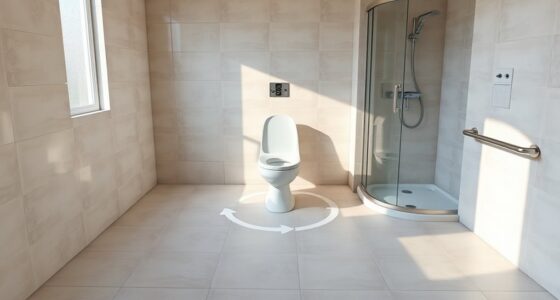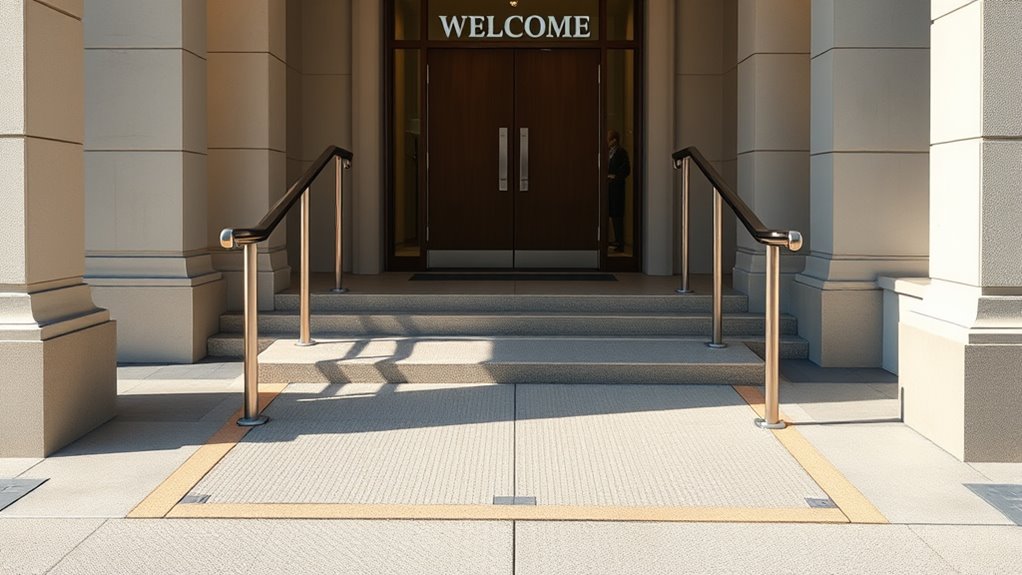

To make your entryway accessible, guarantee slopes are gentle with a maximum 1:12 ratio, and thresholds are no more than 1/2 inch high. Install proper landings at least 36 inches deep and wide enough for your door and mobility devices, ideally matching or exceeding door widths of 32 inches. Use slip-resistant surfaces and maintain clean, even pathways. If you want tips on meeting safety standards and blending functionality with style, keep exploring these essential guidelines.
Key Takeaways
- Entry slopes should be gentle, with a maximum 1:12 ratio, to ensure easy access and prevent obstacles.
- Landings must be at least 36 inches deep and level, providing safe transition spaces.
- Doorways should have a minimum clear width of 32 inches, with thresholds no higher than 1/2 inch.
- Surface materials should be slip-resistant and durable, especially in wet or icy conditions.
- Regular maintenance of pathways, landings, and widths ensures ongoing safety and compliance with accessibility standards.

ELEVII – Angled Entry Mat, Slip-Resistant Rubber Threshold Ramp for Doorways, Indoor & Outdoor Door Ramp for Wheelchair Access, Safer Home Floor Mats for Smooth Transition (Black, 1.25-in)
- Smooth doorway transitions: Creates seamless, safe thresholds
- Durable recycled rubber: Eco-friendly, heavy-duty, weather-resistant
- Indoor and outdoor use: Versatile for high-traffic areas
As an affiliate, we earn on qualifying purchases.
As an affiliate, we earn on qualifying purchases.
Understanding Slope Requirements for Accessible Entryways

Have you ever wondered what makes an entryway accessible for everyone? One key factor is understanding slope requirements. A gentle incline ensures easy access without obstacles. Keep the threshold height low—ideally no more than 1/2 inch for exterior doors and 1/4 inch for interior doors—to prevent tripping hazards. When considering the door swing, ensure it doesn’t obstruct the pathway or require excessive force to open. A wider doorway, at least 32 inches clear when the door is open, helps accommodate wheelchairs and mobility aids. Proper slope and threshold height work together to create a smooth transition from outside to inside. Additionally, ensuring compliance with accessibility standards can help identify specific measurements and requirements. Avoid steep inclines or high thresholds that can make entry difficult. By paying attention to these details, you make your entryway safer and more accessible for everyone.
Designing Proper Landings for Safety and Comfort
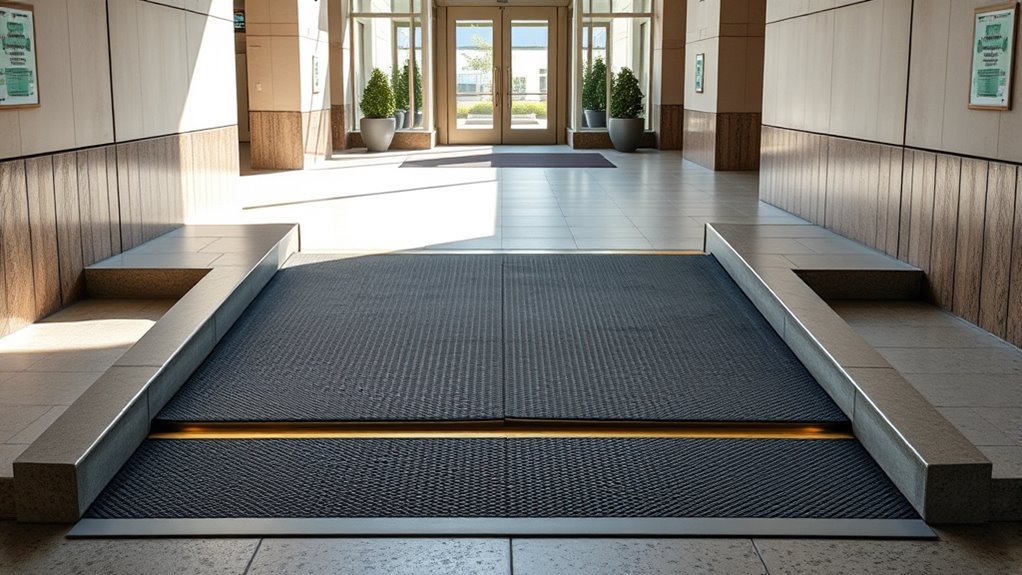
When designing landings, you need to ensure optimal dimensions to consider sufficient space for safe movement. Choosing the right surface material helps prevent slips and makes the area more comfortable to use. Additionally, incorporating safety and accessibility features, like handrails and tactile indicators, enhances overall safety and usability. To ensure compliance with safety standards, it’s important to determine proper landings dimensions based on local building codes and accessibility guidelines.
Optimal Landing Dimensions
To guarantee safety and comfort, designing landings with ideal dimensions is essential. Proper landings ensure smooth transitions between slope and door, reducing trip hazards. The landing should be at least 36 inches deep and as wide as the door opening, accommodating thresholds and door dimensions comfortably. This space allows users to pause safely and prepare for entry or exit. Use this table to visualize optimal sizes:
| Aspect | Recommended Measurement | Purpose |
|---|---|---|
| Depth of landing | Minimum 36 inches | Space for safe footing and stability |
| Width of landing | Equal or greater than door width | Ease of access and maneuvering |
| Threshold thresholds | Max ½ inch height | Minimize trip risk and door clearance |
Designing with these dimensions ensures safety, accessibility, and a welcoming entryway. Properly considering accessibility features can also enhance overall safety and usability for all users.
Surface Material Selection
Choosing the right surface material for landings directly impacts safety and comfort. You want materials that provide good traction, especially in wet or icy conditions. Decorative finishes can enhance aesthetics while maintaining slip resistance. For example, textured concrete or stamped patterns add visual appeal without sacrificing safety. Seasonal surface treatments, like applying anti-slip coatings or sealants, help manage weather-related hazards and prolong the lifespan of your landing surface. Consider materials that are durable and easy to maintain, such as brick, textured concrete, or stone. These options resist wear and weather effects, ensuring reliable safety year-round. Proper surface material selection not only improves accessibility but also creates a welcoming environment that encourages confidence in movement. Selecting appropriate surface materials not only improves accessibility but also creates a welcoming environment that encourages confidence in movement. Proper choices support both safety and visual harmony for your entryway.
Safety and Accessibility Features
Creating safe and accessible landings requires careful attention to design details that support ease of use and prevent accidents. You should guarantee the landing surface is level, slip-resistant, and wide enough to accommodate mobility devices comfortably. Incorporate safety features like handrails and proper lighting to enhance security. The entryway aesthetics matter too; a well-designed landing that blends seamlessly with landscaping integration adds visual appeal while maintaining safety. Avoid clutter and keep pathways clear for smooth navigation. Properly placed landings reduce the risk of falls and make entry and exit safer for everyone. Additionally, considering remote hackathons can provide opportunities for collaboration on innovative safety solutions in accessible design. By focusing on these safety and accessibility features, you create an inviting, functional entryway that prioritizes comfort and safety for all users.
Determining the Appropriate Widths for Accessibility
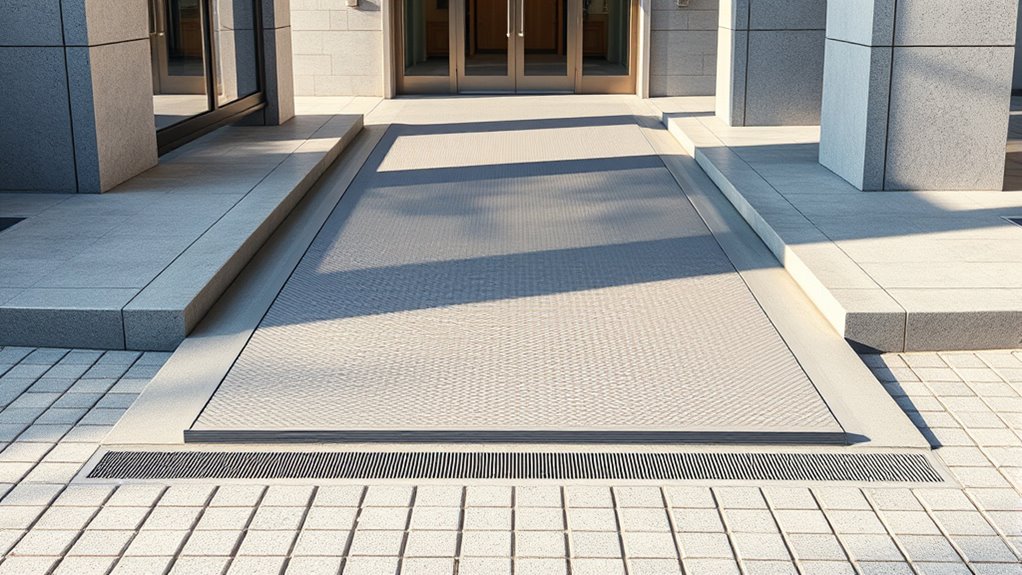
Ensuring the right width for accessible entryways is essential for safe and comfortable passage. Proper door width allows easy movement for wheelchairs and mobility devices, while sufficient threshold clearance prevents tripping hazards. To determine the ideal widths, consider these key points:
Accessible entryways require proper width and threshold clearance for safe, easy passage.
- Maintain a minimum door width of 32 inches for standard accessibility.
- Ensure threshold clearance is no more than 1/2 inch for smooth entry.
- Allow at least 36 inches of clear width inside the entryway for maneuverability.
- Account for additional space if using automatic doors or heavy hardware.
- Remember that Best Beaches often feature accessible pathways to accommodate visitors with diverse mobility needs.
Compliance With ADA and Other Accessibility Standards

Ensuring your entryways meet ADA and other accessibility standards is essential for legal compliance and safety. You need to follow specific design specifications, understand applicable codes, and conduct regular inspections. Staying informed helps you avoid penalties and creates a welcoming environment for all visitors. Regularly reviewing beginners guides on accessibility can keep you updated on best practices and emerging requirements.
Design Specifications for Accessibility
To make entryways accessible, they must meet specific design standards set by the ADA and other accessibility regulations. These standards ensure safe, functional access for everyone. Key considerations include appropriate door hardware, like lever handles, which are easier to operate. Lighting requirements emphasize bright, even illumination to prevent hazards and improve visibility. Clear width measurements ensure mobility devices can pass comfortably. Additionally, the placement of switches and controls should be reachable and easy to operate. Proper signage and tactile indicators help users with visual impairments navigate the space. By adhering to these specifications, you create an entryway that’s safe, compliant, and welcoming for all users. Ensuring that the doorway dimensions are adequate is crucial for accommodating a variety of mobility aids effectively.
Legal Requirements and Codes
Adhering to legal requirements and building codes is fundamental to creating accessible entryways. The ADA and local codes specify minimum standards for slope, width, and landings, ensuring safety and usability. While compliance is essential, you can also consider architectural aesthetics to enhance visual appeal without sacrificing function. Balancing these aspects involves understanding the following standards:
| Aspect | Requirement | Consideration |
|---|---|---|
| Slope | Max 1:12 ratio for ramps | Maintain aesthetic harmony |
| Width | Minimum 36 inches clear opening | Design for visual appeal |
| Landings | Minimum 60 inches in length | Seamless integration with surroundings |
Additionally, incorporating universal design principles can help create entryways that are both functional and visually pleasing for all users.
Inspection and Compliance Checks
Have you ever wondered how to confirm that your entryway meets all accessibility standards? Regular inspection and compliance checks are essential to make sure your entryway adheres to ADA and other accessibility guidelines. You should verify that door hardware is easy to operate with one hand and doesn’t require tight grasping or twisting. Check that lighting fixtures provide adequate illumination without creating glare, improving safety for all users. Measure the slope, landings, and widths regularly to prevent deviations. Additionally, ensure that pathways remain clear of obstacles and that signage is visible and understandable. Conducting these checks helps avoid violations and creates a welcoming environment. Regular assessments keep your entryway compliant and accessible, ensuring safety and convenience for everyone. Incorporating proper evaluation techniques can further enhance the effectiveness of your compliance efforts.
Materials and Surface Considerations for Entryway Accessibility
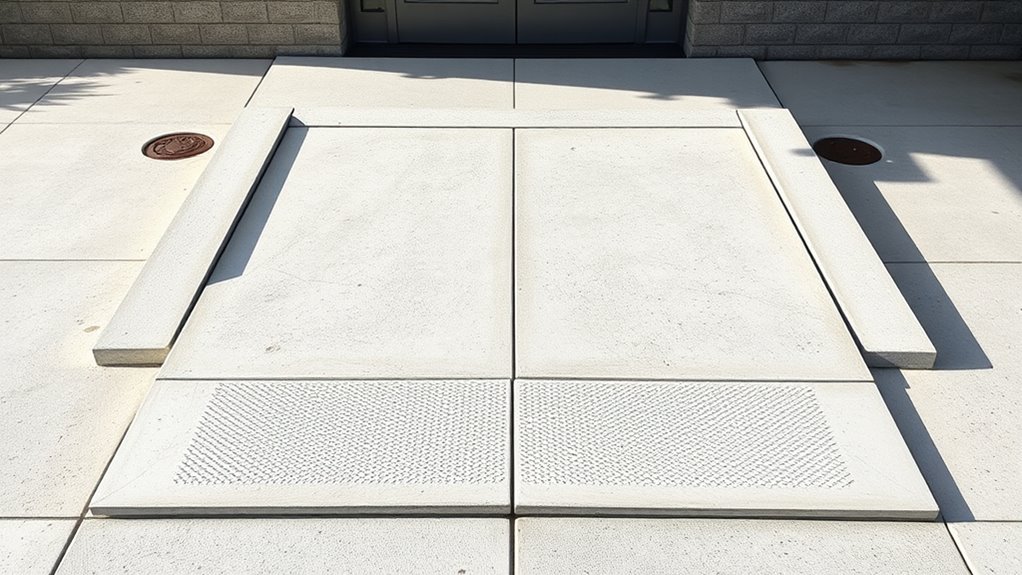
Choosing the right materials and surface finishes is essential for creating accessible entryways. You want surfaces that provide good traction, so slip-resistant materials like textured concrete, specialized coatings, or rubber mats work well. Smooth, hard surfaces such as polished stone or ceramic tiles may look attractive but can become slippery when wet, so consider adding decorative accents like tactile patterns or contrasting colors for aesthetic enhancements and safety. When selecting materials, think about durability and ease of maintenance, ensuring surfaces stay safe over time. Avoid uneven or loose materials that could cause tripping. Incorporate visual cues through color contrasts or textured finishes to help those with visual impairments navigate confidently. Balancing safety, durability, and visual appeal is key to creating an inviting, accessible entryway.
Common Challenges and How to Overcome Them

Designing accessible entryways often presents unique challenges, from uneven surfaces to weather-related hazards. Uneven ground can cause trips, while poor lighting makes navigation difficult, especially at night. Decorative arches may look beautiful but can create obstacles if not properly integrated. Weather conditions, like ice or rain, increase slip risks, and inadequate aesthetic lighting can diminish safety. To overcome these issues, consider leveling surfaces and installing slip-resistant mats. Incorporate aesthetic lighting to improve visibility without sacrificing style. Use ramps with gentle slopes and landings to ease access, and ensure decorative arches don’t obstruct pathways. Regular maintenance, such as clearing debris and applying anti-slip coatings, keeps entryways safe. Addressing these common challenges guarantees a welcoming, accessible entrance for everyone.
Best Practices for Maintaining Accessible Entryways
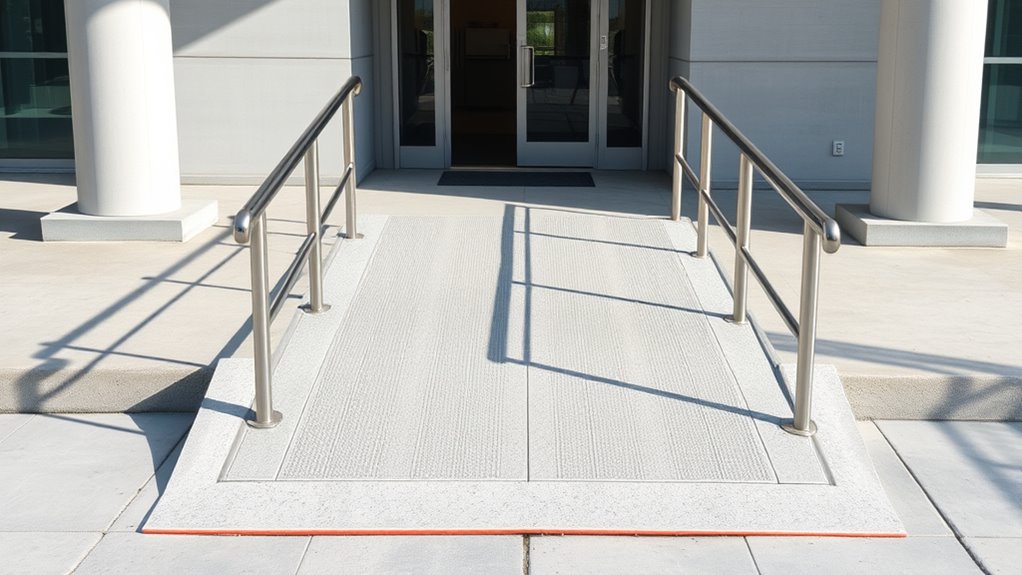
Maintaining accessible entryways requires ongoing attention to detail to guarantee safety and usability. Regularly inspect slopes, landings, and widths to ensure they meet standards. Keep pathways clear of debris and obstacles, which enhances landscaping aesthetics and safety. Incorporate decorative elements like planters or lighting to improve visual appeal without compromising accessibility.
| Action | Focus Area | Tips |
|---|---|---|
| Routine inspections | Slope and landings | Check for cracks or uneven surfaces |
| Clear pathways | Walkway width | Remove clutter, ensure free passage |
| Enhance aesthetics | Landscaping & decor | Use low-maintenance, accessible decor |
Consistent upkeep guarantees your entryway remains both functional and inviting, blending safety with attractive design.
Frequently Asked Questions
How Do Slopes Impact Wheelchair Stability on Entryways?
Slopes directly impact wheelchair safety by affecting stability; steep inclines can cause wheels to slip or tip, risking falls. You need to follow slope regulations to guarantee safe entryways and prevent accidents. When maneuvering slopes, always check for proper gradient, use handrails if available, and guarantee the surface is non-slip. Staying within recommended slope limits helps maintain wheelchair stability and keeps you safe when entering or exiting buildings.
What Are the Cost Considerations for Accessible Entryway Modifications?
They say, “You get what you pay for,” and when considering accessible entryway modifications, budget planning is essential. You should conduct a thorough cost analysis to understand expenses for ramps, landings, and wider doorways. Costs vary based on materials and complexity. Planning ahead helps you allocate funds wisely, ensuring accessibility improvements don’t strain your finances while meeting legal requirements and promoting inclusivity.
Are There Specific Lighting Requirements for Accessible Entryways?
You should guarantee your accessible entryway meets lighting standards that provide adequate visibility, especially for individuals with visual impairments. Emergency lighting is also essential to guide people safely during power outages or emergencies. Check local building codes for specific requirements, which often mandate a certain level of illumination and the presence of emergency lighting at entry points. Proper lighting enhances safety and compliance, making your entryway accessible to everyone.
How Do Weather Conditions Affect Slope and Surface Choices?
Weather conditions directly impact your choice of slope and surface. You should consider weather adaptations like adding non-slip surfaces during rainy seasons or icy conditions to prevent falls. Durable surfaces are essential to withstand snow, rain, and temperature fluctuations, ensuring safety year-round. Regularly maintain and adapt entryway surfaces to handle weather changes, which helps prevent damage and keeps the entryway accessible and safe for everyone.
Can Portable Ramps Be Compliant With Accessibility Standards?
Portable ramps can be compliant with accessibility standards, serving as reliable temporary solutions. Think of them as the Swiss Army knives of entryways—versatile and handy when needed. You need to guarantee they meet standards like proper slope, width, and surface traction. When correctly installed and used, these portable options provide safe, accessible entry, bridging gaps in permanent infrastructure and making spaces welcoming for everyone.
Conclusion
Just as a well-tended garden welcomes all who enter, a thoughtfully designed accessible entryway invites everyone in with open arms. By understanding slope, landings, widths, and materials, you create a space where safety and comfort flourish. Remember, adherence to standards guarantees your entryway is a beacon of inclusivity—like a lighthouse guiding ships safely home. With these best practices, you turn your entry into a welcoming gateway that truly serves everyone.