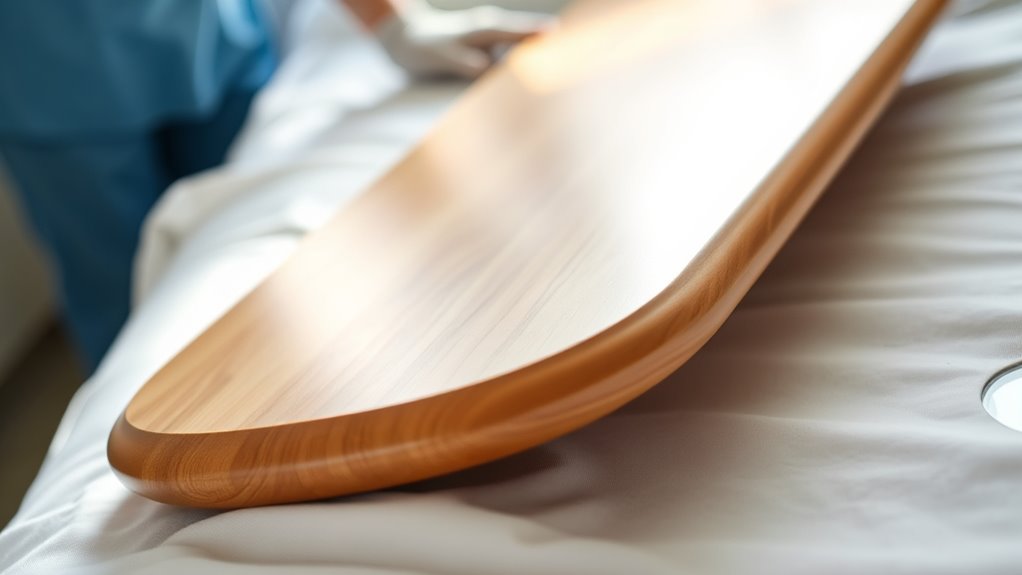

A transfer board can bridge the gap between a wheelchair and a bed, toilet, car, or other nearby surface, but the right choice depends on fit, grip, and how the board will be used. My best overall pick is the DMI Heavy-Duty Wood Transfer Board, 30 × 8 inches, which balances a stated 440-pound capacity, cutout handles, and a substantial wood build. For a shorter board, the Vive 24-inch model is a more compact option, while the Vie Triomphe swivel board suits shoppers seeking a rotating design and a higher stated capacity. The main tradeoffs are wood versus plastic, board length versus maneuverability, and a simple sliding surface versus added features. Read on for the full comparison, selection criteria, and guidance on matching a board to the transfer setup.

Turn quiet afternoons into listening time
- Thousands of audiobooks, podcasts and originals
- Listen on your phone, tablet or Echo — also offline
- Cancel anytime
Complete the kit


Key Takeaways
- The 30 × 8-inch DMI wood board is the strongest all-around fit in this lineup because it combines a 440-pound stated capacity with cutout handles and a familiar, simple design.
- Board length changes placement options: the 24-inch Vive is easier to manage in tighter spaces, while the 32 × 10-inch DMI offers more surface area but needs room to position and store.
- Wood models dominate the straightforward choices, while the blue YHK boards and the sliding-surface option offer alternatives for shoppers who want a different material or surface style.
- Capacity figures are not the whole safety picture: the 500-pound wooden model and 460-pound Vie Triomphe lead on stated capacity, but fit, stable support, and the user’s transfer ability still matter.
- The Vie Triomphe 360° swivel board is the most specialized pick. Its rotating design may suit a particular transfer path, but it is less of a simple all-purpose substitute for a flat board.



| transfer board | Material | Dimensions | Weight capacity | Handles |
|---|---|---|---|---|
| DMI Transfer Board and Slide B | Scotch pine | 30 x 8 x 1 inches | 440 pounds | Two rounded, sanded, sealed cut-out handles |
| DMI Wooden Transfer Board | Scotch pine | 30 x 8 x 0.75 inches | 440 pounds | — |
| Wood Slide Transfer Board with | Wood | 24 x 8 x 0.75 inches | Up to 500 pounds | Two cutout handles |
| Wooden Transfer Board with Han | Hardwood | 30 x 8 x 0.7 inches | — | Handles at both ends |
| Vive Transfer Board | Wood | 24 x 8 x 0.75 inches | — | Two cutout handholds |
| YHK Sliding Transfer Board for | Plasticized steel | — | 440 lbs | — |
| YHK Transfer Board and Slide B | ABS plastic | 30 × 7.9 × 0.55 in | 440 lbs | — |
| DMI Heavy-Duty Wood Transfer B | Scotch pine | 32 × 10 × 1 in | 735 lbs | Two cutout handles |
| Wheelchair Transfer Board with | High-density ABS polymer | 29.5 × 8 × 0.5 in | Up to 440 lbs | Three built-in handles |
| DMI Heavy-Duty Wood Transfer a | Scotch pine | 30 × 8 × 1 in | 440 lbs | — |
| Wooden Slide Transfer Board wi | Hardwood | — | — | — |
| Wooden Transfer Board | Hardwood | — | — | — |
| Transfer Board and Slide Board | — | — | — | Three ergonomic handles |
| Vie Triomphe 360° Swivel Trans | Thickened plastic | 35.4 x 12.6 in | 460 lb | Dual integrated cutout handles |
More Details on Our Top Picks
DMI Transfer Board and Slide Board – Heavy-Duty Wood, FSA Eligible, 440 lb Capacity, Cut-out Handles, 30×8×1 in
I’d put this DMI board first for buyers seeking a longer, sturdy wood option with two handholds. Its 30-inch length gives more placement flexibility than the 24-inch Wood Slide Transfer Board and Vive Transfer Board, which may help when the gap between surfaces is wider. The sealed Scotch pine surface and tapered ends are intended to support sliding and positioning, while two rounded cut-out handles give a caregiver more ways to grip and move the board. Its listed 440-pound capacity is clearly specified, unlike the hardwood board from B07XNQLNMZ, whose supplied data gives no capacity. The tradeoff is that wood may be heavier to handle than plastic, and moisture can reduce slip resistance. I’d choose it for versatile home transfers, provided the user and caregiver can follow proper transfer technique.
Pros:- Two rounded cut-out handles provide grip options for positioning.
- 30-inch length offers more reach than the 24-inch options in this group.
- Sealed, smooth wood surface and tapered ends support sliding and placement.
- Specified 440-pound capacity and FSA eligibility.
Cons:- Wood can be heavier to maneuver than plastic alternatives.
- Moisture may reduce slip resistance; the user should be dry for transfers.
Best for: Households seeking a 30-inch wooden board with two handles and a stated 440-pound capacity for assisted transfers between common seating surfaces.
Not ideal for: People who need a lightweight plastic board, or users whose transfer setup is frequently wet, since moisture can reduce the surface’s slip resistance.
- Material:Scotch pine
- Dimensions:30 x 8 x 1 inches
- Weight capacity:440 pounds
- Handles:Two rounded, sanded, sealed cut-out handles
- Finish:Smooth, sealed surface
- End design:Tapered ends
- FSA eligible:Yes
Our verdict“Choose this DMI if you want a longer wooden board with two handles and a clearly stated 440-pound capacity.”
DMI Wooden Transfer Board, 30 x 8 x 0.75 Inches, 440 lb Capacity
This DMI is a straightforward choice for buyers who want a 30-inch board but prefer a single handhold rather than the two on the B000WNJU1A model. Its 0.75-inch thickness is slimmer than that model’s 1-inch profile, while the sealed, sanded Scotch pine finish and tapered ends support positioning across a wheelchair, bed, chair, car, or commode. The listed 440-pound capacity matches the thicker DMI, so the main distinction is handling and profile—not a higher stated load limit. Compared with the shorter Vive Transfer Board, this board offers more length for setups with a wider gap, but it lacks a second cutout handle. Proper training is specified for safe use, and a dry user is needed to help maintain friction control. I’d skip it if extra handle options are a priority.
Pros:- 30-inch length suits a range of transfer points, including beds and cars.
- Sanded, sealed Scotch pine surface is designed to reduce friction.
- Tapered ends aid positioning at the transfer surfaces.
- Specified 440-pound capacity and FSA eligibility.
Cons:- One cutout handle offers fewer grip options than the two-handle B000WNJU1A.
- Safe use requires proper training and a dry user.
Best for: Users and caregivers who want a 30-inch wooden transfer board with a slimmer profile and one cutout handle for familiar transfer routines.
Not ideal for: Buyers who want two handles for varied grip and positioning, or anyone expecting a board that can be used safely without transfer training.
- Material:Scotch pine
- Dimensions:30 x 8 x 0.75 inches
- Weight capacity:440 pounds
- Handle:One rounded cutout handle
- Finish:Sanded, sealed, and coated
- End design:Tapered ends
- FSA eligible:Yes
Our verdict“Pick this model for a slimmer 30-inch DMI board if one handle is enough for your transfer setup.”
Wood Slide Transfer Board with Two Cutout Handles, 24 × 8 × 0.75 in
Among the listed boards, this model has the highest stated capacity at 500 pounds, which may make it a better fit for buyers who need that specific rating rather than the 440-pound limit listed for the DMI and Vive models. It is also 24 inches long, matching the shorter Vive board but falling well short of the 30-inch DMI options. That compact size may suit tighter transfer layouts, yet it can leave too little reach where the surfaces sit farther apart. Two sanded cutout handles help with gripping and positioning, and the sealed finish is intended to reduce scratching. The description includes indoor and outdoor use, but this is still a board for people able to use one with assistance—not a substitute for transfer training or caregiver judgment. I’d compare the required reach carefully before choosing it.
Pros:- Stated capacity of up to 500 pounds, higher than the other boards reviewed here.
- Two cutout handles support gripping and positioning.
- Sealed, smooth finish is designed to reduce scratching.
- Specified for indoor or outdoor use.
Cons:- 24-inch length may not span every transfer setup.
- Designed for assisted use by people able to use a transfer board, not for every mobility situation.
Best for: Buyers who specifically need a stated 500-pound capacity and have a transfer setup where a 24-inch board provides adequate reach.
Not ideal for: People transferring across wider gaps, or users who need a longer board like either 30-inch DMI model.
- Material:Wood
- Dimensions:24 x 8 x 0.75 inches
- Weight capacity:Up to 500 pounds
- Handles:Two cutout handles
- Finish:Smooth, sealed
- Use:Indoor or outdoor
Our verdict“Choose this compact board when its 500-pound rating matters and its 24-inch length fits the transfer gap.”
Wooden Transfer Board with Handles for Patients, 30 x 8 x 0.7 inches
The supplied details make this hardwood option the clearest pick for buyers who put easy maneuvering ahead of a published load rating: it weighs 3.7 pounds and has handles at both ends. By comparison, the two DMI boards list 440-pound capacities and cutout handles, while this product’s data provides no weight-capacity figure. That missing specification matters for caregivers choosing equipment for a particular user, so I wouldn’t infer that it matches the DMI ratings. At 30 inches long, it offers the same nominal reach as those DMI boards, and its hardwood construction differs from their Scotch pine. The description calls its surface smooth and non-slip, but also advises careful handling to avoid surface damage. I’d favor it only when the listed weight and end handles suit the buyer and its capacity is confirmed before use.
Pros:- Listed weight of 3.7 pounds supports easier handling.
- Handles at both ends offer grip points for positioning.
- 30-inch length matches the reach of the longer DMI options.
- Hardwood construction with a smooth surface.
Cons:- No weight capacity is provided in the supplied product data.
- Surface requires careful handling to help prevent damage.
- Description warns it may not suit very large or heavy patients.
Best for: Caregivers who want a 30-inch hardwood board with handles at both ends and a stated 3.7-pound weight, after confirming suitability for the user.
Not ideal for: Buyers who need a clearly documented weight capacity or a board specified for heavy-duty use.
- Material:Hardwood
- Dimensions:30 x 8 x 0.7 inches
- Weight:3.7 pounds
- Color:Natural wood finish
- Handles:Handles at both ends
- Surface:Smooth, described as non-slip
Our verdict“Consider this board for its manageable listed weight and end handles only if its capacity is verified for the intended user.”
Vive Transfer Board – Patient Slide Assist Device for Wheelchair, Bed, Toilet, Car, and Bathtub (24″ x 8″ x 0.75″)
The Vive is a compact choice for buyers whose transfer points are close together: its 24-inch length is six inches shorter than the DMI boards, which can make it easier to place in a tighter setup but less suitable for wider gaps. It shares that shorter format with the B0C3LWG7BS wood board, though its stated capacity is 440 pounds rather than 500. Dual cutout handholds and rounded corners are intended to improve grip and reduce contact with clothing or furniture, while the listed two-pound weight may help caregivers reposition it. The description names transfers involving a wheelchair, bed, toilet, car, and bathtub, but the fixed length remains the deciding constraint; the supplied cons also contain a conflicting reference to 36 inches. I’d verify the actual board dimensions before purchase and avoid relying on it for a span it cannot cover.
Pros:- Listed weight of two pounds may ease repositioning.
- Dual cutout handholds offer grip and leverage.
- Rounded corners are intended to protect clothing and furniture.
- Stated 440-pound capacity and sealed, smooth wood surface.
Cons:- 24-inch length may not cover wider transfer gaps.
- Supplied details conflict by mentioning a 36-inch length in the cons, so dimensions merit verification.
Best for: Caregivers seeking a lightweight, 24-inch wooden board with two handholds for short transfer gaps and a stated 440-pound capacity.
Not ideal for: People who need the longer reach of a 30-inch board, or buyers who cannot verify the conflicting length information in the supplied details.
- Brand:Vive
- Model number:RHB1037WOOD
- Material:Wood
- Dimensions:24 x 8 x 0.75 inches
- Item weight:2 pounds
- Load capacity:440 pounds
- Handles:Two cutout handholds
- Warranty:60-day guarantee
Our verdict“Choose the Vive for short transfer gaps and lighter handling, but verify its dimensions before ordering.”
YHK Sliding Transfer Board for Seniors, Supports Up to 440 lbs, Blue
The YHK pairs a 440 lb capacity with a back-side toothed-granule pattern intended to help limit movement against the supporting surface. That grip-focused design sets it apart from the DMI Heavy-Duty Wood Transfer Board with Cutout Handles, whose smooth sealed surface prioritizes sliding and caregiver handholds instead. An arc-shaped handle gives the user or caregiver a dedicated place to grip while positioning the board, and its plasticized-steel construction aims for a sturdy feel. The tradeoff is that a more secure board does not make the transfer itself effortless: users still need adequate balance and strength, or help from a caregiver. Check the edges before use, as they may be sharp, and consider a protective mat if the board could scratch furniture or vehicle surfaces.
Pros:- Rated to support up to 440 lbs.
- Toothed granule pattern on the back is designed to reduce board movement.
- Arc handle offers a dedicated grip for positioning.
- Sturdy plasticized-steel construction.
Cons:- Requires adequate balance and strength or assistance to complete transfers.
- Edges may be sharp and should be checked before use.
- May need a mat to protect surfaces from scratches.
Best for: Wheelchair users and caregivers who want a high-capacity board with a defined grip handle and added resistance to slipping underneath.
Not ideal for: People with poor balance, limited upper-body strength, or no caregiver support; also a poor fit for anyone needing verified smooth, snag-free edges.
- Material:Plasticized steel
- Weight capacity:440 lbs
- Color:Blue
- Handle design:Arc handle with smooth surface
- Back surface:Toothed granule non-slip design
- Intended transfers:Bed, chair, wheelchair, and car
Our verdict“Choose this YHK when underside grip and a positioning handle matter more than a documented board size or a smooth sliding surface.”
YHK Transfer Board and Slide Board, Plastic Transfer Aid for Seniors, 30″ x 7.9″ x 0.55″, Supports up to 440 lbs, Blue
With its stated 30 × 7.9-inch dimensions, this YHK makes it easier to check whether a board can bridge a particular gap than options without listed measurements, including the YHK Sliding Transfer Board for Seniors. Its ABS plastic body, non-slip back, smooth edges, and handle cover the basic needs of positioning and sliding between a wheelchair and a bed, car, or other surface. The 440 lb capacity matches the other YHK in this group, but the listed size is the clearer buying advantage here—not evidence that it suits every setup. At just over half an inch thick, it may be easier to position than a thicker board, though fit still depends on seat height and transfer distance. It is not a substitute for assistance: users with weak upper limbs or balance concerns may need caregiver support.
Pros:- Listed dimensions make setup compatibility easier to check.
- ABS plastic construction with a non-slip back.
- Smooth edges are intended to make handling more comfortable.
- 440 lb capacity and a handle for gripping.
Cons:- May require strong upper-body strength or caregiver assistance.
- The 7.9-inch width may not suit every user or transfer setup.
- Dimensions should be checked against the specific seat heights and gap.
Best for: Caregivers comparing board dimensions against a known wheelchair-to-bed or chair-to-car gap before buying.
Not ideal for: Users with very limited upper-body strength or balance, and buyers whose transfer setup needs a wider or longer board.
- Dimensions:30 × 7.9 × 0.55 in
- Material:ABS plastic
- Weight capacity:440 lbs
- Color:Blue
- Back surface:Non-slip
- Handle:Included
- Edge design:Smooth edges
Our verdict“Pick this model when a clearly specified 30-inch length helps you assess fit, provided the user has sufficient strength or assistance.”
DMI Heavy-Duty Wood Transfer Board with Cutout Handles, 32 x 10 x 1 in
The DMI stands apart on capacity and width: its 735 lb rating and 10-inch width exceed the listed figures for the plastic YHK boards, while two cutout handles give caregivers clear grip points for positioning. A sealed Scotch pine surface with tapered ends supports sliding between a wheelchair and a bed, chair, car, or commode. That wider, heavier-duty format can be useful when a narrower board feels limiting, but it also calls for careful fit checks against the available seat space. Unlike the Wheelchair Transfer Board with Sliding Surface and Non-Slip Pad, it does not include a separate positioning pad. DMI also specifies use with proper training, and a dry user is recommended to reduce friction; this is a tool for planned, careful transfers, not a shortcut around safe technique.
Pros:- 735 lb stated weight capacity.
- 10-inch width offers more surface than the 7.9- and 8-inch boards in this group.
- Two rounded cutout handles support gripping and positioning.
- Sanded, sealed, coated surface with tapered ends.
Cons:- Proper transfer training is specified for safe use.
- A dry user is recommended to reduce friction during transfers.
- Wider dimensions may not fit every chair or transfer space.
Best for: Caregivers seeking a wider wooden board with substantial stated capacity and two integrated handholds for assisted transfers.
Not ideal for: People who need a lightweight board, a separate non-slip positioning pad, or a product they can use without transfer training.
- Material:Scotch pine
- Dimensions:32 × 10 × 1 in
- Weight capacity:735 lbs
- Handles:Two cutout handles
- Finish:Sanded, sealed, and coated
- Ends:Tapered
- Eligibility:FSA eligible
Our verdict“Choose this DMI for its wider wooden surface, caregiver handles, and higher stated capacity if you have training and room for its 10-inch width.”
Wheelchair Transfer Board with Sliding Surface and Non-Slip Pad
This ABS board combines a smooth glide surface with three built-in handles and an included 10-inch non-slip pad, making it the most accessory-focused choice in this group. The pad can help stabilize placement, while multiple grip points offer more options for handling than the single-handle YHK Transfer Board and Slide Board. Tapered ends and side notches also support positioning across common wheelchair-to-bed, sofa, toilet, or car transfers. Its 29.5 × 8-inch footprint is close to the 30 × 7.9-inch YHK, so neither has a clear size advantage without checking the actual setup. The 440 lb rating is substantial, but fit still needs to be tested; the product also calls for slow, careful movement. Buyers seeking a wooden board with cutout handles may prefer the wider DMI, though it lacks this included pad.
Pros:- Three built-in handles provide multiple grip points.
- Includes a 10-inch non-slip round pad.
- Smooth, burr-free surface is designed to reduce friction.
- Tapered ends and side notches aid positioning.
Cons:- Fit should be tested before regular use.
- Transfers call for slow, careful movement.
- The 8-inch width may be limiting for some users or setups.
Best for: Wheelchair users and caregivers who want several built-in grip options and a separate pad to help stabilize board placement.
Not ideal for: Buyers who need a board with documented fit for a specific transfer gap, or users who cannot perform slow, controlled transfers even with assistance.
- Material:High-density ABS polymer
- Dimensions:29.5 × 8 × 0.5 in
- Weight capacity:Up to 440 lbs
- Handles:Three built-in handles
- Included accessory:10-inch non-slip round pad
- Surface:Smooth, burr-free sliding surface
- Positioning features:Tapered ends and side notches
Our verdict“Choose this board if multiple grip points and an included stabilizing pad are more useful to you than a wider wooden surface.”
DMI Heavy-Duty Wood Transfer and Slide Board for Patient and Senior Transfers
This DMI keeps the design straightforward: a 30 × 8-inch solid Scotch pine board with a sealed surface and rounded, sanded edges. Its 440 lb capacity matches both YHK plastic boards, but its wood construction gives buyers a different feel and care profile from ABS options such as the Wheelchair Transfer Board with Sliding Surface and Non-Slip Pad. The smooth finish is intended to reduce snags and support sliding, while tapered, rounded edges help with placement. Unlike that ABS model, this DMI does not list built-in handles or an included positioning pad, so it is less feature-rich for caregivers who want multiple grip points. Wood can also be heavier to handle and needs care to avoid surface damage. It makes most sense for buyers who want a familiar, sealed board without extra accessories.
Pros:- Solid Scotch pine construction.
- Sealed surface is designed to resist cracks and snagged clothing.
- Rounded, sanded edges support comfortable handling.
- 440 lb stated capacity and tapered edges for positioning.
Cons:- Wood may be heavier to handle than plastic alternatives.
- Surface needs careful handling to avoid damage.
- No handles or positioning pad are listed.
Best for: Users and caregivers who prefer a simple sealed-wood board for wheelchair, bed, or chair transfers and can manage positioning without built-in handles.
Not ideal for: People who prioritize a lightweight plastic board, multiple grip points, or an included non-slip positioning pad.
- Material:Scotch pine
- Dimensions:30 × 8 × 1 in
- Weight capacity:440 lbs
- Surface:Sealed
- Edge design:Rounded and sanded
- Ends:Tapered
- Intended transfers:Wheelchair, bed, and chair
Our verdict“Pick this DMI if you want a basic sealed-wood board and do not need the extra handles or pad offered by the ABS alternative.”
Wooden Slide Transfer Board with Handles for Seniors, 500 lb Capacity
For buyers prioritizing stated load capacity in a compact wooden board, this model supports up to 500 lb, more than the 440 lb listed for the 28.7-inch Wooden Transfer Board. Its 24-inch length is easier to store and carry than that longer option, while large handles at both ends give caregivers clear grip points when positioning it. The smooth, sealed hardwood surface is intended to reduce friction during a slide and help limit wear on furniture. The tradeoff is reach: a shorter board may be less suitable when the gap between surfaces is wide or alignment is difficult. Its rigid hardwood construction may also feel less forgiving than a plastic aid. I’d choose it for a manageable transfer gap and a buyer who values capacity and portability over extra length.
Pros:- 500 lb stated load capacity exceeds the 440 lb rating of several wooden alternatives in this roundup.
- Large handles at both ends help with gripping and positioning.
- Smooth, sealed surface is designed to reduce sliding friction and furniture wear.
- At 3.7 lb, it is portable and straightforward to store.
Cons:- Its 24-inch length offers less reach than the 28.7-inch Wooden Transfer Board.
- Rigid hardwood may feel unforgiving for some users.
- Limited finish options may not suit buyers seeking a particular appearance.
Best for: Caregivers seeking a lightweight wooden board with a stated 500 lb capacity for transfers across manageable gaps.
Not ideal for: People who need a longer bridge between surfaces or prefer a less rigid transfer aid.
- Material:Hardwood
- Length:24 in
- Width:8 in
- Thickness:0.75 in
- Weight:3.7 lb
- Load capacity:500 lb
Our verdict“Choose this compact hardwood board if its 500 lb capacity and end handles matter more than the added reach of a longer board.”
Wooden Transfer Board, 28.7 inches, Sliding Board for Wheelchair and Bed Transfers, Load Capacity 440 lbs
The main case for this board is its 28.7-inch length: it provides more reach than the 24-inch Wooden Slide Transfer Board with Handles, which can help when positioning a board between surfaces takes precision. At 2.4 lb, it is also lighter than that shorter model, a practical advantage for caregivers who regularly carry and reposition the board. The smooth, splinter-free hardwood surface supports a straightforward slide between a wheelchair, bed, or car, and the stated capacity is 440 lb. That rating is below the 500 lb option in this roundup, so buyers prioritizing the highest listed capacity may prefer the shorter board. This is still a rigid wooden surface, and its 7.5-inch width does not offer a particularly broad platform. I’d favor it when extra length and easy handling outweigh maximum capacity.
Pros:- 28.7-inch length gives more reach than the 24-inch wooden board in this roundup.
- 2.4 lb weight makes it easy to carry and reposition.
- Smooth, splinter-free hardwood surface supports sliding transfers.
- 440 lb stated capacity suits many users.
Cons:- Its 440 lb capacity is lower than the 500 lb compact wooden option.
- At 7.5 inches wide, it may feel narrow for users who need a broader platform.
- Hardwood remains rigid and may be less forgiving if dropped.
Best for: Caregivers who want a lightweight wooden board with more reach for recurring wheelchair, bed, or car transfers.
Not ideal for: Buyers who need the highest listed weight capacity or a wider transfer platform.
- Material:Hardwood
- Length:28.7 in
- Width:7.5 in
- Height:1.04 in
- Weight:2.4 lb
- Load capacity:440 lb
Our verdict“Pick this board if you want extra length and low carry weight, and do not need the 500 lb rating of the shorter hardwood alternative.”
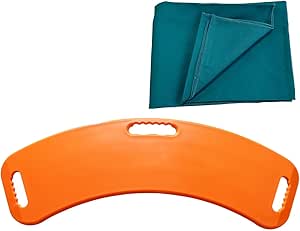
Transfer Board and Slide Board – Patented Patient Transfer from Wheelchair to Car, Toilet, Tub
This set stands apart from the single-board wooden options by pairing a 31.5-inch transfer board with a 28-by-28-inch slide sheet. That combination offers caregivers another positioning aid for transfers involving a wheelchair, car, toilet, or tub, rather than relying on a board alone. The board’s anti-slip back is designed to help keep it in place, while three handles give more grip locations than the two-end-handle hardwood board. Curved edges are intended to reduce scratching against skin or clothing. The tradeoff is that the supplied dimensions may not suit every body size or transfer setup; the sheet may be too small for very tall users, and no load capacity is provided in the supplied specifications. Compared with the rotating Vie Triomphe board, this kit has no adjustable swivel disc, so it is better for buyers who want a board-and-sheet pairing than guided rotation.
Pros:- Includes both a 31.5-inch board and a 28-by-28-inch slide sheet.
- Anti-slip backing is designed to help keep the board positioned.
- Three ergonomic handles offer multiple grip points.
- Curved edges are intended to reduce contact with skin and clothing.
Cons:- No load capacity is listed in the supplied product data.
- The sheet may be too small for very tall users.
- Unlike the Vie Triomphe 360° board, it has no rotating disc or adjustable glide tension.
Best for: Caregivers who want a longer transfer board plus a slide sheet for varied wheelchair, car, toilet, or tub setups.
Not ideal for: Buyers who need a documented load capacity, a larger sheet, or a rotating transfer surface.
- Board size:31.5 x 8 in
- Slide sheet size:28 x 28 in (73 x 73 cm)
- Handles:Three ergonomic handles
- Back:Anti-slip
- Edges:Curved
- Patent number:US D1,004,898
Our verdict“Choose this kit if a slide sheet and multiple handles are more useful to your care routine than a rotating disc or a stated capacity.”
Vie Triomphe 360° Swivel Transfer Board, 35.4 in, 460 lb Capacity
Unlike the fixed wooden boards in this roundup, the Vie Triomphe pairs a 360° rotating disc with adjustable glide tension, giving caregivers a way to guide a seated turn rather than relying only on a straight slide. Its 35.4-by-12.6-inch plastic platform is wider than the 8-inch wooden boards, and the textured surface is intended to limit clothing from moving too quickly. Integrated handles and a wipe-clean surface add practical value in care settings. This design has a clear boundary, though: it is intended for transfers between similarly positioned surfaces, with a maximum height gap of 2.8 inches, and the description calls for caregiver assistance. At 7.2 lb, it is also heavier than either wooden board. I’d choose it for controlled, assisted swiveling—not for a large height difference such as some car transfers.
Pros:- 360° disc and adjustable glide tension support controlled seated turns.
- 12.6-inch width offers a broader platform than the wooden boards listed here.
- Textured surface is designed to reduce overly fast clothing movement.
- Plastic construction is wipe-clean and includes integrated handles.
Cons:- Designed for caregiver-assisted transfers rather than independent use.
- Maximum height gap is 2.8 inches, limiting use across larger differences.
- At 7.2 lb, it is heavier than the wooden boards in this batch.
Best for: Caregivers assisting seated users between nearby surfaces of similar height who benefit from guided rotation.
Not ideal for: Independent users or anyone needing to bridge a large height difference, including some car-transfer setups.
- Dimensions:35.4 x 12.6 in
- Transfer path width:12.6 in
- Weight capacity:460 lb
- Product weight:7.2 lb
- Maximum height gap:2.8 in (7 cm)
- Material:Thickened plastic
- Disc:360° rotating with adjustable glide tension
- Handles:Dual integrated cutout handles
Our verdict“Choose this plastic swivel board for caregiver-guided turns between nearly level surfaces, not for independent transfers or large gaps.”

How We Picked
I compared the 14 boards on the details buyers can use to match a product to a real transfer setup: length and width, material, stated weight capacity, handles, surface design, and intended transfer settings. I gave more weight to clear, practical specifications than to broad claims, since a board that cannot bridge the distance or sit securely on both surfaces is a poor fit regardless of its listed capacity. I also considered whether the design appears straightforward to position, carry, and store.
The ranking favors versatility and usable information over a single standout number. That puts the 30-inch DMI wood model at the top for its balance of capacity, handles, and general-purpose size; compact boards follow for tighter setups, while wider, higher-capacity, plastic, sliding-surface, and swivel designs are ranked for narrower needs. Several listings provide limited construction or safety details, so I do not treat a capacity claim as proof that a board is suitable for every user or transfer. A clinician or occupational therapist can help confirm fit and technique, especially when a person needs substantial assistance.
Factors to Consider When Choosing Transfer Board
Choosing a transfer board starts with the gap and surfaces it must connect—not with the longest board or the largest capacity number. I would map the intended transfer, measure the available space, and check how the user can participate before choosing a design. These factors can help avoid a board that is awkward to position or mismatched to the person’s needs.
Measure the Gap and the Landing Area
Measure the distance between the two surfaces in the positions they will occupy during a transfer, then check how much board can rest securely on each side. A longer board can bridge a wider gap, but it may be harder to maneuver beside a toilet or inside a vehicle. Width matters too: more surface may feel easier to target, yet it can conflict with wheelchair arms, bed rails, or narrow spaces. Do not rely on a product’s overall length alone; the usable resting area and the geometry of the surfaces affect fit. If the transfer location changes often, measure each setting and choose for the most demanding one that the board will serve safely.
Match Material and Surface to the Transfer
Wood and plastic boards can feel different under the user and may suit different preferences, but material alone does not determine how smoothly or safely a transfer will go. A slick surface may reduce friction while also making positioning or control more demanding, especially for someone with limited balance or upper-body strength. Check for any stated surface texture, padding, edge treatment, and care instructions rather than assuming a material has a particular grip. A sliding-surface design may help in a specific setup, but it can add another feature to inspect and keep clean. Ask a therapist to assess whether the user’s clothing, skin sensitivity, and transfer technique suit the surface.
Treat Weight Capacity as One Check, Not a Guarantee
Compare the listed capacity with the user’s weight, but do not treat a higher number as a substitute for proper support and fit. A board must sit securely on both surfaces, avoid unstable edges, and suit the way the person will move across it. Product listings may differ in how much construction detail they provide, so unclear capacity or usage information is a reason to seek confirmation from the seller or a clinician. Do not use a board that is cracked, warped, or otherwise damaged, even if its rated capacity appears adequate. If transfers involve substantial caregiver assistance, get guidance on whether a board is appropriate at all.
Choose Handles and Extras for the Person Using the Board
Cutout handles can make a board easier for a caregiver to carry or reposition, but they do not automatically make it easier for the user to transfer. Consider whether the user’s hands can reach and use the available openings without creating pressure or disrupting their movement. Extra features, such as a swivel mechanism, can address a specific transfer path but may bring added setup steps and a less familiar feel. For a first board, a simple design can be easier to learn, provided it matches the person’s abilities and transfer plan. Have the user and caregiver practice the intended setup with professional guidance before relying on it in daily routines.
Plan for Storage, Cleaning, and Regular Checks
A board used in several rooms or carried in a vehicle needs a practical storage spot, and its length and weight can affect whether a caregiver can position it comfortably. Check the manufacturer’s care guidance before using household cleaners, especially if the board has a special surface or components beyond a plain slab. Routine inspection should include the edges, surface, handles, and any moving parts for damage or wear. Bathroom use calls for particular care: moisture, slippery floors, and limited space can complicate an otherwise workable setup. If cleaning or storage is inconvenient, a board may be left in the wrong place or used without a proper inspection.
Know When a Board Is Not the Right Transfer Aid
A transfer board is not a universal solution for every person or movement. Someone who cannot maintain a supported seated position, follow transfer directions, or participate safely may need a different aid and direct caregiver assistance. A very uneven height difference, unstable furniture, or a transfer requiring a major turn can also make a board unsuitable without a specific plan. Before buying, discuss the exact route—such as wheelchair to car or bed to toilet—with a physical or occupational therapist if the user needs hands-on help. A professional assessment can prevent a purchase that looks suitable on paper but does not fit the person’s capabilities.
Frequently Asked Questions
How do I choose between a 24-inch and a 30- or 32-inch transfer board?
Start by measuring the transfer gap and how much of the board can rest securely on each surface. A 24-inch board may be easier to place in a tight area, but it may not bridge a larger gap with enough support. Longer boards offer more reach, yet can be harder to position around wheelchair arms, toilets, or car doors. Compare the full setup, including the user’s starting position and the caregiver’s access, rather than choosing by length alone. If you are unsure about safe overlap and placement, ask a therapist to check the measurements with you.
Is a higher weight-capacity transfer board automatically safer?
No. Capacity is one requirement, but safe use also depends on a secure fit, stable supporting surfaces, the user’s balance and strength, and correct technique. This roundup includes listings with stated capacities ranging from 440 to 500 pounds, but the higher figure does not mean a board will work better for every transfer. Check that the board is undamaged and that its instructions cover the intended use. For a user who needs substantial help, get clinical guidance rather than relying on the capacity number alone.
Should I choose wood or plastic for a transfer board?
Choose based on the complete design and the transfer needs, not material in isolation. The lineup includes several wood options with different sizes and handle layouts, as well as blue YHK plastic boards and a model described with a sliding surface. Surface feel, care instructions, weight, and how easily the board can be positioned may matter more than the material label. Ask about cleaning guidance and inspect the board for edges or features that could affect the user’s comfort. A therapist can help determine whether the surface is appropriate for the person’s clothing, skin, and movement.
Can I use the same transfer board for a bed, toilet, and car?
Possibly, but one board may not fit all three settings well. Bed, toilet, and car transfers can involve different heights, gaps, angles, and space constraints, so a board that works in one place may be awkward in another. Measure each setup and confirm that the board can rest securely without interfering with arms, rails, or the vehicle opening. The listings identify several intended settings, but those claims do not replace checking the actual fit. If you plan to use one board in multiple places, have each transfer assessed before making it part of the routine.
When should I choose a swivel board or another transfer aid instead of a flat board?
A swivel design may be worth exploring when the transfer involves a turn that a straight slide across a flat board does not address comfortably. It is a more specialized choice than a basic board, and the rotating movement may require instruction and practice. If the user cannot sit securely, follow directions, or participate in the movement, a board—including a swivel model—may not be the right aid. A therapist can assess whether a swivel board, a different transfer device, or caregiver-assisted technique suits the specific route. Avoid experimenting with an unfamiliar mechanism during an unsupported transfer.
Conclusion
For most shoppers comparing the listed options, I would start with the DMI 30 × 8-inch heavy-duty wood board: it has a useful combination of stated 440-pound capacity, cutout handles, and a general-purpose size. My best value choice is the simpler DMI 30 × 8-inch wooden board, while the best for beginners is also a straightforward flat wood design when a therapist has confirmed fit and technique. For a more specialized purchase, the Vie Triomphe 360° swivel board is the premium-style pick for buyers whose transfer plan calls for rotation; the larger DMI 32 × 10-inch board suits those needing more board area and space to position it. Choose the Vive 24-inch board for a compact setup, and consider the YHK plastic models or sliding-surface option only when their material or surface design matches a specific need. The best board is the one that fits the measured gap and the user’s abilities, with professional guidance when transfers require assistance.
Evergreen bestsellers Picks

Samsung 75-Inch M80H Series Mini LED 4K Smart TV (2026)

Dyson Ball Animal 3 Upright Vacuum

Vitamix 5200 Professional-Grade Blender, 64 oz. Container, Black
As an affiliate, we earn on qualifying purchases.